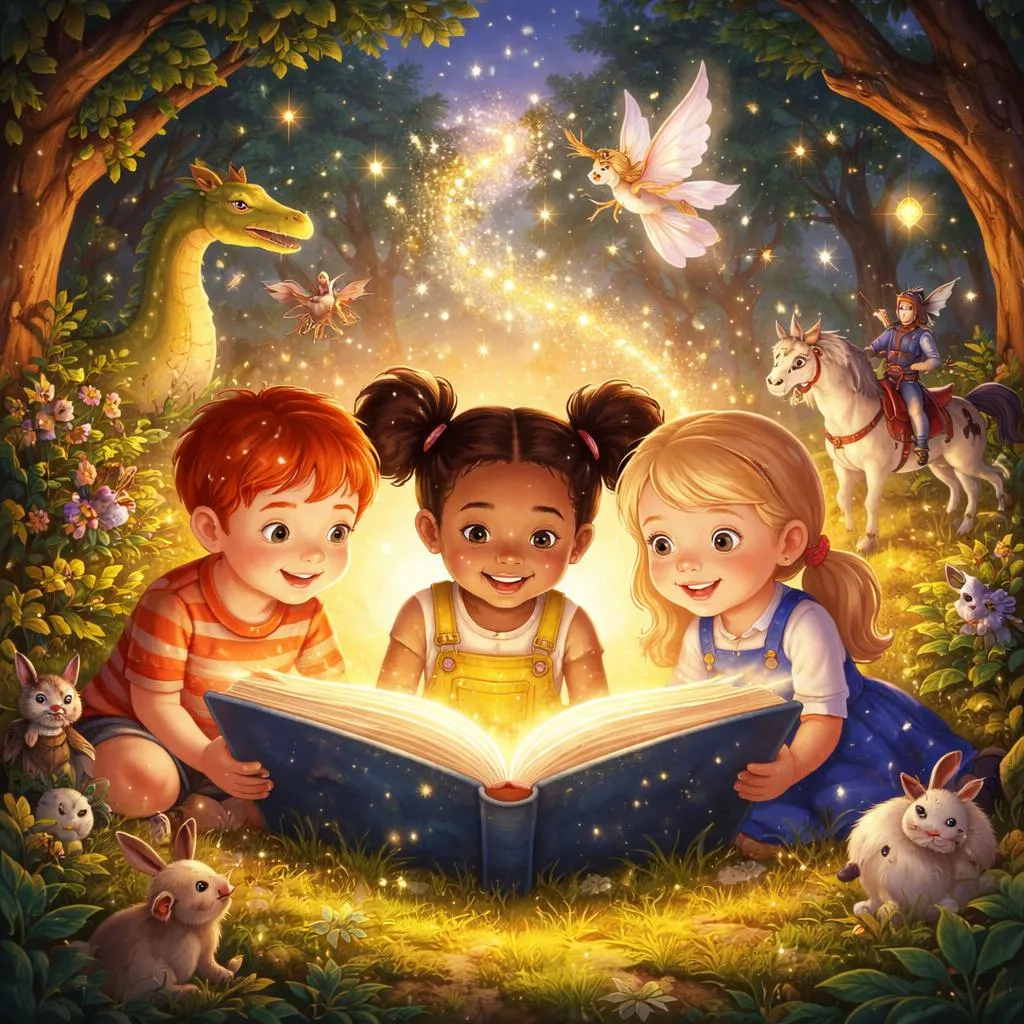

What Are Traditional Children's Stories? Let us explore this rich literary heritage together. Traditional children's stories are tales passed down through many generations. They existed long before books were widely available to families. People told these stories aloud around fires and in homes. The tales traveled from village to village across countries. Each storyteller added small changes to the narratives. Over time many versions of each story developed naturally. The stories come from every culture around the world. European fairy tales like Cinderella and Snow White appear widely. African folktales feature Anansi the spider and other creatures. Asian stories bring dragons, emperors, and wise teachers. Native American tales explain nature and teach lessons. These stories share common patterns and character types. They continue to be told and read in modern times.
Meaning and Purpose of Traditional Tales These stories serve multiple essential purposes in childhood development. They connect children to cultural heritage and shared history. Reading the same tales as grandparents creates family bonds. The stories preserve wisdom from long ago for new generations. They teach moral lessons through memorable narratives. Children learn about kindness, courage, and consequences naturally. The tales also develop imagination through magical elements. Fairies, talking animals, and enchanted objects spark wonder. Traditional stories follow patterns children can recognize. Three brothers, three tasks, and three wishes appear repeatedly. This predictability builds comprehension and confidence in readers. The stories also prepare children for more complex literature later. They provide foundational knowledge referenced in many books.
Categories of Traditional Stories We can organize traditional tales into several helpful categories. Fairy tales feature magic, enchantment, and supernatural beings. Cinderella, Sleeping Beauty, and Snow White belong here. Folk tales come from ordinary people and everyday life. They often explain natural phenomena or teach lessons. Fables are very short stories with clear moral messages. Aesop's fables like The Tortoise and the Hare are famous. Myths explain how the world began and how gods work. Greek, Norse, and Egyptian myths fascinate children. Legends are stories about real people from long ago. Robin Hood and King Arthur appear in these tales. Pourquoi tales explain why things are the way they are. Why the zebra has stripes or why the sun moves. Cumulative tales build repetition like The Gingerbread Man. Each category offers different gifts to young readers.
Daily Life Connections Through Traditional Stories Traditional stories connect to children's experiences in meaningful ways. Cinderella's situation relates to feeling overlooked or unappreciated. Many children know this feeling from family or school. The Three Little Pigs connects to preparing for challenges. Building well matters more than building quickly or easily. Little Red Riding Hood warns about talking to strangers. Children hear this safety lesson in many contexts. The Boy Who Cried Wolf teaches about honesty and trust. Children learn that lies have consequences for everyone. The Tortoise and the Hare shows that slow and steady wins. Patience and persistence matter more than speed sometimes. We can point out these connections during reading discussions. "Have you ever felt like Cinderella in your family?" "When do you need to be steady like the tortoise?"
Vocabulary Learning from Traditional Stories Traditional stories introduce rich vocabulary in meaningful contexts. Once upon a time begins countless traditional tales. Children learn this phrase signals a story beginning. Happily ever after ends many stories with satisfaction. Castle, forest, and kingdom appear in many European tales. Magic, spell, and enchantment fill fairy tale vocabulary. Giant, witch, fairy, and dwarf name traditional characters. Courage, kindness, and honesty name virtues celebrated. Greed, jealousy, and pride name flaws punished. Quest, journey, and adventure describe character paths. Transformation describes changes characters undergo. We can teach these words with examples from familiar tales. Use them in sentences about stories children know well. Create picture cards showing vocabulary in story contexts.
Phonics Points in Traditional Tales Traditional stories provide excellent phonics practice with familiar language. Once has the O sound and soft C. Upon has the short U and short O. Time has the long I and silent E. Character names offer valuable sound patterns. Cinderella has the soft C and short I and long A. Snow White has the SN blend and long O and long I. Tortoise has the OR combination and OI diphthong. Hare has the H sound and long A and silent E. Setting words provide phonics elements. Castle has the soft C and final le. Forest has the OR combination and short E. Kingdom has the short I and NG blend. Action words demonstrate patterns. Run has the short U. Jump has the short U and MP blend. Fly has the FL blend and long I. We can focus on one sound pattern from each tale. Find all words with that sound in the traditional story. Write them on crown or castle shapes for practice.
Grammar Patterns in Traditional Narratives Traditional stories model useful grammar for young readers consistently. Past tense carries the main narrative throughout. "Once upon a time there lived a kind girl named Cinderella." Present tense appears in dialogue between characters. "Who is the fairest of them all?" the queen asks. Future tense shows prophecies and promises. "You will meet a prince at the ball." Questions drive plots and character interaction. "Who will help me spin this straw into gold?" Commands appear from authority figures. "Bring me her heart as proof!" the queen demanded. Descriptive language paints familiar scenes. "The dark, dangerous forest stretched before her." Prepositional phrases describe locations repeatedly. "In the tower, through the woods, under the spell." We can point out these patterns during reading. Notice how most of the story uses past tense.
Repetitive Patterns in Traditional Tales Traditional stories often use repetition that helps young readers. Three appears constantly throughout these narratives. Three brothers, three tasks, three wishes, three tries. This number appears in countless traditional tales everywhere. The rule of three creates satisfying story patterns. Characters often encounter challenges in increasing difficulty. The third try usually succeeds after failures before. Repeated phrases appear in many traditional tales. "Little pig, little pig, let me come in." "I'll huff and I'll puff and I'll blow your house in!" These repetitions invite children to join in reading aloud. They build confidence through successful participation. The patterns also aid memory and comprehension. Children can retell stories using these repeated elements.
Learning Activities for Traditional Stories Many activities deepen engagement with traditional tales. Create a story map showing common elements across tales. Characters, settings, problems, and solutions appear. Compare different versions of the same traditional story. Notice what changes and what stays the same always. Act out favorite tales with simple costumes and props. Children become the characters they have read about. Draw illustrations for traditional stories in different styles. Try realistic, cartoon, and abstract approaches. Write a new version of a familiar tale with changes. Set Cinderella in modern times or different place. Create puppets for retelling traditional stories to others. Use socks, paper bags, or craft sticks for characters. These activities make traditional tales personally meaningful.
Printable Materials for Traditional Tales Printable resources support deep engagement with traditional stories. Create sequencing cards for popular tales like Goldilocks. Arrange events in correct order from beginning to end. Design character masks for dramatic play activities. Children wear them while retelling stories together. Make vocabulary cards with words from multiple tales. Castle, forest, fairy, witch, giant, and dragon appear. Create a story comparison chart for different versions. List elements that stay same and change across versions. Design a fairy tale elements checklist for identifying patterns. Magic, royalty, talking animals, and happy endings included. Make simple comprehension sheets for each traditional tale. "Who were the characters?" "What problem did they face?" These printables structure story exploration activities effectively.
Educational Games About Traditional Tales Games make traditional story learning playful and interactive. Play "Fairy Tale Charades" acting out stories without words. Others guess which traditional tale is being shown. Create "Match the Tale" pairing objects with stories. Glass slipper with Cinderella, apple with Snow White. Play "Story Bingo" with elements from many tales. Mark off when each appears during reading or discussion. Design "Three of Everything" game finding story trios. Three bears, three pigs, three brothers, three wishes. Play "Who Said It?" reading famous quotes from tales. "Mirror, mirror on the wall" from Snow White. Create "Fairy Tale Scavenger Hunt" finding items in classroom. Look for something that could be in a traditional tale. These games build story knowledge through active participation.
Teaching Moral Lessons Through Traditional Tales Traditional stories carry clear moral messages for children. The stories reward good behavior and punish bad behavior. Kind characters receive help from unexpected sources. Greedy characters lose everything they wanted. Honest characters eventually prosper in the end. Deceitful characters face exposure and consequences. These patterns teach that actions have results always. The messages are clear enough for children to grasp. They are embedded in engaging stories, not lectures. Children absorb values while enjoying the narrative. The stories also show that good wins eventually. Evil may seem powerful but ultimately fails. This provides comfort and hope for young readers. They learn that goodness matters even when hard.
Cultural Variations in Traditional Tales Traditional stories exist in every culture with unique flavors. Cinderella appears in hundreds of versions worldwide. Chinese Yeh-Shen, Egyptian Rhodopis, and Native American versions exist. The core story remains while details change completely. Animals reflect local wildlife in different regions. European wolves become African lions or Asian tigers. Clothing reflects local dress and customs naturally. Food mentioned varies with local cuisine and crops. Values emphasized reflect what each culture treasures most. Reading multiple versions builds cultural understanding and respect. Children see that all people tell similar stories. The details differ but the heart remains the same. This develops appreciation for diversity and shared humanity.
Why Traditional Stories Endure Traditional stories have survived for thousands of years for good reasons. They speak to universal human experiences and emotions. Fear, hope, love, and jealousy belong to everyone. The simple patterns make them easy to remember and retell. Anyone can become a storyteller with practice. The lessons remain relevant across changing times. Kindness mattered then and matters just as much now. The magic and wonder delight each new generation. Children today love fairy tales as much as ever. The stories adapt to new media and formats constantly. Movies, books, and games retell these ancient tales. Each generation rediscovers them and makes them their own. The stories will continue for thousands more years.