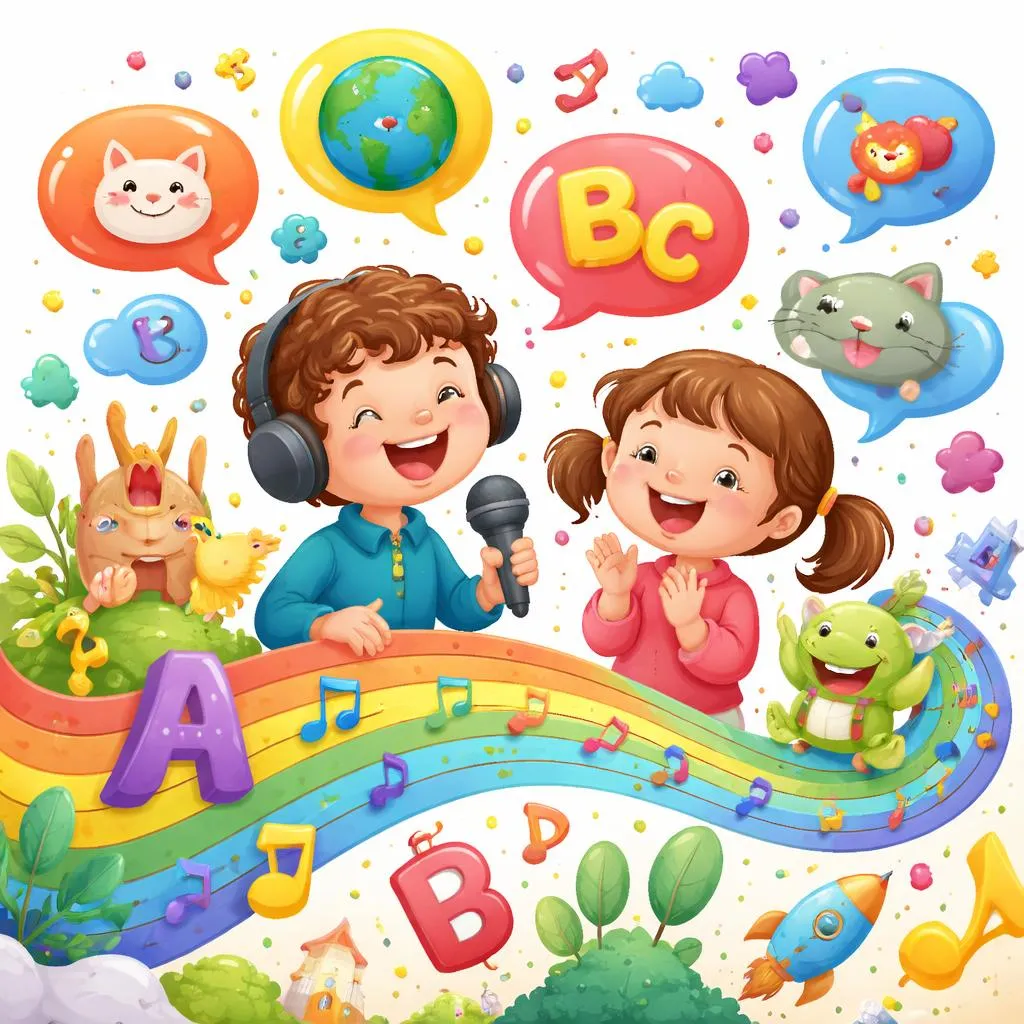

Words alone tell stories. Music adds another layer. Melody carries meaning. Rhythm creates patterns. Together they form a children's story song that sticks in memory long after hearing. These musical narratives combine the best of both worlds for language learners. This article explores methods for using these engaging formats in teaching.
What Defines a Children's Story Song?
A children's story song tells a narrative through music. Some songs tell complete stories from beginning to end. A character faces a problem. Adventures unfold. The story resolves. All within a musical framework.
Other story songs use repetition to build narrative. Each verse adds new elements while repeating familiar ones. The song grows like a story building toward conclusion. This structure supports prediction and participation.
Many classic children's songs function as story songs. "The Wheels on the Bus" tells about a bus journey. "Old MacDonald" introduces farm animals one by one. "She'll Be Coming Round the Mountain" describes an approaching visit. These familiar songs already tell stories.
Vocabulary Learning Through Story Songs
Story songs introduce vocabulary in musical context. Words appear with melodic emphasis. Important words often land on strong beats or high notes. This musical highlighting aids retention.
Repetition in songs reinforces vocabulary naturally. Key words repeat throughout the song. Each repetition strengthens memory without feeling like drill. The music carries the learning.
Action words become physical through songs. Many story songs include movements. "If You're Happy and You Know It" connects verbs to actions. Clap, stomp, shout gain meaning through physical response.
Children's story song lyrics also introduce descriptive language. Songs paint pictures with words. "Sparkling" streams. "Friendly" animals. "Happy" children. These adjectives gain color through musical context.
Simple Phonics Points in Story Songs
Story songs offer excellent phonics material. Rhyme appears naturally in song lyrics. Words that rhyme land at phrase ends where listeners expect them. This rhyme supports phonemic awareness.
Alliteration appears in song lyrics for musical effect. Repeated sounds create pleasing patterns. "Peter Piper picked a peck of pickled peppers" works as tongue twister and song. These patterns highlight initial sounds.
Vowel sounds stretch in song. Long vowels hold for multiple notes. This elongation helps learners hear vowel differences clearly. Short vowels get crisp rhythmic placement. Both support sound discrimination.
Exploring Grammar Through Musical Narratives
Story songs provide clear grammar models. Present tense describes ongoing actions. "The wheels on the bus go round and round." This simple present expresses recurring events.
Past tense narrates story events in some songs. "Froggy went a-courtin' and he did ride." This past tense shows completed action appropriate for storytelling.
Questions appear in many story songs. "Do you know the muffin man?" "Where has my little dog gone?" These questions model inquiry forms naturally.
Learning Activities with Story Songs
Active engagement with musical narratives deepens learning. These activities bring story songs into productive language use.
Song Movement Creation After learning a story song, create movements for key vocabulary. Each important word gets a gesture. Sing the song again with full movements. This physical connection supports memory.
Story Song Illustration Listen to a story song and discuss what happens. Learners draw the story in sequence. Three or four panels show beginning, middle, and end. Below each drawing, write the matching lyrics. This builds comprehension and sequencing.
New Verse Creation Take a familiar story song and create new verses together. What other animals might Old MacDonald have? What else happens on the bus? This builds creative language use within familiar structure.
Song Charades Sing a story song but pause before key words. Learners act out the missing word. Others guess what word fits. This builds vocabulary retrieval and physical response.
Educational Games with Story Songs
Games add playful interaction with musical narratives. These activities work well for groups or individuals.
Story Song Bingo Create bingo cards with elements from story songs. Bus wheels. Farm animals. Clapping hands. Stomping feet. As you sing or describe song moments, learners cover matching squares. This builds listening comprehension.
Song Scramble Write lyrics from a story song on sentence strips. Mix them up. Learners arrange in correct order while listening to the song. This builds sequencing and print awareness.
Musical Story Dice Create dice with story elements from different songs. Character die: bus driver, farmer, monkey. Action die: driving, feeding, jumping. Setting die: bus, farm, bed. Learners roll and create original story song verses. This builds creative language use.
Printable Materials for Story Song Learning
Tangible resources support extended exploration of musical narratives. These materials work well for independent practice.
Song Word Cards Create cards with vocabulary from story songs on one side and simple definitions or pictures on the other. Wheel, bus, farmer, animal, clap. Use these for matching games or quick reviews.
My Story Song Page Provide a template for writing an original story song. Prompts guide structure. "My song is about..." "First, [character]..." "Then..." "Finally..." Space for drawing accompanying pictures. This builds creative writing with musical awareness.
Song Sequence Strips Create strips with lyrics from a story song in order. Learners cut apart and practice arranging while singing. This builds print awareness and sequencing.
Lyric and Picture Match Create cards with song lyrics on some and matching pictures on others. "The wheels on the bus" matches bus picture. Learners match lyrics to pictures. This builds reading comprehension.
The lasting value of a children's story song lies in its natural memorability. Brains are wired for music. Melody carries language into long-term storage. Years later, adults can still sing songs from childhood. The words remain accessible because music encoded them. This power makes story songs invaluable for language teaching. Learners absorb vocabulary, grammar, and pronunciation through enjoyable repetition. They participate without pressure. They remember without effort. Each story song sung together builds language skills while creating joyful classroom moments. The music turns learning into something closer to play. And play, as all teachers know, may be the most powerful learning of all.