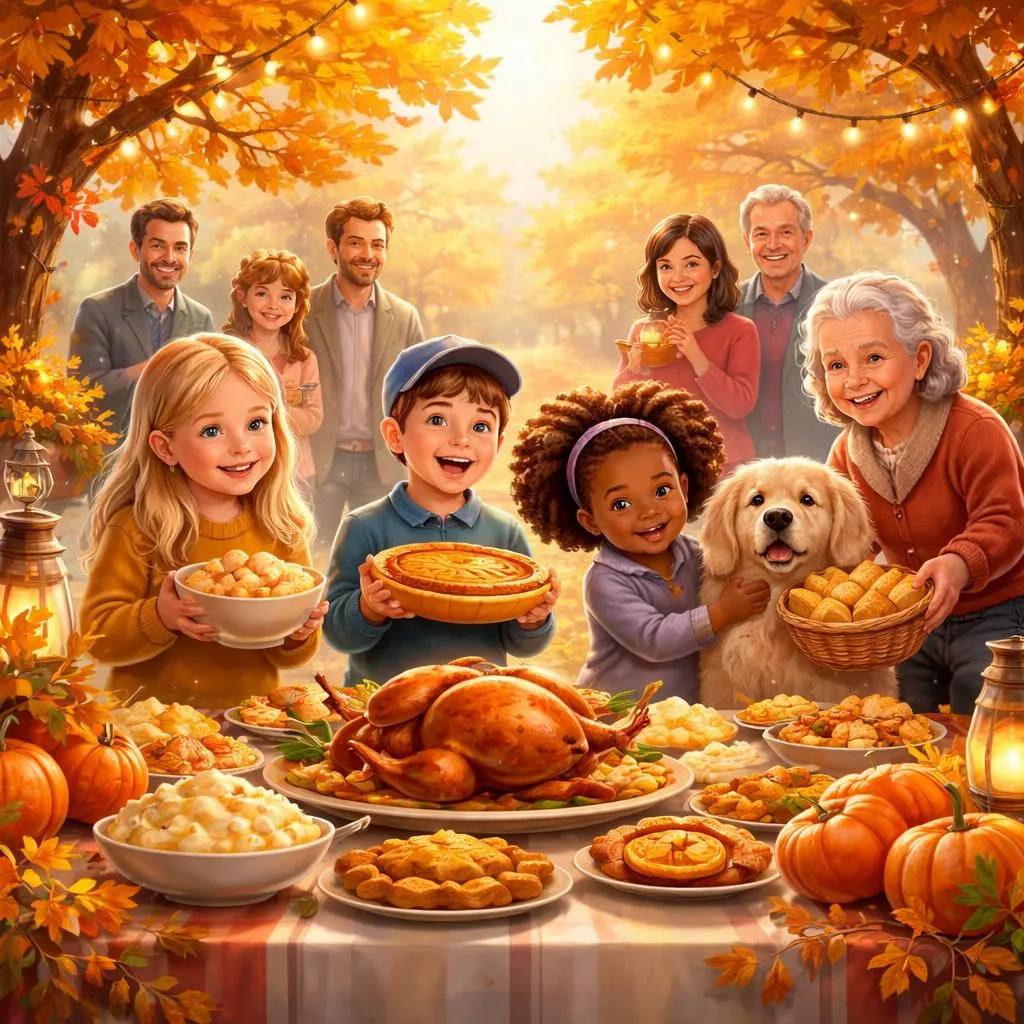

Leaves turn gold and red. Families gather around tables. Turkey fills the air with delicious smell. Thanksgiving brings a moment to pause and give thanks. A children's story thanksgiving weaves gratitude into narrative form. It shows why saying thank you matters. This article explores methods for using these seasonal tales in teaching.
What Defines a Thanksgiving Story for Children?
A children's story thanksgiving centers on themes of gratitude and sharing. Some stories explore the historical first Thanksgiving. Pilgrims and Native Americans share a harvest feast. These tales introduce the holiday's origins in simple terms.
Other stories focus on modern Thanksgiving traditions. Families traveling to gather. Cooking together. Sharing what each person appreciates. These narratives reflect children's own holiday experiences.
Many Thanksgiving stories emphasize gratitude itself. Characters learn to notice what they have. They discover that thanks matters more than things. These tales teach the heart of the holiday.
The best Thanksgiving stories balance past and present. They honor history while connecting to today. They show gratitude as a timeless practice.
Vocabulary Learning Through Thanksgiving Stories
Thanksgiving stories introduce rich holiday vocabulary. Food words fill these tales. Turkey, stuffing, cranberry, and pumpkin pie name the feast. Each word connects to tastes and smells children know.
Gathering vocabulary appears naturally. Family, guests, table, and feast describe the celebration. These words help learners talk about holiday togetherness.
History words appear in stories about the first Thanksgiving. Pilgrim, Native American, harvest, and plenty introduce the holiday's origins. These words build historical understanding.
Children's story thanksgiving also introduces words for gratitude. Thankful, grateful, blessed, and appreciative name the holiday's central feeling. These adjectives help learners express appreciation.
Simple Phonics Points in Thanksgiving Tales
Thanksgiving stories offer excellent phonics material. Holiday words provide sound practice. Thanksgiving features th sound twice. Turkey has er at the end. Pumpkin contains short u and consonant blend. These words become phonics anchors.
Food words offer varied sound patterns. Bread has ea for short e. Corn has or sound. Pie has long i. Each word builds phonics foundations.
Many Thanksgiving stories use rhythmic language. "Over the river and through the woods" creates familiar cadence. These patterns support phonemic awareness.
Exploring Grammar Through Holiday Narratives
Thanksgiving stories provide clear grammar models. Present tense describes Thanksgiving traditions. "Every Thanksgiving, families gather to share a meal." This general present expresses recurring holiday events.
Past tense narrates story events. "The children helped prepare the feast. They set the table carefully." This past tense shows completed action appropriate for storytelling.
Future tense appears in Thanksgiving anticipation. "Tomorrow we will travel to Grandma's house." "We will eat turkey together." These structures show expectations connected to the holiday.
Learning Activities with Thanksgiving Stories
Active engagement with Thanksgiving narratives deepens learning. These activities bring holiday themes into productive language use.
Gratitude Chain After reading a Thanksgiving story, provide paper strips. Each learner writes one thing they are thankful for on a strip. Connect strips to form a paper chain. Display the chain as a classroom gratitude reminder. This builds writing practice and gratitude awareness.
Thanksgiving Food Exploration Read about Thanksgiving foods. If possible, bring simple examples. Cranberry sauce. Pumpkin bread. Corn muffins. Learners taste and describe using story vocabulary. Sweet, tart, soft, warm. This multisensory experience connects language to real experience.
Thanksgiving Then and Now Create a simple chart comparing the first Thanksgiving with modern celebrations. Food, location, who came, activities columns. Learners fill in information from stories. This builds comparative thinking and historical understanding.
Thank You Note Writing After stories emphasizing gratitude, guide learners in writing thank you notes. To family members. To friends. To school helpers. This builds authentic writing with real purpose.
Educational Games with Thanksgiving Stories
Games add playful interaction with holiday narratives. These activities work well for groups or individuals.
Thanksgiving Bingo Create bingo cards with Thanksgiving story elements. Turkey. Pumpkin. Pilgrim. Native American. Corn. Family. As you describe story moments or call words, learners cover matching squares. This builds listening comprehension and holiday vocabulary.
Thanksgiving Charades Act out Thanksgiving activities from stories without speaking. Eating turkey. Traveling to Grandma's. Setting the table. Saying thank you. Others guess the activity. This builds comprehension and movement connection.
Gratitude Scavenger Hunt Create a list of things to find or notice that prompt gratitude. Something beautiful. Something that smells good. Something warm. Something that makes you smile. Learners find and share. This builds observation and gratitude language.
Printable Materials for Thanksgiving Story Learning
Tangible resources support extended exploration of Thanksgiving themes. These materials work well for independent practice.
Thanksgiving Word Cards Create cards with Thanksgiving vocabulary on one side and simple definitions or pictures on the other. Turkey, thankful, feast, family, pumpkin. Use these for matching games or quick reviews.
My Thanksgiving Story Page Provide a template for writing an original Thanksgiving story. Prompts guide structure. "On Thanksgiving morning..." "My family gathered to..." "We ate..." "I was thankful for..." This builds narrative skills with holiday themes.
Gratitude List Page Create a simple page with spaces for listing things to be thankful for. At home, at school, in nature, with friends categories. Learners fill in throughout Thanksgiving season. This builds vocabulary and gratitude practice.
Thanksgiving Then and Now Chart Provide a simple chart comparing the first Thanksgiving with today. Learners fill in information from stories and discussion. This builds historical understanding and comparative language.
The lasting value of a children's story thanksgiving lies in its focus on gratitude itself. In a world focused on getting, Thanksgiving celebrates having. Stories that emphasize this message shape how children see their lives. The vocabulary learned connects to genuine appreciation. Words like thankful and grateful name real feelings. Each Thanksgiving story read together builds language while cultivating hearts that notice and appreciate. The classroom becomes a place where gratitude grows alongside vocabulary.