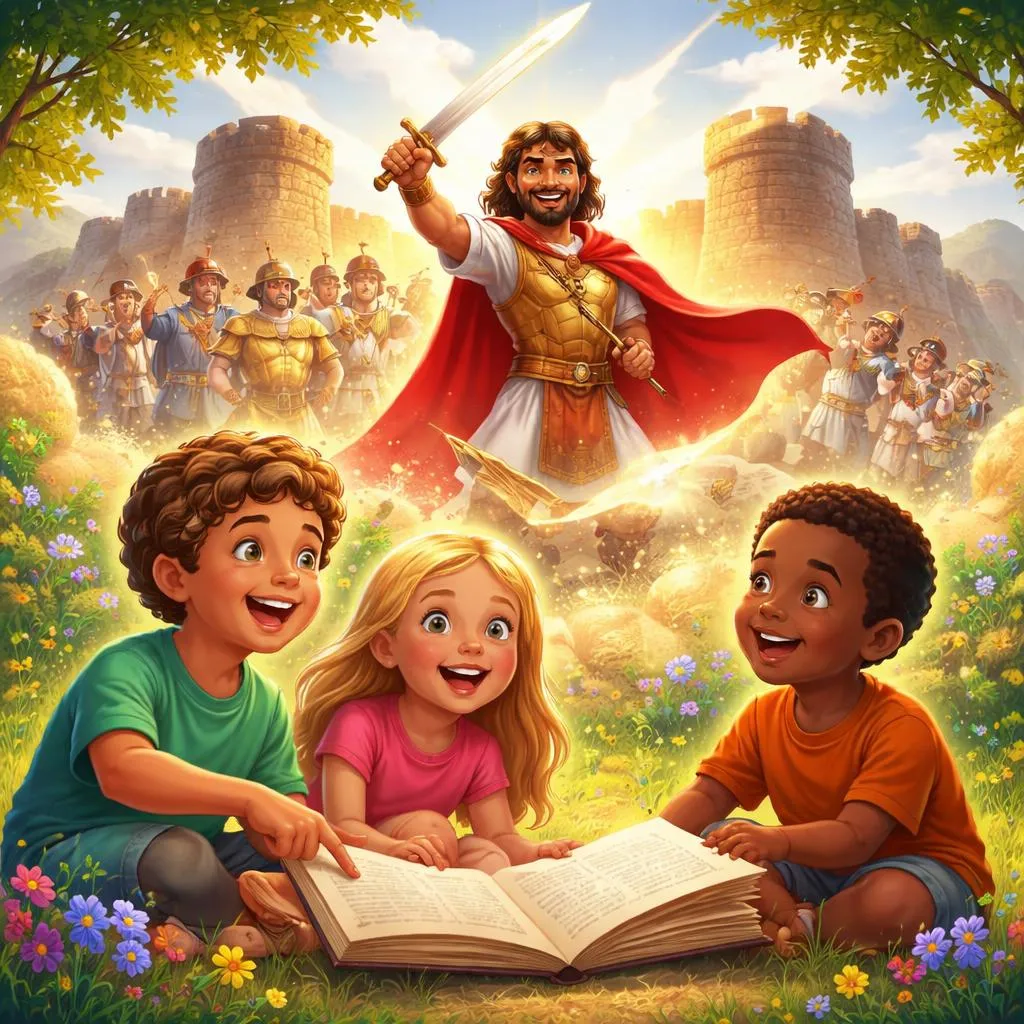

What Is the Children's Bible Story of Joshua? Let us explore this exciting biblical narrative together. The children's Bible story of Joshua comes from the book that bears his name. Joshua was Moses' assistant and became leader after Moses died. God chose Joshua to lead the Israelites into the Promised Land. This was the land God had promised to Abraham many years before. The story begins with God encouraging Joshua to be strong and courageous. God promised to be with Joshua wherever he went. Joshua faced the huge task of leading millions of people. They needed to cross the Jordan River into enemy territory. The first great obstacle was the fortified city of Jericho. God gave Joshua specific instructions for conquering the city. The story shows Joshua's faith and obedience to God's commands. It demonstrates that God keeps promises and fights for his people.
Meaning and Purpose of Joshua's Story This story carries deep meaning about leadership and faith. Joshua had big shoes to fill after Moses' leadership. He could have felt inadequate and afraid of the task. But God told him repeatedly to be strong and courageous. Children learn that God empowers people for tasks he gives. Joshua also shows the importance of following God's instructions exactly. The victory at Jericho came through obedience, not military strategy. Children learn that God's ways may seem unusual but work perfectly. The story also demonstrates that God keeps promises always. He promised Abraham land, and now his descendants received it. Children learn that God is faithful to his word completely. The conquest of Canaan shows God fighting for his people. Children learn they are not alone in their battles.
Main Events in Joshua's Story We can identify several key events in Joshua's narrative. The spies sent to Jericho begin the conquest story. Rahab protected them and believed in their God. Crossing the Jordan River on dry ground mirrored Moses at the Red Sea. The priests carrying the ark stepped into the water first. The waters piled up, and all Israel crossed on dry ground. Twelve stones were set up as a memorial forever. The battle of Jericho followed God's unusual battle plan. Marching around the city for seven days seemed strange. But on the seventh day, the walls fell down flat. The Israelites conquered the city as God had promised. The story continues with other battles and dividing the land. Joshua's final speech challenges Israel to serve God faithfully. "As for me and my house, we will serve the Lord."
Vocabulary Learning from Joshua's Story Joshua's story introduces rich biblical vocabulary for children. Leader means someone who guides and directs others. Courage means facing danger without giving in to fear. Obey means following instructions and commands given. Promise means a declaration that something will or will not be done. Conquer means to overcome and take control of something. Battle means a fight between opposing armies or forces. Jericho was the first city conquered in the Promised Land. Walls means the sides of a city that protect it from enemies. Spies means people sent to gather information secretly. Rahab was the woman who protected the spies in Jericho. We can teach these words with picture cards showing examples. Use them in sentences about the story events.
Phonics Points in Joshua's Story Joshua's story provides useful phonics practice with biblical language. Joshua has the short O and long U and short A. Leader has the L sound and EA digraph and ER ending. Courage has the OUR combination and GE ending. Obey has the long O and long A. Promise has the PR blend and short O and short I. Conquer has the short O and QU blend and ER ending. Battle has the short A and TT and final le. Jericho has the soft G and short E and short O. Rahab has the long A and short A. Spies has the SP blend and long I. Place names offer valuable sound patterns. Jordan has the OR combination and short A. Canaan has the long A and short A. Gilgal has the short I and short A. We can focus on one sound pattern from each section. Find all words with that sound in Joshua's story. Write them on stone or trumpet shapes for practice.
Grammar Patterns in Joshua's Narrative Joshua's story models useful grammar for young readers naturally. Past tense carries the main historical narrative throughout. "Joshua led the people across the Jordan River on dry ground." Present tense appears in applications and memory verses. "Be strong and courageous, God tells us today." Future tense shows promises and hope ahead. "God will be with you wherever you go." Questions explore events and their meaning deeply. "Why did God tell Joshua to march around Jericho?" "How did the walls fall down?" Commands appear in God's instructions to Joshua. "Be strong and courageous." "Do not be afraid." Descriptive language paints battle scenes vividly. "The great, strong walls of Jericho towered above the Israelite camp." Prepositional phrases describe locations and movements. "Around the city, across the river, into the Promised Land." We can point out these patterns during reading.
Daily Life Connections Through Joshua's Story Joshua's story connects to children's experiences in meaningful ways. Facing something new and scary happens to everyone sometimes. Joshua faced leading millions of people after Moses died. Children face new schools, teachers, and activities regularly. Following instructions carefully leads to success often. Joshua followed God's unusual battle plan exactly. Children follow parents and teachers' instructions daily. Remembering past help gives courage for future challenges. The twelve stones helped Israel remember God's faithfulness. Children have memories of God's help in their lives. Standing up for what is right takes courage always. Joshua challenged Israel to serve God faithfully. Children face choices about doing right every day. We can point out these connections during reading. "You faced something new and scary like Joshua." "Remembering help makes us brave for new things."
Learning Activities for Joshua's Story Many activities deepen understanding of Joshua's adventures. Create a model of Jericho with walls that can fall. Use blocks or cardboard to build and then knock down. Make twelve stones from paper or clay to remember God's help. Write blessings on each stone as reminders. March around a "Jericho" in the classroom seven times. Blow pretend trumpets and shout on the seventh time. Act out the story of Rahab hiding the spies. Use a rope to lower "spies" from a window. Create a timeline showing Joshua's life and leadership. Include key events from Moses' death to settling the land. Draw a map showing the Jordan River and Jericho. Trace the Israelites' path into the Promised Land. These activities make Joshua's story tangible and memorable.
Printable Materials for Joshua Learning Printable resources support deep engagement with Joshua's story. Create sequencing cards showing major story events. Spies sent, crossing Jordan, marching around Jericho, walls fall, dividing land. Design character cards for each person in the story. Joshua, Rahab, spies, priests, and people included. Make vocabulary cards with Joshua story words and definitions. Leader, courage, obey, promise, conquer, battle, Jericho, walls included. Create a twelve stones template for writing blessings. Each stone shape holds one thing to remember. Design a "Be Strong and Courageous" coloring page with Joshua. Add the memory verse to the illustration. Make a Joshua crossword puzzle with story vocabulary. These printables structure Joshua learning activities effectively.
Educational Games About Joshua Games make Joshua's story playful and interactive. Play "March Around Jericho" walking in circles quietly. On seventh time, shout and pretend walls fall. Create "Spy Mission" hiding and seeking like Joshua's spies. Send two "spies" to explore "Jericho" area. Play "Rahab Says" like Simon Says with story actions. "Rahab says hide the spies." "Rahab says use the scarlet rope." Design "Cross the Jordan" relay race across the room. Step on "stones" to cross without touching "water." Play "Memory Stone Match" with pairs of story pictures. Match Joshua with trumpets, Rahab with rope, Jericho with walls. Create "Joshua Bingo" with story elements on cards. Spies, Jordan, Jericho, walls, trumpets, shout, Rahab included. These games build Joshua knowledge through active participation.
Teaching About Courage Through Joshua Joshua's story teaches powerful lessons about courage repeatedly. God told Joshua to be strong and courageous four times. Courage was needed because the task seemed impossible. The people had failed before when spies first explored. Giants and walled cities had frightened their parents. Now Joshua needed courage to try again. Children face situations requiring courage every day. Trying something new even if it might fail. Standing up for what is right even if others disagree. Speaking in front of class even when feeling nervous. Joshua's example shows that courage comes from God's presence. "I will be with you wherever you go," God promised. Children can claim this same promise for their challenges.
The Importance of Remembering Joshua placed great importance on remembering God's faithfulness. Twelve stones from the Jordan became a memorial. When children asked what the stones meant, parents would tell the story. Joshua wanted future generations to remember God's power. Remembering past faithfulness builds faith for future challenges. Children need reminders of how God has helped them. They can create their own memorials of God's goodness. A journal of answered prayers serves this purpose. A box of stones with blessings written on them works. Telling stories of God's help to others strengthens faith. Joshua's example teaches that remembering is active, not passive. We must intentionally create opportunities to remember and tell.
Joshua's Final Challenge At the end of his life, Joshua gathered all Israel together. He reminded them of everything God had done for them. From Abraham to the present, God had been faithful. Then Joshua challenged them to choose whom they would serve. The people around them served other gods. But Joshua declared his own choice clearly. "As for me and my house, we will serve the Lord." This powerful statement models commitment and leadership. Children can learn to declare their own faith choices. They can decide to follow God regardless of what others do. Joshua's example shows that following God is a choice. It must be made actively and declared publicly. This choice brings blessing and purpose to life.