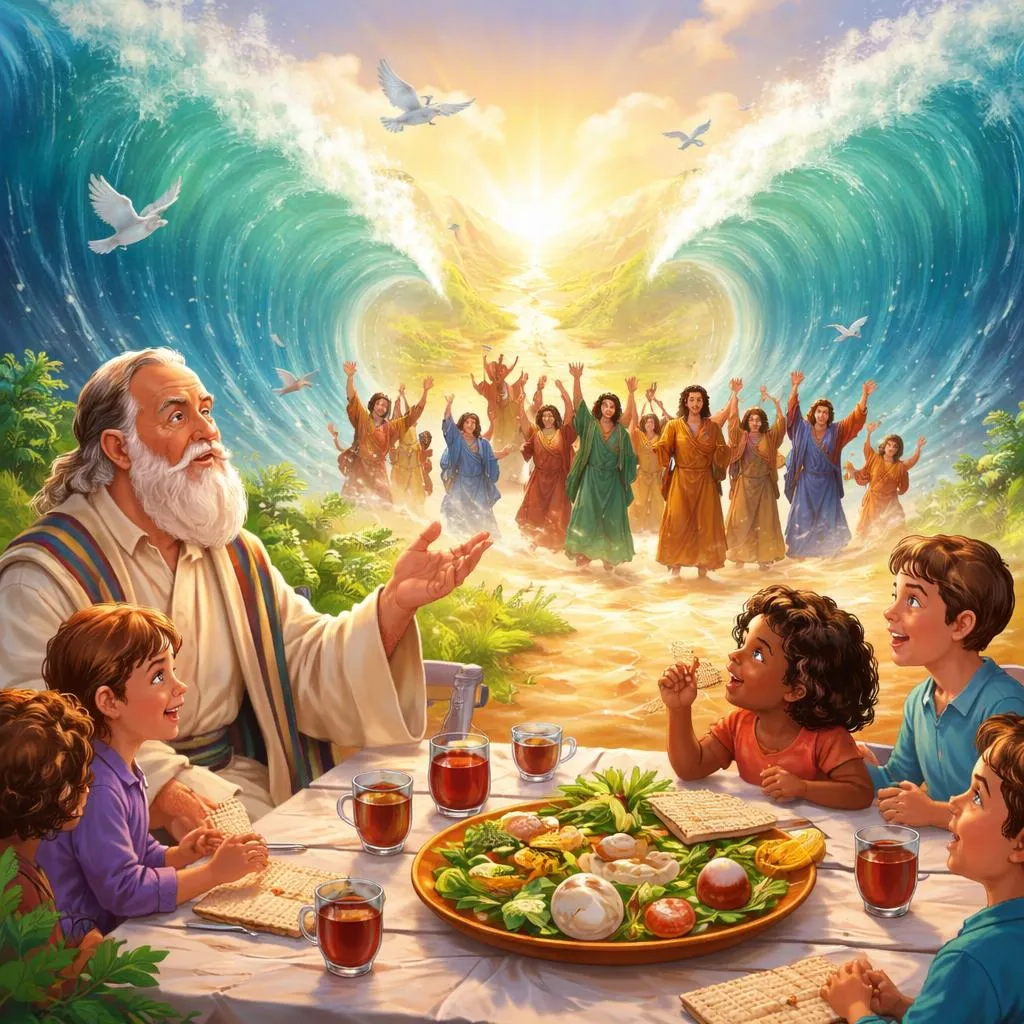

A people leaving slavery. A journey toward freedom. Traditions that remember this journey every year. The story of Passover carries themes that resonate across generations. A children's story of Passover brings this ancient narrative to young listeners in accessible form. It teaches about freedom, courage, and memory. This article explores methods for using this meaningful story in teaching.
What Defines the Passover Story for Children?
A children's story of Passover retells the Exodus narrative for young audiences. The story follows the Israelites' journey from slavery in Egypt to freedom. Moses appears as a leader. Pharaoh refuses to let the people go. Plagues come to Egypt. Finally, the people escape through parted waters.
Child-friendly versions simplify complex elements. They focus on the main narrative arc. They emphasize themes of freedom and hope. They explain Passover traditions that connect to the story. Matzah, the quick bread baked without time to rise. The Seder meal where families retell the story each year.
The best Passover stories for children balance historical events with age-appropriate telling. They convey the importance of the story without overwhelming young listeners. They show why this ancient tale still matters today.
Vocabulary Learning Through the Passover Story
The Passover story introduces rich vocabulary about ancient life and Jewish traditions. Historical words appear naturally. Pharaoh, Egypt, slavery, and freedom gain meaning through story context. These words build understanding of the biblical world.
Passover tradition vocabulary emerges through the narrative. Seder, matzah, Haggadah, and afikoman connect to how families celebrate today. Each word links story events to modern practice.
Plague vocabulary appears in the narrative. Frogs, locusts, darkness, and other plagues become part of the story. These words help learners understand the challenges faced.
Children's story of Passover also introduces words for emotions. Afraid, hopeful, grateful, and joyful describe how characters feel. These adjectives help learners connect emotionally to the narrative.
Simple Phonics Points in the Passover Story
The Passover story offers useful phonics material. Hebrew words used in English contexts provide varied sound practice. Matzah features short a and tz sound. Seder has long e and er. Haggadah offers h sound and repeated a. These words build phonological flexibility.
Names provide sound practice. Moses has long o and z sound. Pharaoh offers f and long o. Egypt begins with long e and ends with pt. Each name offers phonetic learning.
Action words carry the narrative. Leave, follow, escape, and celebrate each provide distinct sound patterns. Repeated use in meaningful context reinforces sound-symbol connections.
Exploring Grammar Through the Passover Narrative
The Passover story provides clear grammar models. Past tense dominates narration. "The Israelites lived in Egypt. They worked very hard. Moses told Pharaoh to let them go." This consistent past tense builds familiarity with narrative forms.
Commands appear in divine instructions. "Let my people go." "Eat matzah on this night." "Tell your children this story." These imperatives show the simplest sentence form in meaningful context.
Questions appear in the story and especially in the Seder. "Why is this night different from all other nights?" This famous question models inquiry forms central to Passover tradition.
Learning Activities with the Passover Story
Active engagement with the Passover narrative deepens learning. These activities bring the ancient story into active language use.
Seder Plate Exploration After reading the Passover story, introduce the Seder plate. Each item represents part of the story. Bitter herbs for slavery's bitterness. Charoset for mortar used in building. Greens for spring and hope. Learners label plate items and explain their meaning. This builds vocabulary and story connection.
Matzah Making Experience Read about matzah as the bread baked in haste. If possible, make simple matzah or crackers. Discuss why there is no time to rise. This connects story to sensory experience and builds procedural language.
Passover Word Collection Create a class collection of Passover words from the story. Group by category. People: Moses, Pharaoh, Israelites. Objects: matzah, Seder plate, sea. Concepts: freedom, slavery, promise. This builds organized vocabulary.
Freedom Discussion Discuss the theme of freedom in the story. What does freedom mean? Why was it important? What freedoms do we have today? This builds critical thinking and abstract vocabulary.
Educational Games with the Passover Story
Games add playful interaction with the Passover narrative. These activities work well for groups or individuals.
Passover Bingo Create bingo cards with Passover story elements. Moses. Pharaoh. Matzah. Sea. Seder. Plague. As you describe story moments or call words, learners cover matching squares. This builds listening comprehension and holiday vocabulary.
Story Sequence Cards Write key events from the Passover story on separate cards. Slavery in Egypt. Moses speaks to Pharaoh. Plagues come. People leave. Sea parts. Freedom. Learners arrange in correct order. This builds comprehension of narrative structure.
Passover Matching Game Create pairs of cards with Passover symbols on some and meanings on others. Matzah matches "bread baked in haste." Bitter herbs matches "slavery was bitter." Sea matches "place of miracle." Learners match symbols to meanings. This builds understanding of symbolism.
Printable Materials for Passover Story Learning
Tangible resources support extended exploration of Passover themes. These materials work well for independent practice.
Passover Word Cards Create cards with Passover vocabulary on one side and simple definitions or pictures on the other. Moses, matzah, Seder, plagues, freedom. Use these for matching games or quick reviews.
My Passover Story Page Provide a template for writing or drawing about the Passover story. Prompts guide response. "The most amazing part was..." "The people felt..." "I wondered about..." This builds comprehension and personal connection.
Seder Plate Diagram Provide a simple Seder plate diagram with empty circles. Learners label each item and write one sentence about its meaning. This builds vocabulary and understanding of tradition.
Passover Story Map Template Create a simple map template for plotting the Passover story. Beginning in Egypt, problem, journey, miracle, freedom. Learners fill in information. This builds comprehension of narrative structure.
The lasting value of a children's story of Passover lies in its connection to living tradition. Families still tell this story every year. Children around tables still ask the four questions. The story lives not just in books but in homes and hearts. Learners encountering this narrative gain more than vocabulary. They gain understanding of how stories create community and preserve memory across generations. Each Passover story read together builds language skills while connecting to traditions that have lasted thousands of years. The classroom becomes a place where ancient stories still speak to young ears.