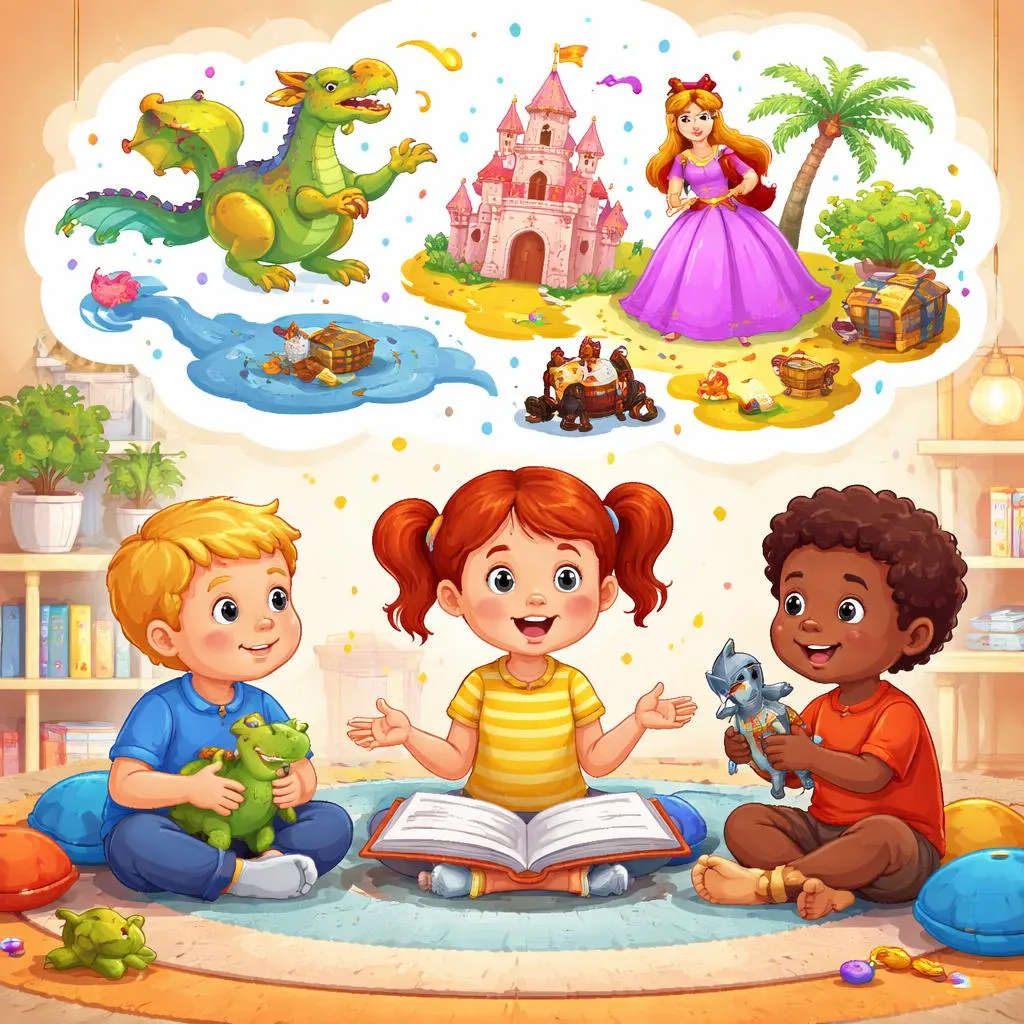

What Is Story Retelling? Let us explore this powerful learning strategy together. Story retelling is when children recount a story they have heard or read. They tell the story in their own words without looking at the book. Retelling includes the main characters, setting, and important events. Children sequence events in the correct order as they retell. They recall details that support the main story elements. The retelling shows what children understood from the original story. It reveals gaps in comprehension that need attention. Retelling can be done orally or through writing and drawing. It is a natural way for children to process stories. This strategy works for children of all ages and abilities.
Meaning and Purpose of Story Retelling Story retelling serves multiple essential purposes in comprehension development. It requires children to process and organize story information. This deepens understanding beyond passive listening or reading. Retelling also helps children identify main ideas versus details. They learn to distinguish what matters most in a story. The process builds memory and sequencing skills naturally. Children must remember the order of events to retell correctly. Retelling also develops oral language and vocabulary. Children use story language in their own speaking. The practice builds confidence in expressing ideas clearly. Teachers can assess comprehension through children's retellings. This informal assessment guides further instruction.
Benefits of Story Retelling We can identify several key benefits of story retelling for children. Comprehension deepens as children process and organize information. Understanding moves from surface to deeper levels. Memory strengthens through the act of recall and sequencing. Children remember stories better after retelling them. Vocabulary grows as children use words from the story. New words become part of their active vocabulary. Sequencing skills develop through ordering events correctly. Understanding beginning, middle, and end improves. Oral language skills improve through expressive practice. Children learn to speak clearly and organize thoughts. Confidence builds as children successfully retell stories. Success motivates further reading and retelling efforts.
Story Retelling in Daily Life Story retelling connects naturally to children's everyday experiences. Children naturally retell events from their day. "Guess what happened at school today!" They recount movies or shows they have watched. "And then, and then, and then..." They share stories with friends and family members. Retelling is a natural human activity. The classroom strategy builds on this natural tendency. Children already have experience retelling in daily life. They just need guidance to retell stories effectively. The connection makes the strategy feel familiar and comfortable. Children understand the purpose of retelling intuitively. They know what it means to tell someone what happened.
Vocabulary Learning Through Story Retelling Retelling builds vocabulary in powerful, active ways. Children encounter new words in the original story. During retelling, they must use those words themselves. Passive vocabulary becomes active through use. Story-specific words become part of children's language. Words like "enormous" from a giant story stick. Descriptive words get practiced during character descriptions. Children learn to use adjectives and adverbs effectively. Dialogue words like "whispered" or "shouted" become useful. Children incorporate them into their retelling language. The repeated use of new words builds mastery. Retelling turns new vocabulary into owned vocabulary.
Grammar Patterns in Story Retelling Retelling reinforces correct grammar naturally. Children must use past tense to tell what happened. "The wolf went to the house of straw." They use sequence words to order events. "First, then, next, after that, finally." Dialogue requires correct quotation patterns. "The pig said, 'Not by the hair of my chinny chin chin.'" Descriptive language uses adjectives and prepositional phrases. "The big, bad wolf huffed and puffed." Children internalize these patterns through practice. The original story provides a correct grammar model. Retelling lets children practice using those patterns. Grammar becomes natural through meaningful use.
Learning Activities for Story Retelling Many activities support story retelling skill development. Use picture cards to help children sequence events. Arrange cards in order before retelling. Create story props like puppets or felt board pieces. Children use them while retelling. Draw a story map showing characters and settings. Use it as a guide during retelling. Practice retelling to different audiences. Tell the story to a friend, a stuffed animal, or family. Record children retelling stories and play it back. They can hear themselves and notice what to improve. Retell stories in different ways. Tell it from another character's point of view.
Printable Materials for Story Retelling Printable resources support effective story retelling practice. Create retelling cards with story elements prompts. Characters, setting, beginning, middle, end, problem, solution. Design story sequence strips for cutting and ordering. Children arrange events in correct sequence. Make story maps with spaces for each story part. Children draw or write in each section. Create character cards for each person in the story. Use them to prompt retelling of each character's role. Design a simple retelling rubric for self-assessment. Did I include all the important parts? Make retelling certificates to celebrate successful retelling. Children feel proud of their accomplishment.
Educational Games for Story Retelling Games make retelling practice playful and engaging. Play "Story Relay" where one person starts retelling. Next person continues, and so on around the circle. Create "Retelling Bingo" with story elements on cards. Mark elements as they appear in retelling. Play "Story Detective" where listeners find missing parts. What did the reteller leave out? Design "Story Cube" with pictures on each side. Roll and include that element in retelling. Play "Pass the Story" where each person adds one sentence. Build a collaborative retelling together. Create "Retelling Race" where partners race to retell accurately. Time each retelling and celebrate improvement.
Teaching Comprehension Through Retelling Retelling reveals what children understand about stories. Teachers can listen for key elements in retellings. Are all main characters included? Is the setting described correctly? Are events in the right order? Is the problem and solution stated clearly? These observations guide teaching decisions. Children who struggle with certain elements need more practice. Teachers can model retelling with think-alouds. "First I think about the characters. Who was in this story?" This shows children the thinking process behind retelling. Gradually, children internalize this process themselves. Comprehension monitoring becomes automatic over time.
The Connection Between Retelling and Writing Retelling skills transfer directly to writing development. Writers must organize ideas in logical sequence. Retelling practice builds this organizational ability. Writers must include important details, not everything. Retelling teaches selection of key information. Writers must consider their audience. Retelling to others builds audience awareness. Writers develop voice through practice. Retelling lets children experiment with expressive language. The connection between oral and written language is strong. Children who retell well often write well. Both skills draw from the same comprehension foundation.
Building Confidence Through Successful Retelling Successful retelling builds reading confidence in children. They realize they understood and remember the story. This motivates them to read and retell more. Confidence grows with each successful experience. Children who feel capable read more willingly. They participate more in classroom discussions. They take risks with more challenging texts. Retelling provides regular opportunities for success. Every child can retell at their own level. The strategy meets children where they are. It builds confidence without pressure or competition.
Why Retelling Works for All Learners Story retelling benefits all types of learners effectively. Visual learners benefit from story maps and picture cards. Auditory learners learn through hearing retellings and practicing aloud. Kinesthetic learners engage through puppets and props. English language learners practice language in safe context. Struggling readers succeed with familiar, supported texts. Advanced readers deepen comprehension of complex stories. Retelling can be adapted for any age or level. It works with pictures for non-readers. It works with chapter books for older children. The strategy's flexibility makes it universally useful. Every classroom should include regular retelling practice.