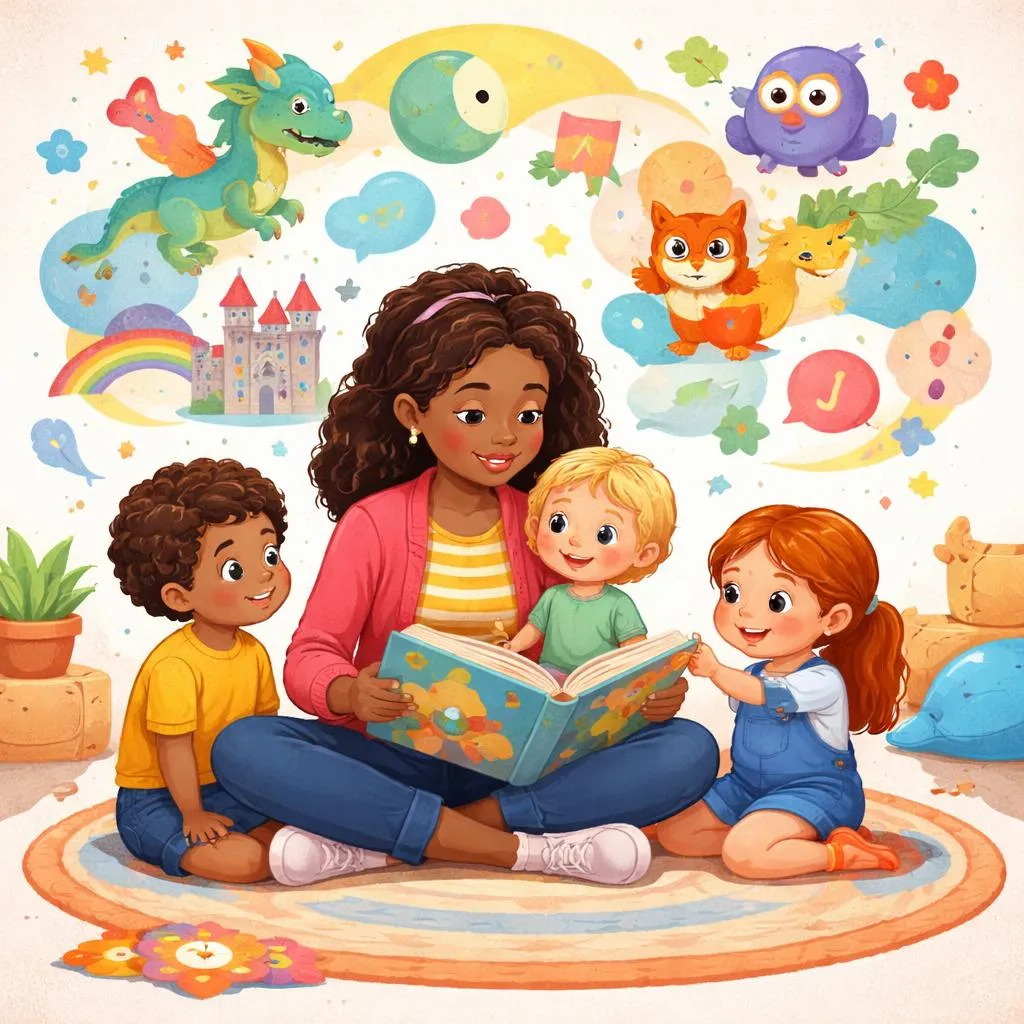

Pictures and words together create magic for young learners. The images carry meaning. The words provide labels. Together they build understanding. A children's picture story combines these elements perfectly. Illustrations show what words describe. Children see the story while hearing it. They connect visual images to verbal language. This connection supports vocabulary acquisition powerfully. The best picture stories use clear images that support text. They create opportunities for prediction and discussion. They engage children who cannot yet read. Let us explore how these books serve language development in early childhood.
What Is a Children's Picture Story?
This is a book where illustrations carry as much weight as text. Pictures tell part of the story. Sometimes they tell more than words alone. The images show characters, settings, and actions. They provide context for unfamiliar words. They create opportunities for observation and discussion. Picture stories range from wordless books to those with rich text. Some have one sentence per page. Others have paragraphs. The key feature is the partnership between image and word. Neither stands alone. Together they create the complete story experience.
Categories of Children's Picture Stories
Understanding different types helps in selecting appropriate materials for specific learning goals.
Wordless Picture Stories: These have no text at all. Pictures alone tell the story. Children create their own narration. They describe what they see. They invent dialogue. These build oral language powerfully. They work for any language level.
Simple Text Picture Stories: One or two sentences per page. Text describes the main action. Pictures provide details. These support beginning readers. They build confidence through manageable text.
Rich Text Picture Stories: More complex language with detailed illustrations. Pictures help decode unfamiliar words. These challenge more advanced learners. They build vocabulary through context.
Interactive Picture Stories: Books with flaps, textures, or prompts. Children lift flaps to discover hidden elements. They feel different textures. They respond to questions. These engage multiple senses in learning.
Concept Picture Stories: Books designed to teach specific ideas. Colors, numbers, opposites, or ABCs within a story framework. The narrative carries the learning. Children absorb concepts naturally.
Vocabulary Learning from Picture Stories
Picture stories introduce vocabulary with unparalleled visual support.
Concrete Nouns: Pictures show objects clearly. Children see the image while hearing the word. The connection is direct and memorable. Dog, house, tree, car all become clear through illustration.
Action Verbs: Pictures show actions. Running, jumping, eating, sleeping appear in context. Children see the action while learning the word. This supports understanding of verbs particularly well.
Descriptive Words: Illustrations show color, size, and emotion. Red balloon. Big elephant. Happy child. The picture provides meaning instantly. Children learn adjectives through visual examples.
Prepositions: Pictures show location clearly. In the box. Under the table. On the chair. Children see the relationship while learning the word. This makes prepositions concrete rather than abstract.
Story Vocabulary: Words specific to the narrative appear with visual support. Castle, dragon, spaceship, treasure all become understandable through illustration. Children learn words they might not encounter daily.
Phonics Points in Picture Stories
Picture stories support phonics instruction through visual cues.
Initial Sound Connection: Pictures show objects that start with target sounds. A page about "bear" reinforces the /b/ sound. Children see the bear while hearing and saying the sound.
Rhyming Support: Pictures clarify rhyming words. Cat and hat appear together in illustration. Children see both objects while learning they sound alike at the end.
Word Families: Picture books often group related words. A farm scene shows pig, cow, horse, sheep. Children learn words in semantic groups, supporting pattern recognition.
Letter Recognition: Alphabet picture books connect letters to words and pictures. A is for apple with an apple illustration. The connection is clear and memorable.
Sound Discrimination: Similar sounding words become clear through pictures. Ship and sheep look different. Children learn to distinguish through visual cues.
Grammar Patterns in Picture Stories
Picture stories model grammar structures with visual reinforcement.
Present Tense Action: Pictures show ongoing action. "The boy runs." Children see the running boy. The connection between verb form and meaning is immediate.
Past Tense Narrative: Pictures show completed actions. "The girl jumped." Children see her in the air or landing. They understand the action happened.
Prepositional Phrases: Pictures show location relationships perfectly. "The cat is under the chair." Children see exactly what "under" means.
Question Forms: Some picture stories ask questions directly. "Where is the mouse?" Children search the picture. They learn question meaning through active engagement.
Dialogue Bubbles: Many picture stories use speech bubbles. Children see who is speaking and what they say. This supports understanding of conversational language.
Learning Activities for Picture Stories
Active engagement helps children internalize vocabulary and themes through hands-on learning.
Picture Walk: Before reading, look at all pictures. Predict what happens in the story. Use prediction language. "I think the bear will find honey." "Maybe the girl will get lost." This builds prediction and oral language.
Story Retelling with Pictures: After reading, use pictures to retell. Children describe what happens on each page using their own words. This builds narrative skills and comprehension.
Picture Detective: Hide parts of pictures with sticky notes. Reveal gradually. Children guess what is happening or what comes next. This builds observation and prediction.
Create Your Own Ending: Read most of the story. Stop before the end. Show the last picture without text. Children create their own ending based on the illustration. This builds creativity and language.
Match Text to Pictures: Write sentences from the story on cards. Students match each sentence to the correct picture. This builds reading comprehension and text-picture connection.
Learning Activities for Group Settings
Collaborative learning builds language through interaction with picture stories.
Shared Reading: Use a big book or projected version. Read together. Point to pictures as you read. Discuss what you see. Children chime in on repeated phrases. This builds community and comprehension.
Picture Discussion Circle: Display one illustration. Ask open-ended questions. "What do you see?" "What is happening?" "How does the character feel?" Children share observations using descriptive language.
Story Sequencing with Pictures: Provide copies of pictures from the story out of order. Groups arrange them correctly and retell the story. This builds narrative skills and teamwork.
Illustrator Study: Look at how pictures tell the story. What do we learn from pictures that words don't say? Discuss visual literacy. This builds observation and analytical skills.
Educational Games for Picture Stories
Games make learning playful and memorable.
Picture Bingo: Create bingo cards with images from the story. Call out words or descriptions. Students cover matching pictures. First to cover a row wins.
Memory Match with Story Pictures: Create pairs of cards with story pictures. Place face down. Students flip two looking for matches. Name pictures when flipping. Describe what's happening.
What's Missing Game: Display several pictures from the story. Remove one while children close eyes. They identify which picture is missing. Describe what it shows.
Picture Charades: One student acts out a scene from the story without speaking. Others guess which scene it is. This builds comprehension and physical expression.
Printable Materials for Picture Stories
Ready-to-use printables extend learning beyond story time.
Story Picture Cards: Create cards of key illustrations from the story. Use for sequencing, matching, or retelling activities. This builds narrative skills.
Vocabulary Flashcards: Create cards with pictures from the story on one side and words on the other. Use for vocabulary building and review.
Story Map Worksheet: Create a simple graphic organizer with spaces for characters, setting, problem, and solution. Students draw or write based on the picture story.
Coloring Pages: Print outline versions of story illustrations. Students color while discussing the story with partners. This provides quiet reinforcement.
Draw Your Own Page: Provide blank paper. Students draw a new page for the story. Write or dictate a sentence to go with it. This builds creativity and written expression.
Daily Life Connections to Picture Stories
Linking picture stories to daily experiences makes learning relevant.
Observation Practice: Like looking at picture books, encourage observation of real life. "What do you see on our walk?" "Look at that building. What do you notice?" This builds observation and descriptive language.
Story Creation: Create class picture stories about daily experiences. A field trip becomes a picture story. A class project becomes a narrative. Photographs or drawings plus simple text.
Picture Description: Display interesting photographs. Children describe what they see using complete sentences. This builds oral language and observation.
Emotion Recognition: Look at faces in pictures and in real life. "How does she feel?" "How can you tell?" This builds emotional vocabulary and empathy.
Printable Flashcards from Picture Stories
Effective flashcards support multiple learning styles.
Picture-Word Cards: Front shows image from story. Back shows corresponding word. Use for vocabulary building, matching games, and quick review.
Character Cards: Create cards showing each character. Students describe the character using words from the story. This builds descriptive language.
Setting Cards: Create cards showing different settings from the story. Students describe each setting. Compare settings using comparative language.
Action Cards: Create cards showing actions from the story. Students act out actions while others guess. This builds verb vocabulary through movement.
Phonics Practice from Picture Stories
Use picture story vocabulary for targeted phonics instruction.
Initial Sound Sort: Provide picture cards from the story. Sort by beginning sound. This builds phonemic awareness with familiar images.
Rhyming Word Hunt: Find rhyming words in the story text. Generate other words in the same family. Use pictures to support understanding.
Syllable Clapping: Clap syllables in character names and key vocabulary from the story. This builds phonological awareness.
Letter Hunt: Find specific letters on story pages. Count how many times a letter appears. This builds letter recognition.
Grammar Patterns Practice
Use picture story sentences to practice specific grammar structures.
Sentence Pattern Practice: Identify sentence patterns in the story. "I see a [noun]." Students create new sentences following the pattern using pictures from the story or classroom.
Question and Answer: Practice questions and answers based on pictures. "What is the bear doing?" "He is eating honey." Students practice with partners using story pictures.
Preposition Practice: Use pictures to practice prepositions. "Where is the mouse?" Point to picture showing under, in, on, behind. Students answer using complete sentences.
Descriptive Language: Use pictures to practice adjectives. "Describe the elephant." Students use words from the story and their own vocabulary. Big, gray, friendly, gentle.
The Picture-Word Connection
A children's picture story offers the perfect entry point for language learning. Pictures reduce anxiety. They provide meaning when words are unknown. They support comprehension at every level. Children can understand stories before they can read words. This success builds confidence. It proves that English stories are accessible. The pictures also invite participation. Children point and name. They describe what they see. They predict what comes next. This active engagement accelerates learning. For educators, picture stories are essential tools. They work for whole class instruction. They work for small groups. They work for individual reading. They bridge home and school. They connect to every subject. The combination of image and text creates optimal conditions for language acquisition.