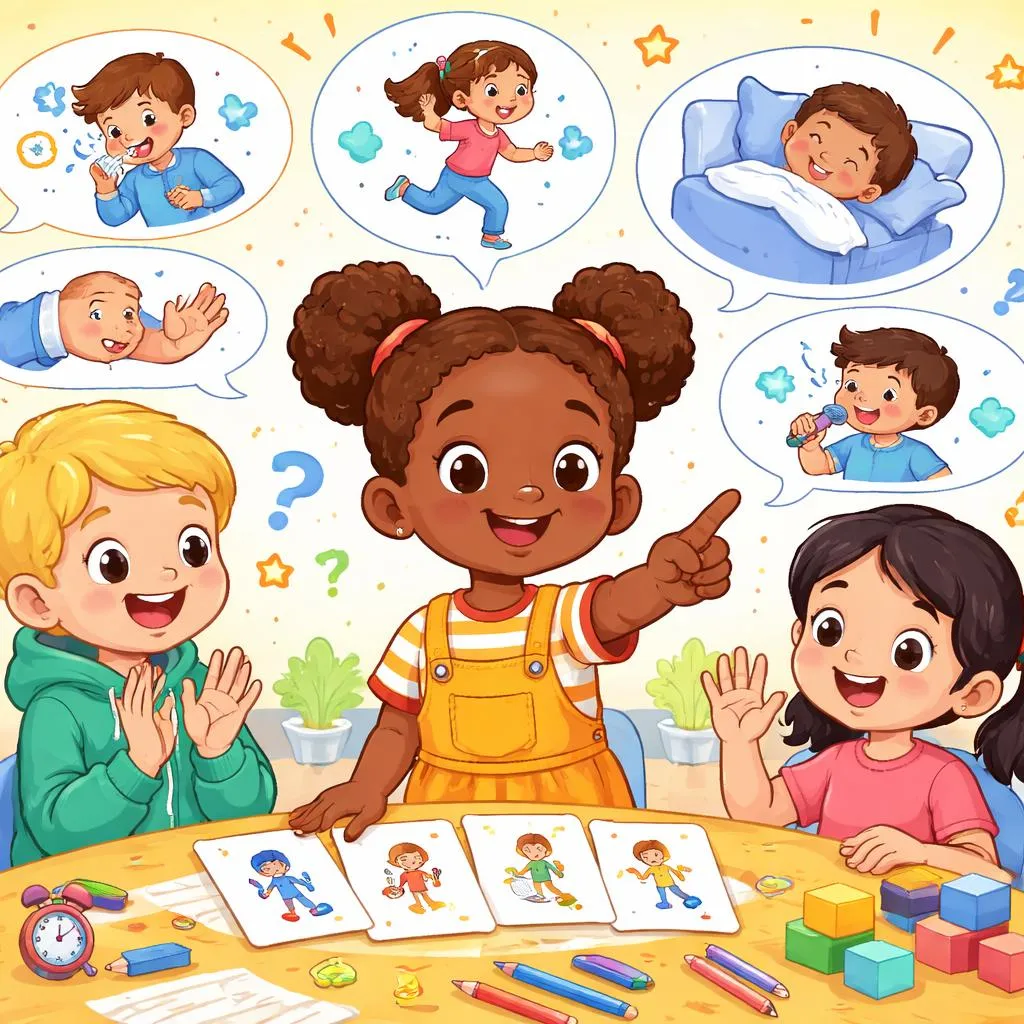

The verb "do" appears everywhere in English. Children hear it constantly. "Do you want a snack?" "What did you do?" "I do my homework." This small verb has big jobs. It helps form questions. It makes negatives. It replaces other verbs. It shows action. Teaching the verb to do gives children tools they need every day. They learn to ask about the world. They learn to talk about what they do. Let us explore how to guide young learners through this essential grammar point.
Meaning of the Verb to Do The verb "do" has several important meanings in English. Understanding these meanings helps children use it correctly.
Main verb meaning action: I do my homework every day. She does the dishes after dinner. We did a fun project yesterday.
In these sentences, "do" shows an action. It means to perform or complete something.
Auxiliary verb for questions: Do you like ice cream? Does he play soccer? Did they go to the park?
Here, "do" helps form questions. It does not have its own meaning. It supports the main verb.
Auxiliary verb for negatives: I do not want milk. She does not have a pencil. They did not see the movie.
In negatives, "do" works with "not" to make the sentence negative.
Substitute verb: I run faster than you do. She sings better than he does. They played longer than we did.
Here, "do" replaces another verb to avoid repetition. It means the same as the earlier verb.
For young learners, start with the most common uses. Questions and negatives with "do" appear constantly. Children need these patterns every day.
Conjugation of the Verb to Do The verb "do" is irregular. It changes form for different subjects and tenses. Children need to learn these patterns.
Present tense forms: I do You do He does She does It does We do They do
Past tense forms: I did You did He did She did It did We did They did
Future tense forms: I will do You will do He will do She will do It will do We will do They will do
Negative present: I do not (don't) You do not (don't) He does not (doesn't) She does not (doesn't) It does not (doesn't) We do not (don't) They do not (don't)
Negative past: I did not (didn't) You did not (didn't) He did not (didn't) She did not (didn't) It did not (didn't) We did not (didn't) They did not (didn't)
Question forms: Do I? Do you? Does he? Does she? Does it? Do we? Do they?
Past questions: Did I? Did you? Did he? Did she? Did it? Did we? Did they?
For beginners, focus on present tense forms. Add past tense gradually. The contractions are very common in speech and should be taught early.
Present Tense of the Verb to Do The present tense of "do" has two forms: do and does. Does is used with he, she, and it.
Positive statements with do as main verb: I do my chores every Saturday. You do a good job cleaning up. We do art projects on Fridays. They do homework after school. He does his work carefully. She does the dishes every night. It does the job well. (referring to a machine)
Positive statements with do as auxiliary: These sentences have another main verb. "Do" just helps. I do like ice cream. (emphasizes) You do sing nicely. We do want to play outside. They do have a new car. He does read many books. She does speak Spanish. It does work properly.
Negative statements: I do not like spiders. You do not have to go. We do not want to leave. They do not eat meat. He does not play soccer. She does not have a sister. It does not work today.
Contractions in negatives: I don't like spiders. You don't have to go. We don't want to leave. They don't eat meat. He doesn't play soccer. She doesn't have a sister. It doesn't work today.
Practice present tense sentences during daily routines. "Do you have a pencil?" "She does her work quietly." This connects grammar to real classroom life.
Past Tense of the Verb to Do The past tense of "do" is "did" for all subjects. This simplicity makes it easier than present tense.
Positive statements with did as main verb: I did my homework yesterday. You did a great job on your test. He did the laundry this morning. She did the dishes after dinner. It did the trick. (it worked) We did a fun project last week. They did their best in the game.
Positive statements with did as auxiliary: I did see that movie. You did finish your work. He did call his grandmother. She did eat all her vegetables. It did rain yesterday. We did visit the museum. They did arrive on time.
Negative statements: I did not see the cat. You did not finish your lunch. He did not hear the bell. She did not like the soup. It did not work properly. We did not go to the park. They did not bring their books.
Contractions in past negative: I didn't see the cat. You didn't finish your lunch. He didn't hear the bell. She didn't like the soup. It didn't work properly. We didn't go to the park. They didn't bring their books.
Use clear time markers with past tense. Yesterday, last week, this morning, already. These words signal that the time is past.
Future Tense with the Verb to Do The future tense uses "will do" for all subjects.
Future positive statements: I will do my homework later. You will do well on the test. He will do the dishes after dinner. She will do a presentation tomorrow. It will do the job automatically. We will do our best in the game. They will do the work together.
Future negative statements: I will not do that again. You will not do it correctly. He will not do what you ask. She will not do anything dangerous. It will not do any harm. We will not do anything wrong. They will not do the project.
Contractions in future: I'll do it tomorrow. You'll do fine. He'll do his share. She'll do the cooking. It'll do the work. We'll do our best. They'll do what they can. I won't do that. (will not) She won't do it. (will not)
Future time markers include tomorrow, later, next week, soon. These words help children understand when the action happens.
Questions with the Verb to Do Forming questions with "do" follows clear patterns. This is one of its most important uses.
Present tense yes/no questions: Do I have to go? Do you like pizza? Does he play soccer? Does she read books? Does it work? Do we have time? Do they want to play?
Past tense yes/no questions: Did I do something wrong? Did you see the movie? Did he finish his work? Did she call her mom? Did it rain yesterday? Did we bring enough? Did they enjoy the party?
Information questions with do: What do you want? Where does she live? When do we eat lunch? Why do they laugh? How does it work? What did you see? Where did he go? When did she arrive? Why did they leave? How did you do that?
Short answers: Yes, I do. No, I don't. Yes, he does. No, she doesn't. Yes, we did. No, they didn't.
Practice question patterns during daily routines. Ask about preferences, activities, and experiences. This builds conversation skills naturally.
Other Uses of the Verb to Do "Do" has other important uses beyond questions and negatives. Children will encounter these as they progress.
Emphatic do: I do like ice cream! (strong feeling) You do sing beautifully! She does work hard. We did have fun!
This use adds emphasis. It shows strong feeling or corrects a wrong idea.
Do for commands: Do sit down. Do be careful. Do your homework! Do the dishes!
Commands with "do" sound more polite or emphatic. They are common in classroom language.
Do as a substitute verb: I run faster than you do. She sings better than he does. They played longer than we did. Can you help? I already did.
This replaces the main verb to avoid repetition. It is very common in conversation.
Do for hobbies and activities: What do you do for fun? I do yoga on Tuesdays. She does gymnastics. We do puzzles together.
This use pairs with activities and hobbies. It is different from "make," which creates something.
Do in fixed expressions: Do your best Do the right thing Do someone a favor Do business Do damage Do good
These expressions are common. Children learn them as chunks.
Learning Tips for Teaching the Verb to Do Teaching the verb "do" requires clear strategies. Here are tips for introducing it effectively.
Start with questions: Questions are the most common use of "do." Children hear "Do you want...?" constantly. Begin with this pattern. Practice asking and answering.
Teach do and does separately: Focus on "do" with I, you, we, they for several days. Then introduce "does" with he, she, it. Mastery comes from focused practice.
Use gestures: Point to yourself for "I." Point to a child for "you." Use hand motions to show the difference between subjects. Gestures reinforce grammar visually.
Contrast with other verbs: Show how "do" helps make questions and negatives. "You like pizza" becomes "Do you like pizza?" This contrast makes the pattern clear.
Use songs and chants: Create simple chants. "Do I, do you, does he, does she. Do we, do they, that's the key!" Rhythm helps memory.
Practice with real questions: Ask children real questions throughout the day. "Do you need a pencil?" "Does she have a book?" "Did you finish?" This makes grammar meaningful.
Correct gently: When children make errors, model the correct form. If a child asks "He like pizza?" respond "Does he like pizza? Yes, he does." Gentle modeling works better than explicit correction.
Educational Games for Practice Games make grammar practice joyful. Here are games for practicing the verb to do.
Do You Like Bingo: Create bingo cards with pictures of different items. Children ask classmates "Do you like...?" and mark squares when someone says yes. First to fill a row wins.
Question Chain: Start a chain of questions. First child asks "Do you like pizza?" Second child answers and asks next child a new question. "Yes, I do. Do you like cats?" Continue around the circle.
What Did You Do Yesterday: Children take turns saying one thing they did yesterday. "I played outside." "I watched TV." "I did my homework." This practices past tense naturally.
Find Someone Who: Give children a list of activities. "Find someone who does chores." "Find someone who did a puzzle." Children ask classmates questions to complete their lists.
Mystery Action: One child acts out an activity without speaking. Others ask yes/no questions using "do" or "did." "Do you do this at home?" "Did you do this yesterday?" The first to guess correctly wins.
Sentence Scramble: Write sentences with "do" on sentence strips. Cut them into words. Children arrange the words in correct order. "Do you like ice cream?" This builds sentence structure.
Spin and Answer: Create a spinner with questions using "do." "Do you like spiders?" "Does your mom read books?" "Did you see a movie?" Children spin and answer the question.
Common Challenges with the Verb to Do Young learners often struggle with certain aspects of "do." Knowing these challenges helps teachers provide support.
Forgetting to change for he/she/it: Children may say "He do" instead of "he does." Explain that he, she, and it need "does." Practice with many examples.
Using do in questions with to be: Children may say "Do you are happy?" Explain that "be" verbs don't use "do" in questions. "Are you happy?" is correct.
Overusing do: Some children add "do" to every question. "Do you can swim?" Explain that "can" is a modal verb and doesn't need "do." "Can you swim?" is correct.
Confusing do and make: Both translate to one word in many languages. Explain that "do" is for actions and activities. "Make" is for creating something.
Forgetting did for past: Children may use present tense for past questions. "Do you go yesterday?" Remind them that past needs "did." "Did you go yesterday?"
Using do after did: Children may say "Did you went?" Explain that after "did," the main verb goes back to base form. "Did you go?"
Address these challenges with patience. Children learn through exposure and practice, not through error correction alone.
Connecting to Writing Writing activities reinforce the verb to do. Here are writing ideas.
Daily Journal: Each day, children write about what they did. "Today I did..." This builds past tense practice.
Interview Questions: Children write questions to ask a friend. "Do you have a pet?" "Did you go to the park?" They conduct the interview and write answers.
Story Completion: Start a story with sentences using "do." "Every day, I do my chores. Yesterday, I did something special..." Children complete the story.
Class Survey: Create a class survey about preferences. "Do you like pizza?" Children ask classmates and record answers. Graph the results.
Thank You Notes: Write simple thank you notes. "Thank you for the book. I did enjoy reading it." This connects to real communication.
The verb to do is a workhorse of English. It forms questions. It makes negatives. It replaces other verbs. It shows action. Teaching this verb well gives children tools they use every day. They ask about the world. They talk about activities. They express what they did and what they will do. With songs, games, and daily practice, "do" becomes natural. Children use it without thinking. And that is real communication.