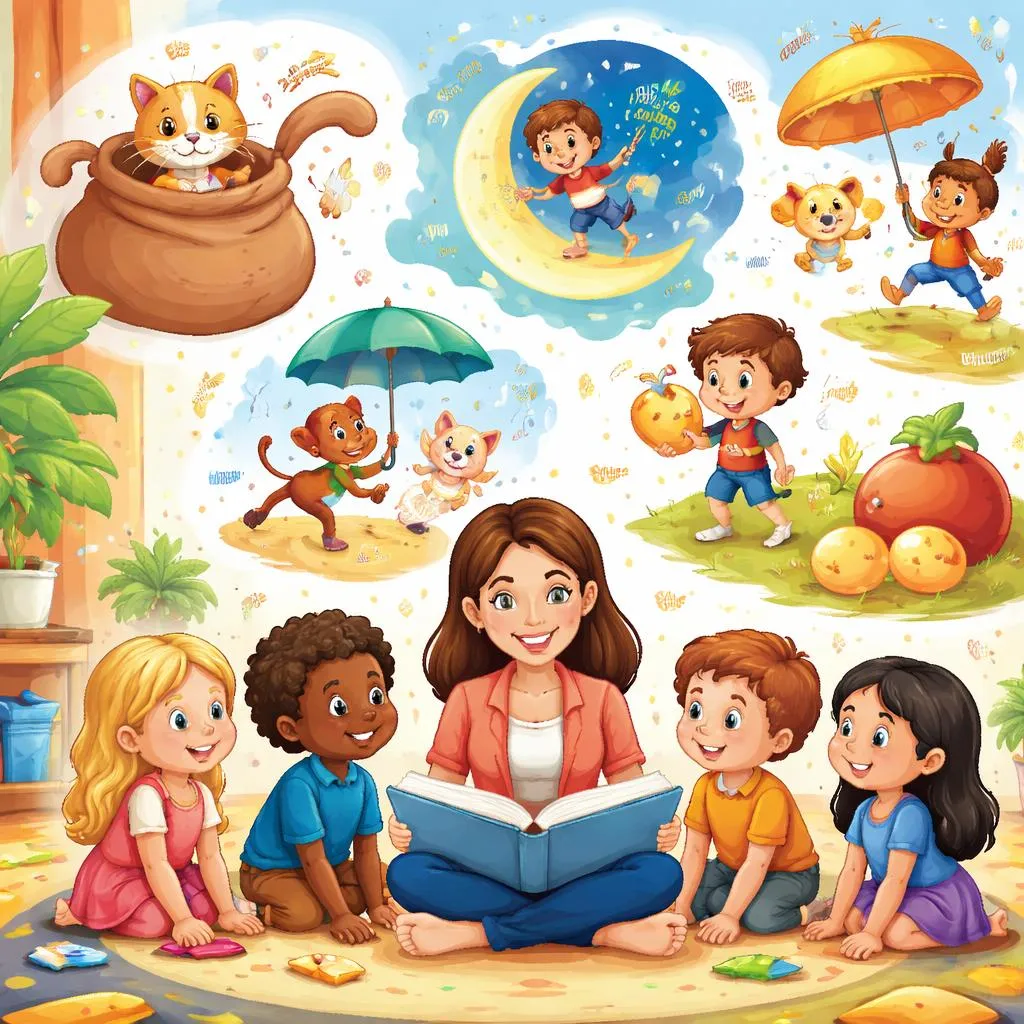

Idioms are everywhere in English. People say "it's raining cats and dogs" when water falls from the sky. They tell someone to "break a leg" before a performance. They advise not to "cry over spilled milk." For children learning English, these phrases cause confusion. The words make sense individually. Together, they mean something completely different. Children's stories with idioms solve this problem beautifully. They place idioms in context where meaning becomes clear. They show characters using these phrases naturally. This article explores how teachers can use these special stories to unlock the colorful world of figurative language.
What Are Children's Stories With Idioms? Children's stories with idioms are narratives that intentionally include common figurative expressions. The idioms appear naturally in the text, spoken by characters or woven into the narration. The surrounding story provides context clues to meaning. Sometimes the idiom is illustrated literally for humor. A character who is "in a pickle" might actually sit inside a giant pickle jar. This visual joke helps children remember that idioms are not literal. The story format makes idioms memorable. Children encounter them in context rather than on a list. They see how real people use these expressions. They absorb both meaning and usage naturally through the story.
Meaning and Explanation Behind Idiom Stories Idioms present a unique challenge in language learning. The words do not mean what they say. "Hold your horses" has nothing to do with horses. "Spill the beans" does not involve beans. Children who translate word by word end up confused. Stories solve this by providing context.
When a character says "I'm feeling under the weather" and then sneezes and shivers, children understand. The actions explain the words. When someone advises "don't count your chickens before they hatch" and the story shows why, the meaning becomes clear.
Stories also show the social situations where idioms belong. "Break a leg" is for performances, not injuries. "Cost an arm and a leg" is about expensive things, not body parts. The story provides the social context.
The literal illustrations in many idiom storybooks add another layer. Seeing a child actually "crying over spilled milk" while also understanding the figurative meaning creates a double memory hook. Children remember the joke and the meaning together.
Categories or Lists of Common Idioms in Stories Children's stories with idioms often focus on the most common and child-friendly expressions.
Animal Idioms:
Let the cat out of the bag (reveal a secret).
Hold your horses (wait a moment).
When pigs fly (something that will never happen).
Kill two birds with one stone (accomplish two things at once).
The elephant in the room (obvious problem no one mentions).
Food Idioms:
Spill the beans (reveal secret information).
Piece of cake (very easy).
Apple of my eye (favorite person).
Cry over spilled milk (worry about past mistakes).
Not my cup of tea (not something one enjoys).
Body Part Idioms:
Cost an arm and a leg (very expensive).
Keep an eye on (watch carefully).
Pull someone's leg (joke or tease).
Give a hand (help).
Cold feet (nervous before doing something).
Weather Idioms:
Under the weather (feeling sick).
Raining cats and dogs (heavy rain).
Storm in a teacup (big reaction to small problem).
Save for a rainy day (save money for later).
Action Idioms:
Hit the sack (go to bed).
Break a leg (good luck).
Bend over backwards (try very hard).
Face the music (accept consequences).
Daily Life Examples from Idiom Stories Children's stories with idioms connect to everyday language use. After reading, children start noticing idioms around them. Parents use them. Teachers use them. Movies and shows include them. The stories create awareness.
Teachers can point out idioms in daily classroom talk. "I just told you to hold your horses. That is an idiom we read about. Remember what it means?" "When I said this assignment would be a piece of cake, I was using an idiom."
The stories also provide opportunities for idiom humor. A child might say "it's raining cats and dogs" on a rainy day, then laugh at the literal image. This playful use shows deep understanding.
Vocabulary Learning from Idiom Stories Idiom stories introduce both the idioms themselves and related vocabulary.
Idiom Phrases: Each idiom is a multi-word vocabulary item to learn as a chunk.
Literal Meanings: The individual words in idioms also need understanding. Spill, beans, cry, milk, arm, leg. Stories teach both.
Figurative Language Terms: Introduce words like idiom, expression, phrase, figurative, literal, meaning.
Context Clue Words: Words that help decode idioms. Means, like, when, if, then, because.
Teachers can create idiom charts showing the phrase, its literal meaning, and its figurative meaning. Pictures help cement understanding.
Phonics Points in Idiom Stories Idioms provide interesting phonics practice.
Alliteration: Many idioms use alliteration. Peter Piper picked. She sells seashells. This repetition helps pronunciation.
Rhyming Idioms: Some idioms rhyme. Make or break. Wait and see. This makes them memorable.
Syllable Patterns: Idioms have rhythm. Piece of cake has three syllables. Under the weather has five. Practice clapping idiom rhythms.
Compound Words: Some idioms contain compounds. Underdog. Overboard. Uppercut. These show word building.
Teachers can use idioms for pronunciation practice. The familiar phrases build confidence.
Grammar Patterns in Idiom Stories Idioms follow grammar patterns that children can learn.
Imperative Idioms: Many idioms are commands. Hold your horses. Spill the beans. Break a leg. These model imperative sentences.
Comparison Idioms: Some use like or as. As busy as a bee. Like a fish out of water. These teach comparisons.
Possessive Idioms: Apple of my eye uses possessive. Cost an arm and a leg uses articles. These patterns appear.
Verb Tense in Idioms: Idioms can appear in different tenses. He spilled the beans. She is spilling the beans. They will spill the beans. This shows verb conjugation with fixed phrases.
Teachers can point out these patterns gently. The grammar learning happens within meaningful phrases.
Learning Activities for Idiom Stories Activities make idiom learning engaging.
Activity 1: Literal Illustration Give children an idiom. They draw the literal meaning. A cat coming out of a bag. Pigs with wings. Rain with cats and dogs falling. Display these alongside the figurative meanings.
Activity 2: Idiom Match Game Create cards with idioms and separate cards with meanings. Children match each idiom to its definition.
Activity 3: Idiom in Context Provide sentences with blanks. "I was really nervous before the play, but Mom told me to ____________." Children choose correct idiom.
Activity 4: Idiom Charades Children act out idioms literally or figuratively. Others guess which idiom it is.
Activity 5: Idiom Stories Children write short stories that include a given idiom. The story should make the meaning clear through context.
Activity 6: Idiom of the Day Introduce one idiom each day. Post it on the wall. Encourage use throughout the day. Notice when it appears in conversation.
Printable Materials for Idiom Stories Printable resources support idiom learning.
Idiom Flashcards: Cards with idiom on one side, meaning and picture on the other.
Idiom Matching Game: Printable cards for matching idioms to meanings.
Idiom Illustration Pages: Pages with idiom written at top, space below for literal drawing.
Idiom List Poster: Colorful poster showing common idioms with simple explanations.
Idiom Fill-in Sheets: Sentences with blanks for completing with correct idioms.
Idiom Mini-Book: Folded book where each page features one idiom with illustration and meaning.
Educational Games for Idiom Practice Games make idiom review playful.
Game: Idiom Bingo Create bingo cards with idiom meanings in the squares. Call out idioms. Children cover the matching meaning.
Game: Idiom Pictionary Children draw idioms while others guess. The challenge is whether to draw literally or figuratively.
Game: Idiom Memory Match Create pairs of idiom cards and meaning cards. Play memory match to find pairs.
Game: Idiom Bee Similar to spelling bee but with idioms. Give a meaning, child provides the correct idiom.
Game: Idiom Go Fish Create decks with idioms and meanings. Play Go Fish asking for matches.
Connecting Idiom Stories to Other Subjects Idiom stories connect across the curriculum.
Social Studies Connection: Explore idioms from different cultures. Many languages have unique expressions. Compare English idioms to those from children's home languages.
History Connection: Learn where idioms come from. Why "raining cats and dogs"? What is "the whole nine yards"? These stories teach history.
Art Connection: Create idiom art showing literal interpretations. This makes humorous and memorable visuals.
Writing Connection: Encourage idiom use in creative writing. A character who is "feeling under the weather." A problem that is "a piece of cake."
Drama Connection: Act out idiom situations. Show a scene where someone "spills the beans" accidentally. Another where someone "faces the music."
The Color of Language Children's stories with idioms do more than teach phrases. They reveal that language is playful. Words can do more than name things. They can paint pictures. They can create jokes. They can express ideas in colorful ways.
This understanding transforms how children view English. It is not just rules and vocabulary. It is a living, breathing thing full of surprises. The child who learns "it's raining cats and dogs" does not just learn an idiom. They learn that English speakers love word pictures. They learn that language has history and humor.
The best idiom stories leave children listening for these expressions. They start noticing when people say "break a leg" or "hit the sack." They become language detectives, spotting idioms in the wild. This awareness builds vocabulary far beyond the classroom.
In the end, idioms are gifts from the past to the present. They carry culture and history in a few words. Children's stories with idioms unwrap these gifts. They show their meaning. They demonstrate their use. They pass them on to the next generation of English speakers, who will keep the language colorful for years to come.