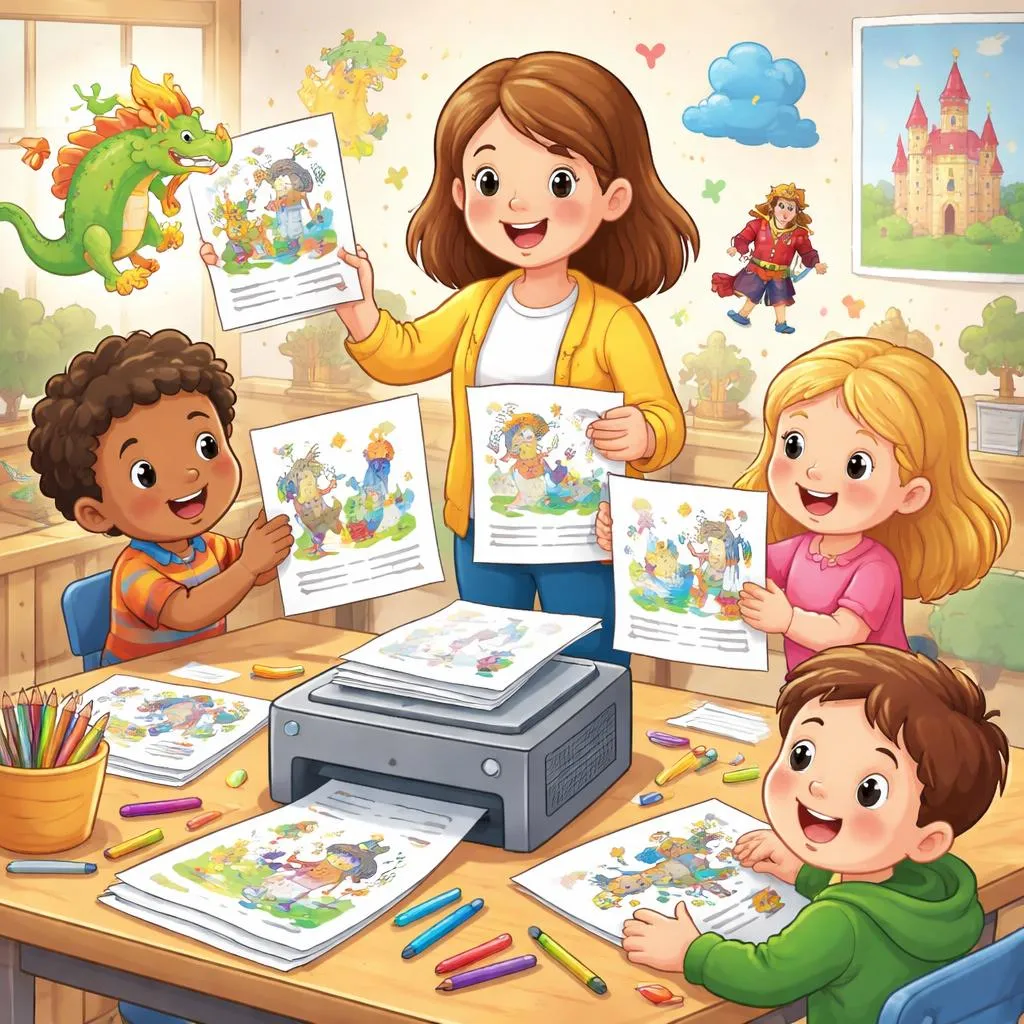

Printed stories hold a special place in early literacy. They do not require screens or batteries. They can be held in small hands. They can be written on, colored in, and taken home. Children's short stories to print offer teachers unlimited flexibility. Need a story for a rainy day activity? Print it. Want each child to have their own copy to follow along? Print them. Looking for something specific for a lesson theme? Find it and print it. This article explores how printable short stories can transform reading instruction and create powerful learning opportunities.
What Are Children's Short Stories to Print? Children's short stories to print are brief narratives available in digital format that teachers can print for classroom use. They come from many sources. Educational websites offer free stories. Teacher resource sites provide themed collections. Authors share stories on their blogs. Curriculum packages include printable readers. These stories are typically one to four pages long. They use simple language appropriate for young readers. Many include pictures that children can color. The printable format means teachers can make exactly as many copies as needed. No more sharing one book among five children. Every child can have their own copy to hold, read, and keep.
Meaning and Explanation Behind Printable Stories Printable stories solve many practical classroom problems. Budgets for classroom books are often limited. A class set of a single title costs money many schools do not have. Printable stories cost nothing or very little. Teachers can build a classroom library one printed story at a time.
Printables also solve the problem of differentiation. One reading level does not fit all children. With printable stories, teachers can print different stories for different reading groups. Advanced readers get more challenging texts. Emerging readers get simpler ones. Every child reads at their own level.
The physical book matters for young readers. Holding a story creates connection. Turning pages builds book-handling skills. Taking a story home to read with family extends learning. Printable stories make all this possible without expensive purchases.
Printable stories also allow for customization. Teachers can add notes. They can highlight vocabulary words. They can create comprehension questions on the back. The story becomes exactly what the teacher needs it to be.
Categories or Lists of Printable Stories Children's short stories to print come in many varieties. Knowing the categories helps teachers find what they need.
Leveled Readers: Stories written specifically for different reading levels.
Level A has one simple sentence per page.
Level B adds slightly more complexity.
Level C includes longer sentences and more words.
Progressively harder levels through upper elementary.
Holiday and Seasonal Stories: Stories tied to specific times of year.
Halloween spooky stories.
Thanksgiving tales of gratitude.
Winter stories about snow and holidays.
Spring stories about new life and Easter.
Summer adventure stories.
Themed Story Collections: Stories grouped by topic for unit studies.
Animal stories for science connections.
Friendship stories for social learning.
Family stories for personal connections.
Fantasy stories for imagination.
Phonics-Focused Stories: Stories designed to practice specific phonics patterns.
Short vowel stories.
Long vowel stories.
Digraph and blend practice.
Word family readers.
Sight Word Stories: Stories that repeat high-frequency words.
"The" appears on every page.
"And" connects ideas throughout.
"Said" used in dialogue repeatedly.
Multicultural Stories: Tales from diverse cultures and traditions.
Folktales from around the world.
Stories featuring diverse characters.
Celebrations from various cultures.
Seasonal and Holiday Stories: Tales tied to specific times of year.
Back to school stories.
Fall and harvest tales.
Winter holiday stories from various traditions.
Spring and new beginnings.
Daily Life Examples Using Printable Stories Children's short stories to print fit naturally into daily classroom routines. Morning meeting might include a printed story related to the day's theme. Transition times between activities work well for quick read-alouds. A printed story can calm the class after recess.
Small group instruction becomes easier with printables. Each child has their own copy. They can point to words as they read. They can circle sight words with pencils. They can underline new vocabulary. The teacher can work with one group while others read their own printed stories independently.
Take-home reading programs thrive on printables. Each Friday, children receive a printed story to read over the weekend with family. No lost library books to track. No overdue fines. Just reading practice that families can keep and treasure.
Emergency substitute plans become simple with printables. Leave a folder of printed stories with simple activities. The substitute has everything needed for a productive day.
Vocabulary Learning from Printable Stories Printable stories offer unique advantages for vocabulary instruction.
Word Highlighting: Before printing, teachers can highlight target vocabulary words. Children see these words standing out. They pay special attention when reading.
Picture Dictionaries: Printable stories can include a small picture dictionary on the back. New words appear with simple drawings. Children reference this while reading.
Word Banks: Teachers can add a word bank at the bottom of each story. Important words from the text are listed. Children see them before, during, and after reading.
Personal Dictionaries: Children can keep a notebook of new words from printable stories. Each printed story adds words to their collection. This builds vocabulary over time.
Teachers can introduce vocabulary before reading by pointing to words in the printed text. During reading, they pause at target words. After reading, they use the words in discussion and activities.
Phonics Points in Printable Stories Printable stories allow teachers to target specific phonics skills.
Targeted Practice: Find or create stories focusing on specific phonics patterns. A story full of short A words. A tale rich with L blends. Children get concentrated practice in context.
Word Hunting: Give children highlighters. Ask them to find and highlight words with the target phonics pattern. This active engagement builds recognition.
Word Families: Printable stories often include multiple words from the same family. Cat, hat, sat, fat. Children see the pattern repeated naturally.
Decodable Text: Many printable stories are designed as decodable texts. They use only words with phonics patterns children have learned. This builds confidence and success.
Teachers can use printed stories for quick phonics lessons. "Let's find all the words with the 'sh' sound in this story. Circle them with your pencil."
Grammar Patterns in Printable Stories The simple text in printable stories provides clear grammar models.
Sentence Starters: Many printable stories repeat sentence patterns. "I like the cat." "I like the dog." "I like the bird." This repetition reinforces sentence structure.
Punctuation Practice: Printed stories show punctuation in action. Periods end sentences. Question marks ask things. Exclamation points show excitement. Children see these marks used correctly.
Parts of Speech: Teachers can use printed stories for parts of speech lessons. Find all the nouns. Circle the verbs. Underline the describing words. The story provides authentic text.
Capitalization: Proper nouns appear in stories. Character names. Place names. Days of the week. Children see capitalization rules modeled.
Teachers can make copies for grammar hunts. Children use crayons to mark different parts of speech. The printed format allows this hands-on interaction.
Learning Activities for Printable Stories Printable stories enable countless learning activities.
Activity 1: Story Annotation Give each child a printed story and a pencil. As they read, they circle words they know, underline new words, and draw small pictures in the margins. This active reading builds comprehension.
Activity 2: Story Illustrations Many printable stories leave space for illustrations. Children read the text and draw what it describes. This checks comprehension creatively.
Activity 3: Story Sequencing Print multiple copies of a story. Cut them into sentence strips or paragraph sections. Children arrange them in correct order. This builds understanding of narrative structure.
Activity 4: Story Questions Print questions on the back of each story. Children answer after reading. The story and questions stay together for reference.
Activity 5: Story Bookmarks Create bookmarks with comprehension prompts. "Who is in this story?" "Where does it happen?" "What happens at the end?" Children use these with any printed story.
Activity 6: Story Journals Children keep notebooks where they paste printed stories and respond. A sentence about what they read. A drawing of their favorite part. New words they learned.
Printable Materials for Extended Learning Beyond the stories themselves, printable materials enhance learning.
Story Response Sheets: Simple forms for after reading. Title, author, favorite part, new words, rating. Children complete these for each story.
Comprehension Question Cards: Printable cards with generic questions that work for any story. Keep them accessible for independent reading time.
Reading Logs: Printable logs where children record stories they read. Title, date, how they liked it. Builds accountability and pride.
Bookmarks: Printable bookmarks with reading strategies. "Sound it out." "Look at the picture." "Think about what makes sense."
Story Maps: Printable graphic organizers for story elements. Characters, setting, problem, solution. Use with any printed story.
Educational Games with Printable Stories Games make working with printable stories playful.
Game: Story Scavenger Hunt Give each child a printed story and a list of things to find. Find a word with three letters. Find a character name. Find a describing word. The first to find everything wins.
Game: Story Puzzles Print a story, then cut it into puzzle pieces. Children reassemble the story in correct order. This builds sequencing skills physically.
Game: Story Bingo Create bingo cards with story elements. Characters, settings, objects. As you read a story aloud, children mark elements that appear.
Game: Story in a Bag Place a printed story in a bag with related objects. A story about a farm might include small plastic animals. Children explore the bag, read the story, and connect objects to text.
Game: Story Swap Children read a printed story, then swap with a partner. Each reads the other's story and shares one thing they liked about it.
Building a Printable Story Collection Over time, teachers can build a valuable collection of children's short stories to print.
Organize by Theme: Keep stories in labeled folders. Animals. Friendship. Holidays. Fantasy. Easy access when planning lessons.
Organize by Reading Level: Color code stories by difficulty. Red for emerging readers. Blue for developing readers. Green for fluent readers. Children choose from their color.
Organize by Phonics Pattern: Keep stories targeting specific skills together. Short vowels folder. Long vowels folder. Blends folder. Quick access for targeted instruction.
Digital Backup: Save all printable stories in organized computer folders. Easy to find and print again when needed. No losing favorite stories.
Student Favorites: Notice which stories children love most. Keep multiple copies. These become classroom treasures requested again and again.
The Joy of Physical Books In a digital age, printed stories offer something special. They are tangible. Real. Permanent. A child can hold a printed story and know it is theirs. They can write their name on it. They can color the pictures. They can take it home and keep it forever.
This physical connection matters for young readers. It makes reading concrete. It creates ownership. It builds the identity of "someone who has books." For children with few books at home, a printed story from school might be the first book they truly own.
Teachers who make printed stories available give children this gift. They are not just teaching reading. They are building libraries in small hands. They are creating book owners. They are starting home libraries one printed story at a time.
The stories themselves matter less than the habit they build. A child who reads one printed story this week will read another next week. A child who owns ten printed stories will want twenty. The collection grows. The reading skill grows with it. And it all starts with a single piece of paper, printed and folded, placed in small hands with the words, "This story is for you."