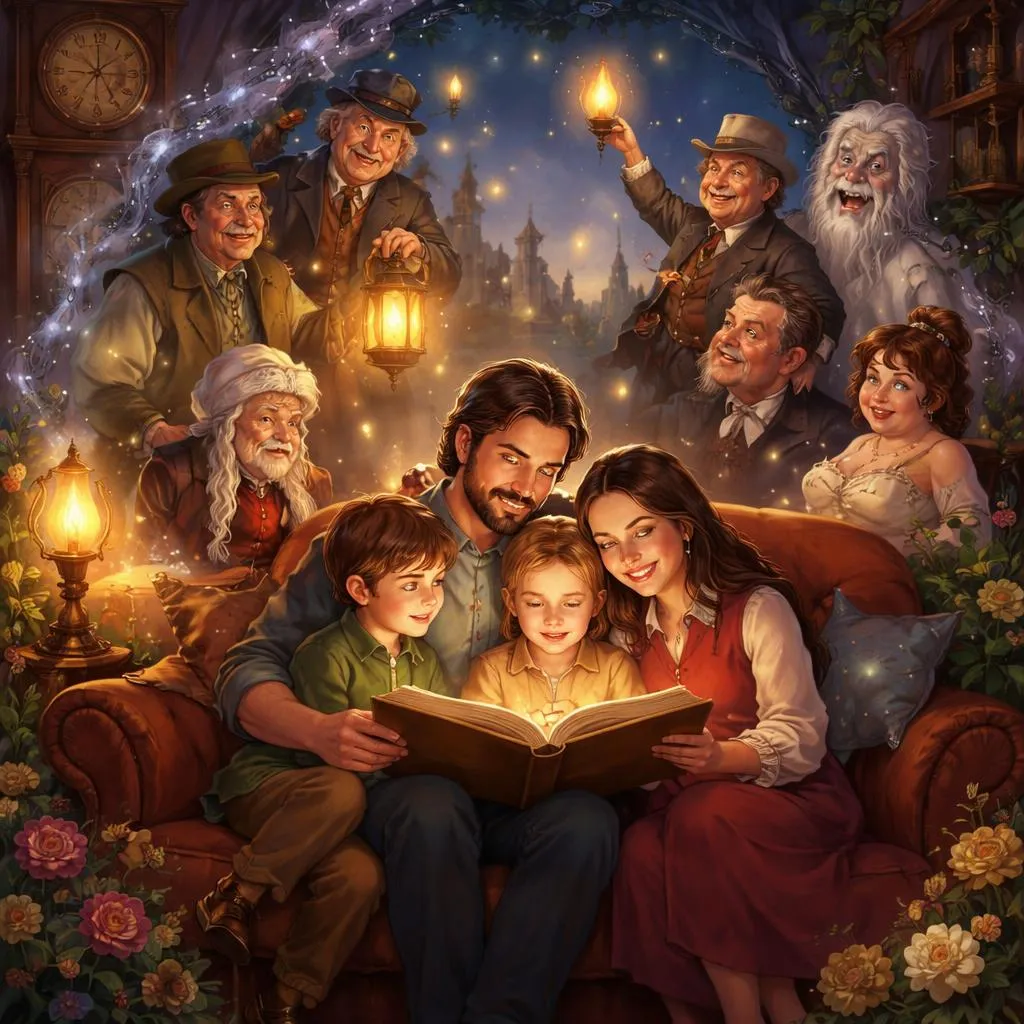

The fog swirls through London streets. A small boy asks for more food. A lonely girl waits by a dusty window. These images come from the pen of Charles Dickens, one of England's greatest storytellers. His books filled thousands of pages with unforgettable characters. But many parents wonder about sharing these classics with young children. The good news is that Charles Dickens children's stories exist in many wonderful forms.
Let us walk together through gaslit streets and meet characters who have delighted readers for nearly two hundred years.
<h2>What is the story?</h2> Charles Dickens wrote long books for adults, but many of his tales feature children as heroes. Oliver Twist tells about a boy born in a workhouse. He has no family and very little food. One day, he bravely asks for more gruel. This small act changes his life forever.Oliver runs away to London. There he meets a boy named Jack Dawkins, called the Artful Dodger. The Dodger takes Oliver to meet Fagin, an old man who teaches boys to pick pockets. Oliver does not understand what they really do. He only wants a safe place to stay.
A kind man named Mr. Brownlow rescues Oliver. But Fagin and a scary man named Bill Sikes want Oliver back. They fear he will tell secrets. The story follows Oliver through danger until he finally finds safety and family.
Children's versions of Oliver Twist keep this basic story while removing the scariest parts. They focus on Oliver's courage and the kindness of strangers.
<h2>The message of the story</h2> Charles Dickens children's stories carry powerful messages about justice and kindness. Dickens grew up poor himself. His father went to prison for debt when Charles was only twelve. Young Charles had to work in a factory pasting labels on bottles. He never forgot this experience.In Oliver Twist, children learn that every person deserves kindness, no matter how poor. Oliver has nothing, but he never stops hoping. He never stops being good. The story shows that goodness wins in the end.
The book also teaches about looking beneath the surface. Rich people like Mr. Brownlow turn out to be kind. Poor people like Nancy, who works for Fagin, also show great courage. She helps Oliver even though it costs her everything.
We can ask our children, Who showed kindness in this story? How did it change things? These questions help children see that their own kindness matters too.
<h2>Vocabulary learning</h2> Dickens used wonderful words that paint vivid pictures. Charles Dickens children's stories introduce young readers to language they might not meet elsewhere.In Oliver Twist, children learn about a workhouse. This was a place where poor people lived and worked. It was not a happy place. The word gruel appears too. This was a thin, watery porridge that workhouses served. Oliver asks for more because he is still hungry.
Children meet words like orphan, which means a child without parents. They learn about pickpockets and thieves. These words help them understand a different time and place.
We can use these words in our own talk. When your child wants more dinner, you might smile and say, Are you asking for more like Oliver Twist? This connects the story to daily life. When you see someone helping another person, you might say, That person is being like Mr. Brownlow.
<h2>Phonics points</h2> The character names in Charles Dickens children's stories give us wonderful phonics practice. Dickens chose names that sound like the characters themselves.Oliver starts with a short O sound. Ooo-liver. Can you hear that first sound? What other names start with O? Oscar starts the same way. So does Olive.
Fagin has a long A sound. Fay-gin. The name sounds a little sneaky, doesn't it? That matches the character. Dickens wanted readers to hear the character in the name.
The Artful Dodger gives us wonderful sound play. Dodger starts with D. It ends with ER. Children love saying this name. They can practice the D sound at the beginning and the soft J sound in the middle.
We can invent our own character names using Dickens style. What would you name a kind baker? Maybe Mr. Sweetbread. What would you name a mean teacher? Perhaps Miss Crabapple. This play builds phonics awareness and creativity.
<h2>Grammar patterns</h2> Dickens wrote in Victorian England, so his language differs from ours. But Charles Dickens children's stories use simplified language that keeps his style while remaining understandable.We see wonderful descriptions. Oliver was a small, pale, thin child. This string of adjectives shows how we can use multiple describing words. Children learn that we can stack adjectives to paint detailed pictures.
Dickens also uses contrasts. The workhouse was cold and hard, but Oliver's heart remained warm and hopeful. This but shows contrast between two ideas. Children absorb this pattern and use it in their own talk and writing.
Some versions keep a bit of Dickens dialogue. Pray, sir, may I have more? The word pray here means please, not the prayer we say at bedtime. This shows children that words can change meaning over time.
<h2>Learning activities</h2> After enjoying Charles Dickens children's stories, we can extend the experience with gentle activities. These help children connect with the stories on a deeper level.Create a simple workhouse bowl. Use an old bowl and put in a small serving of plain oatmeal. Talk about how Oliver felt when this was all he got day after day. Then make a special treat together to contrast with the gruel. This helps children understand Oliver's experience.
Draw a map of Oliver's London. Show the workhouse, the long road to London, Fagin's den, and Mr. Brownlow's nice house. Follow Oliver's journey on your map. This builds geography skills and story comprehension.
Dress up like Victorian characters using simple clothes from home. An old vest becomes fancy wear. A shawl becomes a poor child's covering. Act out scenes from the story together.
<h2>Printable materials</h2> Many wonderful printable materials exist for Charles Dickens children's stories. These can enrich your family reading time.Look for coloring pages showing Oliver asking for more, or the Artful Dodger showing Oliver around London. Children can color while you talk about the scenes.
Find printable character cards showing Oliver, Fagin, Nancy, and Mr. Brownlow. Cut them out and use them to retell the story. Your child can hold up each character as they appear in the tale.
Some websites offer simple Victorian paper dolls. Children can dress them in clothes from Dickens time. This builds fine motor skills while teaching about historical fashion.
You might also find printable story summaries with pictures. Your child can put these in order to retell Oliver's journey. This builds sequencing skills and comprehension.
<h2>Educational games</h2> Games based on Dickens stories make learning active and fun. These work well for family time or rainy afternoons.Play a memory game with character names and descriptions. Write character names on cards and descriptions on other cards. Match Fagin with the man who taught boys to steal. Match Mr. Brownlow with the kind gentleman who helped Oliver.
Create a good choices versus bad choices game. Describe situations from the story. Was it a good choice when Nancy helped Oliver? Was it a good choice when Fagin taught boys to steal? This builds moral reasoning.
Play a Victorian treasure hunt. Hide objects around the house that connect to the story. A small bowl for gruel. A handkerchief for pickpocket practice. A toy dog for Bill Sikes's bull terrier. Children find each item and explain its connection to the story.
For younger children, play a simple sorting game. Sort characters into helpers and hurters. Who helped Oliver? Who tried to hurt him? This builds character analysis in simple terms.
These games show that classic literature can come alive through play. Children absorb the stories while having fun together.
Charles Dickens wrote about children because he cared about them deeply. He wanted his readers to see that poor children deserved better lives. His stories helped change laws in England. They made people care about orphans and workhouse children.
When we share Charles Dickens children's stories with our own children, we pass along this tradition of caring. We show that stories can change the world. We introduce characters who have lived in readers' hearts for generations.
So find a beautifully illustrated version of Oliver Twist or another Dickens tale. Settle into a comfortable spot. Let the foggy streets of Victorian London surround you. Meet Oliver and the Artful Dodger and all the rest. Your child will travel back in time and forward in understanding. And you will travel right beside them, sharing the magic of a master storyteller.