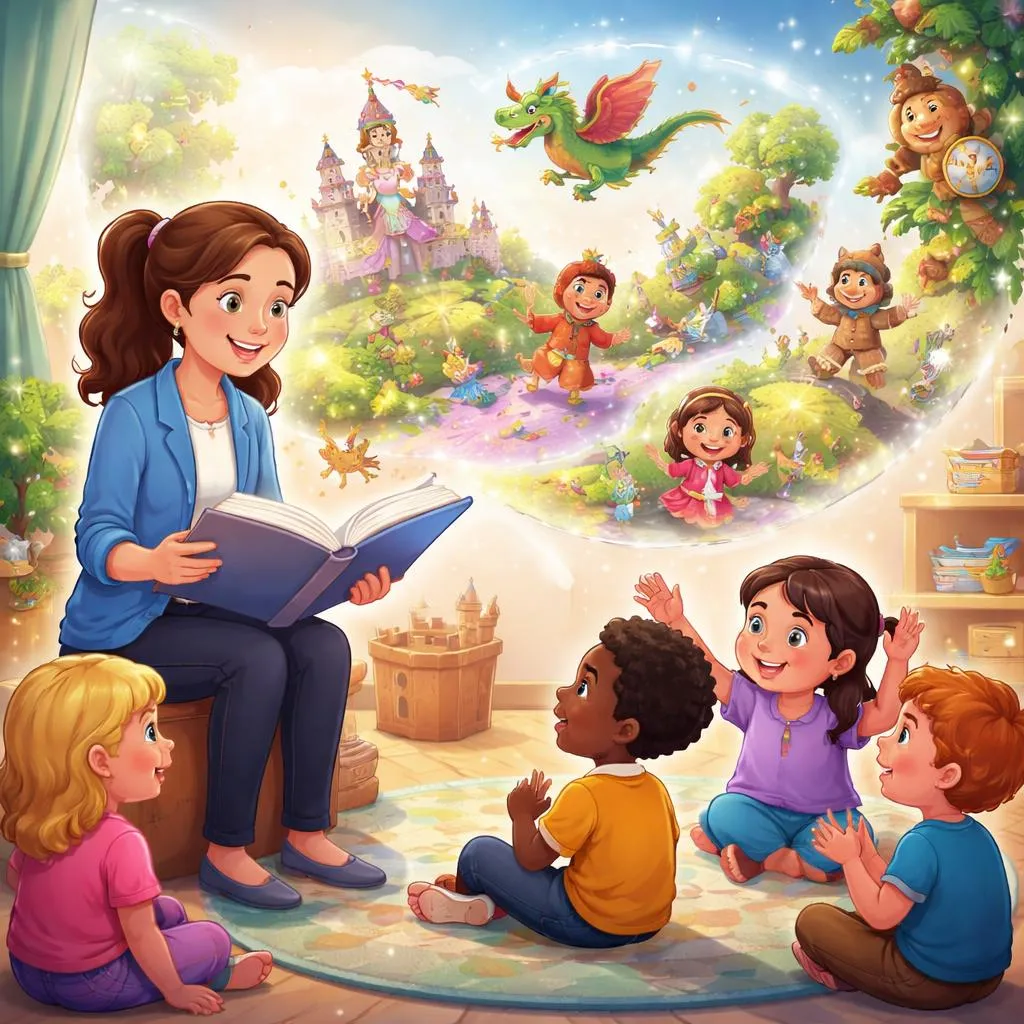

Short stories hold a special place in early childhood education. They fit perfectly into young attention spans. They deliver complete narratives in a single sitting. Popular children's short stories offer all these benefits while carrying the added power of familiarity. Many children already know these tales from home. This prior knowledge builds confidence. This article explores how teachers can use these beloved stories to build vocabulary, comprehension, and a lasting love for reading in their English learners.
What Are Popular Children's Short Stories? Popular children's short stories are brief narratives that have captured young hearts across generations and cultures. They are simple enough for young minds to follow. They are short enough to read in one sitting. They feature memorable characters and clear plots. These stories often carry simple lessons about kindness, honesty, or bravery. Many come from folklore and fairy tale traditions. Others were written by beloved authors specifically for children. Their popularity means most children arrive in the classroom with some familiarity. This prior knowledge creates a comfortable foundation for deeper learning.
Meaning and Explanation Behind Short Stories Short stories serve multiple purposes in a child's development. They introduce narrative structure in its simplest form. A beginning sets the scene. A middle presents a problem. An end brings resolution. Children internalize this pattern through repeated exposure. This understanding becomes the foundation for all future reading comprehension.
These stories also introduce archetypal characters that appear across literature. The clever trickster. The kind heart. The greedy villain. Recognizing these character types helps children predict behavior in new stories. It builds their ability to understand motivation and theme.
The brevity of short stories allows for deep exploration. A long book must move forward to finish. A short story can be reread multiple times. Each reading reveals something new. The language becomes familiar. The nuances become clear. This depth of engagement builds strong readers.
Categories or Lists of Popular Short Stories Popular children's short stories fall into several natural categories. Understanding these groups helps teachers choose the right story for each lesson.
Fairy Tales and Folktales: These stories come from oral traditions around the world.
The Three Little Pigs teaches about preparation.
Little Red Riding Hood warns about strangers.
Goldilocks and the Three Bears explores curiosity and consequences.
The Gingerbread Man shows the importance of not trusting everyone.
Fables with Morals: These very short stories end with clear lessons.
The Tortoise and the Hare teaches that slow and steady wins.
The Lion and the Mouse shows that even the small can help the great.
The Boy Who Cried Wolf warns about lying.
The Ant and the Grasshopper teaches about planning ahead.
Classic Picture Book Stories: These come from beloved children's authors.
The Very Hungry Caterpillar teaches days and food.
Where the Wild Things Are explores imagination and emotions.
Goodnight Moon builds bedtime vocabulary.
Brown Bear, Brown Bear teaches colors and animals.
Modern Favorites: Recent stories that have already become classics.
Don't Let the Pigeon Drive the Bus shows persuasion.
Elephant and Piggie books explore friendship.
Pete the Cat teaches resilience and positivity.
Daily Life Examples from Short Stories Popular children's short stories connect directly to experiences children know. After reading about the Three Little Pigs, notice buildings in the neighborhood. Which houses look strong? Which look weak? After sharing Goldilocks, talk about things that are just right. A favorite chair. A perfect snack. A cozy bed.
The fables connect to daily choices. When someone rushes through work, mention the hare who rested too soon. When a child helps another, remember the mouse who helped the lion. These connections make the stories living things rather than old tales on a page.
The Hungry Caterpillar connects to food and growth. Children can track what they eat in a day. They can notice how they grow and change. The story becomes a lens for seeing the world. This perspective shift is the deepest gift of literature.
Printable Flashcards for Short Stories Flashcards bring the vocabulary from popular children's short stories into focus. Create cards featuring key elements from multiple tales.
Character Cards: Pig, wolf, bear, girl, lion, mouse, tortoise, hare, caterpillar, pigeon.
Setting Cards: Forest, house, river, garden, city, farm, bedroom, tree.
Object Cards: Straw, sticks, bricks, basket, hood, clock, food, egg, leaf.
Action Cards: Build, run, hide, eat, grow, fly, sleep, wake, share.
Teachers can use these cards in multiple ways. Sort them by which story they belong to. Sequence them in story order. Use them for retelling practice. Play matching games with character and action. The cards make abstract story elements concrete and manageable.
Learning Activities or Games for Short Stories Activities bring popular children's short stories to life in the classroom.
Activity 1: Story Sorting Gather picture cards from three different short stories. Mix them together. Children work in small groups to sort the cards by which story they belong to. They must recall details from each tale to sort correctly. This builds comprehension and memory while encouraging collaboration.
Activity 2: Story Theater Divide the class into small groups. Assign each group a different short story. They create simple props and practice retelling their story through acting. Then they perform for the class. The audience guesses which story they are performing. This activity builds deep comprehension, speaking skills, and confidence.
Activity 3: What Happens Next Read a short story but stop before the ending. Ask children to predict what happens next. Write their ideas on the board. Then read the real ending. Compare predictions to the actual ending. Discuss why the author might have chosen that ending. This builds prediction skills and understanding of narrative cause and effect.
Activity 4: Story Comparison Read two different versions of the same tale. Many short stories exist in multiple forms. Compare them. What is the same? What is different? Why might the author have changed certain elements? This builds critical thinking and introduces the concept of adaptation.
Vocabulary Learning from Short Stories Popular children's short stories introduce vocabulary in rich contextual settings. Words appear surrounded by meaning. This natural exposure beats memorizing lists every time.
Fairy Tale Vocabulary: Castle, forest, witch, giant, spell, prince, princess, kingdom, magic.
Fable Vocabulary: Moral, lesson, clever, foolish, steady, swift, brave, tiny, mighty.
Animal Vocabulary: Each story introduces specific animals with their characteristics. Wolf, pig, bear, lion, mouse, hare, tortoise, caterpillar, butterfly.
Emotion Vocabulary: Afraid, brave, curious, greedy, kind, lonely, proud, ashamed, happy.
Teachers can create word walls for each story. Add new words as they appear. Review them through games and discussion. The vocabulary becomes part of each child's active language through repeated meaningful use.
Phonics Points in Short Stories The simple language in popular children's short stories creates perfect opportunities for phonics instruction.
Beginning Sounds: Three little pigs starts with the P sound. Practice other P words. Please, pretty, play, party. The gingerbread man features G. Practice G words. Go, good, game, garden.
Word Families: Short stories often use rhyming text. Pig, big, wig. Man, can, pan. Cat, hat, sat. These word families show how changing one letter creates new words.
Sight Words: Short stories contain high-frequency words that appear again and again. The, and, said, was, they, with. Repeated exposure in context helps these words become instantly recognizable.
Sound Patterns: Listen for repeated sounds. The huffing and puffing of the wolf. The creeping and peeking of Goldilocks. These sound patterns build phonemic awareness through enjoyable repetition.
Teachers can point out these patterns during reading. A quick comment draws attention without breaking the flow. The phonics learning happens naturally within the joyful story context.
Grammar Patterns in Short Stories The simple sentences in popular children's short stories provide clear grammar models for young learners.
Past Tense Verbs: Short stories typically use past tense. The wolf blew the house down. The bear saw Goldilocks sleeping. This provides natural exposure to regular and irregular past forms.
Repetitive Structures: Many short stories repeat phrases. "I'll huff and I'll puff and I'll blow your house down." "Who's been sleeping in my bed?" This repetition reinforces grammatical patterns through enjoyable repetition.
Dialogue Patterns: Short stories contain conversation between characters. "Not by the hair of my chinny chin chin." "Someone's been eating my porridge." These exchanges model question and answer patterns naturally.
Descriptive Language: Short stories use adjectives to paint pictures. Big, medium, and small. Fierce, clever, and brave. These descriptions enrich language and teach descriptive skills.
Teachers can point out these patterns during rereading. The second or third reading provides space for noticing language structures while the story remains familiar and comfortable.
Learning Activities for Deeper Comprehension Beyond initial reading, popular children's short stories support deeper learning activities.
Activity: Story Maps Create simple visual maps showing the structure of a short story. Beginning, problem, events, solution, ending. Children fill in details from the story they read. This builds understanding of narrative structure.
Activity: Character Traits Choose a character from a short story. List words that describe them. The wolf is fierce, hungry, clever, loud. Goldilocks is curious, naughty, sleepy, surprised. This builds descriptive vocabulary and character analysis skills.
Activity: Alternate Endings Ask children to imagine a different ending for a familiar story. What if the wolf couldn't blow down the brick house? What if Goldilocks woke up while the bears were still there? Writing alternate endings builds creativity and understanding of story cause and effect.
Activity: Story Questions Prepare simple questions at different levels. Literal questions check basic understanding. Where did the little pig build his house? Inferential questions require thinking. Why did the wolf go down the chimney? Creative questions invite personal response. Have you ever built something that felt very strong?
Printable Materials for Short Stories Printable resources extend learning from popular children's short stories across multiple lessons.
Story Sequencing Cards: Create simple picture cards showing key moments from each story. Children arrange them in correct order, retelling the story as they work.
Character Masks: Create masks of popular story characters. Children wear them during story theater or retelling. The masks make the characters real and personal.
Mini-Books: Create folded paper books with simplified versions of each story. Children illustrate each page. They take the books home to read with their families.
Comprehension Sheets: Create simple questions for each story. Include space for drawing answers. This provides written practice with story concepts.
Word Searches: Create word searches using vocabulary from each story. This provides quiet independent practice with important words.
Educational Games for Short Story Review Games provide a fun way to review popular children's short stories while maintaining the joyful spirit.
Game: Story Charades Write story titles or events on slips of paper. Children draw a slip and act it out without speaking. The class guesses which story they are performing. This game requires recalling specific story details while getting children moving and laughing.
Game: Who Said That Read lines of dialogue from various stories. Children guess which character spoke each line. For extra fun, they say the line again using the character's voice. This builds attention to character and story details.
Game: Story Bingo Create bingo cards with words and images from multiple stories. Read definitions or descriptions. Children cover the matching square. The first to complete a row wins. This game provides vocabulary review across multiple stories.
Game: Story Memory Match Create pairs of cards. One card shows a story element. The matching card shows the story title. Children play memory match by turning over two cards at a time, looking for matches. This builds connections between elements and their source stories.
Connecting Short Stories to Writing Popular children's short stories naturally inspire young writers. After enjoying these tales, children feel ready to create their own.
Shared Writing: Write a class story together. Start with a simple idea. A lost mitten. A talking animal. A magical object. Take suggestions from the class. Write the story on the board, making decisions together. This demonstrates the writing process while creating something original.
Story Patterns: Notice patterns in familiar stories. Three characters. Three attempts. A problem and solution. Children use these patterns to write their own versions. The structure provides support while the content stays original.
Illustration: Short stories need pictures. Provide art supplies and encourage children to illustrate their stories or favorite scenes from stories read in class. The pictures add another layer of expression and understanding.
Story Sharing: Create time for children to share their stories with classmates. This builds confidence and shows that their words matter. The classroom becomes a community of storytellers.
Popular children's short stories remain popular for good reason. They speak to something deep in the human heart. They offer comfort in their familiarity. They provide excitement in their plots. They deliver wisdom in their lessons. For teachers, they offer a trusted tool for building language and literacy. For children, they offer a doorway into the joy of reading. This combination makes them invaluable in any classroom. The stories will continue to be shared for generations to come, passing their magic from one young reader to the next.