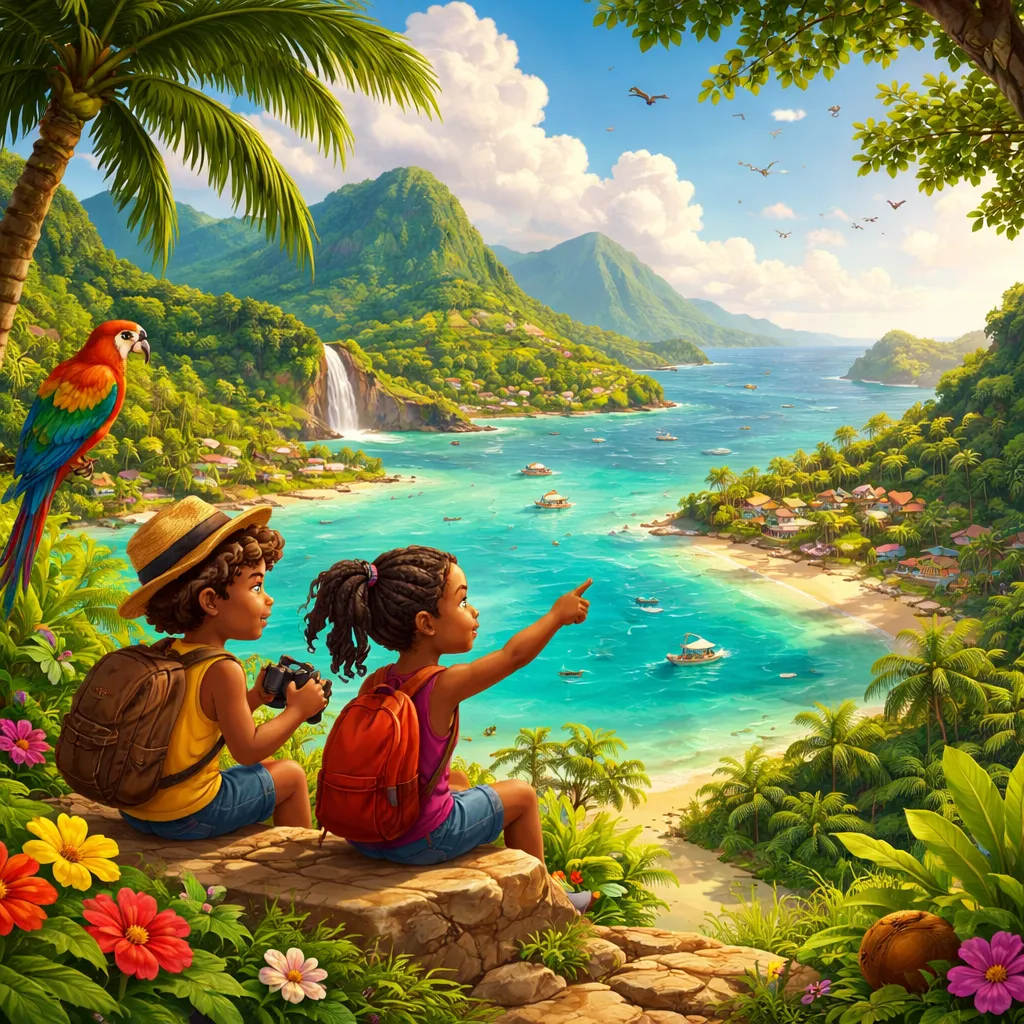

Introduction to Sao Tome and Principe Sao Tome and Principe is a country of two main islands. The islands sit in the Atlantic Ocean. They lie close to the equator. Children there learn Portuguese in school. They also speak local Creole languages at home. Learning reading: Sao Tome and Principe opens a door to a rarely visited part of the world. Kids on these islands read stories about cocoa farms and sea turtles. They also hear legends about old volcanic mountains. Reading about this country feels like finding a secret map. Your child can explore these remote islands from a cozy chair. Each new word becomes a clue to a hidden treasure. Let us follow those clues together.
Where Is Sao Tome and Principe? Sao Tome and Principe sits off the west coast of Africa. The country lies in the Gulf of Guinea. Two islands give the country its long name. The bigger island is Sao Tome. The smaller island is Principe. The capital city is Sao Tome. It sits on the island of Sao Tome. The whole country covers only 1,001 square kilometers. That is about the size of a large city. The equator passes just south of the islands. So the weather stays warm all year. The islands have no land neighbors. The Atlantic Ocean surrounds them completely. Learning reading: Sao Tome and Principe becomes real when you look at a map of Africa. Find the west side of Africa. Look for a small bump where Cameroon and Gabon meet. Then look west into the ocean. You will see two tiny dots. Those dots are the islands. Point to the larger dot. Say "Sao Tome." Point to the smaller dot. Say "Principe." You just found one of Africa's smallest countries.
Interesting Facts About Sao Tome and Principe Sao Tome and Principe has many amazing facts. First, the islands have no native mammals. The only land animals arrived with humans. Second, the country grows excellent cocoa. Chocolate makers around the world prize Sao Tome cocoa. Third, the islands have a special bird called the Sao Tome ibis. It lives nowhere else on Earth. Fourth, the country has a famous rock formation called Pico Cao Grande. It looks like a giant needle of stone. Fifth, Principe island has a small population of sea turtles. They come to the beaches to lay eggs. Sixth, the islands were empty when Portuguese explorers arrived in 1470. No people lived there before that time. Learning reading: Sao Tome and Principe teaches words like "cocoa," "ibis," and "equator." Each fact gives your child a new picture. Imagine a chocolate bar made from beans grown on these islands. Imagine a bird that lives only on one tiny island. Imagine a rock shaped like a needle pushing out of the jungle. These pictures make words stay in your mind. Parents can ask: "Would you like to taste chocolate from Sao Tome?" "What does a needle rock look like?" Your child will feel curious about these strange and wonderful islands.
Key Vocabulary About Sao Tome and Principe Let us learn six important words from these islands.
First is "cocoa." Cocoa is a bean. People roast it to make chocolate.
Second is "island." An island is land with water all around. Sao Tome and Principe are islands.
Third is "equator." The equator is an imaginary line around the middle of Earth. It is very warm there.
Fourth is "ibis." An ibis is a bird with a long curved beak. The Sao Tome ibis is very rare.
Fifth is "volcano." A volcano is a mountain that can erupt hot rock. The islands formed from old volcanoes.
Sixth is "turtle." A turtle is a slow animal with a hard shell. Sea turtles visit the beaches.
Learning reading: Sao Tome and Principe gives you these six words. Make a sound for each word. For cocoa, make a crunching sound like biting chocolate. For island, make a swooshing sound like waves. For equator, say "warm warm warm" in a high voice. For ibis, make a bird chirp. For volcano, make a rumbling "grrr" sound. For turtle, make a slow "whoosh" sound like flippers in water. Say each word then make its sound. Your child will laugh. Laughter helps memory. Practice these sounds in the car. Practice them while waiting for dinner. Soon your child will say "cocoa" and make a crunching sound without thinking.
The Famous People About Sao Tome and Principe Sao Tome and Principe is very small. It has produced a few famous people. One is Manuel Pinto da Costa. He became the first president after independence in 1975. He served as president for many years. Another famous person is Jose Cassandra. He writes poems and stories. His words describe life on the islands. There is also a singer named Camila. She sings traditional music from Sao Tome. Her voice carries the sounds of the ocean and the forest. Another important person is Lima. He plays soccer for international teams. He represents his small country with pride. These people show that even tiny nations have big hearts and big talents. Learning reading: Sao Tome and Principe becomes inspiring through these names. Say each name. "Ma-nuel Pin-to da Cos-ta." "Jo-se Cas-san-dra." "Ca-mi-la." "Li-ma." Talk about what each person did. "What did Manuel do?" "He led the country." "What does Jose do?" "He writes poems." "What does Camila do?" "She sings." "What does Lima do?" "He plays soccer." Your child can imagine becoming a poet or a singer or a soccer star. These famous people prove that no country is too small for big dreams.
Simple Sentences for Reading Practice Here are easy sentences about Sao Tome and Principe. Read each one aloud.
Sao Tome and Principe has two main islands in the Atlantic Ocean.
The capital city shares its name with the larger island.
Cocoa beans from these islands make delicious chocolate.
The Sao Tome ibis is a rare bird found nowhere else on Earth.
Pico Cao Grande looks like a giant stone needle in the jungle.
The equator passes just south of the islands.
Sea turtles come to Principe island to lay their eggs.
No people lived on the islands before Portuguese explorers arrived in 1470.
Manuel Pinto da Costa became the first president of the country.
Camila sings traditional music that sounds like ocean waves.
Learning reading: Sao Tome and Principe makes these sentences easy to practice. Read a sentence. Then ask your child to draw a quick picture. For sentence three, draw a chocolate bar. For sentence four, draw a bird with a long beak. For sentence five, draw a needle-shaped rock. For sentence seven, draw a turtle on sand. After drawing, read the sentence again. The picture helps the words stay. You can also make a listening game. Read three sentences. Ask your child to hold up one finger for the first sentence, two for the second, three for the third. Then say one sentence again. Your child shows the correct number of fingers. This game builds attention and memory.
Short Reading Passage About Sao Tome and Principe Read this passage together. It uses all the words we learned.
Sao Tome and Principe is a country of two green islands. The larger island gives the country its first name. The smaller island gives the country its second name. Both islands formed from old volcanoes. The mountains rise steeply from the sea. Cocoa grows in the rich volcanic soil. Farmers pick the cocoa beans by hand. Chocolate makers in Europe and America love these beans. A rare bird called the Sao Tome ibis hides in the forest. It has a long curved beak. You cannot see this bird anywhere else on Earth. A rock called Pico Cao Grande shoots up from the jungle. It looks like a giant needle. The equator passes just south of the islands. So the weather stays warm and wet. Sea turtles swim thousands of miles to lay eggs on Principe's beaches. The first people arrived on ships in 1470. No one lived there before. Today, famous people like Camila the singer and Lima the soccer player represent these small islands. Learning reading: Sao Tome and Principe invites you to imagine a world apart. A world of cocoa trees and rare birds. A world of needle rocks and visiting turtles. Now close your eyes. Imagine you walk through a cocoa farm. The pods hang yellow and red. You hear a bird call from the trees. What does the bird sound like? What do you smell in the warm air?
This passage has 190 words. Read it slowly. After each sentence, tap the table once. The tapping keeps a steady rhythm. Children learn well with rhythm. After the passage, ask your child to close the book and tell you one new thing they learned. Do not correct small mistakes. Just say "That is interesting. Tell me more." Let their words flow. The flow is more important than the grammar.
Fun Questions About Sao Tome and Principe Use these questions to talk about these hidden islands.
Would you rather visit the big island or the small island? Why?
What would you name a chocolate bar made from Sao Tome cocoa?
Why do you think the Sao Tome ibis lives nowhere else on Earth?
How would you feel standing at the bottom of Pico Cao Grande looking up?
Would you like to live near the equator? Why or why not?
What would you pack for a trip to a warm, rainy island?
Why do sea turtles travel so far to lay eggs on the same beaches?
What would you ask Manuel Pinto da Costa about being the first president?
If you could sing like Camila, what song would you write about the ocean?
Would you want to be the first person to discover an empty island? What would you name it?
Learning reading: Sao Tome and Principe turns every question into a storytelling moment. Parents answer first. "I would visit the smaller island because I want to see the sea turtles without many other people." Then your child answers. Let their answers fly. If they say "I would name my chocolate bar Monkey Munch," say "That is a perfect name. What picture would you put on the wrapper?" Keep asking. Keep imagining. You can also act out the answers. Pretend to pick cocoa pods. Pretend to fly like the ibis. Pretend to swim like a turtle. Ask one question during breakfast. Ask another question before bed. These islands will become a happy place in your family's imagination.
Tips for Learning English with This Topic Now let us bring Sao Tome and Principe into your home. First, taste different kinds of chocolate. Find one from Africa if you can. Say "cocoa" with each bite. Second, draw a rare bird. Give it a long beak and bright feathers. Name it after the Sao Tome ibis. Say "ibis" when you finish. Third, build a needle rock with blocks or clay. Make it tall and skinny. Say "Pico Cao Grande" as you build. Fourth, draw the equator on a world map. Color the line red. Say "equator" when you draw. Fifth, pretend to be a sea turtle. Crawl slowly on the floor. Pretend to dig a nest in the sand. Say "turtle" as you dig. Sixth, listen to music from Sao Tome online. Close your eyes. Imagine you are on a beach. Say "island music" while you listen. Learning reading: Sao Tome and Principe gives you these six tips. Do not rush. Pick one tip for today. Let the words and sounds settle. Learning English is like growing cocoa. The beans take time to ripen. You cannot hurry them. You can only water them and wait. So water your child's mind with words. Wait with patience. The harvest will come.
Your child will remember Sao Tome and Principe. They will remember the cocoa and the ibis and the needle rock. But most of all, they will remember reading with you. That quiet time together builds a bridge between your hearts and the wider world. So keep this article close. Read one sentence tonight. Ask one question tomorrow. Try one tip this weekend. Sao Tome and Principe is not a faraway mystery. It is right here every time you learn a new word together. Say one now. "Cocoa." Wonderful. Say another. "Ibis." Beautiful. You are already exploring hidden islands. Keep going. The journey has just begun.