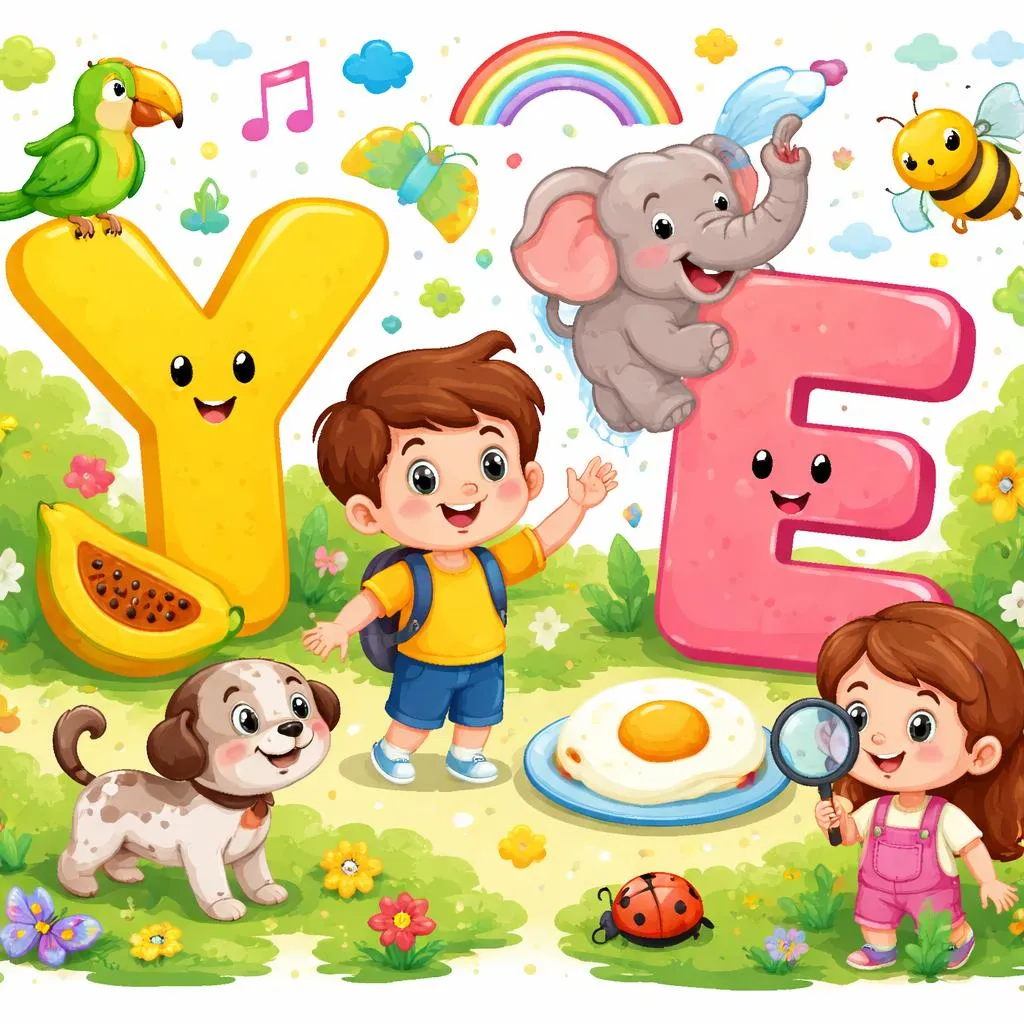

What Are Y and E in the Spanish Alphabet?
Y and E are letters in the Spanish alphabet.
They are important letters.
Children see them very often.
They appear in many common words.
Learning Y and E helps children read.
It also helps children pronounce words clearly.
Spanish uses both letters in simple ways.
But they also have special roles.
Understanding them takes practice.
Practice makes learning easier.
Why Learn Y and E Together?
Y and E often work together.
They appear in similar positions.
They sometimes sound alike.
Children may feel confused at first.
Learning them together helps comparison.
Comparison builds understanding.
Children learn how sounds change.
They learn when letters behave differently.
This supports reading and listening skills.
The Letter E in Spanish
E is a vowel.
Spanish has five vowels.
E is one of them.
The sound of E is clear.
It sounds like “eh.”
This sound does not change much.
That makes E easy to learn.
Children can recognize it quickly.
The Sound of E
The E sound is short and steady.
It does not slide.
It does not change like in English.
Children say it the same way each time.
This makes Spanish pronunciation easier.
Clear sounds build confidence.
Confidence helps reading.
Examples of E in Spanish Words
Many words use E.
Here are simple examples:
mesa leche elefante pelota dedo
Children can repeat these words.
They can clap for each sound.
They can hear the E clearly.
This builds sound awareness.
Practicing the Letter E
Children can practice E every day.
They can say the sound aloud.
They can trace the letter.
They can circle E in books.
Simple practice works best.
Short practice works best.
The Letter Y in Spanish
Y is a special letter.
It can act like a consonant.
It can act like a vowel.
This makes Y interesting.
Children often feel curious about Y.
Learning its roles takes time.
Y as a Consonant
At the start of words, Y is a consonant.
It sounds similar to “y” in yes.
Examples include:
yo yoyo yema yate
Children can hear the sound clearly.
It feels familiar.
This helps learning.
Y as a Vowel
Y can also act like a vowel.
This happens at the end of words.
It sounds like the vowel I.
This surprises some learners.
Examples include:
muy soy hoy
The Y here sounds like “ee.”
Children need practice to notice this.
Comparing Y and E Sounds
Y and E can sound similar.
This happens in some words.
Especially when Y sounds like a vowel.
E always sounds like “eh.”
Y changes sound based on position.
Learning this difference is important.
It helps avoid confusion.
Why Y and E Can Be Confusing
Children may mix Y and E.
They may hear similar sounds.
They may spell words incorrectly.
This is normal.
Mistakes are part of learning.
Clear examples help.
Practice helps even more.
Listening Practice with Y and E
Listening builds strong skills.
Children should hear words often.
Teachers can say words slowly.
Children can repeat together.
Listening before speaking works well.
Speaking Practice with Y and E
Speaking builds confidence.
Children can say short words.
They can say sounds clearly.
Group speaking feels safe.
Encouragement matters.
Reading Practice with Y and E
Reading helps connect letters and sounds.
Children can read simple words.
They can point to letters.
They can say sounds aloud.
Reading daily builds fluency.
Writing Practice with Y and E
Writing helps memory.
Children can trace Y and E.
They can copy words.
They can write short lists.
Slow writing is fine.
Accuracy is important.
Uppercase and Lowercase Y and E
Y and E have two forms.
Uppercase letters are tall.
Lowercase letters are smaller.
Children should learn both.
Recognition builds reading skill.
Phonics Focus on Y and E
Phonics supports pronunciation.
Children can practice sound pairs.
E is steady.
Y can change.
Phonics practice helps children notice patterns.
Patterns help reading.
Syllables with E
E appears in many syllables.
Examples include:
me pe se te
Children can clap syllables.
This builds rhythm.
Rhythm supports fluency.
Syllables with Y
Y appears in fewer syllables.
It often starts words.
Examples include:
ya ye yo
Children can repeat slowly.
This helps accuracy.
Word Building with Y and E
Children can build words.
They can move letter cards.
They can combine sounds.
Examples include:
y + e = ye m + e = me
Word building feels like play.
Play supports learning.
Common Spanish Words with E
Children learn best with real words.
Common examples include:
ella eso este ese perro
These words appear often.
They are useful.
Common Spanish Words with Y
Y appears in useful words.
Examples include:
y yo ya muy hoy
Children see these words daily.
Recognition builds confidence.
Using Y as “And” in Spanish
Y also means “and.”
This is very important.
It connects ideas.
Children use it in sentences.
Example:
pan y leche
Learning this use supports grammar.
Grammar Awareness with Y
Y connects nouns.
It connects phrases.
It connects ideas.
This is simple grammar.
Children learn it naturally.
Comparing Spanish Y with English Y
English Y has many sounds.
Spanish Y is more stable.
This helps learners.
Children can switch between languages.
Understanding differences is helpful.
Comparing Spanish E with English E
English E changes sound often.
Spanish E stays the same.
This makes Spanish reading easier.
Children often feel relief.
Consistency builds confidence.
Classroom Activities for Y and E
Teachers can use games.
Letter hunts work well.
Children find Y and E in texts.
Movement keeps focus.
Fun supports learning.
Matching Activities with Y and E
Children match letters to pictures.
Y matches yo-yo.
E matches elephant.
Pictures support memory.
Songs with Y and E
Songs repeat sounds.
Repetition helps memory.
Children enjoy singing.
Learning feels joyful.
Stories with Y and E
Stories show letters in context.
Children hear words naturally.
Meaning becomes clear.
Stories support understanding.
Daily Life Examples of Y and E
Children see letters everywhere.
Books use them.
Signs use them.
Songs use them.
Daily exposure helps learning.
Learning Tips for Y and E
Keep lessons short.
Repeat often.
Use visuals.
Praise effort.
Positive learning matters.
Supporting Confidence with Difficult Letters
Y can feel tricky.
E feels easier.
Both are important.
Encouragement helps children persist.
Mistakes are normal.
Home Practice with Y and E
Parents can help.
Reading together works well.
Simple games help.
Home support matters.
Review Activities for Y and E
Review strengthens memory.
Children can read word lists.
They can spell words.
They can say sounds aloud.
Short review works best.
Long-Term Benefits of Learning Y and E
Strong letter knowledge supports reading.
It supports writing.
It supports speaking.
Early practice builds strong foundations.
Language learning becomes easier later.
Growing Language Skills with Y and E
Learning Y and E takes time.
Practice makes progress.
Children gain confidence.
They use words naturally.
Language feels friendly.
Step by step, skills grow.
Advanced Listening Practice with Y and E
As children grow, listening skills become more important.
Y and E appear in many spoken words.
Children need to hear these letters in sentences.
Teachers can read short sentences aloud.
Children can listen carefully.
They can raise hands when they hear Y or E.
This sharpens attention.
It also builds sound awareness.
Listening practice supports pronunciation.
Sentence Practice Using Y and E
Sentences help children see meaning.
Simple sentences work best.
Examples include:
Yo veo el sol.
Ella come pan y queso.
Hoy es un buen día.
Children can repeat sentences.
They can point to letters.
Sentence practice connects letters to ideas.
Question Practice with Y and E
Questions build thinking skills.
Children can answer simple questions.
Examples include:
¿Es hoy lunes?
¿Y tú?
¿Ella es mi amiga?
Questions help children listen carefully.
They also help children respond clearly.
Reading Short Paragraphs with Y and E
After words, children can read short paragraphs.
Paragraphs use repeated letters.
This builds confidence.
Example reading practice:
Hoy es lunes. Yo voy a la escuela. Ella y yo somos amigos.
Children can read slowly.
They can read aloud.
Reading paragraphs prepares children for stories.
Spelling Practice with Y and E
Spelling supports writing.
Children can spell words aloud.
They can spell with letter cards.
Examples include:
hoy muy ella yema
Spelling slowly is helpful.
Accuracy matters more than speed.
Common Mistakes with Y and E
Mistakes are normal.
Children may write E instead of Y.
They may confuse sounds.
This happens often.
Teachers should guide gently.
Clear examples help children correct errors.
Practice builds improvement.
Visual Learning with Y and E
Visual tools help many learners.
Charts show letters clearly.
Color-coding letters helps recognition.
Pictures connect meaning.
Visual learning supports memory.
Children remember faster with images.
Using Y and E in Simple Writing
Writing helps children express ideas.
They can write short sentences.
They can write lists.
Examples include:
yo y tú pan y leche hoy es lunes
Writing connects letters to meaning.
Meaning makes learning stronger.
Group Activities with Y and E
Group work builds confidence.
Children learn from each other.
They can read together.
They can play games together.
Social learning feels safe.
Safe learning builds progress.
Review Routines for Y and E
Routine supports learning.
Daily review works best.
Five minutes is enough.
Children can review sounds.
They can review words.
Routine builds habit.
Habit builds skill.
Teacher Tips for Teaching Y and E
Teachers should speak clearly.
They should repeat often.
They should use gestures.
They should praise effort.
Positive teaching builds motivation.
Parent Support for Y and E Learning
Parents play an important role.
Reading together helps.
Listening together helps.
Simple encouragement helps.
Home support strengthens school learning.
Confidence Building Through Practice
Confidence grows with success.
Small success matters.
Each correct sound matters.
Children feel proud.
Pride supports learning.
Learning becomes enjoyable.
Connecting Y and E to Other Letters
Letters work together.
Y and E connect with others.
Children see patterns.
Patterns help reading.
Understanding grows step by step.
Long-Term Language Growth with Y and E
Strong letter skills last long.
They support future reading.
They support future writing.
They support future learning.
Early effort brings lasting benefits.
Language Learning as a Journey
Learning letters is a journey.
Y and E are part of it.
Children grow slowly.
Progress takes time.
With support, children succeed.
Language learning becomes natural and joyful.