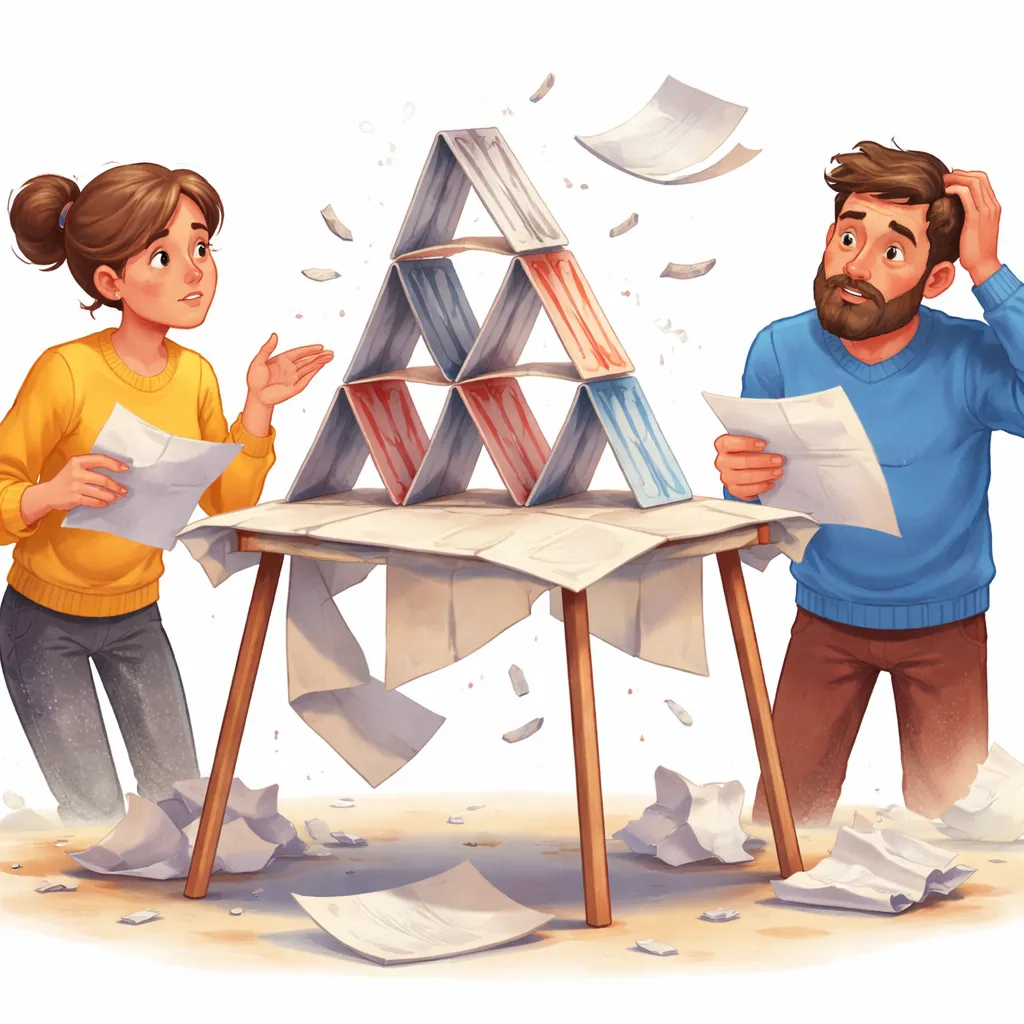

Children know when something is not strong. A thin paper, a broken toy, a tired arm. Parents say “The branch is weak” or “The excuse sounds flimsy.” Are “weak” and “flimsy” the same word? This guide helps your child understand the difference.
Both words describe things that lack strength. But one word means lacking power or force. The other word means thin, fragile, or poorly made. Let us explore these delicate words together. Your child will learn to use both with confidence.
Are Similar Words Really Interchangeable? “Weak” and “flimsy” seem very close. But you cannot always swap them. Each word carries a different focus. Knowing this helps your child speak more precisely.
Imagine a weak cup of tea. The tea is weak. It has little flavor. Now imagine a flimsy paper plate. The plate is flimsy. It bends and might break. Weak means lacking strength or power. Flimsy means thin and easily broken.
Sometimes both words work. “A weak excuse” and “a flimsy excuse” are both fine. But “flimsy” suggests the excuse has no real support. Weak can mean general lack of power.
Set 1: Weak vs Flimsy — Which One Is More Common? “Weak” appears very often in daily English. Children say “I feel weak” or “Weak light.” Parents say “Weak signal” or “Weak spot.” It is a short, common word. Everyone uses it for strength, flavor, and ability.
“Flimsy” is less common, especially for kids. It sounds more specific and descriptive. We use it for objects, excuses, or structures. “A flimsy cardboard box” or “Flimsy evidence.” A child might say “Flimsy paper” but usually says “thin.”
Teach “weak” first to your child. It is perfect for lack of strength or power. Introduce “flimsy” for thin, poorly made things. “The flimsy umbrella broke in the wind.” This makes “flimsy” feel vivid.
Set 2: Weak vs Flimsy — Same Meaning, Different Contexts Both words can mean not strong. But the context changes the cause. “Weak” focuses on lack of power. “Flimsy” focuses on thinness or poor construction.
Think about a weak flashlight beam. The beam is weak. It does not shine far. Now think about a flimsy plastic fork. The fork is flimsy. It bends when you pick up food. So weak is about power. Flimsy is about thinness and fragility.
Help your child see context with examples. “The weak battery died quickly.” “The flimsy tent collapsed in the wind.” This builds real-world understanding. It also makes language more precise.
Set 3: Weak vs Flimsy — Which Word Is “Bigger” or More Emphatic? “Flimsy” feels more specific and visual. It describes things that are thin and bendable. Flimsy paper. Flimsy alibi. Flimsy structure. The word carries a sense of cheapness or poor quality.
“Weak” is broader and more general. Weak can describe muscles, tea, or arguments. A weak argument might still be thick paper. So “flimsy” is about physical fragility. “Weak” is about lack of power. Neither is stronger. They focus on different things.
For children, use “weak” for lack of power. “The weak puppy could not walk far.” Use “flimsy” for thin, bendable things. “The flimsy cardboard bent under the book.” This teaches specificity.
Set 4: Weak vs Flimsy — Concrete vs Abstract Both words work for concrete things. Weak rope, flimsy paper. Children understand these easily. But abstract meanings are common.
Weak argument means not convincing. Weak excuse means not believable. Weak smile means not happy. Flimsy excuse means poorly supported. Flimsy evidence means not reliable. Abstract uses help children talk about ideas, behavior, and communication.
Start with concrete examples at home. “The weak string broke when I pulled it.” “The flimsy plastic bag ripped open.” Then move to gentle abstract ones. “His weak excuse for being late did not work.” “The flimsy evidence did not prove anything.” These phrases build critical thinking vocabulary.
Set 5: Weak vs Flimsy — Verb or Noun? First Understand the Role “Weak” is always an adjective. “The weak bridge could not hold the truck.” It never changes form. So it is simple to learn.
“Flimsy” is also always an adjective. “The flimsy chair broke when I sat on it.” Both words work the same way grammatically. That makes them easier for children.
Teach both as describing words. “The weak signal made the call drop.” “The flimsy ruler bent in half.” This sequence avoids confusion. It also builds strong adjective skills.
Set 6: Weak vs Flimsy — American English vs British English Both words are common in American and British English. There is almost no difference in meaning. But there are small preferences in use. Americans say “weak” and “flimsy” very often. British speakers say the same.
British people say “flimsy” for poor excuses. Americans do too. So this pair is easy for international learning. For your child, teach both words freely. A weak battery is weak everywhere. A flimsy box is flimsy anywhere. This makes learning simple and safe.
Set 7: Weak vs Flimsy — Which Fits Formal Situations? Formal situations prefer “weak” for general lack of strength. A report says “The weak correlation affected the results.” It might also say “flimsy,” but less often. “Weak” sounds more neutral.
“Flimsy” works in formal writing too. “The flimsy construction failed safety tests.” But for scientific contexts, “weak” is safer. So formality and tone change the word choice.
For children, you do not need formal rules yet. But you can show the difference. “At school, the teacher says weak answer.” “In a product review, they write flimsy material.” This gentle difference prepares them for later.
Set 8: Weak vs Flimsy — Which One Is Easier for Kids to Remember? “Weak” is very easy for young children. It has four letters and one clear sound. Kids know weak from being tired or sick. “Weak means not strong.” Memory sticks through feelings.
“Flimsy” is harder for small kids. It has two syllables: “flim-sy.” You can connect it to “flimsy” sounds like “flimsy paper.” “Flimsy means thin and bendy.” That simple sentence helps.
Use feelings to help remember. “The weak kitten could not jump.” “The flimsy paper tore easily.” Repeat both words during craft time. “This string is weak. This paper is flimsy.”
Mini Exercise: Can You Spot the Differences Between These Similar Words? Try these simple questions with your child. No pressure, just playful thinking.
Which word fits better? “The ____ flashlight could not light up the room.” (Answer: weak)
Which word fits better? “The ____ plastic cup squished in my hand.” (Answer: flimsy)
Is this concrete or abstract? “He gave a weak excuse for missing the game.” (Answer: abstract)
True or false? Flimsy things are always weak. (Answer: true)
Which word means thin and poorly made? (Answer: flimsy)
Fill in the blank: “The ____ battery died after one hour. The ____ cardboard box collapsed under the weight.” (Answer: weak, flimsy)
Check answers together slowly. Talk about why each answer works. Praise every effort your child makes.
Parent Tips: How to Help Kids Learn and Remember Similar Words Learning similar words takes gentle repetition. Here are practical tips for your home.
First, use real weak moments. Try a weak flashlight. Say “This light is weak.” Bend a thin paper plate. Say “This plate is flimsy.” Your child sees and feels the difference.
Second, create a “weak or flimsy” game. Test different things: thin paper, a tired arm, a plastic fork, a dim light. Ask “Is this weak, flimsy, or both?” Talk about why thin things are flimsy.
Third, read detective and science stories together. Many children’s books use these words. Pause and ask “Would the author say weak or flimsy here?” This builds critical thinking skills.
Fourth, make a word wall at home. Write “weak” in light gray for low power. Write “flimsy” in tan for thin and fragile. Add drawings of a dim bulb and a bent paper plate.
Fifth, use gentle correction. If your child says “The strong rope is flimsy”, say “Flimsy means thin and weak. A strong rope is the opposite.” Never scold. Just explain.
Finally, celebrate noticing weakness. When your child uses either word correctly, celebrate. “Yes, the battery is weak. And the paper cup is flimsy. Great noticing words!” Positive feelings make both words stick. Your patience today builds their vocabulary for life.
Some weakness is about lack of power. Other weakness is about thinness and fragility. Both words help us describe things that do not hold up. Keep practicing together in a warm, low-pressure way. Your child will learn to choose the right word naturally. And that small skill will make every weak moment more accurate in English.