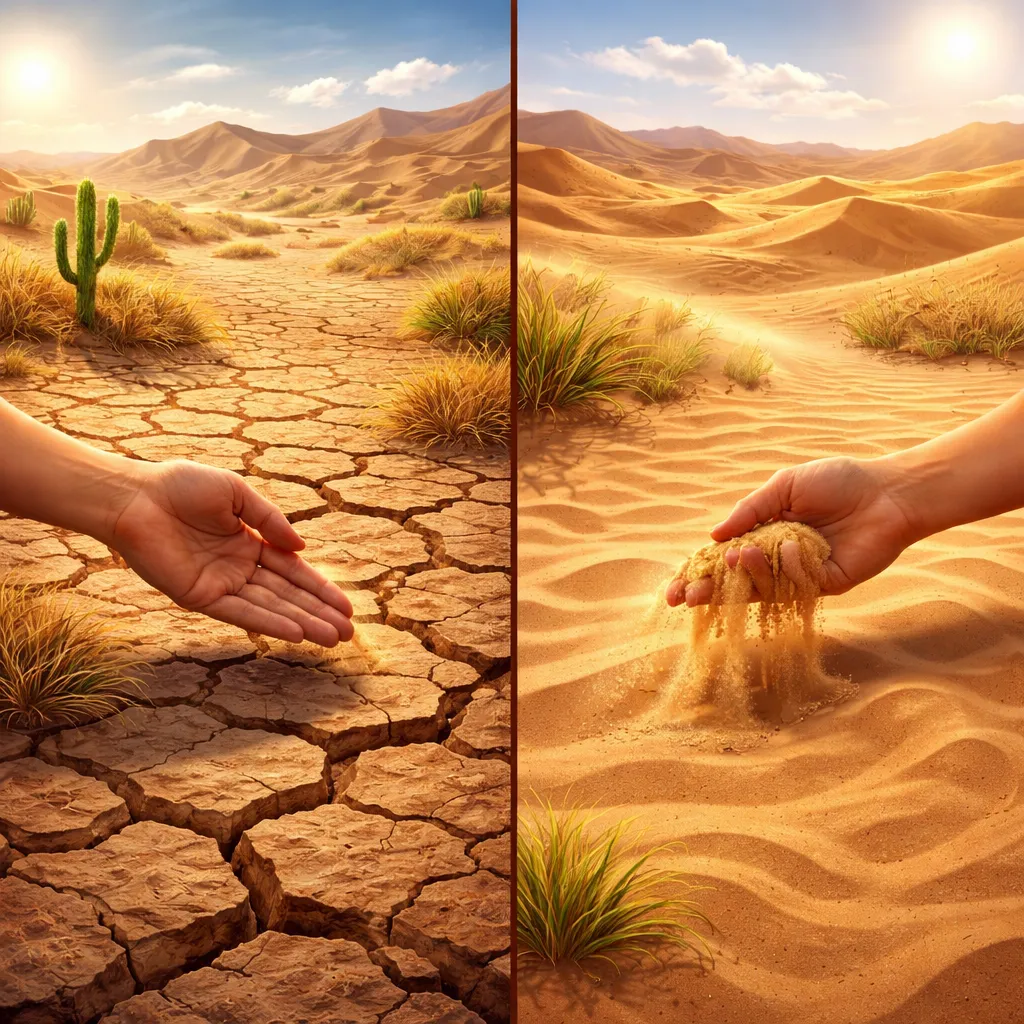

Children know when things feel dry. Sand, crackers, a thirsty mouth, an old book. Parents say “The towel is dry” or “The road is dusty.” Are “dry” and “dusty” the same word? This guide helps your child understand the difference.
Both words describe a lack of moisture. But one word means no water or wetness. The other word means covered in fine powder. Let us explore these parched words together. Your child will learn to use both with confidence.
Are Similar Words Really Interchangeable? “Dry” and “dusty” seem very close. But you cannot always swap them. Each word carries a different focus. Knowing this helps your child speak more precisely.
Imagine a dry towel from the laundry. The towel is dry. It has no water in it. Now imagine an old shelf that no one cleans. The shelf is dusty. It has a layer of fine powder on it. Dry means without moisture. Dusty means covered with dust.
Sometimes both words work. “Dry ground” and “dusty ground” are both fine. But dusty ground has dust particles you can see or kick up. Dry ground just has no water.
Set 1: Dry vs Dusty — Which One Is More Common? “Dry” appears very often in daily English. Children say “My mouth is dry” or “Dry clothes.” Parents say “Dry weather” or “Dry skin.” It is a short, common word. Everyone uses it for moisture level.
“Dusty” is also common, but more specific. Children say “The attic is dusty” or “Dusty shoes.” Parents say “Dusty road” or “Dusty air.” It is a descriptive word. Teach both words together.
“Dry” is broader. “Dusty” is more about powder. Both are good for daily use.
Set 2: Dry vs Dusty — Same Meaning, Different Contexts Both words can mean not wet. But the context changes the cause. “Dry” focuses on lack of water. “Dusty” focuses on the presence of fine particles.
Think about a dry sponge. The sponge is dry. No water inside. Now think about an old, unpaved road in summer. The road is dusty. Tiny particles fly up when you walk. So dry is about moisture. Dusty is about powder.
Help your child see context with examples. “The dry towel felt rough on my skin.” “The dusty bookshelf made me sneeze.” This builds real-world understanding. It also makes language more precise.
Set 3: Dry vs Dusty — Which Word Is “Bigger” or More Emphatic? “Dry” feels broader and more general. It describes weather, skin, humor, and wine. Dry humor means not emotional. Dry wine means not sweet. The word carries many meanings.
“Dusty” is more specific and sensory. It describes places, objects, or air with dust. Dusty road. Dusty attic. Dusty old book. So “dry” is wider. “Dusty” is more about visible particles. Neither is stronger. They focus on different things.
For children, use “dry” for moisture. “The dry cereal crunched.” Use “dusty” for powder. “The dusty path made my shoes gray.” This teaches specificity.
Set 4: Dry vs Dusty — Concrete vs Abstract Both words work for concrete things. Dry towel, dusty attic. Children understand these easily. But abstract meanings are different.
Dry humor means funny without emotion. Dry spell means period with no rain. Dry voice means not emotional. Dusty has very few abstract uses. Dusty memory means old and forgotten. Dusty answer means outdated. Abstract uses help children talk about humor, weather, and memory.
Start with concrete examples at home. “The dry sand blew in the wind.” “The dusty window needed cleaning.” Then move to gentle abstract ones. “He has a dry sense of humor.” “That is a dusty old story no one tells anymore.” These phrases build emotional and descriptive vocabulary.
Set 5: Dry vs Dusty — Verb or Noun? First Understand the Role “Dry” is an adjective most of the time. “The dry ground cracked.” “Dry” can also be a verb. “Please dry the dishes.” “Dry” can be a noun. “The clothes hung on the dry.” So “dry” has many roles.
“Dusty” is always an adjective. “The dusty rug needed shaking.” It never changes form. So “dusty” is simpler in grammar.
Teach “dry” as an adjective first. “The dry towel worked well.” Then introduce the verb use later. Teach “dusty” only as an adjective. “The dusty shelf made me cough.”
Set 6: Dry vs Dusty — American English vs British English Both words are common in American and British English. There is almost no difference in meaning. But there are small preferences in use. Americans say “dry” and “dusty” very often. British speakers say the same.
British people say “dusty” for old things. Americans do too. So this pair is easy for international learning. For your child, teach both words freely. A dry towel is dry everywhere. A dusty road is dusty anywhere. This makes learning simple and safe.
Set 7: Dry vs Dusty — Which Fits Formal Situations? Formal situations prefer “dry” for scientific use. A report says “The dry climate affected crops.” It might also say “dusty,” but less often. “Dry” sounds more neutral.
“Dusty” works in formal writing too. “The dusty samples were analyzed.” But for moisture-related contexts, use “dry.” So formality and context change the word choice.
For children, you do not need formal rules yet. But you can show the difference. “At school, the teacher says dry soil.” “In a story, the author writes dusty attic.” This gentle difference prepares them for later.
Set 8: Dry vs Dusty — Which One Is Easier for Kids to Remember? “Dry” is very easy for young children. It has three letters and one clear sound. Kids know dry from towels and crackers. “Dry means not wet.” Memory sticks through daily life.
“Dusty” is also easy for young children. It has two syllables: “dust-ee.” You can connect it to “dust.” “Dusty means covered in dust.” That simple sentence helps.
Use feelings to help remember. “The dry cereal crunched.” “The dusty table left dirt on my finger.” Repeat both words during cleaning moments. “This towel is dry. This shelf is dusty.”
Mini Exercise: Can You Spot the Differences Between These Similar Words? Try these simple questions with your child. No pressure, just playful thinking.
Which word fits better? “The ____ towel dried my hands.” (Answer: dry)
Which word fits better? “The ____ old books made me sneeze.” (Answer: dusty)
Is this concrete or abstract? “He has a dry sense of humor.” (Answer: abstract)
True or false? Dusty things are always dry. (Answer: generally true — dust needs dryness)
Which word describes fine powder on a surface? (Answer: dusty)
Fill in the blank: “The ____ desert had no rain for months. The ____ road kicked up clouds of dirt.” (Answer: dry, dusty)
Check answers together slowly. Talk about why each answer works. Praise every effort your child makes.
Parent Tips: How to Help Kids Learn and Remember Similar Words Learning similar words takes gentle repetition. Here are practical tips for your home.
First, use real dry moments. Touch a dry towel. Say “This towel is dry.” Touch a dusty shelf. Say “This shelf is dusty.” Your child feels and sees the difference.
Second, create a “dry or dusty” game. Touch different things: dry cracker, dusty book, wet sponge, clean table. Ask “Is this dry, dusty, or both?” Talk about why wet things are neither.
Third, read desert and attic stories together. Many children’s books use these words. Pause and ask “Would the author say dry or dusty here?” This builds critical thinking skills.
Fourth, make a word wall at home. Write “dry” in brown for no moisture. Write “dusty” in gray for powder. Add drawings of a desert and a dusty shelf.
Fifth, use gentle correction. If your child says “The wet sponge is dusty”, say “Dusty means covered in powder. Wet things are not dusty.” Never scold. Just explain.
Finally, celebrate clean and dry observations. When your child uses either word correctly, celebrate. “Yes, the towel is dry. And the old book is dusty. Great texture words!” Positive feelings make both words stick. Your patience today builds their vocabulary for life.
Some dryness is about no water. Other dryness comes with powder and dust. Both words help us describe the world without moisture. Keep practicing together in a warm, low-pressure way. Your child will learn to choose the right word naturally. And that small skill will make every dry observation more accurate in English.