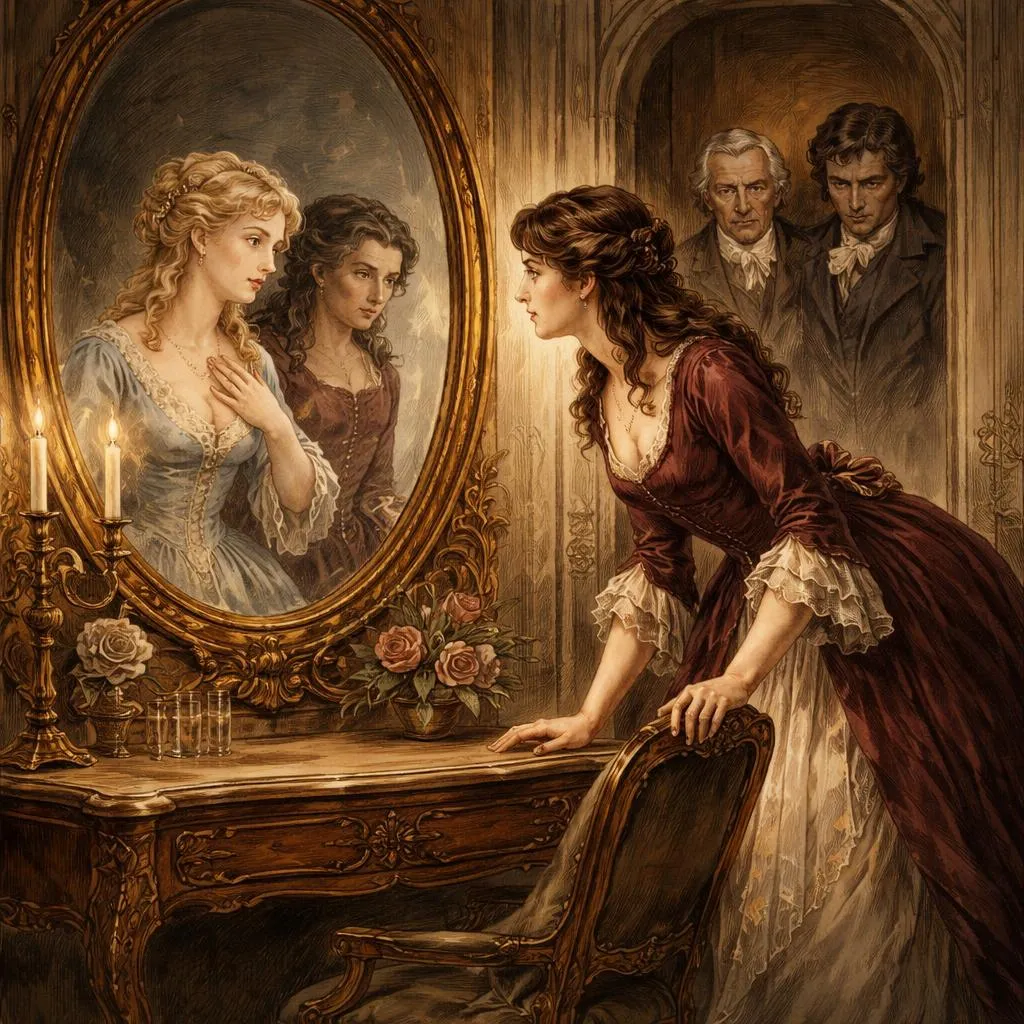

“Sydney,” said Mr. Stryver, on that self-same night, or morning, to his jackal; “mix another bowl of punch; I have something to say to you.”
Sydney had been working double tides that night, and the night before, and the night before that, and a good many nights in succession, making a grand clearance among Mr. Stryver’s papers before the setting in of the long vacation. The clearance was effected at last; the Stryver arrears were handsomely fetched up; everything was got rid of until November should come with its fogs atmospheric, and fogs legal, and bring grist to the mill again.
Sydney was none the livelier and none the soberer for so much application. It had taken a deal of extra wet-towelling to pull him through the night; a correspondingly extra quantity of wine had preceded the towelling; and he was in a very damaged condition, as he now pulled his turban off and threw it into the basin in which he had steeped it at intervals for the last six hours.
“Are you mixing that other bowl of punch?” said Stryver the portly, with his hands in his waistband, glancing round from the sofa where he lay on his back.
“I am.”
“Now, look here! I am going to tell you something that will rather surprise you, and that perhaps will make you think me not quite as shrewd as you usually do think me. I intend to marry.”
“DO you?”
“Yes. And not for money. What do you say now?”
“I don’t feel disposed to say much. Who is she?”
“Guess.”
“Do I know her?”
“Guess.”
“I am not going to guess, at five o’clock in the morning, with my brains frying and sputtering in my head. if you want me to guess, you must ask me to dinner.”
“Well then, I’ll tell you, said Stryver, coming slowly into a sitting posture. “Sydney, I rather despair of making myself intelligible to you, because you are such an insensible dog.
“And you,” returned Sydney, busy concocting the punch, “are such a sensitive and poetical spirit—”
“Come!” rejoined Stryver, laughing boastfully, “though I don’t prefer any claim to being the soul of Romance (for I hope I know better), still I am a tenderer sort of fellow than YOU.”
“You are a luckier, if you mean that.”
“I don’t mean that. I mean I am a man of more—more—”
“Say gallantry, while you are about it,” suggested Carton.
“Well! I’ll say gallantry. My meaning is that I am a man,” said Stryver, inflating himself at his friend as he made the punch, “who cares more to be agreeable, who takes more pains to be agreeable, who knows better how to be agreeable, in a woman’s society, than you do.”
“Go on,” said Sydney Carton.
“No; but before I go on,” said Stryver, shaking his head in his bullying way, I’ll have this out with you. You’ve been at Doctor Manette’s house as much as I have, or more than I have. Why, I have been ashamed of your moroseness there! Your manners have been of that silent and sullen and hangdog kind, that, upon my life and soul, I have been ashamed of you, Sydney!”
“It should be very beneficial to a man in your practice at the bar, to be ashamed of anything,” returned Sydney; “you ought to be much obliged to me.”
“You shall not get off in that way,” rejoined Stryver, shouldering the rejoinder at him; “no, Sydney, it’s my duty to tell you—and I tell you to your face to do you good—that you are a devilish ill-conditioned fellow in that sort of society. You are a disagreeable fellow.”
Sydney drank a bumper of the punch he had made, and laughed.
“Look at me!” said Stryver, squaring himself; “I have less need to make myself agreeable than you have, being more independent in circumstances. Why do I do it?”
“I never saw you do it yet,” muttered Carton.
“I do it because it’s politic; I do it on principle. And look at me! I get on.”
“You don’t get on with your account of your matrimonial intentions,” answered Carton, with a careless air; “I wish you would keep to that. As to me—will you never understand that I am incorrigible?”
He asked the question with some appearance of scorn.
“You have no business to be incorrigible,” was his friend’s answer, delivered in no very soothing tone.
“I have no business to be, at all, that I know of,” said Sydney Carton. “Who is the lady?”
“Now, don’t let my announcement of the name make you uncomfortable, Sydney,” said Mr. Stryver, preparing him with ostentatious friendliness for the disclosure he was about to make, “because I know you don’t mean half you say; and if you meant it all, it would be of no importance. I make this little preface, because you once mentioned the young lady to me in slighting terms.”
“I did?”
“Certainly; and in these chambers.”
Sydney Carton looked at his punch and looked at his complacent friend; drank his punch and looked at his complacent friend.
“You made mention of the young lady as a golden-haired doll. The young lady is Miss Manette. If you had been a fellow of any sensitiveness or delicacy of feeling in that kind of way, Sydney, I might have been a little resentful of your employing such a designation; but you are not. You want that sense altogether; therefore I am no more annoyed when I think of the expression, than I should be annoyed by a man’s opinion of a picture of mine, who had no eye for pictures: or of a piece of music of mine, who had no ear for music.”
Sydney Carton drank the punch at a great rate; drank it by bumpers, looking at his friend.
“Now you know all about it, Syd,” said Mr. Stryver. “I don’t care about fortune: she is a charming creature, and I have made up my mind to please myself: on the whole, I think I can afford to please myself. She will have in me a man already pretty well off, and a rapidly rising man, and a man of some distinction: it is a piece of good fortune for her, but she is worthy of good fortune. Are you astonished?”
Carton, still drinking the punch, rejoined, “Why should I be astonished?”
“You approve?”
Carton, still drinking the punch, rejoined, “Why should I not approve?”
“Well!” said his friend Stryver, “you take it more easily than I fancied you would, and are less mercenary on my behalf than I thought you would be; though, to be sure, you know well enough by this time that your ancient chum is a man of a pretty strong will. Yes, Sydney, I have had enough of this style of life, with no other as a change from it; I feel that it is a pleasant thing for a man to have a home when he feels inclined to go to it (when he doesn’t, he can stay away), and I feel that Miss Manette will tell well in any station, and will always do me credit. So I have made up my mind. And now, Sydney, old boy, I want to say a word to YOU about YOUR prospects. You are in a bad way, you know; you really are in a bad way. You don’t know the value of money, you Eve hard, you’ll knock up one of these days, and be ill and poor; you really ought to think about a nurse.”
The prosperous patronage with which he said it, made him look twice as big as he was, and four times as offensive.
“Now, let me recommend you,” pursued Stryver, “to look it in the face. I have looked it in the face, in my different way; look it in the face, you, in your different way. Marry. Provide somebody to take care of you. Never mind your having no enjoyment of women’s society, nor understanding of it, nor tact for it. Find out somebody. Find out some respectable woman with a little property—somebody in the landlady way, or lodging-letting way—and marry her, against a rainy day. That’s the kind of thing for YOU. Now think of it, Sydney.”
“I’ll think of it,” said Sydney.
Contexte et Introduction de l'Auteur
Ce passage est tiré de Un Conte de Deux Cités, un roman célèbre écrit par Charles Dickens, l'un des plus grands romanciers anglais du 19ème siècle. Publié en 1859, ce roman se déroule pendant les temps turbulents de la Révolution française. Dickens est connu pour ses personnages vivants et ses commentaires sociaux profonds, soulignant souvent les luttes des pauvres et les injustices de la société.
L'histoire met en contraste la vie à Londres et à Paris, explorant les thèmes du sacrifice, de la résurrection et de la possibilité de rédemption. Les personnages du roman sont confrontés à des dilemmes moraux et à des transformations personnelles au milieu du chaos politique.
Interprétation Détaillée du Passage
Dans cette scène, M. Stryver, un avocat confiant et quelque peu vantard, révèle à Sydney Carton, son ami et collègue, qu'il a l'intention d'épouser Miss Manette. Sydney, qui a une personnalité complexe et quelque peu dépréciative, réagit avec un mélange de sarcasme et d'indifférence.
Le dialogue révèle des traits de caractère clés : l'ambition de Stryver et son désir d'ascension sociale par le mariage, et le cynisme et le détachement émotionnel de Carton. La mention de Miss Manette se connecte à l'histoire plus large, car elle est une figure centrale dont le destin affecte profondément les protagonistes.
Les conseils de Stryver à Carton sur le mariage sont pratiques mais aussi condescendants, reflétant les attitudes sociales de l'époque. La réponse de Carton montre son conflit intérieur et préfigure ses actions héroïques ultérieures dans le roman.
Leçons et Aperçus pour les Étudiants
-
Comprendre la Complexité des Personnages : Ce passage aide les étudiants à apprécier que les gens sont souvent compliqués, avec des forces et des faiblesses. Le mélange d'humour, de tristesse et de perspicacité de Sydney Carton en fait un personnage mémorable qui évolue tout au long de l'histoire.
-
Responsabilité Sociale et Personnelle : L'accent mis par Stryver sur le mariage comme moyen de sécurité et de statut reflète les pressions sociétales. Les étudiants peuvent apprendre à réfléchir de manière critique à la façon dont les attentes sociales influencent les choix personnels.
-
Amitié et Honnêteté : Malgré leurs différences, Stryver et Carton partagent une relation franche. Cela montre la valeur d'une communication honnête entre amis, même lorsque les opinions divergent.
-
Réflexion Personnelle : Les remarques sarcastiques de Carton et sa volonté éventuelle de « penser à cela » suggèrent l'importance de la conscience de soi et de l'ouverture au changement.
Appliquer Ces Leçons dans la Vie et l'Apprentissage
-
À l'École : Les étudiants peuvent apprendre à analyser les personnages en profondeur, à comprendre les motivations et les conflits, ce qui améliore la pensée critique et l'empathie.
-
Dans les Situations Sociales : Reconnaître que les gens ont des personnalités et des luttes différentes peut aider les étudiants à développer de la patience et de la gentillesse dans leurs amitiés.
-
Dans le Développement Personnel : Comme Sydney Carton, les étudiants peuvent être confrontés à des moments de doute ou de cynisme. Réfléchir à leurs attitudes et être ouverts à de nouvelles perspectives peut conduire à une amélioration personnelle.
-
Dans la Prise de Décision : Comprendre les influences sociétales, comme le montre l'approche pragmatique de Stryver, peut aider les étudiants à faire des choix éclairés concernant leur avenir, en équilibrant les désirs personnels et les considérations pratiques.
Cultiver les Qualités Positives de l'Histoire
-
Empathie : En voyant le monde à travers les yeux de personnages comme Carton et Manette, les étudiants peuvent développer une compréhension plus profonde des sentiments des autres.
-
Courage et Sacrifice : Le roman dans son ensemble enseigne le courage et le fait de faire passer les autres avant soi, inspirant les étudiants à agir avec intégrité.
-
Résilience : Les personnages sont confrontés à des difficultés mais continuent à s'efforcer d'améliorer leur vie, encourageant les étudiants à persévérer face aux défis.
Conclusion
Cet extrait de Un Conte de Deux Cités offre aux étudiants une matière riche pour explorer la nature humaine, la dynamique sociale et les choix moraux. En s'engageant dans l'histoire, les jeunes lecteurs peuvent acquérir des connaissances qui les aident à naviguer dans leur propre vie avec plus de sagesse et de compassion.
