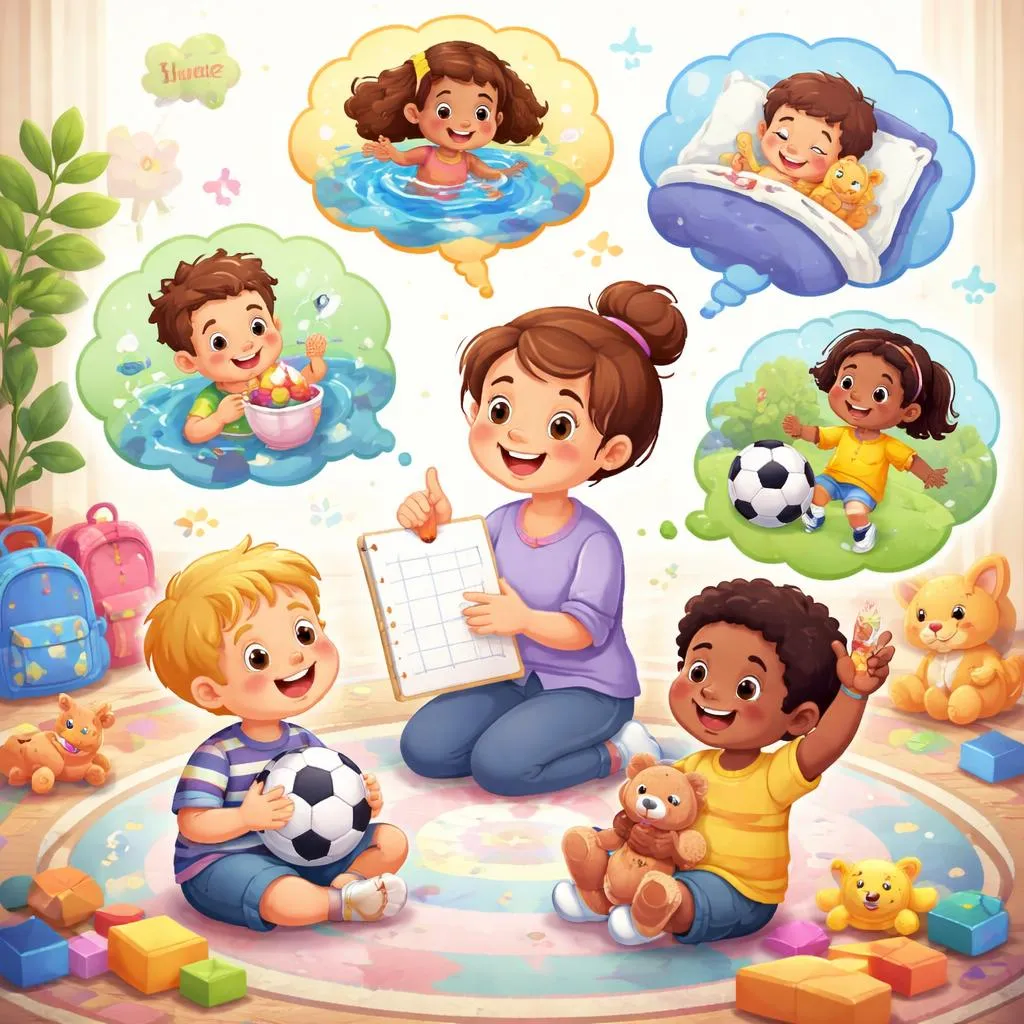

Meaning Let's explore a very common and useful English phrase pattern: "have a verb". This structure is a bit special. Here, "have" is the main action verb. The word "a" is an article. The word "verb" in this phrase stands for a noun that names an activity. For example, we say "have a walk" or "have a talk." This means to do the activity of walking or talking. It often suggests doing the activity in a relaxed, complete, or social way. Understanding this "have a verb" pattern helps us sound more natural and expressive in English.
Conjugation The word "have" in the phrase "have a verb" follows standard conjugation rules. We change "have" to match the subject. For I, you, we, and they, we use "have." For he, she, and it, we use "has." The article "a" and the activity noun stay the same. Let's see examples. I have a swim. You have a look. He has a talk. She has a rest. It has a good run (like a machine). We have a meeting. They have a chat. Remembering to change "have" to "has" for he/she/it is the key to correct grammar here.
Present Tense We use the "have a verb" structure in the present simple tense for routines and general facts. We talk about activities we do regularly. I have a bath every evening. She has a piano lesson on Tuesdays. We have a discussion in class. The dog has a walk in the park. We also use it for suggestions or offers in the present. "Let's have a break." This pattern is very common in daily conversation. It turns a simple verb into a more substantial, countable event. Instead of just "resting," we "have a rest."
Past Tense To talk about these activities in the past, we change "have" to "had." We use "had" for all subjects: I, you, he, she, it, we, they. Yesterday, I had a long walk. She had a nice chat with her friend. They had a big argument. The computer had a scan for problems. The phrase often describes a completed event in the past. It gives a sense that the activity happened fully and is now finished. "We had a swim" sounds more complete than "We swam."
Future Tense To express a future plan for such an activity, we use "will have" or "going to have." We use this for all subjects. I will have a look at it tomorrow. She is going to have a party next week. They will have a meeting on Friday. We can also use it to make a future offer. "You will have a chance to play later." This structure helps us plan and talk about future events as distinct, scheduled activities rather than just vague actions.
Questions We ask questions about these activities using "do" or "does." We use "do" with I, you, we, they. We use "does" with he, she, it. When we use "does," the main verb "have" returns to its base form. Do you have a nap in the afternoon? Does he have a practice today? Do they have a game this weekend? To answer, we say, "Yes, I do," or "No, she doesn't." We can also give a full answer. "Yes, I have a nap." This question form is essential for making plans and checking schedules.
Other Uses The "have a verb" structure has some important nuances. It is often more informal and idiomatic than using the verb alone. "Let's have a think" is common in British English, similar to "Let's think." It can express a temporary experience. "I'm having a difficult time." It is also used in many fixed expressions. "Have a good time!" "Have a safe trip!" "Have a baby." These are essential phrases for daily life. The pattern adds a sense of the activity being an event or an experience.
Learning Tips A great tip is to create a "Phrase Bank." Collect common "have a verb" combinations. Start with: have a bath, have a drink, have a go (try), have a dream, have a good time. Practice them with different subjects. "I have a dream. She has a drink." Listen for these phrases in movies or songs. Notice how they are used. Another helpful strategy is to pair the phrase with a time word. "On Saturdays, we have a walk." This connects the grammar to a real-life routine.
Educational Games Games can make mastering this pattern fun. Play "Phrase Charades." One child acts out "having a nap" or "having a talk." Others guess and say the full phrase. Another game is "Sentence Builder." Provide cards with subjects [I, He, She, They], verbs [have, has], and activity nouns [bath, party, break]. Children pick one of each to build a logical sentence. "She has a party." For a speaking game, "My Day" dice can be used. Roll a die with times of day (morning, afternoon) and another with phrases (have a snack, have a play). Create a sentence. "In the afternoon, I have a play."
Mastering the "have a verb" structure is a significant step toward fluent, natural-sounding English. It moves beyond basic verb conjugation into the realm of common colloquial phrases. This pattern allows children to describe activities as events, make suggestions politely, and share their routines more descriptively. Consistent practice through substitution, creative games, and real-life application helps internalize the rule. The goal is for phrases like "Let's have a look" or "I had a great time" to become automatic. This builds confidence and enables clearer, more expressive communication about everyday life and special moments alike.