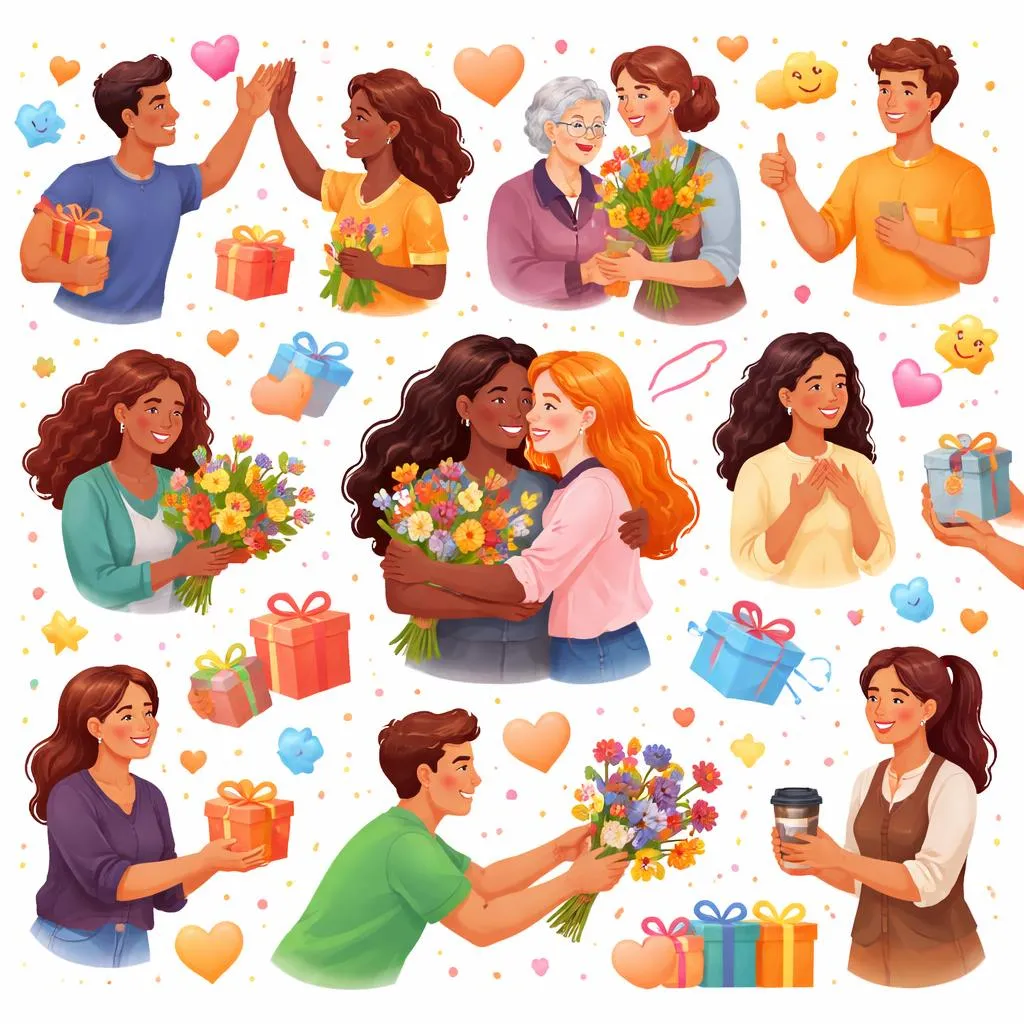

What is "thank you" in English?
Hello, wonderful learners. Today, we are going to explore a very important question. How do you say thank you in English languages? This is a fantastic question because the answer is not just one thing. English is spoken in many countries, and it is full of colorful and friendly ways to express gratitude.
When someone helps you or gives you a gift, you want to say thank you. The most common and important way is to say "Thank you." But that is just the beginning. There are so many other wonderful phrases. You can say "Thanks!" or "Thank you so much!" Learning all these ways makes your English sound natural and kind. It helps you show exactly how grateful you feel. Let us discover the whole family of thank you phrases together.
Meaning and explanation
When we ask "How do you say thank you in English languages?" we are really learning about tone and feeling. Each thank you phrase has a slightly different feeling. "Thank you" is polite and works everywhere. "Thanks" is a little more casual and friendly. "Cheers" as thank you is very casual and used in some places like Britain.
The word "gratitude" means the feeling of being thankful. All these phrases express gratitude. Choosing the right one is like choosing the right color for a drawing. You pick the phrase that fits the moment perfectly. A big gift might need a "Thank you ever so much." A small favor might just need a quick "Thanks!" It is all about matching your words to your feelings and the situation.
Categories or lists
Let us sort the many ways to say thank you in English into simple groups. Think of them from very polite to very casual.
The Standard and Always Safe Group: This group is perfect for almost any time. You can use these phrases with teachers, family, and friends. "Thank you" is the classic. "Thank you very much" adds a little more emphasis. "Thanks" is the shorter, friendly version. "Thank you so much" shows strong, happy thanks.
The Very Polite and Formal Group: Use these phrases when you want to be extra polite. You might use them in a thank you note or with someone very important. "I really appreciate it" is warm and personal. "Thank you kindly" sounds very nice and traditional. "Many thanks" is good for writing notes or emails.
The Casual and Friendly Group: These are for friends, family, and very relaxed times. "Thanks a lot" is common and casual. "Thanks a million" or "Thanks a bunch" are fun and show you are very grateful. "Ta" is a very short, informal thank you used in places like the UK and Australia. "Cheers" can also mean thanks in the UK.
Daily life examples
You can practice all these ways to say thank you in English every single day. The right phrase depends on where you are and who you are with.
At home, you have many chances. Your dad makes your favorite sandwich. You can say, "Thanks, Dad!" If he helps you build a huge Lego castle, a bigger "Thanks a million!" fits perfectly. Your sister shares her last piece of candy. A sincere "Thank you! I appreciate it" is a lovely choice.
At school, you talk to teachers and friends. Your friend lends you an eraser. A simple "Thanks!" is perfect. Your teacher stays late to help you. A respectful "Thank you very much for your help, Mrs. Brown" is exactly right. A classmate lets you go first in line. A cheerful "Cheers!" could work if you are feeling playful.
Out in the world, you meet strangers. A bus driver waits for you. A clear "Thank you!" as you get on is polite. Someone holds a heavy door for you and your mom. A bright "Thank you so much!" shows your gratitude clearly. Using these phrases makes the world a friendlier place.
Printable flashcards
Printable flashcards are a super tool for learning how to say thank you in English. You can make a "Gratitude Phrasebook" of cards.
Each card can have a picture of a situation on the front. For example, a picture of a child receiving a birthday present. On the back, write the best thank you phrase for that big moment: "Thank you so much! I love it!"
Make another card with a small favor, like someone passing the salt. The back can say: "Thanks!" This helps you match the phrase to the action. You can draw little faces to show the tone: a big smile for "Thanks a million!" and a polite smile for "Thank you kindly."
You can also make a "Phrase Meter" on a big piece of paper. Draw a line from "Very Formal" on one end to "Very Casual" on the other. Write or glue your thank you flashcards along the line where they belong. This helps you see the whole range of how to say thank you in English.
Learning activities or games
Let's play some games to practice these phrases. First, play "Thank You Charades." Write different situations on small papers: "Your grandma gives you a hug," "A waiter brings your food," "Your friend scores a goal for your team." Put them in a hat. One player picks a paper and acts out the scene. The other players must guess the situation and then say the perfect thank you phrase for it. This connects actions to words.
Another fun game is the "Gratitude Grab Bag." Get a bag and fill it with small objects or pictures: a toy car, a picture of a cookie, a drawing of a helping hand. Players take turns pulling an item from the bag without looking. They must then say thank you for that item using a phrase from one of our groups. "You found a toy car? Say 'Thanks a bunch!'" This game encourages quick thinking.
Finally, try "Thank You Story Time." Make a set of cards with different thank you phrases. Start telling a story. "One day, I was walking and I saw a lost puppy..." Pause and let a player draw a thank you card. They must continue the story and use that phrase naturally. "...I helped the puppy find its home. Its owner said, 'Thank you ever so much!'" This creative game makes you use the phrases in context. It is a wonderful way to make the words your own.