
Fun Introduction
Last Saturday, Mia played hide-and-seek with friends. She hid behind the couch. Suddenly, she heard footsteps approaching the door. Her heart raced fast. Later, Mia sat with grandma. She listened to grandma tell a story. Every word felt important. Both used ears. But one happened by accident. The other needed focus. Let’s learn the difference.
Word Breakdown
Core Principle
We reject boring dictionary definitions. We use pictures in your mind. We add functions and memory hooks. This helps you remember forever.
Hear To Do
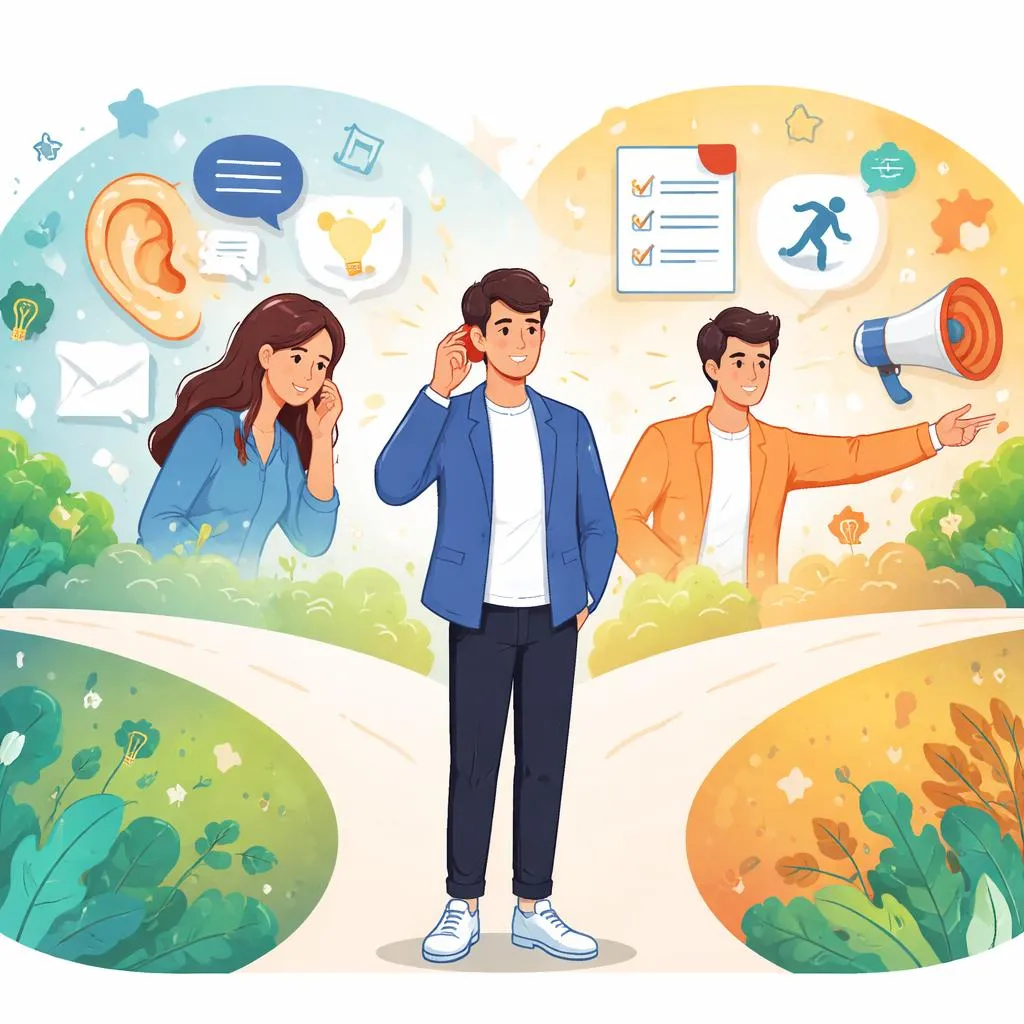
Image: Imagine a loud door slamming shut. You jump in surprise. That is hear to do. It means sound reaching your ears without effort.
Function: It is for accidental sounds. Like hear thunder outside. Or hear your name called.
Sensory Description: You feel startled suddenly. You hear a sharp noise. Your body reacts fast.
Memory Anchor: A person jumping at a loud bang. See the surprise? That is hear to do.
Listen To Do
Image: Think of leaning close to a friend. You cup your ear carefully. That is listen to do. It means paying attention to sound on purpose.
Function: It is for focused hearing. Like listen to the teacher. Or listen to music.
Sensory Description: You feel concentration building. You hear details clearly. Your mind stays alert.
Memory Anchor: A child cupping an ear to hear better. See the focus? That is listen to do.
Advanced Comparison
Hear is passive and accidental. Listen is active and intentional. Hear lets sound come to you. Listen makes you chase the sound. Use hear for surprises. Use listen for learning.
Scene Comparison
Scene One happens at school. Leo sits at his desk. The bell rings loudly. He hears it and stands up. Then he listens to the teacher’s instructions. He nods along carefully. This shows hear for the bell, listen for the lesson.
Scene Two takes place at home. Emma watches TV when thunder crashes. She hears the boom clearly. She runs to the window. She listens to the rain tapping gently. She smiles at the rhythm. This shows hear for thunder, listen for rain.
Scene Three occurs in the park. Ben walks under a tree. He hears a bird chirping. He stops and looks up. He listens to its song for a minute. He whistles back softly. This shows hear for the chirp, listen for the melody.
Pitfalls Deep Reminder
Mistake One is saying “I listened to the alarm clock.” Why wrong? Alarm clocks are heard accidentally. Listening implies choice. Funny result? Friends think you enjoy waking up early. Correct phrase is hear the alarm. Memory trick: Hear is for sudden noises.
Mistake Two is saying “I heard the instructions carefully.” Why wrong? Instructions need listening to understand. Hearing is too passive. Funny result? Teacher thinks you ignored her. Correct phrase is listen to the instructions. Memory trick: Listen is for paying attention.
Mistake Three is saying “I listened to the explosion.” Why wrong? Explosions are heard unexpectedly. Listening suggests analysis. Funny result? People think you study bombs. Correct phrase is hear the explosion. Memory trick: Hear is for shocks.
Mistake Four is saying “I heard my favorite song on purpose.” Why wrong? Choosing to hear a song is listening. Hearing is accidental. Funny result? You claim you have magic ears. Correct phrase is listen to my favorite song. Memory trick: Listen is for chosen sounds.
Interactive Exercises
Read each sentence and pick the right phrase. I hear the dog barking outside. Or I listen to the dog barking outside. Which fits? The first. Try more. She hears the school bus coming. He listens to the podcast intently. We hear the fireworks tonight. They listen to the coach’s advice.
Act with a friend. Use the phrases.
Scene A: Sudden Noise
A: Did you hear that loud crash?
B: Yes, it came from the kitchen.
Scene B: Focused Attention
A: I need to listen to this audiobook.
B: Is it the mystery story?
Spot the odd sentence. I listened to the lightning strike. Why odd? Lightning is heard suddenly. Use hear instead. I heard the piano recital carefully. Why odd? Recitals need listening. Use listen instead. I listened to the baby crying. Why odd? Crying is heard accidentally. Use hear instead.
Create your own sentences. Use hear to do: I hear the ice cream truck music. Use listen to do: I listen to my sister read a book.
Bonus challenge. You walk past a construction site. Do you hear or listen to the drills? Answer: Hear. The sound finds you.
Rhyme Time
Hear it come, listen with care.
One is chance, one is aware.
Sudden sound? Choose hear.
Focused mind? Listen to steer.
Homework Task
Pick one activity. Complete it this week. Share with family.
Option One: Observation Journal. Get a small notebook. Draw three pictures. Write a sentence under each.
Picture One: You hear something. Sentence: I heard the doorbell ring.
Picture Two: You listen to something. Sentence: I listened to my dad read a story.
Picture Three: You hear something else. Sentence: I heard the birds outside.
Show your journal to a parent. Explain the differences.
Option Two: Role Play. With a parent, act out moments. Use phrases correctly.
You: Mom, I will hear the timer ding.
Parent: Good. Then we can eat.
You: Dad, I need to listen to this song.
Parent: It has a great beat.
Practice until it feels natural.
Option Three: Sharing Time. Tomorrow at school, tell a friend. Describe one hear and one listen. Say: Yesterday I heard thunder. I listened to my teacher. Ask your friend about theirs.
Life Practice
Week Challenge: Try one task. Complete within seven days. Share your success.
Task One: Observation Log. For three days, note hear and listen moments. Draw icons.
Day One: Hear a siren. Draw a bell icon.
Day Two: Listen to a story. Draw a book icon.
Day Three: Hear a bird. Draw a wing icon.
Show your log to your teacher. Place it on the classroom wall.
Task Two: Action Demo. Use both phrases in real actions.
Step One: React to a sudden noise. Say: I hear that sound.
Step Two: Lean in to catch words. Say: I listen to you speak.
Demonstrate to a sibling. Explain the difference.
Task Three: Social Mission. Use phrases with others.
Hear a friend’s joke from afar. Say: I heard your joke, it was funny!
Listen to a classmate’s secret. Say: I listened to your story carefully.
Record a short voice message. Send it to your teacher.
Task Four: Creative Story. Write a short tale. Include both phrases.
Title: The Sound Detective.
Story: I heard a strange noise. Then I listened to find its source. What an adventure!
Share your story in class.
Remember, practice makes perfect. Use these phrases often. Soon they will feel easy.