
Fun Introduction
Last Saturday, Mia played at the park. She brought a crisp apple. She bit into it with a loud crunch. Juice ran down her chin. Later, Mia ate a tough beef jerky. She chewed it slowly to soften. Both actions used her teeth. But one was quick and sharp. The other was slow and grinding. Let’s learn the difference.
Word Breakdown
Core Principle
We reject boring dictionary definitions. We use pictures in your mind. We add functions and memory hooks. This helps you remember forever.
Bite To Do
Image: Imagine taking a big bite of a sandwich. Your teeth close quickly. That is bite to do. It means using teeth to cut or grip something sharply.
Function: It is for quick, decisive actions. Like bite an apple. Or bite a string to cut it.
Sensory Description: You hear a crunch. You feel a sharp pressure. Your tongue tastes a burst of flavor.
Memory Anchor: A bitten apple with teeth marks. See the neat bite? That is bite to do.
Chew To Do
Image: Think of moving your jaw up and down. You grind food slowly. That is chew to do. It means breaking down food by repeated biting and grinding.
Function: It is for making food soft before swallowing. Like chew meat thoroughly. Or chew gum for flavor.
Sensory Description: You hear a rhythmic grinding. You feel your jaw working. Your mouth gets watery.
Memory Anchor: A cow chewing cud peacefully. See the slow motion? That is chew to do.
Advanced Comparison
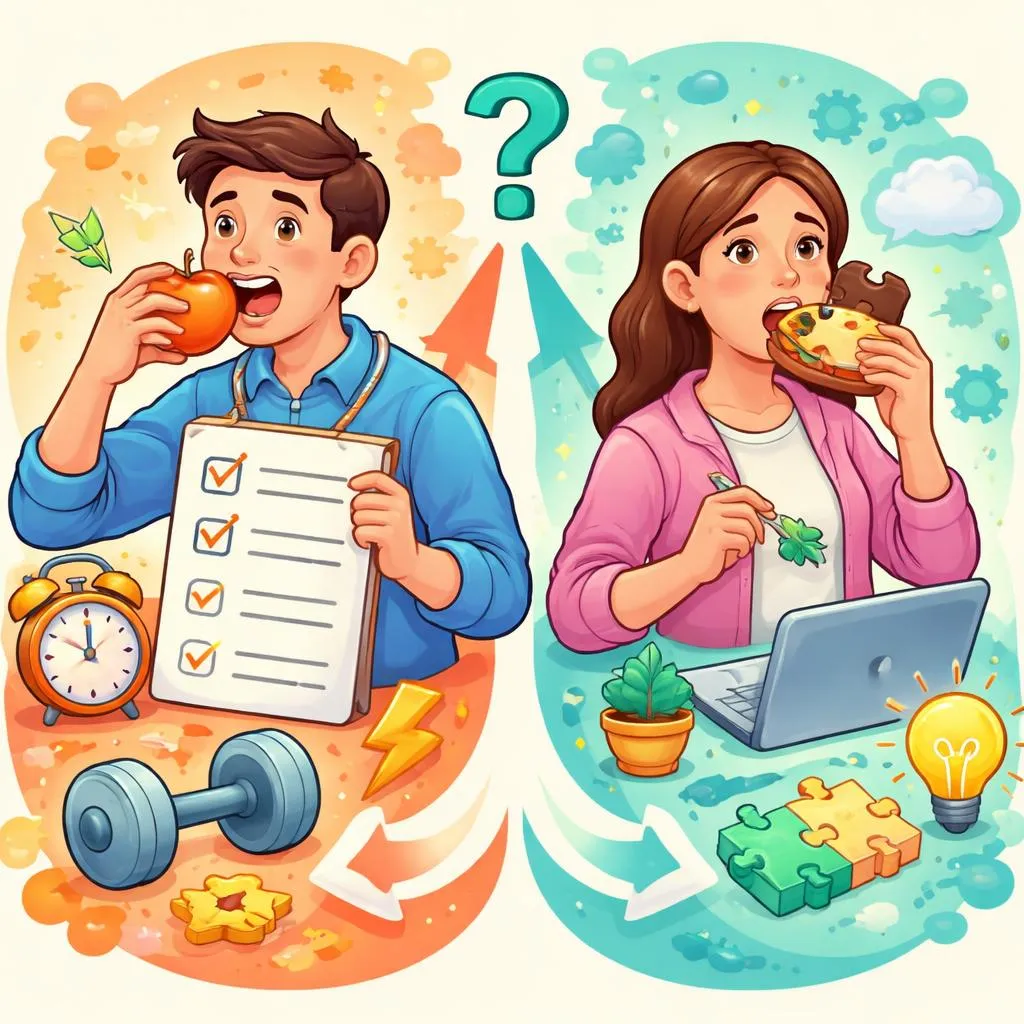
Bite is quick and cutting. Chew is slow and grinding. Bite uses sharp force. Chew uses repetitive motion. Use bite for first contact. Use chew for thorough breakdown.
Scene Comparison
Scene One happens at lunchtime. Leo opens his lunchbox. He bites into a crisp carrot. Crunch! He enjoys the sound. His friend asks for a bite. This is bite to do—quick and decisive.
Scene Two takes place at dinner. Emma eats a tough piece of steak. She chews it many times. Her dad reminds her to chew well. This is chew to do—slow and thorough.
Scene Three occurs during a picnic. Ben bites a chocolate chip cookie. Then he chews it slowly to savor. Notice the shift. Biting starts the process. Chewing continues it.
Pitfalls Deep Reminder
Mistake One is saying “I chewed the apple quickly.” Why wrong? Apples are bitten, not chewed whole. Chewing is for grinding. Funny result? Friends imagine you grinding an apple like a cow. Correct phrase is bite the apple. Memory trick: Bite is for first contact.
Mistake Two is saying “I bit the steak repeatedly.” Why wrong? Steak needs chewing to soften. Biting once is not enough. Funny result? You choke on a big piece. Correct phrase is chew the steak. Memory trick: Chew is for tough food.
Mistake Three is saying “I chewed the string to break it.” Why wrong? Strings are bitten to cut. Chewing is too slow. Funny result? The string stays intact. Correct phrase is bite the string. Memory trick: Bite cuts quickly.
Mistake Four is saying “I bit the gum all day.” Why wrong? Gum is chewed to release flavor. Biting ruins it. Funny result? Gum loses flavor instantly. Correct phrase is chew the gum. Memory trick: Chew is for gum.
Interactive Exercises
Choose the Right Phrase
Read each sentence. Pick bite or chew.
I ___ the sandwich hungrily. (bite/chew)
She ___ the nuts carefully. (bite/chew)
We ___ the toffee until it softened. (bite/chew)
He ___ the pencil tip by accident. (bite/chew)
They ___ the licorice slowly. (bite/chew)
Mini Theater
Act with a friend. Use the phrases.
Scene A: Quick Snack
A: This bagel is fresh. I will ___ it.
B: Save some for me!
Scene B: Slow Enjoyment
A: This jerky is tough. I must ___ it well.
B: Take your time.
Spot the Mistake
Which sentence sounds odd? Explain why.
Sentence: I chewed the apple in one go.
Reason: Apples are bitten. Use bite instead.
Sentence: I bit the bread for five minutes.
Reason: Bread needs chewing. Use chew instead.
Sentence: We chewed the candy cane.
Reason: Candy canes are bitten. Use bite instead.
Create Sentences
Use both phrases.
Bite to do: I bite into a juicy peach.
Chew to do: I chew my food carefully.
Bonus Challenge
You find a tough piece of meat. Do you bite or chew it? Answer: Chew. It needs grinding.
Rhyme Time
Bite it quick, chew it slow.
One cuts sharp, one makes soft flow.
First contact? Choose bite.
Grinding work? Chew to delight.
Homework Task
Pick one activity. Complete it this week. Share with family.
Option One: Observation Journal. Get a small notebook. Draw three pictures. Write a sentence under each.
Picture One: You bite something. Sentence: I bit into a pear.
Picture Two: You chew something. Sentence: I chewed my steak well.
Picture Three: You bite something else. Sentence: I bit a cookie.
Show your journal to a parent. Explain the differences.
Option Two: Role Play. With a parent, act out moments. Use phrases correctly.
You: Mom, I will bite this apple.
Parent: Good, enjoy the crunch.
You: Dad, I need to chew this jerky.
Parent: Chew slowly so it is tender.
Practice until it feels natural.
Option Three: Sharing Time. Tomorrow at school, tell a friend. Describe one bite and one chew. Say: Yesterday I bit a plum. I chewed my sandwich. Ask your friend about theirs.
Life Practice
Week Challenge: Try one task. Complete within seven days. Share your success.
Task One: Observation Log. For three days, note bite and chew moments. Draw icons.
Day One: Bite apple. Draw an apple icon.
Day Two: Chew meat. Draw a steak icon.
Day Three: Bite carrot. Draw a carrot icon.
Show your log to your teacher. Place it on the classroom wall.
Task Two: Action Demo. Use both phrases in real actions.
Step One: Bite a cracker. Say: I bite this crisp.
Step Two: Chew a piece of dried fruit. Say: I chew this until soft.
Demonstrate to a sibling. Explain the difference.
Task Three: Social Mission. Use phrases with others.
Bite a friend’s offered pretzel. Say: I bit your pretzel, thanks!
Chew a classmate’s tough candy. Say: I chewed this for a while.
Record a short voice message. Send it to your teacher.
Task Four: Creative Story. Write a short tale. Include both phrases.
Title: The Picnic Adventure.
Story: I bit into a sour lemon. Then I chewed a piece of jerky. What a tasty day!
Share your story in class.
Remember, practice makes perfect. Use these phrases often. Soon they will feel easy.