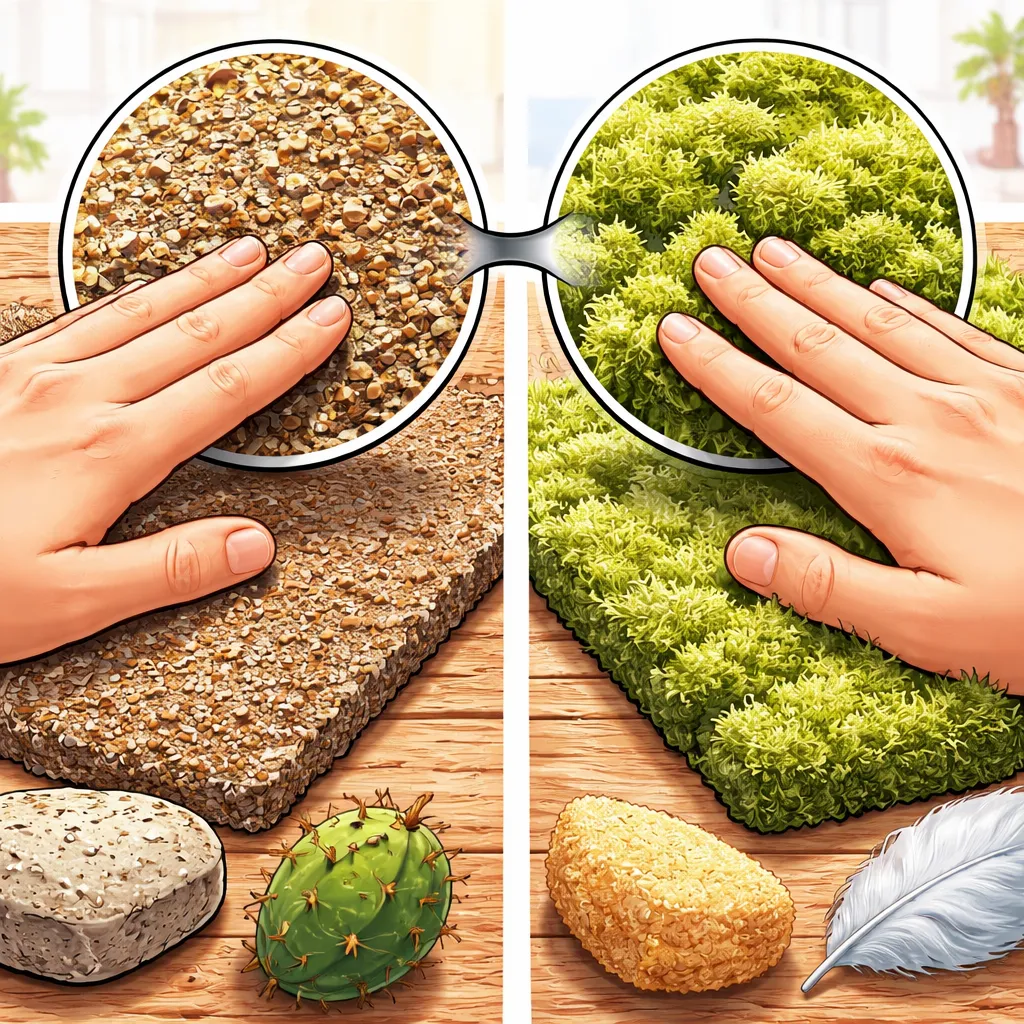

Children know how different things feel. Sandpaper, tree bark, a scratchy wool sweater. Parents say “The road is rough” or “The fabric feels coarse.” Are “rough” and “coarse” the same word? This guide helps your child understand the difference.
Both words describe uneven or scratchy textures. But one word is about general unevenness. The other word is about small, hard particles or fibers. Let us explore these textured words together. Your child will learn to use both with confidence.
Are Similar Words Really Interchangeable? “Rough” and “coarse” seem very close. But you cannot always swap them. Each word carries a different focus. Knowing this helps your child speak more precisely.
Imagine a bumpy dirt road. The road is rough. Your bike bounces on it. Now imagine a fabric made of thick, stiff threads. The fabric is coarse. It feels scratchy against your skin. Rough means not smooth or even. Coarse means having large, hard particles or thick fibers.
Sometimes both words work. “Rough sandpaper” and “coarse sandpaper” are both fine. But “coarse” emphasizes the size of the grains. Rough emphasizes the uneven feeling.
Set 1: Rough vs Coarse — Which One Is More Common? “Rough” appears very often in daily English. Children say “The sidewalk is rough” or “A rough game.” Parents say “Rough estimate” or “Rough seas.” It is a short, common word. Everyone uses it for texture, behavior, and difficulty.
“Coarse” is less common, especially for kids. It sounds more specific and descriptive. We use it for fabrics, hair, sand, or manners. “Coarse sand scratched my feet.” A child might say “Coarse hair” but usually says “scratchy.”
Teach “rough” first to your child. It is perfect for uneven surfaces. Introduce “coarse” for textures with thick or hard pieces. “The coarse towel felt rough on my skin.” This makes “coarse” feel precise.
Set 2: Rough vs Coarse — Same Meaning, Different Contexts Both words can mean not smooth. But the context changes the cause. “Rough” focuses on unevenness. “Coarse” focuses on the size of particles or fibers.
Think about a rocky path. The path is rough. You feel bumps and dips. Now think about a brush with stiff bristles. The brush is coarse. Each bristle is thick and hard. So rough is about bumps. Coarse is about thickness and stiffness.
Help your child see context with examples. “The rough wall scraped my hand.” “The coarse fabric irritated my skin.” This builds real-world understanding. It also makes language more precise.
Set 3: Rough vs Coarse — Which Word Is “Bigger” or More Emphatic? “Rough” feels broader and more general. It describes surfaces, weather, behavior, and difficulty. Rough day. Rough sea. Rough wood. The word carries a sense of discomfort.
“Coarse” is more specific to texture and material. It describes sand, salt, fabric, hair, or manners. Coarse sand. Coarse wool. Coarse joke. So “rough” is wider. “Coarse” is more about small, hard parts. Neither is necessarily stronger. They just focus on different things.
For children, use “rough” for bumps and unevenness. “The rough path made me trip.” Use “coarse” for thick, scratchy textures. “The coarse towel felt like sandpaper.” This teaches specificity.
Set 4: Rough vs Coarse — Concrete vs Abstract Both words work for concrete things. Rough wall, coarse sand. Children understand these easily. But abstract meanings are common.
A rough day means many problems. Rough estimate means not exact. Rough behavior means not gentle. Coarse language means rude or vulgar words. Coarse manners mean not polite. Abstract uses help children talk about feelings, behavior, and speech.
Start with concrete examples at home. “The rough bark of the tree hurt my hand.” “The coarse salt was hard to sprinkle.” Then move to gentle abstract ones. “We had a rough day after the power went out.” “Coarse words can hurt people’s feelings.” These phrases build emotional and social vocabulary.
Set 5: Rough vs Coarse — Verb or Noun? First Understand the Role “Rough” is an adjective most of the time. “The rough surface scratched the table.” “Rough” can also be a noun in golf. But that is rare for children.
“Coarse” is always an adjective. “The coarse fabric made me itch.” Both words work the same way grammatically. That makes them easier for children.
Teach both as describing words. “The rough road shook the car.” “The coarse hair of the brush was stiff.” This sequence avoids confusion. It also builds strong adjective skills.
Set 6: Rough vs Coarse — American English vs British English Both words are common in American and British English. There is almost no difference in meaning. But there are small preferences in use. Americans say “rough” very often. British speakers say the same.
“Coarse” is used equally in both versions. British English uses “coarse” for manners and language too. Americans do the same. So this pair is easy for international learning. For your child, teach both words freely.
A rough road is rough everywhere. Coarse sand is coarse anywhere. This makes learning simple and safe.
Set 7: Rough vs Coarse — Which Fits Formal Situations? Formal situations prefer “coarse” for scientific descriptions. A geology report says “The coarse sediment settled at the bottom.” It might also say “rough,” but “coarse” is more precise. “Coarse” sounds more technical.
“Rough” works in formal writing too. “The rough surface increased friction.” But for material science, use “coarse.” So formality and precision change the word choice.
For children, you do not need formal rules yet. But you can show the difference. “At school, the teacher says rough paper.” “In a science book, they write coarse particles.” This gentle difference prepares them for later.
Set 8: Rough vs Coarse — Which One Is Easier for Kids to Remember? “Rough” is very easy for young children. It has five letters and one clear sound. Kids feel rough surfaces every day. “Rough means not smooth.” Memory sticks through touch.
“Coarse” is harder for small kids. It has one syllable but an unusual “coarse” sound. It sounds like “course” (a class or path). You can connect it to “scratchy.” “Coarse means scratchy with thick pieces.” That simple sentence helps.
Use touch to help remember. “The rough sandpaper scraped my finger.” “The coarse salt felt like tiny rocks.” Repeat both words during texture exploration. “This wall is rough. This sugar is coarse.”
Mini Exercise: Can You Spot the Differences Between These Similar Words? Try these simple questions with your child. No pressure, just playful thinking.
Which word fits better? “The ____ path had many bumps and holes.” (Answer: rough)
Which word fits better? “The ____ fabric felt like thick, stiff hair.” (Answer: coarse)
Is this concrete or abstract? “We had a rough time at the airport.” (Answer: abstract)
True or false? Coarse things are always rough. (Answer: generally true)
Which word describes rude language? (Answer: coarse)
Fill in the blank: “The ____ wood had splinters. The ____ sand had large grains.” (Answer: rough, coarse)
Check answers together slowly. Talk about why each answer works. Praise every effort your child makes.
Parent Tips: How to Help Kids Learn and Remember Similar Words Learning similar words takes gentle repetition. Here are practical tips for your home.
First, use real rough moments. Touch a brick wall. Say “This wall is rough.” Feel a coarse fabric or salt. Say “This is coarse.” Your child feels and hears the difference.
Second, create a “rough or coarse” game. Gather different objects: sandpaper, a soft cloth, salt, a bumpy rock, sugar. Ask “Is this rough, coarse, or both?” Talk about why sugar can be coarse but not rough.
Third, read texture books together. Many children’s books use these words. Pause and ask “Would the author say rough or coarse here?” This builds critical thinking skills.
Fourth, make a word wall at home. Write “rough” in brown for bumps. Write “coarse” in gray for thick particles. Add drawings of a bumpy road and a pile of sand.
Fifth, use gentle correction. If your child says “The soft pillow is coarse”, say “Coarse means scratchy or having thick parts. A soft pillow is the opposite.” Never scold. Just explain.
Finally, celebrate texture discoveries. When your child uses either word correctly, celebrate. “Yes, that wall is rough. And this salt is coarse. Great touching words!” Positive feelings make both words stick. Your patience today builds their vocabulary for life.
Some textures have bumps and dips. Other textures have thick, hard pieces. Both words help us describe the scratchy side of touch. Keep practicing together in a warm, low-pressure way. Your child will learn to choose the right word naturally. And that small skill will make every texture more accurate in English.