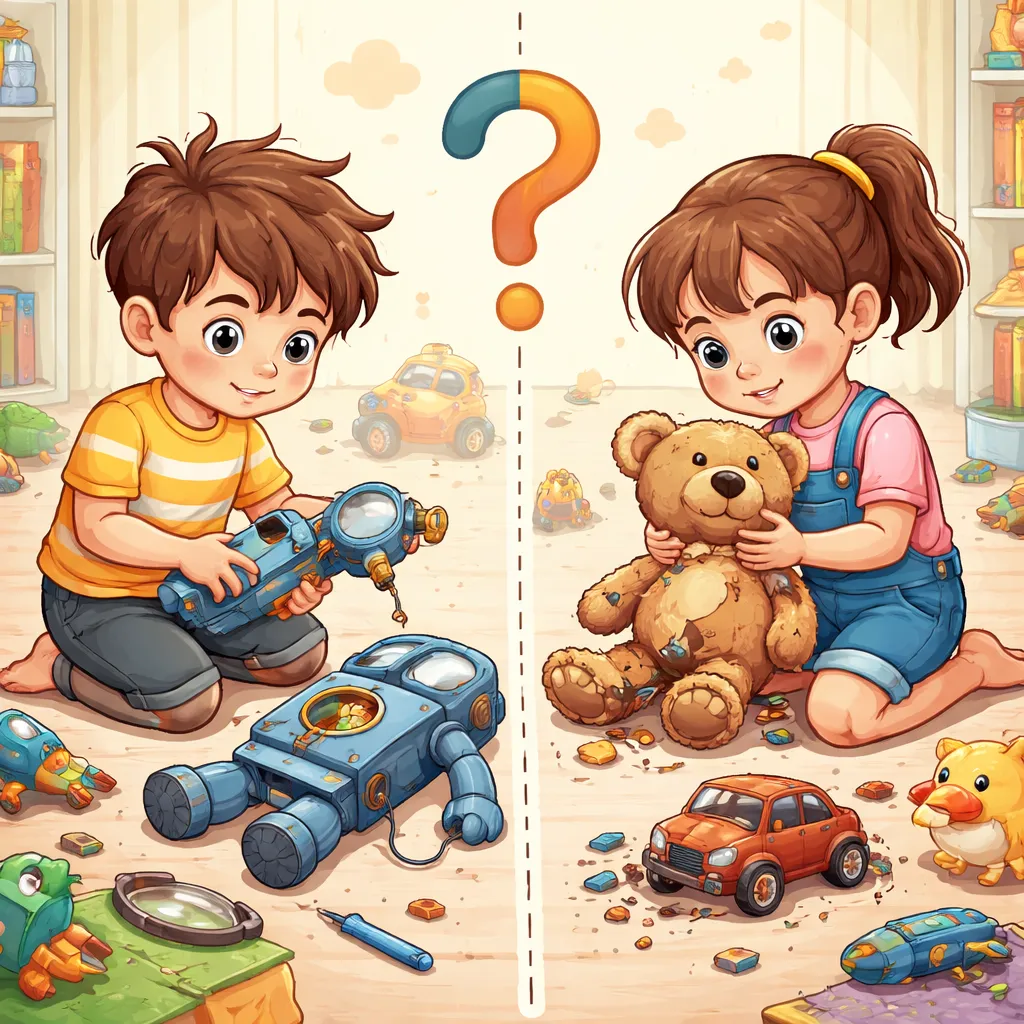

Children use the word “broken” for many things. A crayon snaps in half. A tablet screen cracks. A doll’s arm comes loose. But sometimes, parents hear the word “damaged” instead. Are these two words the same? Can we use them interchangeably? This guide will help your child understand the difference clearly.
Let us explore “broken” and “damaged” together. These words describe when something is not perfect anymore. But they carry different feelings and meanings. Knowing the difference builds stronger English skills. It also helps children describe problems more accurately.
Are Similar Words Really Interchangeable? Many English words seem like twins. But “broken” and “damaged” are not identical. You can damage something without breaking it. And something broken is always damaged. So one word includes the other in some way.
Think of a toy car with a scratch. The scratch damages the paint. But the car still rolls and works. That is damaged, not broken. Now think of a car with a broken wheel. It cannot move at all. That is broken.
For a child, this difference matters. Using the right word helps them explain problems. It also teaches careful observation. Let us look at each comparison in detail.
Set 1: Broken vs Damaged — Which One Is More Common? “Broken” appears much more often in daily English. Children say “My pencil is broken” every day. Parents say “The dishwasher is broken.” It is a simple, strong word. Everyone understands it immediately.
“Damaged” is less common, especially for kids. It sounds more formal and technical. We use it for insurance, cars, or shipping. “The package arrived damaged.” But a child rarely says “My cookie is damaged.”
Teach “broken” first to your child. It is easier to say and remember. Introduce “damaged” when describing valuable items. For example, “We keep the book safe so it does not get damaged.” This makes the new word feel special, not scary.
Set 2: Broken vs Damaged — Same Meaning, Different Contexts Sometimes both words work in the same sentence. “The phone is broken” and “The phone is damaged” both make sense. But the context changes the feeling. “Broken” means the phone does not work. “Damaged” means the phone has a crack but might still work.
Context also includes the object’s value. A broken toy goes to the trash. A damaged antique might get repaired. So “damaged” often suggests hope. “Broken” often suggests the end.
Help your child see context with examples. “The vase fell. Is it broken or damaged?” If pieces are everywhere, it is broken. If only a small chip is missing, it is damaged. This builds real-world judgment.
Set 3: Broken vs Damaged — Which Word Is “Bigger” or More Emphatic? “Broken” feels bigger and more final. It means the object cannot do its job. A broken clock shows no time. A broken promise breaks trust. The word carries a strong emotional weight.
“Damaged” is softer and less dramatic. Damage can be small or large. A damaged reputation might recover. A damaged toy might still bring joy. So “damaged” leaves room for repair.
For children, use “broken” for clear endings. “The eggshell is broken. We cannot fix it.” Use “damaged” for partial problems. “The box is damaged, but the gift inside is fine.” This teaches shades of meaning without pressure.
Set 4: Broken vs Damaged — Concrete vs Abstract Both words work for concrete things you touch. A broken chair, a damaged phone case. Children understand these easily. But abstract meanings are powerful too.
A heart can break. A friendship can become damaged. A broken dream feels hopeless. A damaged reputation can heal over time. Abstract uses help children talk about feelings.
Start with concrete examples at home. “Your crayon is broken. Let us get a new one.” Then move to gentle abstract ones. “When you yell, you damage our happy time.” “A broken promise makes a friend sad.” These phrases build emotional vocabulary.
Set 5: Broken vs Damaged — Verb or Noun? First Understand the Role “Broken” is mainly an adjective. It describes a state. “The toy is broken.” The verb form is “break”. “I break the cookie.” So “broken” comes from the past participle.
“Damaged” is also an adjective. “The car is damaged.” The verb form is “damage”. “Rain can damage the book.” Both words work the same way grammatically. That makes them easier for children.
Teach the adjective form first. Point to things and say “broken” or “damaged”. Then teach the verb “break” and “damage”. “You break the cracker. Rain damages the umbrella.” This sequence avoids confusion.
Set 6: Broken vs Damaged — American English vs British English Both words are common in American and British English. There is almost no difference in meaning. But there are small preferences in use. Americans often say “broken down car.” British speakers say the same. So no big problem here.
However, “damaged” appears more in British insurance forms. “The goods were damaged in transit.” Americans use the same phrase. So both versions understand each other well.
For your child, teach both words equally. There is no regional trap. A broken toy is broken everywhere. A damaged book is damaged anywhere. This makes learning simple and safe.
Set 7: Broken vs Damaged — Which Fits Formal Situations? Formal situations prefer “damaged” over “broken”. A report says “The equipment sustained damage.” It does not say “The equipment is broken.” “Damaged” sounds more professional and careful.
“Broken” is fine for casual and family talk. “The window is broken” works at home. But in a legal document, use “damaged”. “The windshield was damaged during the storm.” So formality changes the choice.
For children, you do not need formal rules yet. But you can plant the seed. “At school, we say ‘damaged’ for library books.” “At home, we say ‘broken’ for old toys.” This gentle difference prepares them for later.
Set 8: Broken vs Damaged — Which One Is Easier for Kids to Remember? “Broken” is much easier for young children. It has six letters and one clear sound. Kids hear it every day from parents and cartoons. The meaning is direct: it does not work. Memory sticks without effort.
“Damaged” is harder for small kids. The “-aged” ending sounds like “age”. That can confuse a five-year-old. Also, “damage” is less common in children’s books. So save it for ages seven and up.
Use pictures to help remember. Draw a cracked egg for “broken”. Draw a scratched toy box for “damaged”. Repeat the words during play. “Oh no, the block tower is broken. The car is damaged but still rolls.”
Mini Exercise: Can You Spot the Differences Between These Similar Words? Try these simple questions with your child. No grades, just fun thinking.
Which word fits better? “The mirror fell and shattered. It is ____.” (Answer: broken)
Which word fits better? “The book cover has a small tear. It is ____.” (Answer: damaged)
Is this concrete or abstract? “His confidence was damaged after the mistake.” (Answer: abstract)
True or false? Something damaged can still work. (Answer: true)
Which word feels more formal? (Answer: damaged)
Fill in the blank: “You can ____ a phone by dropping it, but it might not be ____.” (Answer: damage, broken)
Check answers together slowly. Talk about why each answer works. Praise every effort your child makes.
Parent Tips: How to Help Kids Learn and Remember Similar Words Learning similar words takes gentle repetition. Here are practical tips for your home.
First, use real broken items safely. Show a broken crayon and say “broken”. Show a scratched cup and say “damaged”. Your child touches and sees the difference.
Second, create a “repair or trash” game. Gather old toys or boxes. Ask “Is this broken or damaged?” If broken, put it in the trash box. If damaged, put it in the repair box.
Third, read stories with accidents. Pause when something breaks. Ask “Would the author say broken or damaged here?” This builds critical reading skills.
Fourth, make a word wall at home. Write “broken” in red for stop. Write “damaged” in yellow for caution. Add drawings of cracked eggs and scratched tables.
Fifth, use gentle correction. If your child says “The damaged toy cannot move”, say “That is broken, not damaged. Good try!” Never scold. Just model the right word.
Finally, celebrate curiosity. When your child asks “Is this broken or damaged?”, smile. That question shows deep thinking. Your patience today builds their vocabulary for life.
Some things break completely. Other things only get damaged. Both words help us describe our world. Keep practicing together in a warm, low-pressure way. Your child will learn to choose the right word naturally. And that small skill will open many doors in English.