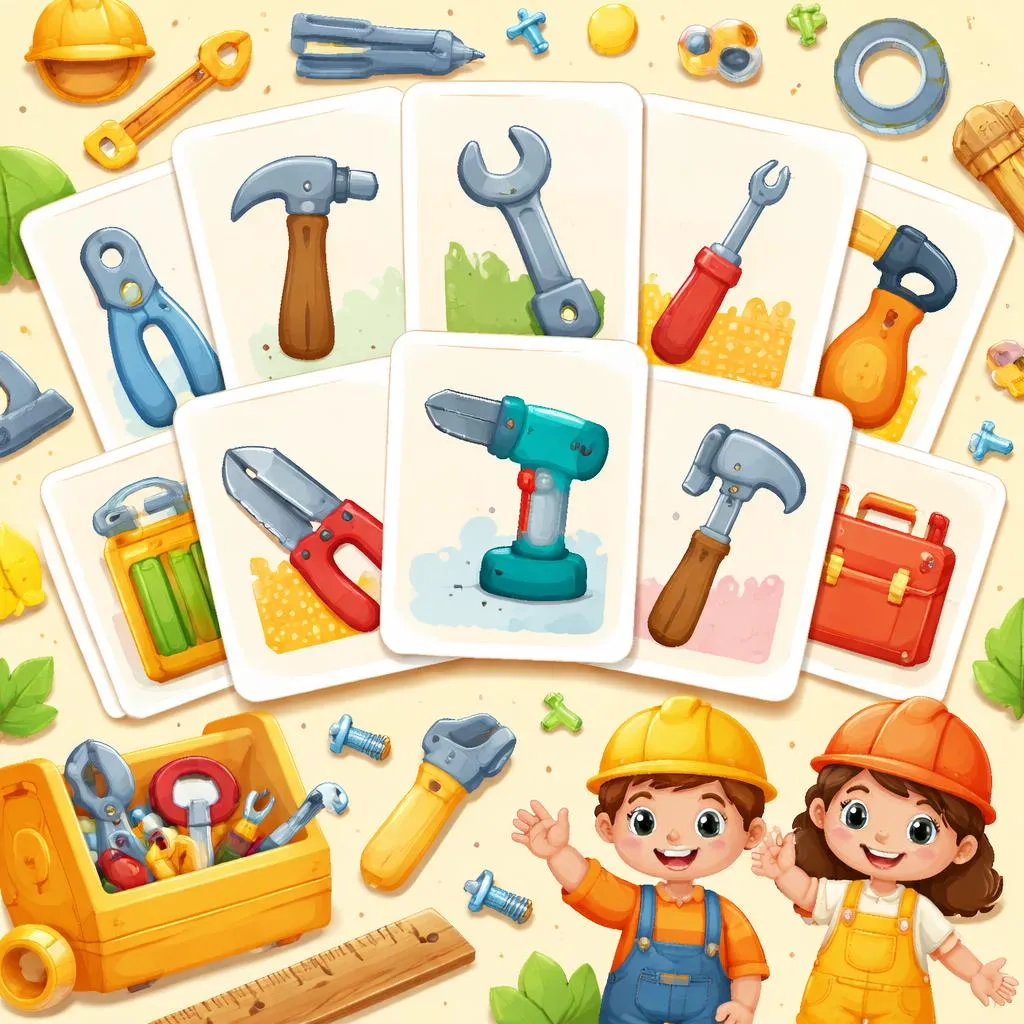

Dear parents and lovely children, today we will learn and practice with this type of English flashcard content: Construction Tools Flashcards For Kids – Free Printable PDF Word list: hammer, nails, saw, screw, wrench, drill, tape, ladder, shovel, tool, gloves, helmet, goggles, bucket, pliers, level, chisel, clamp, trowel, bolt, bit, vise, jack, sander, toolbox, varnish, screwdriver Click here to download Construction Tools Flashcards For Kids – Free Printable PDF
Construction Tools Flashcards Vocabulary Explanation and Example Sentences
-
Hammer – a tool with a heavy metal head used for hitting nails.
Example: I use a hammer to put the nails into the wood. -
Nails – small metal spikes used to join pieces of wood.
Example: The nails hold the wooden boards together. -
Saw – a tool with a sharp blade for cutting wood.
Example: Dad used a saw to cut the plank. -
Screw – a metal fastener with a spiral thread.
Example: I need a screwdriver to tighten the screw. -
Wrench – a tool used to turn bolts or nuts.
Example: She used a wrench to fix the bike. -
Drill – a power tool for making holes.
Example: The drill makes holes quickly. -
Tape – sticky material used to hold things together.
Example: We used tape to fix the broken box. -
Ladder – a set of steps used to climb up or down.
Example: He climbed the ladder to reach the roof. -
Shovel – a tool for digging.
Example: The gardener used a shovel to dig a hole. -
Tool – any device used to carry out a task.
Example: A hammer is a common tool. -
Gloves – hand coverings for protection.
Example: Wear gloves to keep your hands safe. -
Helmet – protective headgear.
Example: Always wear a helmet when riding a bike. -
Goggles – protective glasses for the eyes.
Example: The worker wore goggles to protect his eyes. -
Bucket – a container for carrying liquids or materials.
Example: Fill the bucket with water. -
Pliers – a tool used for gripping or bending.
Example: Use pliers to hold the wire. -
Level – a tool to check if a surface is flat.
Example: The carpenter used a level to make sure the shelf is straight. -
Chisel – a tool with a sharp edge for carving wood.
Example: He used a chisel to shape the wood. -
Clamp – a device to hold objects tightly together.
Example: Use a clamp to keep the wood steady. -
Trowel – a small hand tool for spreading cement or soil.
Example: The builder used a trowel to spread the cement. -
Bolt – a metal pin with a head and thread.
Example: Tighten the bolt with a wrench. -
Bit – the part of a drill that cuts or makes holes.
Example: Change the drill bit for different jobs. -
Vise – a tool for holding an object firmly.
Example: The vise holds the wood while you saw it. -
Jack – a device used to lift heavy objects.
Example: Use a jack to lift the car. -
Sander – a tool used to smooth surfaces.
Example: The sander makes the wood smooth. -
Toolbox – a container to store tools.
Example: Keep your tools in the toolbox. -
Varnish – a liquid used to protect wood.
Example: Apply varnish to make the table shiny. -
Screwdriver – a tool to turn screws.
Example: Use a screwdriver to open the box.
How to Teach Construction Tools Flashcards with Flashcards
Parents and teachers can use these flashcards to introduce children to common construction tools in a fun and interactive way. Start by showing each flashcard, saying the word clearly, and explaining what the tool is used for. Encourage children to repeat the words aloud to improve pronunciation. Use real-life examples or pictures to connect the words with actual tools. You can also demonstrate how some of the tools work safely, such as showing how to hold a hammer or use gloves. Repetition and positive reinforcement help children remember the words better. Flashcards are portable and easy to use anywhere, making learning flexible and engaging.
Fun Construction Tools Flashcard Games
- Memory Match: Lay the flashcards face down and have children flip two cards at a time to find matching pairs of tool names and pictures. This improves memory and word recognition.
- Tool Hunt: Hide flashcards around the room and ask children to find specific tools by name. This encourages listening skills and movement.
- Guess the Tool: Describe a tool’s use or features and let children guess which tool it is. For example, “This tool helps you cut wood.”
- Sentence Building: Use the flashcards to create simple sentences, e.g., “I use a hammer to hit nails.” Children can practice speaking and sentence structure.
Example Sentences with Construction Tools Vocabulary
- The hammer is heavy but easy to use.
- Please pass me the screwdriver to fix the chair.
- We need a ladder to reach the top shelf.
- Always wear gloves and a helmet when working.
- The drill makes holes faster than a hand tool.
Practice Exercises
- Match the tool to its picture.
- Fill in the blanks: “I use a ___ to cut wood.”
- Draw your favorite tool and write its name.
- List three tools you see at home or outside.
Free Construction Tools Flashcards PDF Download
You can download and print the free Construction Tools Flashcards PDF from the link provided. These printable flashcards are perfect for home or classroom use. Simply print, cut out the cards, and start learning! The PDF includes colorful images and clear labels to help children recognize and remember each tool. Printing multiple sets allows for group activities and games. This resource is a great way to support children’s vocabulary development in a practical and enjoyable manner.
FAQ about Construction Tools Flashcards
Q: What age group are these flashcards suitable for?
A: These flashcards are ideal for children aged 3 to 10 years old, depending on their language level.
Q: How often should children practice with flashcards?
A: Short daily sessions of 10-15 minutes are most effective for retention.
Q: Can these flashcards be used for ESL learners?
A: Yes, they are excellent for children learning English as a second language.
Q: Are there suggestions for safe tool use?
A: Yes, always supervise children when handling real tools and emphasize safety gear like gloves and helmets.
Q: How can parents extend learning beyond flashcards?
A: Parents can involve children in simple DIY projects, visit construction sites safely, or watch educational videos about tools.
Q: What if my child forgets the words?
A: Repetition, games, and using the words in daily conversation help reinforce learning over time.
Using these flashcards and activities, children will not only learn the names of construction tools but also understand their uses and importance, building both vocabulary and practical knowledge in a fun, interactive way.