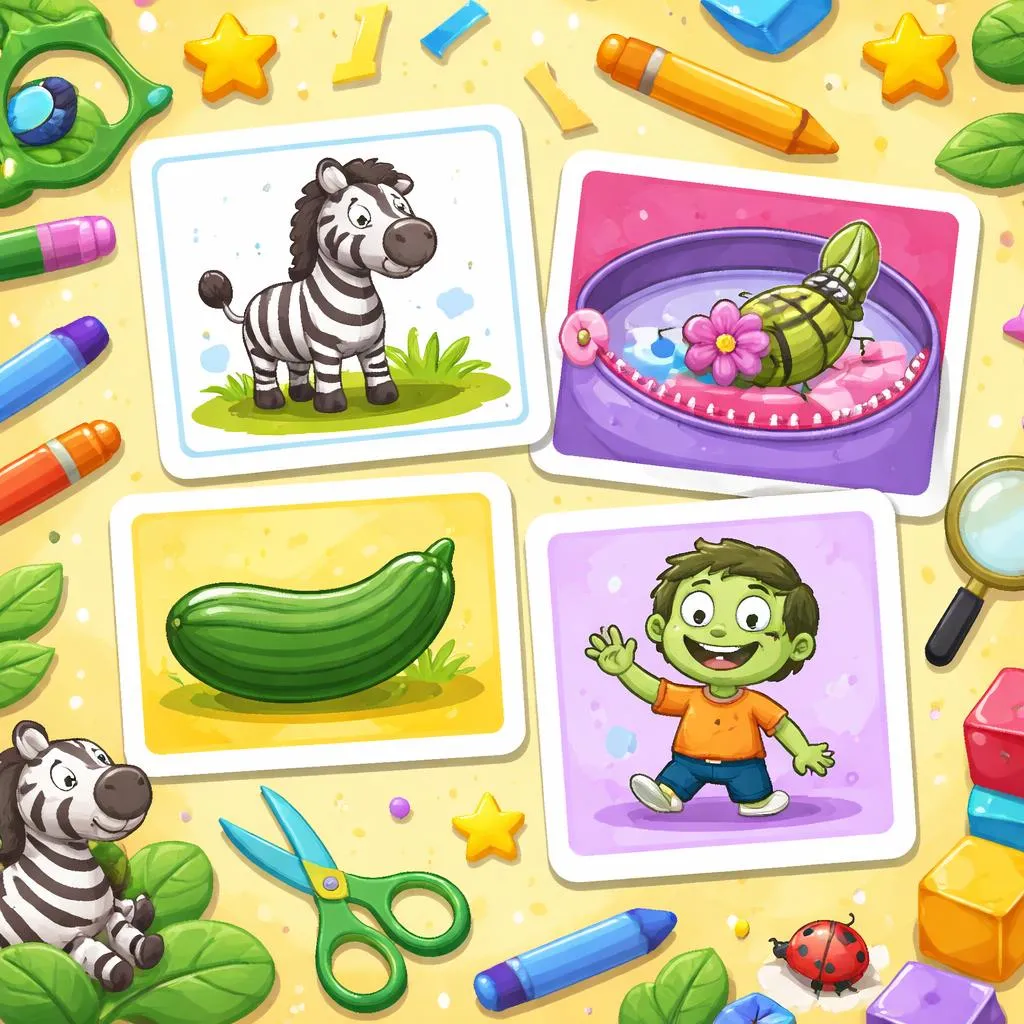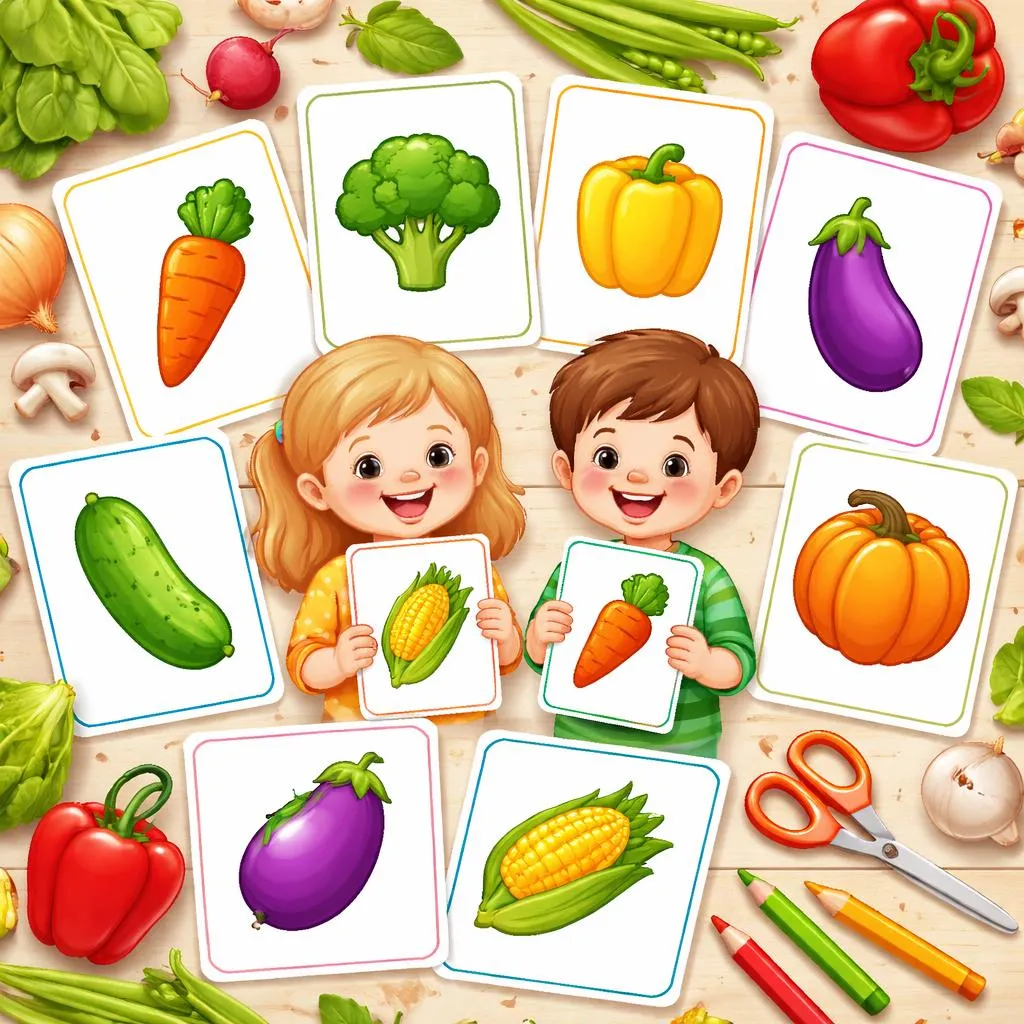

Dear parents and lovely children, today we will learn and practice with this type of English flashcard content: Vegetables Flashcards For Kids – Free Printable PDF Word list: carrots, potatoes, corn, peas, onions, lettuce, cabbage, tomato, bean, pepper, spinach, broccoli, celery, chili, leek, radish, turnip, yam, zucchini, squash, pumpkin, beet, artichoke, asparagus, cauliflower, cucumber, okra, wasabi, mushroom, lotus root, seaweed, green bean, eggplant, butternut, garlic, green onion, ginger, parsnip, brussel sprout, potatoes, beetroot Click here to download Vegetables Flashcards For Kids – Free Printable PDF
Understanding the Vegetables Flashcards Vocabulary
Let's begin by explaining the meanings of the vegetable words on these flashcards:
- Carrots: Orange root vegetables that are sweet and crunchy.
- Potatoes: Starchy tubers that can be cooked in many ways.
- Corn: Yellow kernels that grow on a cob, often eaten boiled or grilled.
- Peas: Small green round seeds found in pods.
- Onions: Bulb vegetables with a strong smell and taste, used in cooking.
- Lettuce: Leafy green vegetable used in salads.
- Cabbage: A leafy vegetable that forms a tight head.
- Tomato: Red or yellow fruit often used as a vegetable in cooking.
- Bean: Seeds from various plants, often eaten cooked or in soups.
- Pepper: Can be sweet or spicy, comes in many colors.
- Spinach: Leafy green vegetable rich in iron.
- Broccoli: Green vegetable with a tree-like shape.
- Celery: Crunchy green stalks often used in salads or soups.
- Chili: Small hot peppers used to add spice.
- Leek: A vegetable similar to onion but milder.
- Radish: Small root vegetable, usually red or white, with a peppery taste.
- Turnip: Round root vegetable, white and purple outside.
- Yam: Sweet starchy tuber.
- Zucchini: Green summer squash.
- Squash: Various types of gourds, often cooked or baked.
- Pumpkin: Large orange squash used in cooking and decoration.
- Beet: Root vegetable with a deep red color.
- Artichoke: A green vegetable with edible flower buds.
- Asparagus: Long green stalks eaten as a vegetable.
- Cauliflower: White vegetable shaped like broccoli.
- Cucumber: Green, long, and crunchy vegetable often eaten raw.
- Okra: Green pods used in soups and stews.
- Wasabi: Spicy green paste made from a root, used in Japanese cuisine.
- Mushroom: Fungi used in many dishes.
- Lotus root: Crunchy vegetable from the root of the lotus plant.
- Seaweed: Edible algae from the sea.
- Green bean: Long green pods eaten as a vegetable.
- Eggplant: Purple vegetable with a spongy texture.
- Butternut: Type of squash with sweet orange flesh.
- Garlic: Strong-smelling bulb used to flavor food.
- Green onion: Also called scallion, mild onion flavor.
- Ginger: Spicy root used in cooking and medicine.
- Parsnip: White root vegetable similar to carrot.
- Brussel sprout: Small cabbage-like vegetable.
- Beetroot: Another name for beet, deep red root vegetable.
Example Sentences
- I like to eat carrots because they are sweet and crunchy.
- We cooked potatoes for dinner last night.
- Corn on the cob is delicious in summer.
- The peas in my soup are fresh and green.
- Onions make me cry when I cut them!
- I put lettuce in my sandwich.
- Tomatoes are red and juicy.
- She added spinach to the salad.
- We roasted broccoli with garlic.
- The pumpkin is big and orange.
How to Teach Vegetables Flashcards with Flashcards
Parents and teachers can use these flashcards to introduce children to vegetable names and their appearances. Begin by showing each card and pronouncing the word clearly. Encourage children to repeat after you to practice pronunciation. Use real vegetables if possible to create a multisensory learning experience. Ask questions like "Can you find the carrot in the kitchen?" or "What color is this vegetable?" to engage children actively. Flashcards can also be used to teach spelling and simple sentences by combining words with images.
Fun Vegetables Flashcard Games
- Memory Match Game: Lay the flashcards face down. Children take turns flipping two cards to find matching pairs. This helps with memory and word recognition.
- Vegetable Bingo: Create bingo cards with vegetable pictures or names. Call out the words and children mark their cards.
- Guess the Vegetable: Describe a vegetable’s color, shape, or taste, and children guess which flashcard it matches.
- Sorting Game: Sort flashcards by color, size, or type (leafy, root, fruit vegetables).
- Sentence Building: Use flashcards to create simple sentences like “I like broccoli” or “Tomatoes are red.”
Example Sentences with Vegetables Vocabulary
- “I am eating a crunchy carrot.”
- “The pumpkin is big and orange.”
- “Can you pass me the potatoes, please?”
- “Spinach is good for your health.”
- “We planted peas in the garden.”
Practice Exercises
- Draw and color your favorite vegetable and write its name.
- Match the vegetable flashcard to a real vegetable or picture in a book.
- Practice spelling the vegetable names aloud.
- Use flashcards to tell a short story about a vegetable garden.
Free Vegetables Flashcards PDF Download
You can easily download and print these free vegetables flashcards to use at home or in the classroom. The PDF includes colorful pictures and clear labels for each vegetable, making it perfect for young learners. Print them on sturdy paper or laminate for durability. Use these flashcards anytime to reinforce vegetable vocabulary and make learning fun and interactive.
Download here: Vegetables Flashcards For Kids – Free Printable PDF
FAQ about Vegetables Flashcards
Q: What age group are these flashcards suitable for?
A: These flashcards are ideal for preschool and early elementary children aged 3 to 8 years.
Q: How often should children practice with these flashcards?
A: Daily short sessions of 5-10 minutes are effective for retention and engagement.
Q: Can these flashcards help with spelling?
A: Yes, children can learn to recognize and spell vegetable names by repeated exposure.
Q: Are there suggestions for parents to make learning more fun?
A: Yes, parents can combine flashcards with cooking activities, gardening, or shopping trips to reinforce learning.
Q: How can I assess my child's progress?
A: Use flashcard games like matching or naming vegetables without prompts to check understanding.
Q: What if my child struggles with some words?
A: Focus on a few flashcards at a time and use real vegetables or pictures to provide context. Repeat frequently and praise effort.
Using these vegetables flashcards, children will not only expand their English vocabulary but also develop recognition skills, pronunciation, and sentence building. The interactive games and printable resources make learning engaging and effective for young learners and their families.