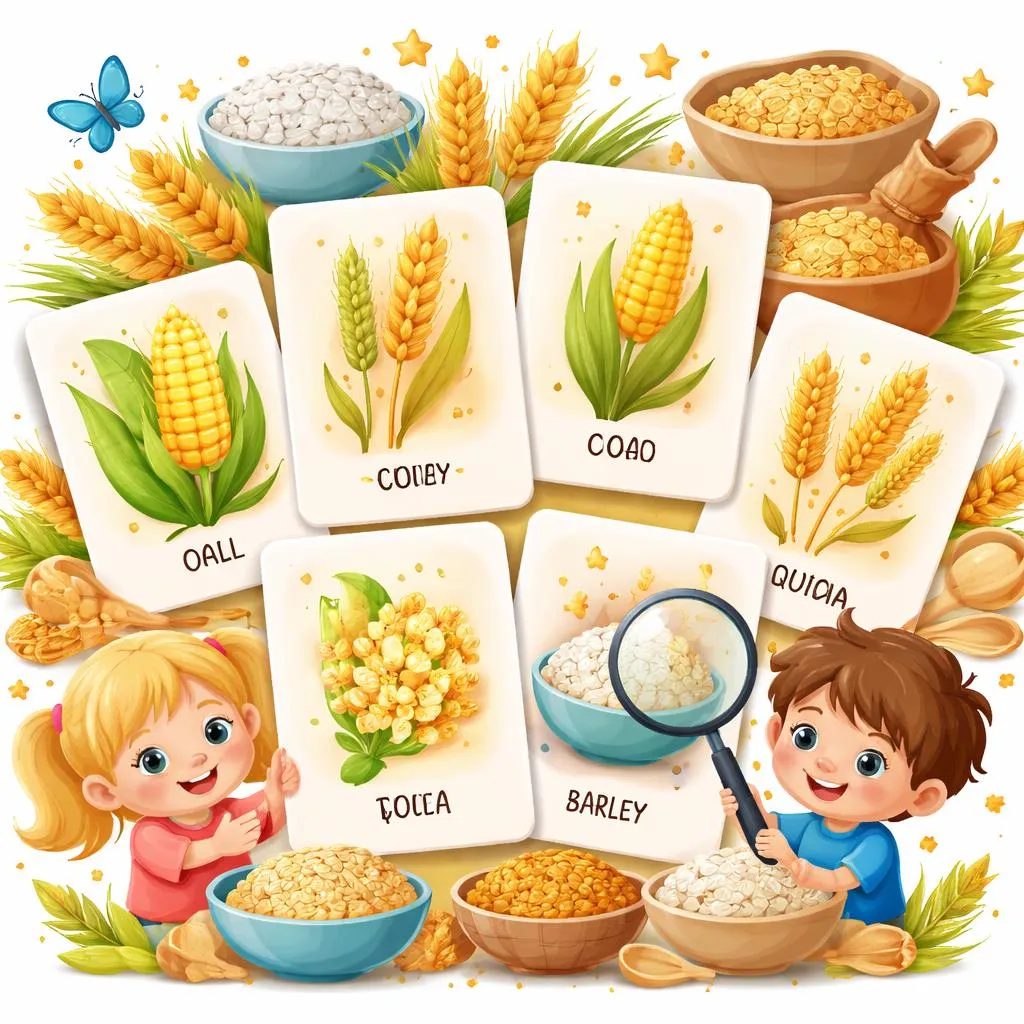

Dear parents and lovely children, today we will learn and practice with this type of English flashcard content: Grains Flashcards For Kids – Free Printable PDF Word list: rice, bread, corn, wheat, oat, pasta, noodle, cereal, grain, flour, bun, roll, loaf, cracker, bagel, toast, barley, maize, bran, grits, tortilla, pita, muffin, biscuit, quinoa, millet, rye, spaghetti, sourdough, flatbread, pancake, waffle, croissant Click here to download Grains Flashcards For Kids – Free Printable PDF
Meaning and Explanation of Each Flashcard Word
- Rice: A staple grain commonly eaten around the world, usually white or brown, cooked by boiling or steaming.
Example: "I like to eat rice with vegetables for dinner." - Bread: A baked food made from flour and water, often eaten as a staple food.
Example: "She made a sandwich with fresh bread." - Corn: A yellow grain often eaten as a vegetable or used to make popcorn.
Example: "We picked fresh corn from the garden." - Wheat: A cereal grain used to make flour for bread and other baked goods.
Example: "Wheat is grown in many countries for bread production." - Oat: A grain used in breakfast cereals and oatmeal.
Example: "I eat oat porridge every morning." - Pasta: A type of Italian food made from wheat flour and water, shaped into noodles or other forms.
Example: "Spaghetti is a popular type of pasta." - Noodle: A long, thin strip of pasta or dough, often used in soups or stir-fries.
Example: "Chicken noodle soup is very comforting." - Cereal: Grains used for breakfast, often eaten with milk.
Example: "I like to eat cereal with bananas." - Grain: Small, hard seeds like wheat or rice that are used for food.
Example: "Farmers harvest grain in the fall." - Flour: Powder made by grinding grains, used for baking.
Example: "We need flour to bake cookies." - Bun: A small, round bread roll often used for sandwiches or burgers.
Example: "He ate a burger with a sesame bun." - Roll: A small loaf of bread, usually round or oval.
Example: "She bought fresh rolls from the bakery." - Loaf: A shaped mass of bread, usually sliced.
Example: "I bought a loaf of sourdough bread." - Cracker: A thin, crispy baked snack made from flour.
Example: "She ate cheese with crackers." - Bagel: A dense, round bread with a hole in the middle, often toasted.
Example: "I had a bagel with cream cheese for breakfast." - Toast: Bread browned by heat, often eaten with butter or jam.
Example: "He likes toast with peanut butter." - Barley: A cereal grain used in soups and brewing.
Example: "Barley soup is very nutritious." - Maize: Another word for corn, especially in agricultural contexts.
Example: "Maize is a major crop in many countries." - Bran: The outer layer of grain, often used as a fiber supplement.
Example: "Bran cereal is good for digestion." - Grits: Coarsely ground corn, popular in Southern cooking.
Example: "We had grits for breakfast." - Tortilla: A thin flatbread from corn or wheat, used in Mexican cuisine.
Example: "She wrapped the filling in a tortilla." - Pita: A soft, round flatbread with a pocket, common in Middle Eastern food.
Example: "Pita bread is great for sandwiches." - Muffin: A small, sweet baked bread, often eaten for breakfast or snacks.
Example: "I baked blueberry muffins today." - Biscuit: A soft bread roll in American English or a hard cookie in British English.
Example: "We had biscuits and gravy for breakfast." - Quinoa: A grain-like seed high in protein, often used as a rice substitute.
Example: "Quinoa salad is very healthy." - Millet: A small grain used in porridge and bread.
Example: "Millet is a staple food in some countries." - Rye: A grain used to make rye bread, which is darker and denser.
Example: "Rye bread has a strong flavor." - Spaghetti: A long, thin type of pasta.
Example: "Spaghetti with tomato sauce is delicious." - Sourdough: Bread made with natural yeast and bacteria, giving it a tangy flavor.
Example: "Sourdough bread is crusty and tasty." - Flatbread: A thin bread, often unleavened, like naan or chapati.
Example: "We ate flatbread with hummus." - Pancake: A flat, round cake cooked on a griddle, usually sweet.
Example: "She loves pancakes with syrup." - Waffle: A batter cake cooked in a patterned iron, often eaten for breakfast.
Example: "Waffles are crispy and soft inside." - Croissant: A flaky, buttery French pastry shaped like a crescent.
Example: "He enjoyed a croissant with coffee."
How to Teach Grains Flashcards with Flashcards
Parents and teachers can use these grain flashcards to introduce children to common grain-related foods and ingredients. Start by showing each card and saying the word clearly. Encourage children to repeat the word aloud. Use real-life examples or pictures of the food to make the learning more relatable. You can also group similar items together, such as breads or cereals, to help children understand categories. Flashcards are great for visual learning and help build vocabulary through repetition. Use the flashcards daily in short sessions to keep children engaged without overwhelming them.
Fun Grains Flashcard Games
- Memory Match: Lay all flashcards face down and have children flip two at a time to find matching pairs, such as "bread" and "loaf."
- Flashcard Bingo: Create bingo cards with grain words. Call out words and have children mark them on their cards.
- Guess the Grain: Show a flashcard without saying the word and give clues or describe the grain. Children guess the word.
- Sorting Game: Have children sort flashcards into categories like "breads," "cereals," and "pastas."
Example Sentences with Grains Vocabulary
- "I eat cereal with milk every morning."
- "She baked a loaf of sourdough bread."
- "We had pancakes and waffles for breakfast."
- "Quinoa is a healthy grain to add to salads."
- "The farmer grows wheat and barley on his land."
Free Grains Flashcards PDF Download
You can easily download and print these grains flashcards for free from the provided link. Printing them on sturdy paper or cardstock makes them durable for repeated use. Lamination is optional but recommended for longer-lasting flashcards. Use the printable flashcards at home or in the classroom to support your child’s vocabulary development in a fun, interactive way.
FAQ about Grains Flashcards
-
Q: What age group is this flashcard set suitable for?
A: These flashcards are ideal for children aged 3 to 10 years old, helping build early vocabulary and food recognition. -
Q: How often should children practice with flashcards?
A: Short daily sessions of 5-10 minutes are effective to keep children interested and reinforce learning. -
Q: Can these flashcards be used for language learners?
A: Yes, they are excellent for ESL learners to learn common food-related vocabulary. -
Q: Are there activities to reinforce learning beyond flashcards?
A: Yes, cooking simple recipes using these grains or visiting a bakery can provide practical learning experiences. -
Q: How to help children remember the words better?
A: Use flashcards with pictures, repeat words often, and engage children in games and real-life conversations about food.
By using these grains flashcards, children will not only learn the names of common grains and grain-based foods but also improve their pronunciation, memory, and understanding of healthy eating habits. This interactive and enjoyable learning method supports language development and curiosity about food and culture.