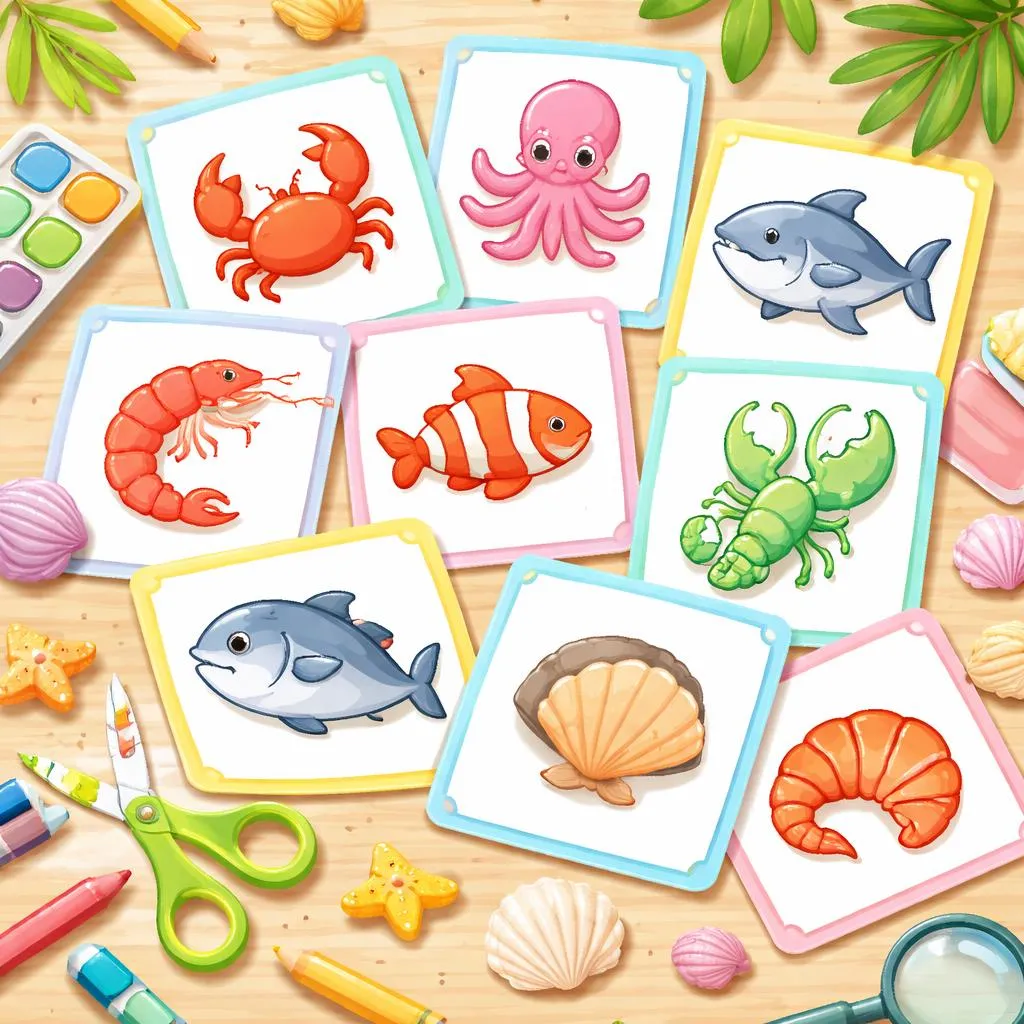

Dear parents and lovely children, today we will learn and practice with this type of English flashcard content: Seafood Flashcards For Kids – Free Printable PDF Word list: fish, shrimp, crab, clam, mussel, lobster, oyster, squid, octopus, scallop, tuna, salmon, cod, trout, sardine, eel, anchovy, bass, halibut, herring, mackerel, perch, shellfish, seafood, tilapia, prawn, caviar Click here to download Seafood Flashcards For Kids – Free Printable PDF
Seafood Flashcards Vocabulary Explanation and Example Sentences
- Fish: A cold-blooded animal that lives in water and has gills.
Example: I caught a big fish in the lake yesterday. - Shrimp: A small, pink sea creature often eaten as seafood.
Example: We had shrimp for dinner last night. - Crab: A crustacean with a hard shell and pincers.
Example: The crab walked sideways on the beach. - Clam: A shellfish with a soft body inside two hinged shells.
Example: We collected clams at the seaside. - Mussel: A type of shellfish that sticks to rocks in the water.
Example: Mussels are delicious when cooked with garlic. - Lobster: A large sea creature with claws, often served as a delicacy.
Example: Lobster is expensive but tasty. - Oyster: A shellfish that can produce pearls.
Example: Oysters are often eaten raw. - Squid: A sea animal with tentacles and ink.
Example: The squid swam quickly in the ocean. - Octopus: A sea creature with eight arms.
Example: The octopus hid under the rock. - Scallop: A shellfish with a fan-shaped shell.
Example: Scallops are sweet and tender. - Tuna: A large fast-swimming fish.
Example: Tuna is used in sushi. - Salmon: A fish known for swimming upstream to spawn.
Example: Salmon is rich in omega-3. - Cod: A white fish often used in fish and chips.
Example: Cod is a popular fish in many countries. - Trout: A freshwater fish.
Example: We saw trout swimming in the clear river. - Sardine: A small oily fish.
Example: Sardines are often canned. - Eel: A long, snake-like fish.
Example: Eels live in both fresh and saltwater. - Anchovy: A tiny fish used as a pizza topping.
Example: Anchovies add a salty flavor to dishes. - Bass: A type of freshwater or saltwater fish.
Example: Bass fishing is a popular sport. - Halibut: A large flat fish.
Example: Halibut is great for grilling. - Herring: A small schooling fish.
Example: Herring is often pickled. - Mackerel: A fast-swimming fish.
Example: Mackerel is rich in healthy fats. - Perch: A freshwater fish with spiny fins.
Example: Perch is common in lakes. - Shellfish: Aquatic animals with shells, like crabs and clams.
Example: Shellfish can cause allergies in some people. - Seafood: Edible sea animals like fish and shellfish.
Example: We love eating seafood at the beach. - Tilapia: A freshwater fish farmed worldwide.
Example: Tilapia is mild in flavor. - Prawn: Similar to shrimp but usually larger.
Example: Prawns are tasty in stir-fry dishes. - Caviar: Salted fish eggs considered a delicacy.
Example: Caviar is often served on crackers.
How to Teach Seafood Flashcards with Flashcards
Parents and teachers can use these seafood flashcards to introduce children to various sea creatures and their names in English. Start by showing each flashcard, saying the word clearly, and encouraging children to repeat it. Use pictures to help them associate the word with the animal. You can also explain interesting facts about each seafood to make learning fun and memorable. For example, talk about how octopuses have eight arms or how lobsters live on the ocean floor. Repetition and visual aids help children remember new vocabulary better. Make sure to keep sessions short and engaging to maintain their attention.
Fun Seafood Flashcard Games
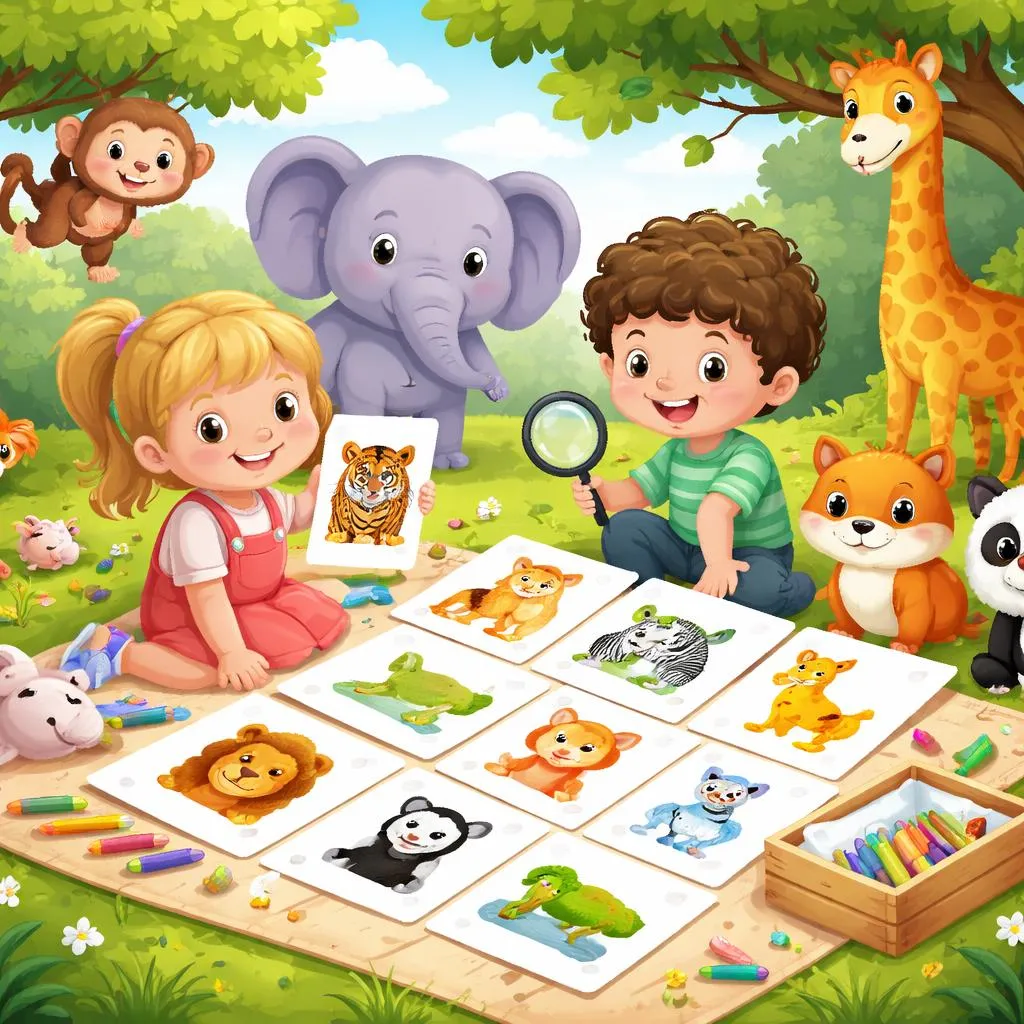
- Memory Match: Lay the flashcards face down and take turns flipping two cards to find matching pairs. This game helps children recognize and recall seafood names.
- Flashcard Bingo: Create bingo cards with seafood pictures and call out the names. Children mark the pictures on their cards, practicing listening and recognition skills.
- Guess the Seafood: Describe a seafood from the flashcards without naming it, and let children guess which one it is. For example, "I have eight arms and live in the ocean."
- Sorting Game: Ask children to sort flashcards into categories like fish vs. shellfish or small vs. large seafood. This enhances classification skills.
Example Sentences with Seafood Vocabulary
- I like to eat grilled salmon with lemon.
- The crab has a hard shell to protect itself.
- We saw a big octopus hiding under the rocks.
- Shrimp and prawn are both tasty seafood options.
- My favorite sushi is made with tuna.
Practice Exercises
- Match the seafood word to the correct picture.
- Fill in the blanks: "The _____ has eight arms."
- Write a sentence using the word "lobster."
- Draw your favorite seafood and label it.
Free Seafood Flashcards PDF Download
You can download and print these seafood flashcards for free from the provided link. The PDF includes colorful images and clear labels, perfect for classroom or home use. Printing the flashcards on sturdy paper or laminating them can make them last longer. Use them anytime to reinforce vocabulary or as part of fun learning activities. Having physical flashcards helps children engage more actively with the material and makes learning tactile and visual.
FAQ about Seafood Flashcards
Q: What age group are these flashcards suitable for?
A: These flashcards are ideal for children aged 3 to 10 who are beginning to learn English vocabulary related to seafood.
Q: How often should children practice with flashcards?
A: Short daily sessions of 10-15 minutes are most effective for retention and interest.
Q: Can these flashcards help with pronunciation?
A: Yes, repeating the words aloud while looking at the pictures improves pronunciation and confidence.
Q: Are there any safety tips when teaching seafood vocabulary?
A: Yes, remind children that some people may be allergic to shellfish and seafood, so always be careful when trying new foods.
Q: How can I make learning seafood vocabulary more fun?
A: Use games, songs, and storytelling involving seafood characters to keep children engaged and excited to learn.
By using these seafood flashcards regularly, children will build a strong vocabulary foundation, improve their English speaking skills, and gain knowledge about different sea creatures and foods. This makes learning both educational and enjoyable!