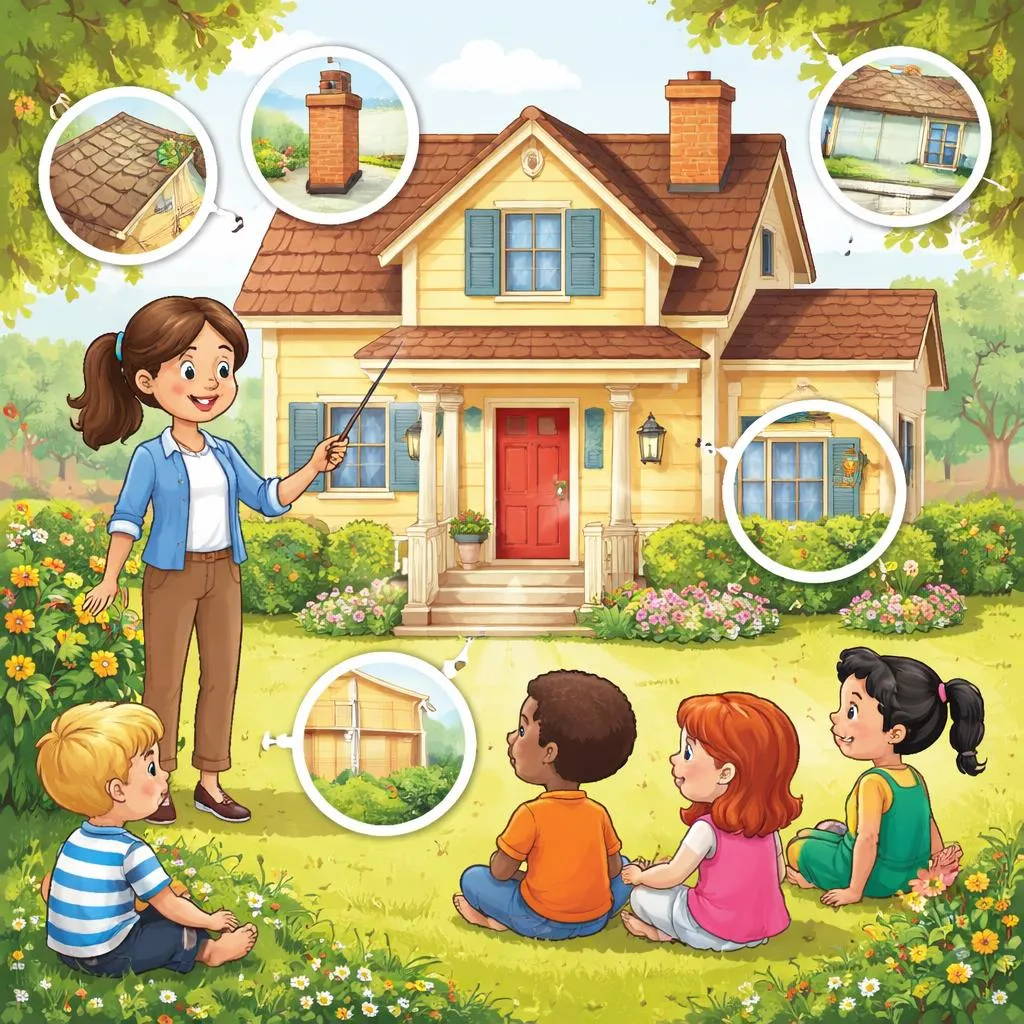

Parts of a House Exterior as an Everyday Learning Topic
Houses appear in daily life. Streets show many homes. Each home has an outside that protects the inside. Learning the parts of a house exterior helps connect language with familiar surroundings. This topic feels safe and concrete. Words link easily to real objects.
In lessons, house vocabulary supports observation and description. Looking at homes nearby or in pictures builds understanding. Simple explanations help new words feel friendly and useful.
This article introduces parts of a house exterior from a teacher’s point of view. Each section guides learning gently. Language stays clear and calm. Curiosity grows step by step.
What Are the Parts of a House Exterior?
The parts of a house exterior are the features found on the outside of a house. These parts protect the home and help people enter and exit. They also give the house its shape and style.
Common exterior parts include the roof, walls, door, windows, and porch. Some houses also have chimneys, garages, and fences.
Learning these parts helps describe homes and understand how houses work.
Meaning and Explanation of House Exterior Parts
Each exterior part has a purpose. Understanding purpose supports memory.
The roof covers the top of the house. It protects from rain, sun, and snow.
The walls form the sides of the house. They hold everything together and keep the inside safe.
The door allows people to enter and leave. Doors also keep homes secure.
Windows let light and air inside. They also allow views outside.
Simple explanations connect words with real use.
Main Categories of the Parts of a House Exterior
Grouping exterior parts helps organize learning.
Some parts protect the house. The roof and walls belong to this group.
Some parts allow entry and exit. Doors, gates, and garages fit here.
Some parts support light and air. Windows and vents belong here.
Some parts decorate the house. Porches, balconies, and shutters add style.
Categories make lessons clearer and easier to remember.
The Roof as an Important Exterior Part
The roof sits at the top of the house. It often has a slanted shape. Some roofs appear flat.
Roofs use materials like tiles or shingles. These materials block water and heat.
Talking about roofs introduces weather vocabulary. Rain, snow, and sun connect naturally.
The roof plays a key role in keeping the house dry and warm.
Walls and Siding on a House Exterior
Walls form the main structure of a house. They surround the inside space.
The outside surface of walls is often called siding. Siding may be made of wood, brick, or stone.
Colors and textures vary. Describing these features builds adjective use.
Walls help keep the house strong and secure.
Doors on the Outside of a House
Doors appear at the front, back, or side of a house. The front door often welcomes visitors.
Doors may open inward or outward. They may include handles or knobs.
Learning door vocabulary supports daily routines. Opening and closing actions connect easily.
Doors also introduce safety concepts in a gentle way.
Windows on the House Exterior
Windows appear on walls. They may be large or small.
Glass allows light to enter. Fresh air flows through open windows.
Windows often include frames. Some have shutters on the outside.
Talking about windows supports observation. Shapes, sizes, and positions offer many details.
Porches and Steps Outside a House
A porch is a small covered area near the entrance. Some porches include steps or railings.
Porches provide space to stand or sit. They also protect the door from rain.
Steps help move from the ground to the door. Counting steps supports number learning.
Porches and steps connect language with movement.
Garages and Driveways as Exterior Features
Some houses include garages. A garage stores cars or tools.
Garages may attach to the house or stand alone. Large doors often appear at the front.
Driveways lead to garages. They provide space for parking.
Learning these words connects homes with transportation.
Chimneys and Vents on House Exteriors
A chimney rises from the roof. It allows smoke to exit from a fireplace.
Vents allow air to move in and out. They help control temperature.
These parts introduce science-related ideas in a simple way.
Observing chimneys on roofs supports detail noticing.
Fences and Gates Around a House
Some houses include fences. Fences mark boundaries and add safety.
Gates allow entry through fences. They may open and close.
Talking about fences supports vocabulary related to space and boundaries.
These features often appear in stories and pictures.
Parts of a House Exterior in Daily Life
Exterior parts appear everywhere. Walking down a street reveals many examples.
Naming parts during a walk reinforces learning. Pointing to doors, windows, and roofs builds clarity.
Daily observation strengthens understanding.
Language feels connected to the real world.
Teaching House Exterior Parts Through Observation
Observation supports memory. Looking closely at a house reveals many details.
Colors, shapes, and materials provide discussion points.
Comparing two houses encourages descriptive language.
Observation builds focus and curiosity.
Simple Sentences About the Parts of a House Exterior
Short sentences support confidence.
“The roof is red.” “The door is open.” “The windows are big.” “The porch has steps.”
These sentences use clear patterns and familiar words.
Repeating patterns supports language structure.
Vocabulary Growth Through House Exterior Topics
This topic introduces many useful nouns. Roof, wall, door, window, and fence appear often.
Adjectives also appear naturally. Tall, wide, small, and strong describe parts.
Prepositions like on, under, and next to explain position.
Vocabulary grows naturally through discussion.
Phonics Practice With House Exterior Words
Many exterior words support phonics learning.
Roof begins with an “r” sound. Door begins with a “d” sound. Window begins with a “w” sound.
Listening for beginning sounds builds phonemic awareness.
Clapping syllables in longer words supports rhythm.
Grammar Patterns in House Exterior Descriptions
Simple grammar patterns appear often. Present tense verbs describe what exists.
“The house has a roof.” “The door is blue.”
Prepositions describe location. On the house, near the door, under the window.
Hearing correct grammar supports language growth.
Cultural Differences in House Exteriors
Houses look different around the world. Roof shapes, colors, and materials vary.
Learning about these differences builds global awareness.
Pictures of houses from different countries support comparison.
Respect and curiosity grow through discussion.
Printable Flashcards for Parts of a House Exterior
Flashcards support visual learning. Each card may show one exterior part.
Roof, door, window, chimney, and fence work well.
Using flashcards before or after lessons reinforces vocabulary.
Printable materials also support learning at home.
Learning Activities About House Exteriors
Activities make learning active. Drawing a house exterior supports creativity.
Labeling parts builds vocabulary.
Building a house with blocks supports spatial thinking.
Activities should feel open and enjoyable.
Educational Games Using House Exterior Vocabulary
Games add excitement. A guessing game may describe a part and ask for its name.
A matching game may pair pictures with words.
Role-play games may include pretending to enter a house.
Games support engagement and communication.
Connecting House Exterior Parts to Safety Awareness
Exterior parts connect to safety topics. Doors and fences relate to protection.
Windows and steps relate to careful movement.
Safety language stays simple and calm.
Real-life connections support understanding.
Supporting Parents and Teachers With This Topic
This topic fits easily into daily routines. Parents may talk about house parts during walks.
Teachers may use pictures, models, or drawings.
Clear language and repetition support learning.
Consistency builds confidence.
Connecting House Exterior Learning to Other Subjects
This topic links to art, science, and social studies.
Drawing houses supports art skills. Talking about materials supports science.
Discussing neighborhoods supports social learning.
Integrated learning deepens understanding.
Encouraging Curiosity About Homes and Buildings
Homes spark questions. Why are roofs shaped differently? Why do some houses have porches?
Questions invite exploration.
Curiosity supports thinking and language use.
A Calm and Familiar Learning Experience
Learning the parts of a house exterior connects language with familiar places. Homes feel safe and close to everyday life.
Through observation, discussion, play, and creativity, exterior vocabulary becomes clear and meaningful. This topic supports language growth, environmental awareness, and confidence in describing the world just outside the door.