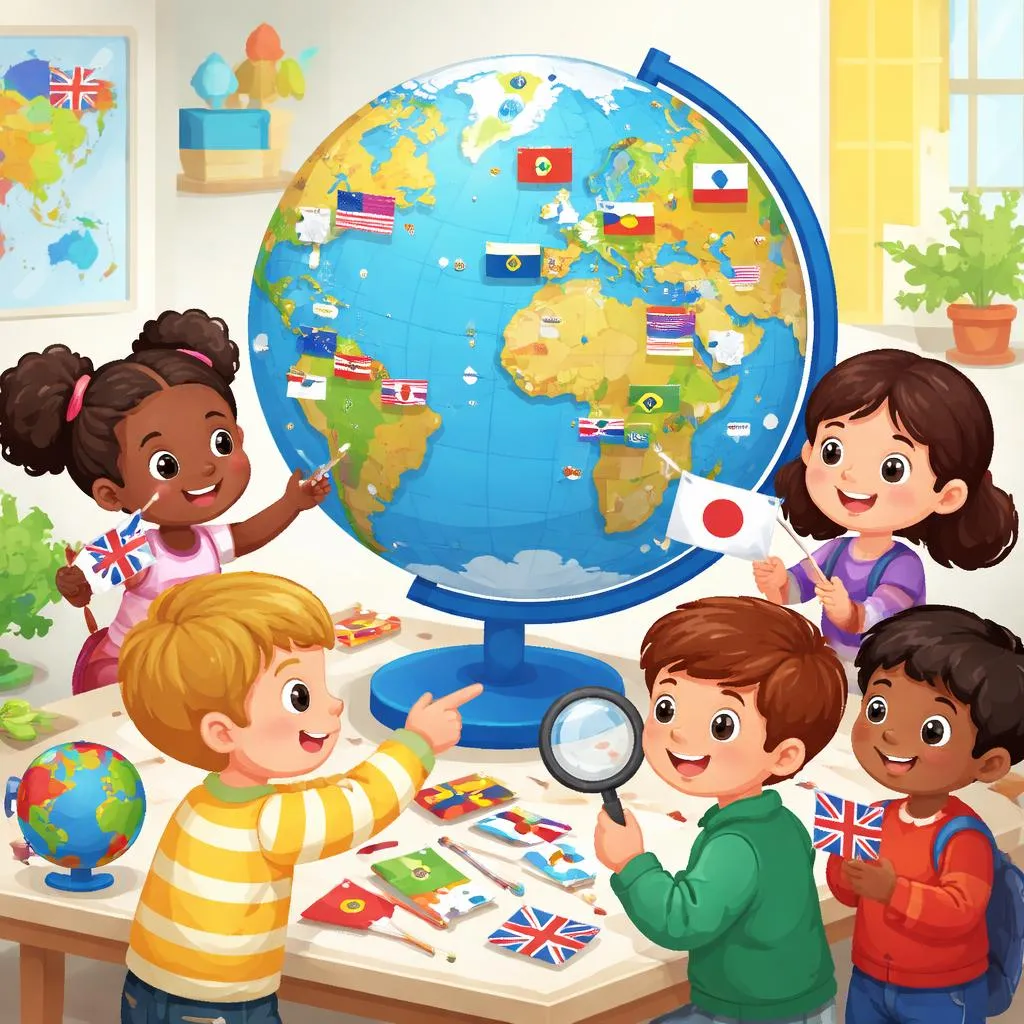

What is countries and nationalities?
Hello, global explorers. Today, we are going to learn about two very important words that help us understand our world. We are going to learn about countries and nationalities. A country is a big piece of land with its own people, government, and rules. Think of a country as a giant house for millions of people. The United States, Canada, Mexico, and Japan are all countries.
A nationality tells us which country a person is from. It is like a label that says, "My home is in this country." If someone is from Canada, their nationality is Canadian. If someone is from Japan, their nationality is Japanese. Learning about countries and nationalities helps us know where people are from and how we are all connected on our big, shared planet.
Meaning and explanation
So, what is the difference between a country and a nationality. A country is the place. Nationality is about the people from that place. The name of a country is a noun. The word for a nationality is usually an adjective. We use it to describe a person or a thing from that country.
For example, Italy is a country. A person from Italy is Italian. We say, "She is an Italian woman." or "This is Italian pizza." The nationality word "Italian" describes the woman and the pizza. Knowing both the country and the nationality helps us talk about the world correctly. It shows respect and curiosity about other cultures. When we learn about countries and nationalities, we are learning about the beautiful diversity of humans.
Categories or lists
Let's look at some countries and their nationalities. We can group them by continents to make it easier.
Countries and Nationalities in North and South America: Country: The United States. Nationality: American.
Country: Canada. Nationality: Canadian.
Country: Mexico. Nationality: Mexican.
Country: Brazil. Nationality: Brazilian.
Country: Argentina. Nationality: Argentine or Argentinean.
Countries and Nationalities in Europe: Country: The United Kingdom. Nationality: British.
Country: France. Nationality: French.
Country: Germany. Nationality: German.
Country: Spain. Nationality: Spanish.
Country: Italy. Nationality: Italian.
Countries and Nationalities in Asia: Country: China. Nationality: Chinese.
Country: Japan. Nationality: Japanese.
Country: India. Nationality: Indian.
Country: South Korea. Nationality: Korean.
Countries and Nationalities in Other Parts of the World: Country: Australia. Nationality: Australian.
Country: Egypt. Nationality: Egyptian.
Country: South Africa. Nationality: South African.
Daily life examples
You can see and use countries and nationalities in your daily life. Here are three fun scenes.
At School with a New Classmate: Imagine a new student joins your class. The teacher says, "Class, this is Leo. He is from France." Now you know his country is France and his nationality is French. You can say, "Hello, Leo. Welcome to our class. Are you French?" This is a real, kind way to use what you have learned about countries and nationalities.
Watching the Olympics or a Soccer Game on TV: This is a perfect time to practice. The athletes wear uniforms with their country's flag. The announcer says, "This athlete is from Kenya. She is Kenyan." You see the flag of Brazil and hear, "The Brazilian team is playing well." As you watch, you can name the countries and nationalities. "That runner is Jamaican. He is from Jamaica."
Looking at Food Labels or in a Restaurant: Go to a supermarket. Look at a can of olives. It might say "Product of Spain." You can tell your parent, "These olives are from Spain. They are Spanish olives." In a restaurant, you might see "Italian pasta" or "Mexican tacos" on the menu. The nationality word describes the style of the food. This connects your learning to everyday things you see and eat.
Printable flashcards
Printable flashcards are a super way to learn about countries and nationalities. You can create a "Country and Nationality Match" set.
Make two sets of cards. Set A has pictures of flags or maps with the country's name. Set B has the corresponding nationality word. The card with the French flag and "FRANCE" matches with the card that says "FRENCH." Kids can match the pairs. This builds a strong visual and verbal link between the place and the people.
Another great printable is a "World Passport" activity book. Print a small booklet for each child. Each page is for a different country. The page has space to draw the flag, write the country name, the nationality, and a fun fact. "Country: Japan. Nationality: Japanese. Fun Fact: Japan is known for sushi and anime." Kids can "stamp" their passport as they learn about each place.
You can also make a "Fill-in-the-Blank" worksheet with simple sentences. "My friend is from [Country]. She is [Nationality]." Provide a word bank. This helps practice using the words in correct sentence structures.
Learning activities or games
Let's play "Where Are You From." This is a fun role-play game. Give each child a card with a country and nationality (e.g., "Australia / Australian"). They must walk around and introduce themselves to others using the nationality. "Hello, I am Australian. I am from Australia." The other child responds with their own. Then they trade cards and find a new friend. This gets kids moving and speaking.
Try the "Nationality Bingo" game. Create bingo cards with nationality words in the squares: Italian, Brazilian, Japanese, etc. The caller holds up a picture of a flag or says a country name. "I'm thinking of Germany!" Players must find the nationality "German" on their card. The first to get a line shouts "Bingo!" This sharpens listening and recognition skills for countries and nationalities.
Create a "Cultural Fair" project. Assign each child or small group a country. Their task is to create a small poster or a "booth" with the country's flag, the nationality word, and one simple cultural element (a common food, a greeting, a famous animal). They then present their country to the class. "This is the flag of Italy. People from Italy are Italian. A popular food in Italy is pizza." This collaborative project turns the class into a mini-world fair, celebrating the diversity of countries and nationalities in a hands-on, creative way.