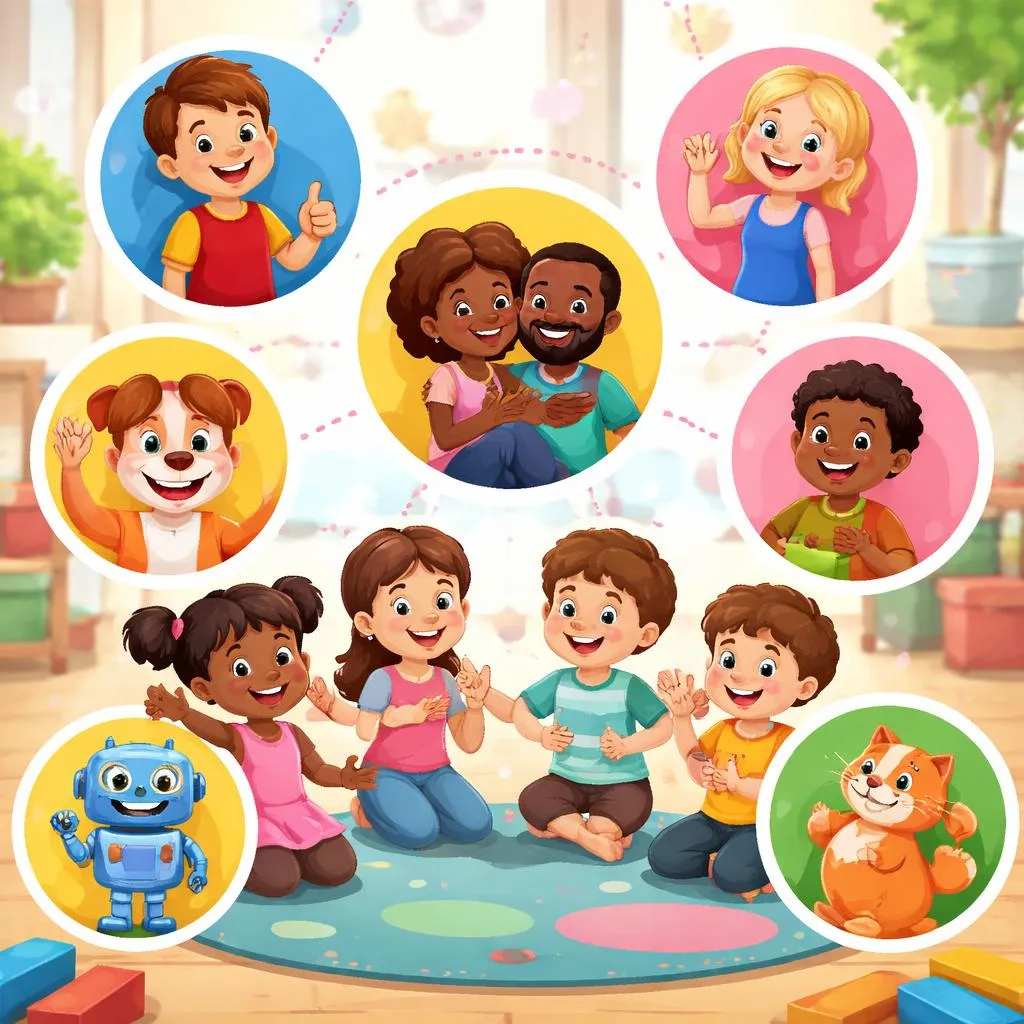

Small words do big jobs in English. Words like I, you, he, and she appear in almost every sentence. They replace nouns. They tell who does the action. They make sentences smoother and less repetitive. These words are called subject pronouns. Teaching subject pronouns gives children tools they need every day. They learn to talk about themselves. They learn to talk about others. Let us explore how to guide young learners through this essential grammar point with clear explanations and engaging activities.
Meaning of Subject Pronouns Subject pronouns are words that replace nouns as the subject of a sentence. The subject is the person or thing that does the action. Subject pronouns tell us who or what the sentence is about.
Without subject pronouns: Maria is my friend. Maria likes to play. The cat is black. The cat sleeps all day.
With subject pronouns: Maria is my friend. She likes to play. The cat is black. It sleeps all day.
The sentences sound much better with pronouns. They flow more naturally. They are easier to say and understand.
The subject pronouns in English: I You He She It We They
I refers to the person speaking. I am a student. I like ice cream.
You refers to the person being spoken to. You are my friend. You have a blue backpack.
He refers to one boy or man. He is my brother. He plays soccer.
She refers to one girl or woman. She is my sister. She reads books.
It refers to one thing or animal. It is a dog. It has a long tail.
We refers to the speaker and other people. We are in kindergarten. We go to school together.
They refers to more than one person or thing. They are my friends. They play outside.
For young learners, start with the most common pronouns. I, you, he, she, it, we, they appear constantly. Children need these words every day.
Conjugation with Subject Pronouns Subject pronouns work with verbs. The verb must match the pronoun. This is called subject-verb agreement.
Present tense of be with subject pronouns: I am You are He is She is It is We are They are
Present tense of have with subject pronouns: I have You have He has She has It has We have They have
Present tense of like with subject pronouns: I like You like He likes She likes It likes We like They like
Present tense of play with subject pronouns: I play You play He plays She plays It plays We play They play
Notice that he, she, and it add -s to most verbs in present tense. This is a key pattern for children to learn.
Past tense is easier because most verbs add -ed for all subjects: I played You played He played She played It played We played They played
The verb "be" is irregular in past tense: I was You were He was She was It was We were They were
For beginners, focus on present tense with common verbs. Practice the -s ending for he, she, it.
Present Tense Examples with Subject Pronouns Present tense sentences show what happens now or regularly. These examples help children see subject pronouns in action.
I examples: I am happy today. I have a red crayon. I like to play outside. I eat lunch at noon. I see a bird in the tree.
You examples: You are my best friend. You have a new backpack. You like to draw pictures. You sing very well. You run fast.
He examples: He is tall for his age. He has a pet dog. He likes to read books. He plays soccer after school. He eats apples for snack.
She examples: She is a good student. She has long hair. She likes to dance. She sings in music class. She helps her friends.
It examples: It is a sunny day. It has four wheels. It likes to eat fish. (for a cat) It runs fast. (for a dog) It grows in the garden. (for a flower)
We examples: We are in kindergarten. We have a nice teacher. We like to play together. We eat snack at ten o'clock. We go to music class on Tuesdays.
They examples: They are my classmates. They have new books. They like to play at the park. They run on the playground. They eat lunch in the cafeteria.
Practice these sentences during daily routines. Point to children and use the correct pronoun. "She is writing her name." "They are playing with blocks." This connects grammar to real classroom life.
Past Tense Examples with Subject Pronouns Past tense sentences show what happened before now. These examples use subject pronouns with past tense verbs.
I examples in past: I was tired yesterday. I had a cold last week. I played outside after school. I ate pizza for dinner. I saw a movie on Saturday.
You examples in past: You were late this morning. You had a turn already. You played very well in the game. You ate all your vegetables. You saw the rainbow yesterday.
He examples in past: He was at the park yesterday. He had a stomach ache. He played soccer after school. He ate a big lunch. He saw his grandmother on Sunday.
She examples in past: She was happy about the news. She had a dance recital. She played with her friends. She ate an apple for snack. She saw a butterfly in the garden.
It examples in past: It was cold yesterday. It had a scratch on the door. It played with a ball. (for a dog) It ate all its food. (for a cat) It grew very tall. (for a flower)
We examples in past: We were at the museum last week. We had pizza for lunch. We played games together. We ate popcorn at the movie. We saw a fire truck on the street.
They examples in past: They were at the party on Saturday. They had a good time. They played in the park. They ate cake and ice cream. They saw a rainbow after the rain.
Use clear time markers with past tense. Yesterday, last week, on Saturday, this morning. These words signal that the time is past.
Future Tense Examples with Subject Pronouns Future tense sentences show what will happen later. These examples use subject pronouns with future verbs.
I examples in future: I will be five tomorrow. I will have a party on Saturday. I will play outside later. I will eat lunch at noon. I will see my grandma next week.
You examples in future: You will be late if you don't hurry. You will have a new teacher next year. You will play in the game tomorrow. You will eat dinner at home. You will see the doctor on Monday.
He examples in future: He will be happy to see you. He will have a baby sister soon. He will play soccer after school. He will eat lunch in the cafeteria. He will see his friends on the weekend.
She examples in future: She will be at the party. She will have a dance recital. She will play the piano in the show. She will eat cake at the celebration. She will see her cousin next month.
It examples in future: It will be sunny tomorrow. It will have a new cover soon. It will work better after fixing. It will grow tall in the summer. It will rain later today.
We examples in future: We will be in first grade soon. We will have a field trip next week. We will play games at the party. We will eat snacks during the movie. We will see the results tomorrow.
They examples in future: They will be here soon. They will have a new house. They will play in the tournament. They will eat dinner together. They will see the show on Friday.
Future time markers include tomorrow, next week, later, soon, on Saturday. These words help children understand when the action happens.
Questions with Subject Pronouns Forming questions with subject pronouns follows patterns. These examples show how subject pronouns work in questions.
Questions with be: Am I late? Are you ready? Is he your brother? Is she a teacher? Is it time to go? Are we there yet? Are they playing?
Questions with do/does: Do I have a turn? Do you like pizza? Does he play soccer? Does she read books? Does it work? Do we have time? Do they want to play?
Questions with did (past): Did I do something wrong? Did you see the movie? Did he finish his work? Did she call her mom? Did it rain yesterday? Did we bring enough? Did they enjoy the party?
Information questions: Where am I? Who are you? What is he doing? Where does she live? When does it start? How are we doing? Why are they laughing?
Short answers with subject pronouns: Yes, I am. No, I'm not. Yes, he is. No, she isn't. Yes, we are. No, they aren't. Yes, I do. No, I don't. Yes, he does. No, she doesn't. Yes, we did. No, they didn't.
Practice question patterns during daily routines. Ask about preferences, activities, and experiences. This builds conversation skills naturally.
Other Uses of Subject Pronouns Subject pronouns have other important uses beyond basic sentences. Children will encounter these as they progress.
Subject pronouns with and: My friend and I play together. You and I can go outside. He and she are in the same class. Mom and they went to the store.
When talking about yourself and another person, put "I" last. This is polite in English.
Subject pronouns with comparisons: I run faster than he does. She sings better than I do. They are taller than we are.
In comparisons, subject pronouns often appear with "do" or "be" at the end.
Subject pronouns in compound sentences: I like pizza, but she likes pasta. He plays soccer, and they play baseball. We want to go, but it is raining.
Subject pronouns help connect ideas in longer sentences.
Subject pronouns with emphasis: I myself will do it. She herself made the cake. They themselves built the fort.
These emphatic forms use "-self" with the subject pronoun. They add emphasis.
Subject pronouns in stories: Once upon a time, there was a girl. She lived in a small house. A dog appeared. It was hungry. The children played outside. They had fun.
Stories use subject pronouns to avoid repeating names. This makes stories flow better.
Learning Tips for Teaching Subject Pronouns Teaching subject pronouns requires clear strategies. Here are tips for introducing them effectively.
Start with yourself: Point to yourself and say "I." Have children point to themselves and say "I." This makes the pronoun personal and meaningful.
Use names first: Say "Maria is reading. She is reading." Connect the name to the pronoun. Children learn that "she" replaces "Maria."
Use gestures: Point to yourself for "I." Point to a child for "you." Point to another child for "he" or "she." Gestures reinforce the meaning visually.
Use pictures: Show pictures of people. Ask "Who is this?" Children respond with "He is a boy" or "She is a girl." This connects pronouns to images.
Teach one pronoun at a time: Focus on "I" for several days. Then add "you." Then add "he" and "she." Mastery comes from focused practice.
Use songs and chants: Create simple chants. "I, you, he, she, it. We, you, they. Subject pronouns every day!" Rhythm helps memory.
Correct gently: When children say "Her is happy," simply repeat correctly. "Yes, she is happy." Gentle modeling works better than explicit correction.
Contrast with object pronouns: For older children, show the difference. "She likes me" vs. "I like her." This helps them understand the different jobs pronouns do.
Educational Games for Practice Games make grammar practice joyful. Here are games for practicing subject pronouns.
Pronoun Match: Create cards with names and cards with pronouns. "Maria" matches with "she." "Juan" matches with "he." "The book" matches with "it." Children match them.
Pronoun Action Game: Call out a pronoun and an action. "She jumps." Children with that pronoun jump. "They clap." All children clap. This connects pronouns to movement.
Who Is It?: Describe someone without naming them. "He has brown hair. He is wearing a red shirt. He sits near the window." Children guess "Is it Juan?" This practices "he" and "she."
Pronoun Bingo: Create bingo cards with pronouns in the squares. Call out sentences with missing pronouns. "___ am happy." Children cover "I." First to cover a row wins.
Pronoun Chain: Start a sentence with a pronoun. "I like pizza." Next child repeats and adds a new sentence with a different pronoun. "I like pizza and she likes pasta." Continue around the circle.
Pronoun Swap: Give sentences with names. "Maria plays soccer." Children change them to use pronouns. "She plays soccer." This builds the replacement skill.
Pronoun Sorting: Create pictures of different people and things. Children sort them under the correct pronoun. Pictures of boys go under "he." Pictures of girls go under "she." Pictures of objects go under "it."
Common Challenges with Subject Pronouns Young learners often struggle with certain subject pronouns. Knowing these challenges helps teachers provide support.
Confusing he and she: Some children mix up he and she. Use clear examples with pictures. Point to a boy and say "he." Point to a girl and say "she." Repeat often.
Using me as subject: Children may say "Me want cookie." Explain that "I" does the action. "Me" receives the action. Practice "I want" sentences.
Forgetting it for objects: Children may use "he" or "she" for all animals and objects. Explain that "it" is for things and animals when gender is unknown.
Using her as subject: Children may say "Her is nice." Explain that "she" is for the subject. "Her" is for the object. Practice contrasting sentences.
Confusing we and us: Children may say "Us go to school." Explain that "we" does the action. "Us" receives the action. "We go to school" is correct.
Forgetting pronoun agreement: Children may say "He like pizza." Remind them that he, she, it need -s on the verb in present tense. "He likes pizza."
Using name and pronoun together: Children may say "Maria she is nice." Explain that we use either the name or the pronoun, not both. "Maria is nice" or "She is nice."
Address these challenges with patience. Children learn through exposure and practice, not through error correction alone.
Subject pronouns are essential building blocks of English. Children use them every day to talk about themselves and others. These small words make sentences smooth and natural. Teaching clear examples of subject pronoun usage gives children confidence to speak correctly. They learn to replace names with pronouns. They learn which pronoun goes with which person. With songs, games, and daily practice, subject pronouns become second nature. Children use them without thinking. And that is the goal of all grammar teaching.