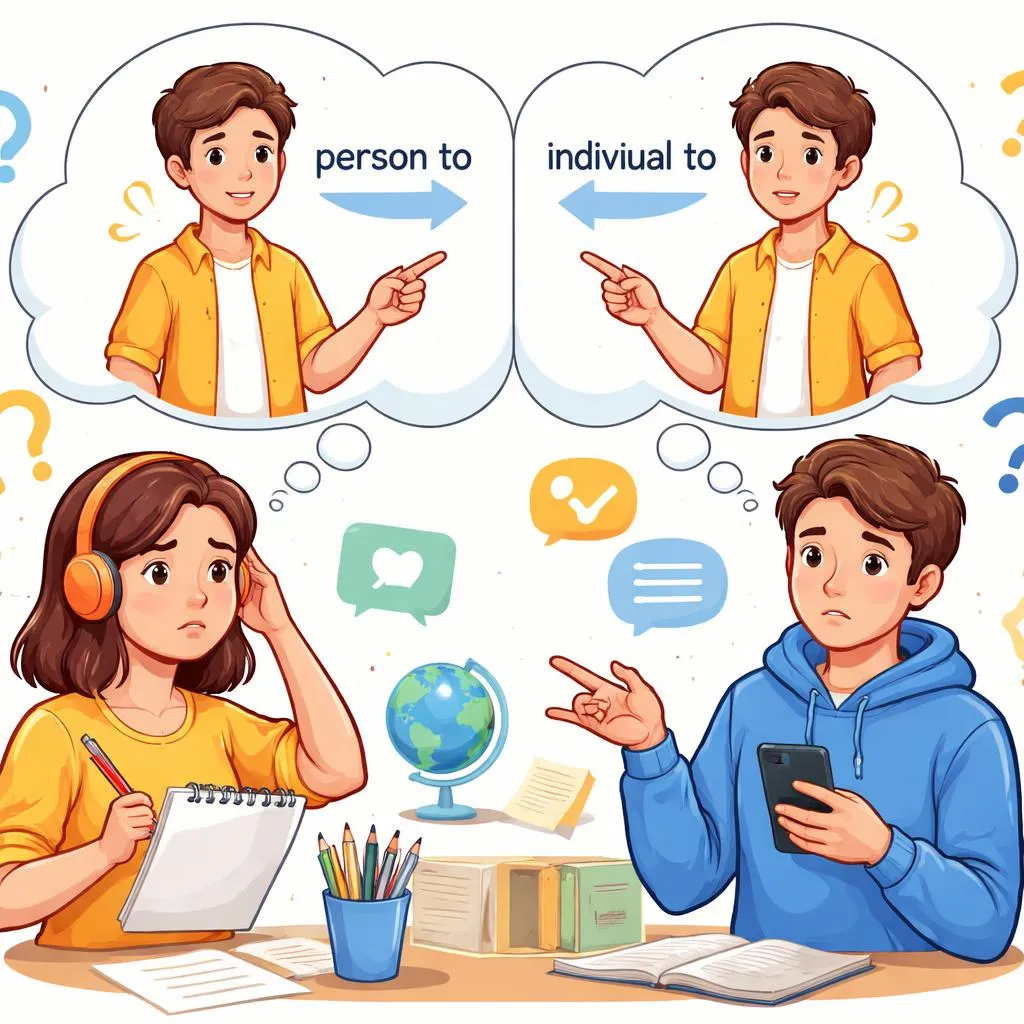

English learners often notice that some words seem almost identical. At first glance, “person” and “individual” both describe a human being. Because of this, the expressions “person to” and “individual to” may look very similar. However, native speakers do not always use them in the same way. One sounds more natural in daily conversation, while the other feels more formal and specific. Understanding these small differences helps children speak and write more clearly. Learning how words feel in real situations is an important part of language growth. Children who notice tone and style become stronger readers, listeners, and writers over time. What Do These Expressions Mean? The phrase “person to” usually appears when someone talks about one human being connected to another place, direction, or action. For example:
“The person to the left is my uncle.”
“Talk person to person.”
The word “person” is common in everyday English. Children hear it at school, at home, and in books. The phrase “individual to” also refers to a human being, but the word “individual” sounds more formal. It often focuses on one unique person rather than people as a group. For example:
“The teacher gave help individual to each student.”
“Each rule should fit the individual.”
A child-friendly explanation is simple:
“Person” sounds normal and everyday.
“Individual” sounds careful and formal.
The two expressions seem similar because both describe human beings. Still, the feeling and usage can change depending on the situation. What’s the Difference? The biggest difference comes from tone. “Person” sounds friendly, natural, and common. People use it in daily conversation all the time. “Individual” sounds more official or serious. Adults may use it in schools, offices, reports, or formal discussions. One expression feels more personal, while the other feels more precise. Here is a simple comparison: ExpressionStyleFeelingCommon Useperson tocasual and naturalwarm and everydayconversationsindividual toformal and specificcareful and detailedreports or official speech Another difference is focus. “Person” often highlights a human being in a simple way. “Individual” highlights uniqueness. It reminds listeners that every human is different. For example:
“Every person matters.”
“Every individual learns differently.”
Both sentences work, but the second sentence sounds more formal and educational. When Do We Use Each One? Children often hear “person to” in normal daily life. At school:
“The person to your right is your partner.”
“Speak person to person.”
At home:
“The person to call is Grandma.”
“One person talked to another.”
Friends also use “person” naturally because it sounds easy and direct. “Individual to” appears more often in formal situations. Teachers may say:
“This lesson is individual to each child.”
“Every individual has different strengths.”
Doctors, counselors, and writers sometimes prefer “individual” because it sounds respectful and careful. Children should remember this idea:
Use “person” for simple daily communication.
Use “individual” for formal or detailed discussions.
Why Formal and Casual Words Matter English has many words with similar meanings but different tones. For example:
“Help” sounds casual.
“Assist” sounds formal.
The same idea appears with “person” and “individual.” Children who understand tone can choose better vocabulary for different situations. Imagine a child talking to a friend:
“That person is funny.”
Now imagine a school report:
“Each individual showed creativity.”
The second sentence fits formal writing better. Understanding tone helps children become flexible English users. Example Sentences for Kids Here are simple examples using “person to.”
“The person to my left likes soccer.”
“Talk person to person when solving problems.”
“The person to the door opened it quickly.”
Now look at examples using “individual to.”
“The teacher gave advice individual to each student.”
“Every individual in the class has special talents.”
“The project should fit the individual child.”
Children may notice that “person” sounds easier and more conversational. “Individual” feels more serious and thoughtful. How Context Changes the Feeling Context changes how words sound. In friendly conversations, “person” usually feels more natural. For example:
“A kind person helped me.”
Most people say this in everyday speech. But in professional writing, “individual” may sound better. For example:
“The program supports each individual learner.”
This sentence sounds more formal and organized. Writers choose vocabulary carefully because words shape the mood of a sentence. Children who notice these details become better readers. Common Mistakes to Avoid One common mistake is using “individual” in every sentence because it sounds advanced. Incorrect:
“An individual gave me a cookie.”
Correct:
“A person gave me a cookie.”
In normal conversation, “person” usually sounds more natural. Another mistake is using “person” in very formal writing where “individual” fits better. Incorrect:
“The report studied each person carefully.”
Better:
“The report studied each individual carefully.”
Children should also avoid thinking that formal words are always better. Good English depends on choosing the right tone for the situation. Why Simpler Words Often Sound Better Many learners believe long words make English stronger. However, native speakers often prefer simple language. “Person” works well because it sounds clear and friendly. Simple vocabulary helps communication stay natural. That is why books for children often use “person” instead of “individual.” Still, “individual” remains useful. It helps writers sound precise and respectful in formal contexts. Learning both words gives children more language choices. Easy Memory Tips Here is a simple memory trick:
“Person” = people in daily life
“Individual” = one unique human
Another fun tip: The word “individual” is longer. Long words often sound more formal. Children can also remember this:
“Person” fits conversations.
“Individual” fits reports and serious discussions.
Short memory tricks help vocabulary stay clear in the mind. Quick Practice Time Choose the Best Word
The _____ to the window smiled at me.
A. person B. mountain Correct answer: A
Every _____ learns in a different way.
A. sandwich B. individual Correct answer: B Fill in the Blank
The teacher spoke person to _____.
Answer: person
Each _____ in the group shared an idea.
Answer: individual How Children Can Use These Words Naturally Children do not need to memorize difficult grammar rules first. Listening and reading help vocabulary grow naturally. Books, cartoons, classroom discussions, and family conversations all teach tone little by little. When children hear “person,” they usually notice a warm and everyday feeling. When they hear “individual,” they often notice a more serious or thoughtful style. Over time, these patterns become easier to understand. Good readers pay attention not only to meaning but also to feeling. That skill helps children communicate clearly and confidently in many situations. Wrap-up “Person” sounds more natural and everyday, while “individual” sounds more formal and focused on uniqueness.