
原诗:
When John Henry was a little tiny baby
Sitting on his mama's knee,
He picked up a hammer and a little piece of steel
Saying, "Hammer's going to be the death of me, Lord, Lord,
Hammer's going to be the death of me."
John Henry was a man just six feet high,
Nearly two feet and a half across his breast.
He'd hammer with a nine-pound hammer all day
And never get tired and want to rest, Lord, Lord,
And never get tired and want to rest.
John Henry went up on the mountain
And he looked one eye straight up its side.
The mountain was so tall and John Henry was so small,
He laid down his hammer and he cried, "Lord, Lord,"
He laid down his hammer and he cried.
John Henry said to his captain,
"Captain, you go to town,
Bring me back a TWELVE-pound hammer, please,
And I'll beat that steam drill down, Lord, Lord,
I'll beat that steam drill down."
The captain said to John Henry,
"I believe this mountain's sinking in."
But John Henry said, "Captain, just you stand aside--
It's nothing but my hammer catching wind, Lord, Lord,
It's nothing but my hammer catching wind."
John Henry said to his shaker,
"Shaker, boy, you better start to pray,
'Cause if my TWELVE-pound hammer miss that little piece of steel,
Tomorrow'll be your burying day, Lord, Lord,
Tomorrow'll be your burying day."
John Henry said to his captain,
"A man is nothing but a man,
But before I let your steam drill beat me down,
I'd die with a hammer in my hand, Lord, Lord,
I'd die with a hammer in my hand."
The man that invented the steam drill,
He figured he was mighty high and fine,
But John Henry sunk the steel down fourteen feet
While the steam drill only made nine, Lord, Lord,
The steam drill only made nine.
John Henry hammered on the right-hand side.
Steam drill kept driving on the left.
John Henry beat that steam drill down.
But he hammered his poor heart to death, Lord, Lord,
He hammered his poor heart to death.
Well, they carried John Henry down the tunnel
And they laid his body in the sand.
Now every woman riding on a C and O train
Says, "There lies my steel-driving man, Lord, Lord,
There lies my steel-driving man."
诗歌的分析与解读
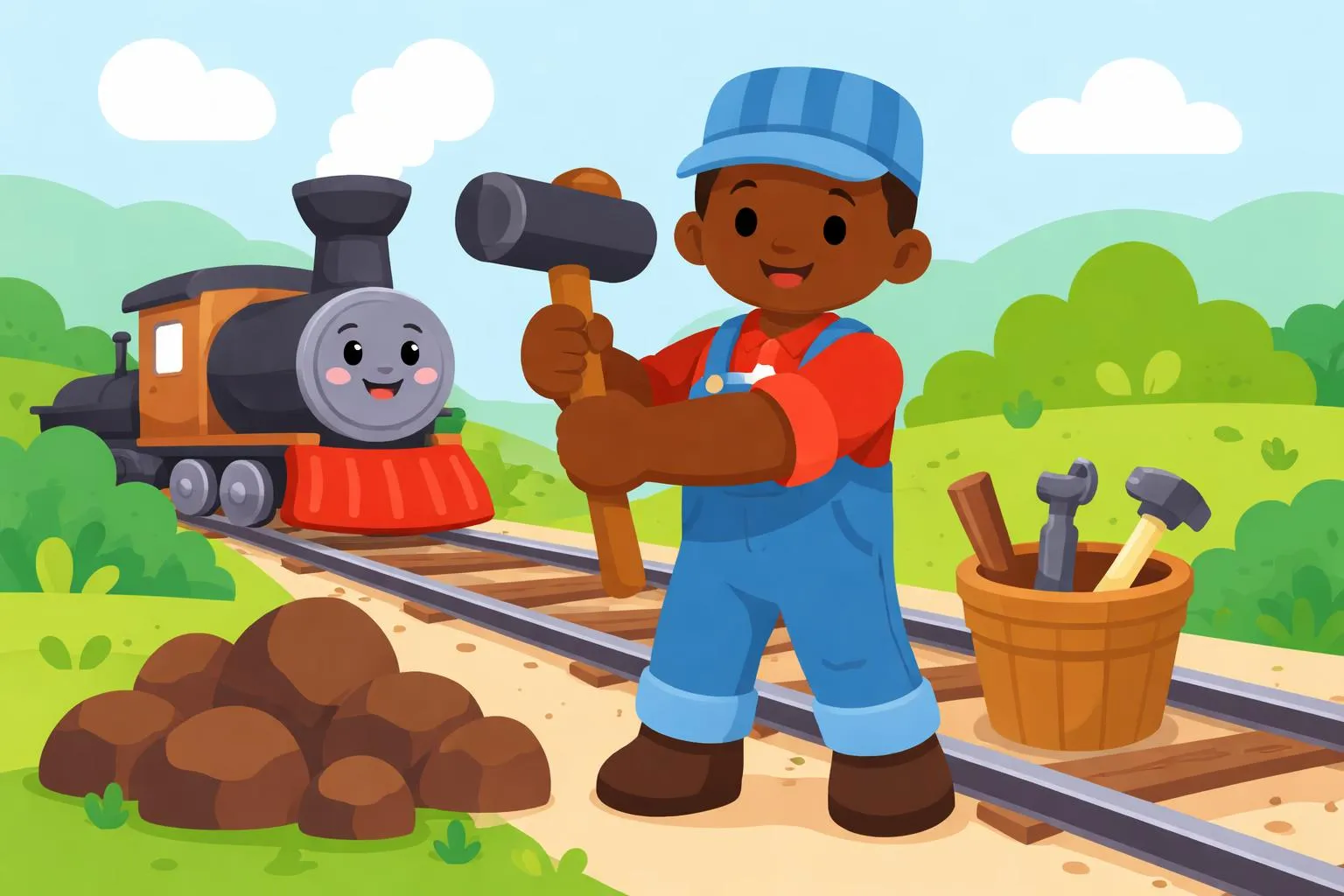
这首诗讲述了约翰·亨利的传奇故事,他是美国文化中的民间英雄,象征着人类劳动的力量、决心和精神,反对工业革命中机器的崛起。叙述开始于约翰·亨利还是个婴儿时,已经与锤子和钢铁紧密相连,预示着他一生与艰苦体力劳动的关系。
约翰·亨利被描绘成一个巨人,无论是在身材还是力量上,他用锤子将钢铁打入岩石。诗歌对比了他的人力与蒸汽钻的机械力量,这种新发明威胁着取代体力劳动。约翰·亨利决心证明人类的力量和意志可以超越机器,这使他与蒸汽钻展开了一场比赛。
尽管他赢得了比赛——将钢铁打得比机器更深——但约翰·亨利付出了最终的代价,因努力的身体负担而死去。诗歌以对约翰·亨利的致敬结束,女性们在火车上记住了他,称他为“钢铁驱动者”,象征着对人类耐力和牺牲的尊重。
背景与作者信息
约翰·亨利的故事是美国民间传说的一部分,特别根植于非裔美国人的口头传统。它起源于19世纪末美国铁路扩张时期。这个故事反映了当时的社会和经济紧张局势,尤其是人类劳动者与工业机械之间的冲突。
这首诗代代相传,通常作为铁路工人的民谣或工作歌曲演唱。确切的作者不详,因为它是一首随着时间演变的传统民歌。它持久的流行性突显了讲故事在保存历史和价值观中的文化重要性。
反思与见解
约翰·亨利的故事是对人类精神韧性和辛勤工作的价值的有力提醒。它也提出了关于进步和技术的重要问题:虽然机器可以提高效率,但它们也可能威胁到工人的生计和尊严。
对于现代读者,这首诗鼓励反思平衡——如何在拥抱创新的同时不失去对人类价值的关注。它还激励勇气和毅力,表明即使面对压倒性的困难,决心也能带来改变。
教育价值与学习要点
从这首诗中,孩子们和学生可以学习到几个重要的教训和技能:
- 历史背景: 理解工业革命及其对工人的影响。
- 民间传说与口头传统: 欣赏故事和歌曲如何保存文化遗产。
- 坚持与牺牲的主题: 认识到辛勤工作和奉献的价值。
- 人类与机器: 讨论技术进步的伦理和社会影响。
- 文学手法: 识别诗歌中的重复、意象和叙事结构。
实际应用
- 在历史课中,约翰·亨利的故事可以展示工业化的人性一面。
- 在文学课中,学生可以分析诗歌的结构和主题。
- 在生活技能教育中,这首诗可以激发关于韧性和面对挑战的讨论。
- 在技术与伦理讨论中,它可以作为关于自动化和就业辩论的起点。
阅读理解问题
- 约翰·亨利是谁,他因为什么而出名?
- 在诗中,锤子象征着什么?
- 约翰·亨利为什么想要一个十二磅的锤子?
- 约翰·亨利与蒸汽钻之间比赛的意义是什么?
- 约翰·亨利在赢得比赛后发生了什么?
- 人们在诗的结尾如何记住约翰·亨利?
- 这首诗传达了关于人类劳动和机器的什么信息?
答案
- 约翰·亨利是一个传奇的钢铁驱动者,以其惊人的力量和决心而闻名。
- 锤子象征着人类劳动、力量和毅力。
- 约翰·亨利想要一个更重的锤子来在比赛中击败蒸汽钻。
- 比赛代表了人类努力与工业机械之间的斗争。
- 约翰·亨利因过度锤击而死于身体的压力。
- 人们记住他是一个英雄,“钢铁驱动者”,受到乘坐火车的人们的尊敬。
- 这首诗传达了人类精神和努力是强大的,但可能会受到技术进步的挑战,突显了对劳动的自豪感和工业化的代价。