
原诗:
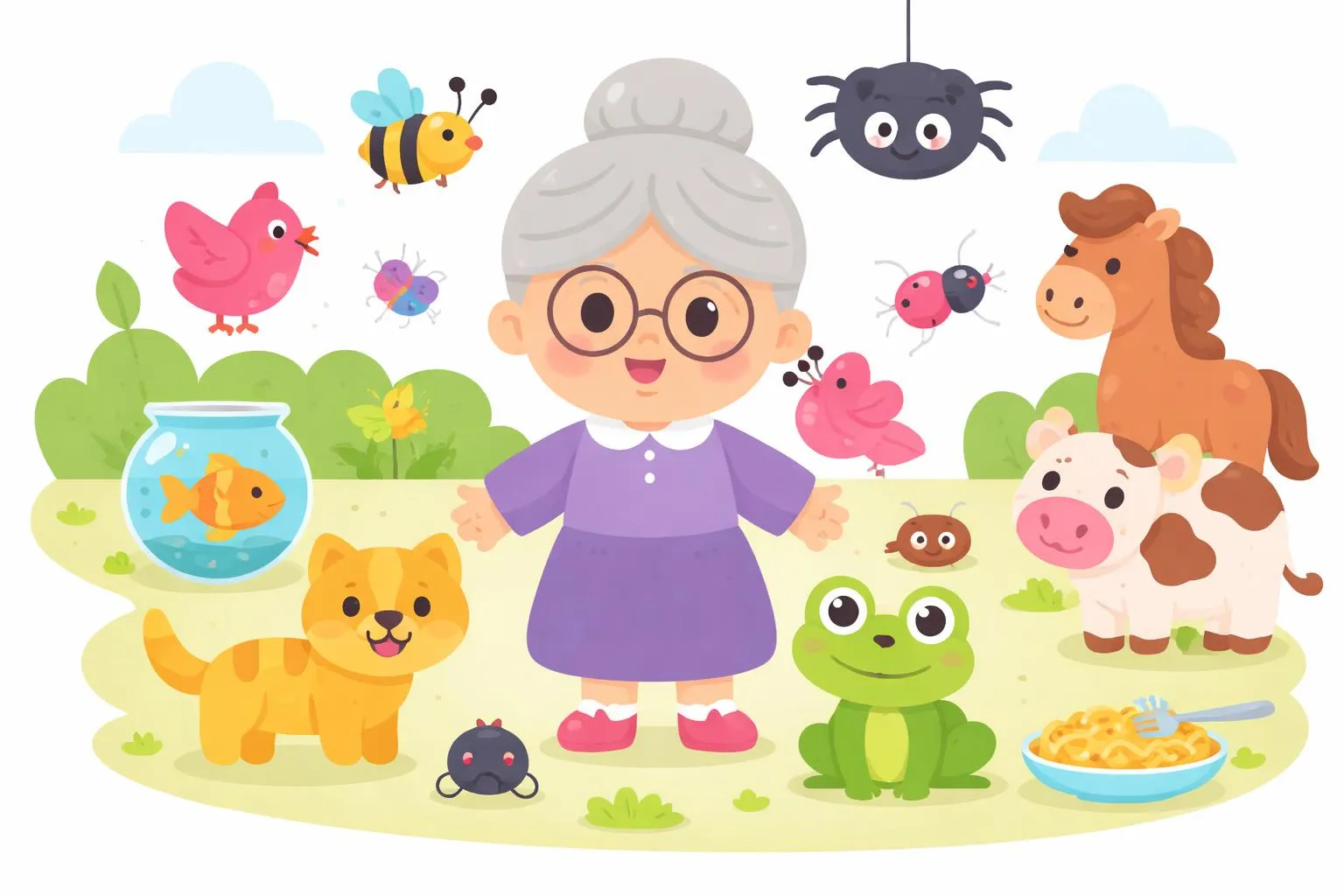
Poor old lady, she swallowed a fly.
I don't know why she swallowed a fly.
Poor old lady, I think she'll die.
Poor old lady, she swallowed a spider.
It squirmed and wriggled and turned inside her.
She swallowed the spider to catch the fly.
I don't know why she swallowed a fly.
Poor old lady, I think she'll die.
Poor old lady, she swallowed a bird.
How absurd!???She swallowed a bird.
She swallowed the bird to catch the spider,
She swallowed the spider to catch the fly,
I don't know why she swallowed a fly.
Poor old lady, I think she'll die.
Poor old lady, she swallowed a cat.
Thank of that!???She swallowed a cat.
She swallowed the cat to catch the bird.
She swallowed the bird to catch the spider.
She swallowed the spider to catch the fly,
I don't know why she swallowed a fly.
Poor old lady, I think she'll die.
Poor old lady, she swallowed a dog.
She went the whole hog when she swallowed the dog.
She swallowed the dog to catch the cat,
She swallowed the cat to catch the bird,
She swallowed the bird to catch the spider.
She swallowed the spider to catch the fly,
I don't know why she swallowed a fly.
Poor old lady, I think she'll die.
Poor old lady, she swallowed a cow.
I don't know how she swallowed a cow.
She swallowed the cow to catch the dog,
She swallowed the dog to catch the cat,
She swallowed the cat to catch the bird,
She swallowed the bird to catch the spider,
She swallowed the spider to catch the fly,
I don't know why she swallowed a fly.
Poor old lady, I think she'll die.
Poor old lady, she swallowed a horse.
She died, of course.
诗歌分析与解释
这首经典的童谣讲述了一位可怜的老太太吞下了一系列越来越大的动物,从一只苍蝇开始,最后吞下了一匹马。诗歌具有重复性和累积性,每一节都在前一节的基础上增加一个新的动物,老太太吞下它以捕捉前一个动物。这个韵律结合了幽默、荒谬和逐渐升级的混乱感。
这首诗的主要主题围绕着老太太行为的荒谬性——吞下动物试图解决问题,结果只导致更多的复杂情况。重复的句子“我不知道她为什么吞下了一只苍蝇”强调了她最初行为的神秘和愚蠢,而最后一句“她死了,当然”则带来了黑色幽默的结局。
意义与解读
从本质上讲,这首诗是一个累积故事,通过重复教孩子们顺序、因果关系和记忆。老太太吞下动物象征着一种连锁反应,一个行为导致另一个,往往伴随着意想不到的后果。诗歌的幽默和节奏使其对年轻观众既难忘又引人入胜。
背景与作者
这首诗传统上被认为是美国民间传统,最早的印刷版本可以追溯到20世纪中期。它由罗斯玛丽·威尔斯推广,她写了一本著名的插图版,但这首韵律本身是口头传统的一部分,并已以多种形式改编。
这种类型的累积韵律在儿童文学中很常见,作为一种有趣的方式来发展语言技能、记忆和顺序能力。这首诗的持久受欢迎程度归功于其朗朗上口的节奏、重复性和幽默荒谬的故事情节。
教育价值与学习要点
孩子们和学生可以从这首诗中学习到几个重要的教训和技能:
- 顺序与记忆: 重复的结构帮助孩子们记住事件的顺序并练习回忆信息。
- 因果关系: 诗歌展示了一个行为如何导致另一个行为,鼓励逻辑思维。
- 词汇积累: 引入动物名称和描述性动词,如“扭动”、“蠕动”和“荒谬”,丰富孩子们的词汇。
- 节奏与韵律: 诗歌的节奏模式支持音素意识,这是早期阅读的基本技能。
- 幽默与创造力: 荒谬性鼓励孩子们运用想象力并理解有趣的语言。
生活与学习中的实际应用
- 课堂活动: 教师可以利用这首诗进行顺序游戏,要求学生按顺序复述故事或表演。
- 语言发展: 家长和教育者可以强调押韵的词,并鼓励孩子们创作自己的累积故事。
- 解决问题的讨论: 这首诗可以引发关于行为后果的对话,促进批判性思维。
- 记忆练习: 重复有助于提高记忆技能,这在所有学习领域都很有用。
理解问题与答案
-
老太太为什么吞下了蜘蛛?
答案: 她吞下蜘蛛是为了捕捉苍蝇。 -
老太太在猫之后吞下了什么动物?
答案: 她吞下了一只狗。 -
老太太吞下的最后一种动物是什么?
答案: 她吞下了一匹马。 -
这首诗为什么有趣?
答案: 因为老太太以一种愚蠢和荒谬的方式吞下越来越大的动物。 -
在诗的结尾,老太太发生了什么?
答案: 她死了,当然。 -
这首诗通过其重复结构帮助孩子们练习什么技能?
答案: 它帮助孩子们练习记忆和顺序。
结论
这首童谣不仅仅是一首简单的儿童诗;它是一个有价值的教育工具,结合了幽默、节奏和讲故事的方式来吸引年轻学习者。通过其重复和累积的结构,它教授了重要的认知技能,如顺序、记忆和因果关系。它还丰富了词汇并鼓励创造力。理解这首诗的背景和有趣的性质有助于教育者和家长有效地使用它来教授语言和批判性思维技能。