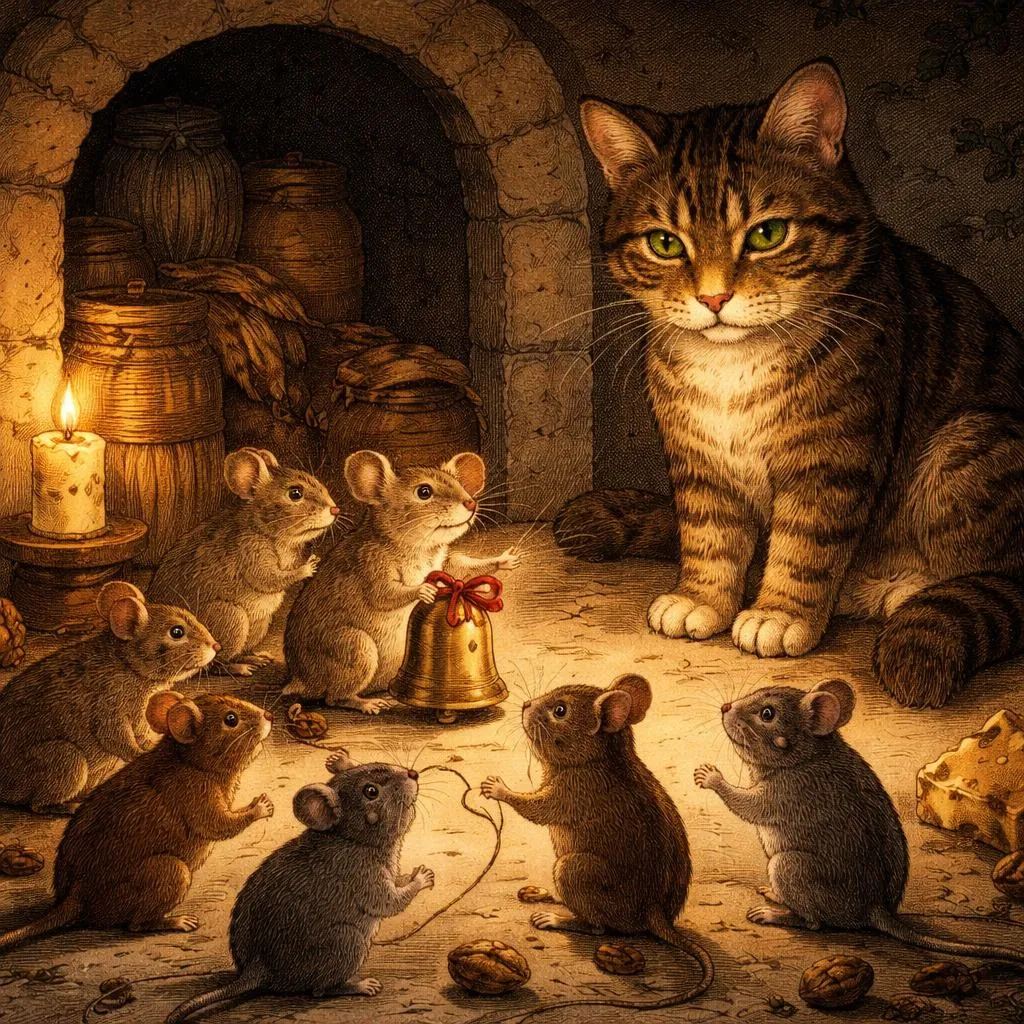

Long ago, the mice had a general council to consider what measures they could take to outwit their common enemy, the Cat. Some said this, and some said that; but at last a young mouse got up and said he had a proposal to make, which he thought would meet the case. “You will all agree,” said he, “that our chief danger consists in the sly and treacherous manner in which the enemy approaches us. Now, if we could receive some signal of her approach, we could easily escape from her. I venture, therefore, to propose that a small bell be procured, and attached by a ribbon round the neck of the Cat. By this means we should always know when she was about, and could easily retire while she was in the neighbourhood.”
This proposal met with general applause, until an old mouse got up and said: “That is all very well, but who is to bell the Cat?” The mice looked at one another and nobody spoke. Then the old mouse said:
“It is easy to propose impossible remedie.”
背景介绍和作者介绍
这个故事是一个著名的寓言,名为“给猫挂铃铛”,归功于伊索,一位据信生活在公元前 6 世纪左右的古希腊的讲故事的人。伊索寓言是使用动物作为角色来传授道德教训的短篇故事。这些故事代代相传,由于其简单而深刻的信息,至今仍风靡全球。
详细解读和含义
寓言“给猫挂铃铛”讲述了一群老鼠开会,他们制定了一个计划来保护自己免受猫的侵害,猫是他们的捕食者。年轻的老鼠建议给猫挂上铃铛,这样他们就可以听到猫来了并避开危险。虽然这个想法看起来很聪明并获得了批准,但老鼠长老指出了真正的困难:谁来给猫挂铃铛?这个问题突出了提出想法和采取行动或承担执行所需的风险之间的区别。
这个故事告诉我们,有些想法,虽然在理论上很有吸引力,但可能无法实现或很难实施。它警告人们不要在没有考虑实际挑战的情况下制定计划。它还强调了勇气和责任——提出解决方案很容易,但要采取行动却难得多,尤其是在涉及危险或困难的情况下。
给学生的教训和见解
-
批判性思维和实用性: 学生学习批判性地思考想法和计划。不仅要提出解决方案,还要评估其可行性以及所涉及的风险,这一点很重要。
-
勇气和责任: 这个故事鼓励年轻读者勇敢和负责任。好的想法需要行动,有时这种行动涉及个人风险或牺牲。
-
团队合作和领导力: 老鼠的会议展示了共同讨论问题和倾听不同观点的价值。领导力不仅仅是提出想法,还在于激励他人采取行动。
-
解决问题的能力: 学生可以反思如何现实地解决问题,同时考虑好处和障碍。
在日常生活中的应用
-
在学校: 在进行小组项目或解决问题时,学生应该超越想法,专注于如何有效地实施它们。他们应该准备好为自己的角色承担责任。
-
在社交场合: 这个故事鼓励诚实地面对困难,以及在面对挑战时(例如为朋友挺身而出或做出艰难的决定)保持勇气的重要性。
-
在个人成长中: 学生们了解到,虽然梦想和计划很重要,但真正的成长来自于行动和面对恐惧。
从故事中培养积极的特质
-
勇敢: 鼓励学生走出舒适区,迎接挑战,即使这些挑战看起来令人生畏。
-
实用智慧: 教导学生平衡创造力与现实主义,确保想法可以转化为行动。
-
责任感: 帮助学生理解提出解决方案意味着准备好为其实施做出贡献。
反思和欣赏
“给猫挂铃铛”是一个永恒的寓言,它结合了智慧和智慧。它邀请读者深入思考想法和行动之间的区别,以及做出改变所需的勇气。通过反思这个故事,学生们可以培养一种更周到、更负责任的方式来应对他们自己的挑战,无论是在学习中还是在生活中。
