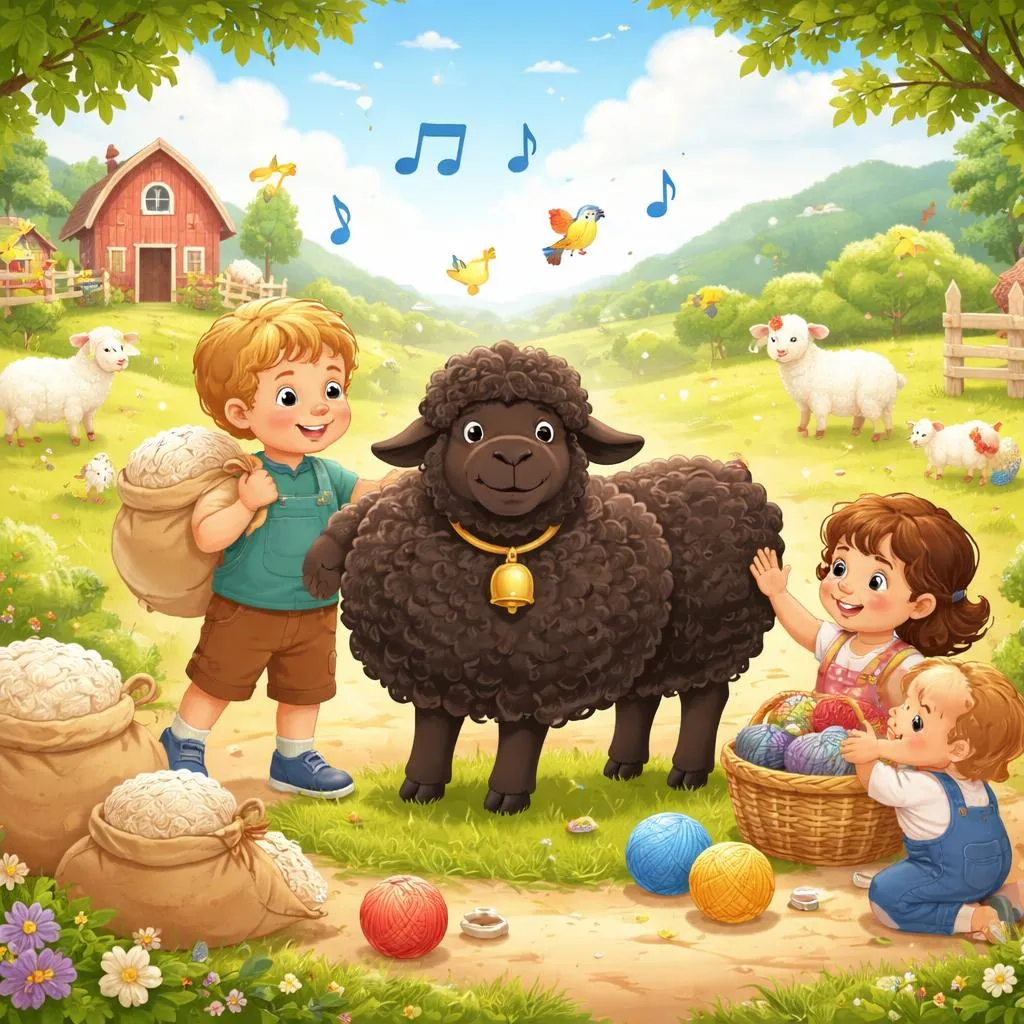

Hello, wonderful educators! Today we are exploring a classic nursery rhyme. The "bah bah black sheep lyrics" have been shared for centuries. This simple song offers rich learning opportunities. We will examine its history and structure. We will explore vocabulary, phonics, and grammar points. We will also share engaging classroom activities. This guide will help you maximize this rhyme's educational value. Let's discover together what this busy sheep can teach our students.
What Is the "Baa Baa Black Sheep" Rhyme?
This rhyme dates back to medieval England. It tells the story of a black sheep. The sheep has three bags of wool. One bag goes to the master. One bag goes to the dame. One bag goes to the little boy down the lane. The rhyme has a simple question and answer format. This structure makes it easy for children to learn. The repetition builds confidence in young speakers. The song introduces concepts of sharing and community. It remains popular in classrooms worldwide today.
The Lyrics of the Nursery Rhyme
Let us review the complete traditional lyrics. The most common version goes like this:
Baa, baa, black sheep,
Have you any wool?
Yes sir, yes sir,
Three bags full.
One for the master,
One for the dame,
And one for the little boy
Who lives down the lane.
Some versions use "bah bah" instead of "baa baa." Both pronunciations are acceptable. The meaning remains exactly the same. The rhyme ends there in most modern versions. This short, sweet song works well for young learners.
Vocabulary Learning from the Song
This rhyme introduces several key vocabulary words. Let us explore each one carefully.
-
Sheep: This is a farm animal. Sheep give us wool. They live in fields. We can show pictures of sheep. We can talk about what sounds sheep make. Baa is the sound we teach children.
-
Black: This is a color word. We can explore the color black. We can find black objects in the classroom. We can compare black to other colors. This builds descriptive vocabulary.
-
Wool: This is the soft hair from sheep. We make clothes from wool. We can show a wool sweater or socks. We can talk about how wool keeps us warm.
-
Master and Dame: These are old words. Master means the man of the house. Dame means the woman of the house. We can explain these as the farmer and his wife. This builds historical vocabulary.
-
Lane: This is a small road. The little boy lives down the lane. We can draw a picture of a lane. We can talk about where students live. This connects the song to their world.
Phonics Points to Practice
The "bah bah black sheep lyrics" offer excellent phonics opportunities. Let us focus on specific sounds.
-
The B Sound: The word baa starts with B. We can practice the /b/ sound. We can feel our lips come together. We can think of other B words. Ball, boy, and big are good examples. This builds phonemic awareness.
-
The SH Sound: Sheep has the /sh/ sound. This is a digraph. Two letters make one sound. We can practice making the shushing sound. We can think of other SH words. Shoe, ship, and fish are good examples.
-
The L Sound: Lane and little start with L. We can practice the /l/ sound. We can feel our tongue on the roof of our mouth. We can think of other L words. Lion, leaf, and leg are good examples.
-
Rhyming Words: The rhyme has a pattern. Wool and full rhyme. Dame and lane have a similar ending sound. Recognizing rhymes builds reading readiness.
Grammar Patterns We Can Teach
The simple sentences in this rhyme provide grammar lessons. Let us look at a few patterns.
-
Question Formation: The song starts with a question. "Have you any wool?" This is an old way of asking. Today we say, "Do you have any wool?" We can practice both forms. We can ask students questions. "Do you have a pencil?" This teaches question structure.
-
Answers and Responses: The sheep answers, "Yes sir." This teaches polite conversation. We can practice saying yes sir and yes ma'am. We can also practice saying no sir politely. This builds social language skills.
-
Prepositions: The song uses "for" and "down." One bag is for the master. The boy lives down the lane. These are important little words. We can practice using for. "This book is for you." We can practice using down. "Walk down the hall."
-
Possession: The rhyme talks about "the master" and "the dame." The uses the definite article. This shows we know which master and dame. We can contrast with "a master" which would be any master.
Learning Activities for the Classroom
Let us explore activities that bring this rhyme to life. These ideas work for various learning styles.
-
Activity 1: Wool Counting Bags
Create three small bags from paper. Label them master, dame, and boy. Give students cotton balls to represent wool. As you sing, place one bag of wool in each bag. Count together. One for the master. One for the dame. One for the boy. This combines counting with the song. -
Activity 2: Black Sheep Art
Provide black construction paper and cotton balls. Students create their own black sheep. They glue cotton balls onto the paper for wool. They can draw a face. Display the sheep around the room. This builds fine motor skills while reinforcing vocabulary. -
Activity 3: Farm Animal Sounds
Talk about different farm animals. Practice the sound each animal makes. Cows say moo. Pigs say oink. Horses say neigh. Ducks say quack. Compare these to the sheep's baa. This builds auditory discrimination. -
Activity 4: Sharing Discussion
Talk about the meaning of sharing. The sheep shares its wool with three people. Ask students about sharing in their lives. What do they share with friends? What do they share with family? This builds social-emotional learning.
Printable Materials for Your Lessons
Visual supports enhance learning for young children. Here are some printable ideas.
-
Sequencing Cards: Create picture cards showing the rhyme's events. Card one shows the black sheep. Card two shows three bags. Card three shows the master. Card four shows the dame. Card five shows the little boy. Students arrange them in order. This builds comprehension and sequencing skills.
-
Vocabulary Flashcards: Create cards for key words. Include sheep, wool, master, dame, and lane. Use simple pictures on one side. Write the word on the other side. Use these for review games and practice.
-
Coloring Page: Create a simple coloring page. Show a black sheep with three bags. Students color while listening to the song. This combines fine motor practice with language exposure. They can point to the bags and count together.
-
Mini Book: Create a small folded book. Each page shows one line of the rhyme. Students illustrate each page. They can take these books home. They can sing the song to their families. This builds home-school connections.
Educational Games to Reinforce Learning
Games make review sessions exciting and effective. Here are some game ideas.
-
Game 1: Wool Hunt
Hide cotton balls around the classroom. Tell students the sheep lost its wool. Students search for the wool. When they find a ball, they bring it to the sheep picture. Count the wool together at the end. This adds movement to vocabulary practice. -
Game 2: Question and Answer Circle
Sit in a circle with students. One student is the sheep. Others ask, "Baa baa black sheep, have you any wool?" The sheep answers, "Yes sir, yes sir, three bags full." Pass a stuffed sheep around. Each child takes a turn being the sheep. This builds confidence in speaking. -
Game 3: Master, Dame, Boy Game
Print three signs. One says master. One says dame. One says boy. Place them in different areas. Play the song. When the music stops, students move to one sign. Ask why they chose that sign. This gets children moving and thinking. -
Game 4: Wool Sorting
Provide different colors of cotton balls or pom-poms. Include black, white, and other colors. Students sort them into groups. They place black wool with the black sheep picture. This teaches color recognition and categorizing skills. -
Game 5: Puppet Show
Create simple puppets. Use a black sheep puppet. Use puppets for the master, dame, and boy. Students act out the rhyme with puppets. This dramatic play deepens engagement. It allows creative expression through language.
We have explored the rich learning potential of this classic rhyme. The "bah bah black sheep lyrics" offer so much to young learners. We looked at vocabulary development. We practiced letter sounds and phonics. We explored simple grammar patterns. We shared engaging classroom activities. We created printable materials. We played educational games. This integrated approach makes learning natural and fun. The rhyme's question and answer format builds conversation skills. The sharing theme teaches valuable life lessons. Use these ideas in your classroom. Adapt them to your students' needs. Watch as your learners sing, count, and grow. The black sheep will become a beloved part of your teaching toolkit. Its woolly bags will keep on giving to your students for years to come.