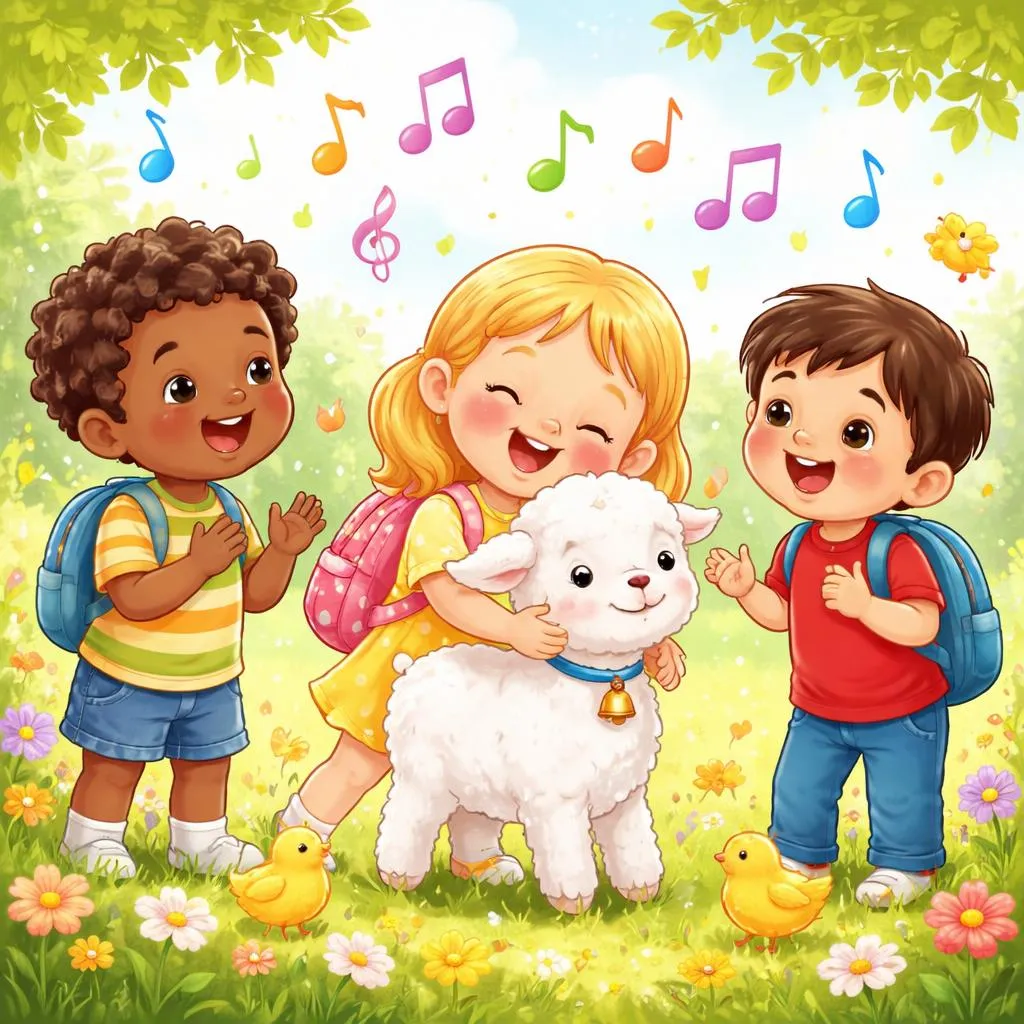

Hello, wonderful educators! Today we are exploring one of the most beloved nursery rhymes of all time. The "mary had a lamb lyrics" have delighted children for nearly two centuries. This simple story of a girl and her faithful lamb offers rich learning opportunities. We will examine its history and structure. We will explore vocabulary, phonics, and grammar points. We will also share engaging classroom activities. This guide will help you maximize this rhyme's educational value. Let's discover together what makes this little lamb such an effective teacher.
What Is the "Mary Had a Lamb" Rhyme?
This classic nursery rhyme dates back to the 1830s in America. It tells the story of a girl named Mary. Her pet lamb follows her to school one day. The children find this very amusing. The teacher explains that lambs belong outside, not in classrooms. The rhyme has a gentle, sweet quality that children love. It is based on a true story about a girl named Mary Sawyer. Her lamb really did follow her to school. This historical connection adds interest for older students.
The Lyrics of the Nursery Rhyme
Let us review the complete traditional lyrics. The most common version goes like this:
Mary had a little lamb,
Little lamb, little lamb,
Mary had a little lamb,
Its fleece was white as snow.
And everywhere that Mary went,
Mary went, Mary went,
Everywhere that Mary went,
The lamb was sure to go.
It followed her to school one day,
School one day, school one day,
It followed her to school one day,
Which was against the rules.
It made the children laugh and play,
Laugh and play, laugh and play,
It made the children laugh and play,
To see a lamb at school.
And so the teacher turned it out,
Turned it out, turned it out,
And so the teacher turned it out,
But still it lingered near.
And waited patiently about,
Patiently about, patiently about,
And waited patiently about,
Till Mary did appear.
"Why does the lamb love Mary so?"
Love Mary so? Love Mary so?
"Why does the lamb love Mary so?"
The eager children cry.
"Why, Mary loves the lamb, you know."
Lamb, you know, lamb, you know,
"Why, Mary loves the lamb, you know."
The teacher did reply.
Vocabulary Learning from the Song
This rhyme introduces several key vocabulary words. Let us explore each one carefully.
-
Lamb: This is a young sheep. Baby animals have special names. We can talk about other baby animals. Calf, kitten, puppy, and chick are good examples. This builds animal vocabulary.
-
Fleece: This is the wool coat of a sheep. It keeps the animal warm. We use wool for sweaters and blankets. This connects to clothing vocabulary.
-
Snow: This is frozen water that falls in winter. It is white and cold. We can talk about weather words. Rain, hail, and sleet are related terms.
-
Followed: This means to go behind someone. The lamb went wherever Mary went. This teaches action vocabulary.
-
Rules: These are things we must follow. The school had rules against animals. This builds social understanding.
-
Lingered: This means to stay nearby. The lamb did not leave completely. This is a more advanced vocabulary word.
-
Patiently: This means waiting without complaining. The lamb waited calmly. This teaches character traits.
Phonics Points to Practice
The "mary had a lamb lyrics" offer excellent phonics opportunities. Let us focus on specific sounds.
-
The L Sound: Lamb starts with L. We can practice the /l/ sound. We can feel our tongue on the roof of our mouth. We can think of other L words. Lion, leaf, and leg are good examples.
-
The M Sound: Mary starts with M. We can practice the /m/ sound. We can feel our lips come together. We can think of other M words. Mom, milk, and moon are good examples.
-
The S Sound: Snow starts with S. We can practice the /s/ sound. We can feel the air hiss out. We can think of other S words. Sun, soap, and sock are good examples.
-
The Long A Sound: Mary has the long a sound. We can practice words with the same sound. Cake, rain, and play are good examples.
-
Rhyming Words: The rhyme has several patterns. Lamb and lamb repeat. Snow and go rhyme. Day and play rhyme. Recognizing rhymes builds reading readiness.
Grammar Patterns We Can Teach
The simple sentences in this rhyme provide grammar lessons. Let us look at a few patterns.
-
Past Tense Verbs: The song uses past tense throughout. Had, was, followed, made, turned, waited. This tells a story about things that already happened. We can contrast with present tense. Today Mary has a lamb. Yesterday she had a lamb.
-
Possessive Form: The title uses Mary had. This shows possession. We can practice with other examples. The boy had a dog. The girl had a cat. This teaches the possessive relationship.
-
Question Formation: The children ask a question in the song. "Why does the lamb love Mary so?" We can practice forming questions. Why does the dog bark? Why is the sky blue? This builds inquiry skills.
-
Repetition for Emphasis: The song repeats phrases often. Little lamb, little lamb. This repetition adds emphasis. It also helps children remember the words.
Learning Activities for the Classroom
Let us explore activities that bring this rhyme to life. These ideas work for various learning styles.
-
Activity 1: Lamb Craft Project
Provide cotton balls, paper, and glue. Students cut out lamb shapes. They glue cotton balls on for fleece. They draw faces on their lambs. Display them around the room. This builds fine motor skills while connecting to the song. -
Activity 2: Story Sequencing Cards
Create picture cards showing the story events. Mary with her lamb. Lamb following Mary. Lamb at school. Children laughing. Teacher turning lamb out. Lamb waiting. Students arrange them in order. This builds comprehension and sequencing skills. -
Activity 3: Classroom Rules Discussion
Talk about why the lamb could not stay at school. What rules does our classroom have? Why do we need rules? Students share their ideas. This builds social understanding and citizenship. -
Activity 4: Pet Share Time
Invite students to talk about their own pets. What animals live at their homes? How do they care for them? This connects the song to personal experience. It builds speaking and listening skills.
Printable Materials for Your Lessons
Visual supports enhance learning for young children. Here are some printable ideas.
-
Vocabulary Flashcards: Create cards for key words from the song. Include lamb, fleece, snow, school, rules, children, teacher, patiently. Use simple pictures on one side. Write the word on the other side.
-
Story Sequencing Pictures: Create a set of pictures showing the story in order. Students cut them out and arrange them. They can glue them in order on paper. They can write a sentence about each picture.
-
Coloring Page: Create a simple coloring page showing Mary and her lamb. Add a schoolhouse in the background. Students color while listening to the song. This combines art with language exposure.
-
Mini Book: Create a small folded book. Each page shows one verse of the song with simple illustrations. Students can take these books home. They can sing the song to their families.
Educational Games to Reinforce Learning
Games make review sessions exciting and effective. Here are some game ideas.
-
Game 1: Mary's Lamb Memory Match
Create pairs of cards related to the song. One card shows Mary. Its match shows the lamb. One card shows the school. Its match shows the teacher. Students find matching pairs. They must explain the connection. -
Game 2: Follow the Leader
Play a game of follow the leader. One student is Mary. Another student is the lamb. Mary walks around. The lamb must follow exactly. Switch roles so everyone participates. This connects to the song's theme physically. -
Game 3: Why Does the Lamb Love Mary?
Discuss the answer from the song. "Mary loves the lamb." Talk about what love means. How do we show love to pets? How do we show love to friends? This builds social-emotional learning. -
Game 4: Lamb Says (Simon Says)
Play a version of Simon Says called Lamb Says. Give commands. "Lamb says jump up high." "Lamb says touch your nose." Students follow only when you say Lamb Says first. This builds listening skills. -
Game 5: Rhyming Word Hunt
Find all the rhyming words in the song. Lamb and lamb repeat. Snow and go rhyme. Day and play rhyme. Cry and reply rhyme. Write them on cards. Students find the rhyming pairs. -
Game 6: What's Missing?
Sing the song but pause before key words. "Mary had a little ______." Students fill in the missing word. This builds memory and vocabulary recall. It works well during circle time. -
Game 7: Puppet Show
Create simple puppets for Mary, the lamb, the children, and the teacher. Students act out the story with puppets. They can use the song as narration. This builds dramatic play and language skills. -
Game 8: Wool Science Exploration
Bring in real wool if possible. Let students feel it. Discuss where wool comes from. Talk about how sheep give us wool. This connects the song to science learning. -
Game 9: Lamb Maze
Create a simple maze on paper. Mary is at one end. The lamb is at the other end. Students draw a path for the lamb to follow Mary. This builds fine motor and problem-solving skills. -
Game 10: Classroom Pet Discussion
If the classroom has a pet, discuss how to care for it. If not, talk about what pet students would like. How would they follow them everywhere like Mary's lamb? This builds imagination and responsibility.
We have explored the rich learning potential of this classic rhyme. The "mary had a lamb lyrics" offer so much to young learners. We looked at vocabulary development carefully. We practiced letter sounds and phonics together. We explored simple grammar patterns clearly. We shared engaging classroom activities for all. We created printable materials for practice. We played educational games for review. This integrated approach makes learning natural and fun. The gentle story teaches about love and loyalty. The school setting connects to children's own experiences. Use these ideas in your classroom daily. Adapt them to your students' specific needs. Watch as your learners sing, create, and grow happily. Mary's little lamb will become a beloved teacher in your classroom. Its fleece as white as snow will brighten your students' learning journey every single day.