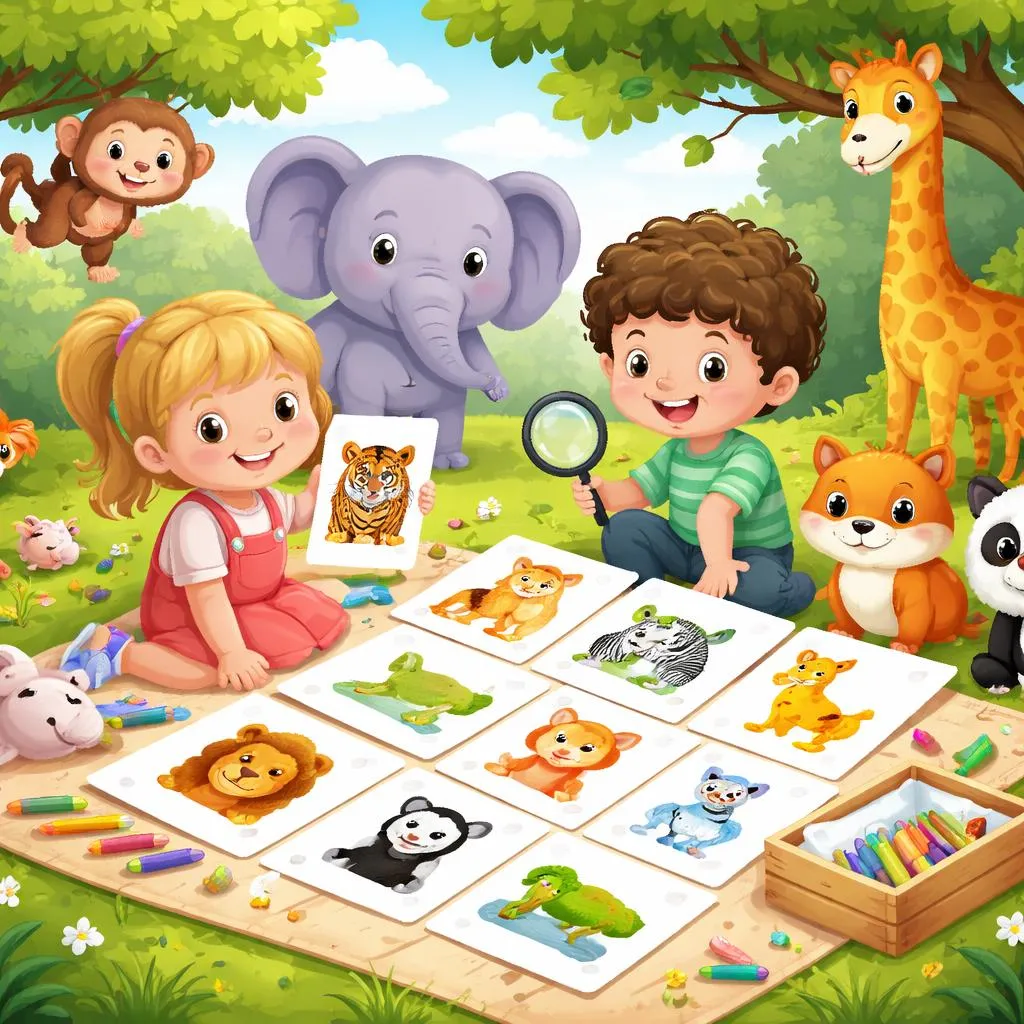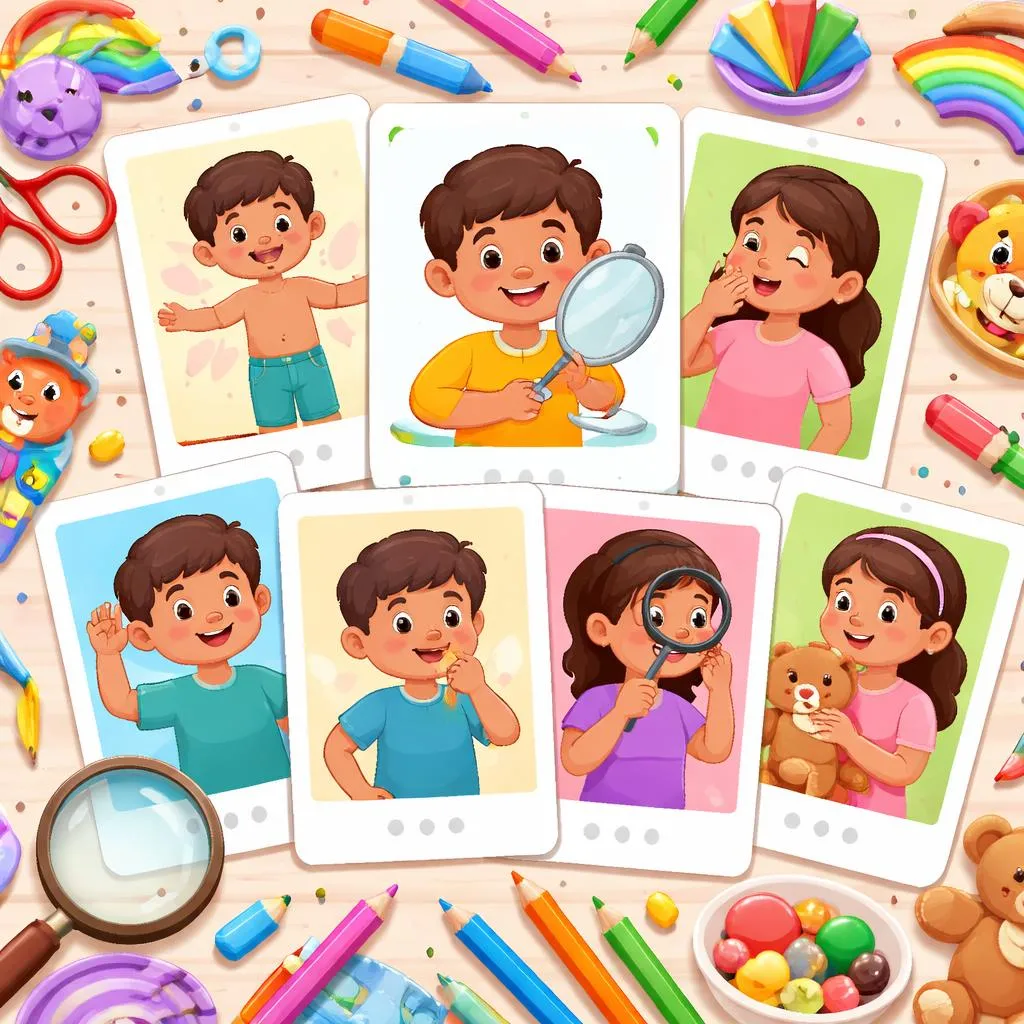

Dear parents and lovely children, today we will learn and practice with this type of English flashcard content: All About Me & Senses Flashcards For Kids – Free Printable PDF
Word list: see, hear, smell, taste, touch, eyes, ears, nose, mouth, hands, feet, face, hair, tongue, skin, feel, loud, soft, hot, cold, sweet, sour, bitter, spicy, salty, itchy, smooth, rough, bumpy, wet, dry, slippery, bright, dark, quiet, noisy, sticky, clean, dirty, hard, arm, head, neck, tears, ear, finger, toe, beard, body, lip, teeth, eyebrow, back, tummy, chin, forehead, ankle, knee, elbow, shoulder
Click here to download All About Me & Senses Flashcards For Kids – Free Printable PDF
Meaning and Explanation of Flashcard Words
- See: To use your eyes to notice something.
Example: I see a bird flying in the sky. - Hear: To use your ears to listen to sounds.
Example: I hear the music playing loudly. - Smell: To use your nose to sense scents or odors.
Example: I smell fresh flowers in the garden. - Taste: To use your tongue to sense flavors.
Example: The ice cream tastes sweet. - Touch: To feel something with your hands or skin.
Example: The blanket feels soft and warm. - Eyes: The organs we use to see.
Example: My eyes are blue. - Ears: The organs we use to hear.
Example: She has big ears. - Nose: The part of the face used for smelling.
Example: His nose is cold in winter. - Mouth: The part used for speaking, eating, and tasting.
Example: Open your mouth wide. - Hands: Body parts used for touching and holding.
Example: I wash my hands before eating. - Feet: The parts of the body used for standing and walking.
Example: My feet are tired after running. - Face: The front part of the head.
Example: She has a happy face. - Hair: The strands growing on the head.
Example: His hair is long and curly. - Tongue: The muscle inside the mouth used for tasting and speaking.
Example: Stick out your tongue! - Skin: The outer covering of the body.
Example: My skin feels smooth. - Feel: To experience a sensation by touching or emotion.
Example: I feel cold today. - Loud: A strong or high volume sound.
Example: The music is very loud. - Soft: Something that is gentle to touch.
Example: The pillow is soft. - Hot: Having a high temperature.
Example: The soup is hot. - Cold: Having a low temperature.
Example: The water is cold. - Sweet: A sugary taste.
Example: The candy is sweet. - Sour: A sharp, acidic taste.
Example: The lemon tastes sour. - Bitter: A sharp, unpleasant taste.
Example: The medicine is bitter. - Spicy: Having a hot flavor from spices.
Example: The curry is spicy. - Salty: Tasting like salt.
Example: The chips are salty. - Itchy: Causing a desire to scratch.
Example: My skin feels itchy. - Smooth: Having an even and soft surface.
Example: The table is smooth. - Rough: Having an uneven or coarse surface.
Example: The rock is rough. - Bumpy: Having raised areas or lumps.
Example: The road is bumpy. - Wet: Covered with water or liquid.
Example: My clothes are wet from the rain. - Dry: Not wet; without moisture.
Example: The towel is dry now. - Slippery: Causing to slide easily.
Example: The floor is slippery when wet. - Bright: Giving off a lot of light.
Example: The sun is bright today. - Dark: Having little or no light.
Example: It is dark at night. - Quiet: Making little or no noise.
Example: The library is quiet. - Noisy: Making a lot of noise.
Example: The street is noisy. - Sticky: Tending to stick to things.
Example: The glue is sticky. - Clean: Free from dirt.
Example: My hands are clean. - Dirty: Covered with dirt.
Example: The shoes are dirty. - Hard: Solid and firm, not soft.
Example: The rock is hard. - Arm: The part of the body between the shoulder and the hand.
Example: She raised her arm. - Head: The top part of the body containing the brain, eyes, ears, nose, and mouth.
Example: He has a big head. - Neck: The part connecting the head and the body.
Example: She wears a necklace around her neck. - Tears: Drops of liquid from the eyes when crying.
Example: Tears fell down her cheeks. - Ear: One of the two organs on the head used for hearing.
Example: He has a small ear. - Finger: One of the five digits on the hand.
Example: I count on my fingers. - Toe: One of the digits on the foot.
Example: My toe hurts. - Beard: Hair growing on the chin and cheeks of a man.
Example: He has a long beard. - Body: The whole physical structure of a person.
Example: Exercise is good for the body. - Lip: The soft edges of the mouth.
Example: She kissed with her lips. - Teeth: Hard parts in the mouth used for biting and chewing.
Example: Brush your teeth twice a day. - Eyebrow: The line of hair above the eye.
Example: He raised his eyebrow. - Back: The rear surface of the body from neck to waist.
Example: My back hurts after sitting. - Tummy: Informal word for stomach.
Example: My tummy feels full. - Chin: The lower part of the face below the mouth.
Example: He stroked his chin thoughtfully. - Forehead: The part of the face above the eyes.
Example: She wiped sweat from her forehead. - Ankle: The joint connecting the foot with the leg.
Example: He twisted his ankle. - Knee: The joint between the thigh and the lower leg.
Example: She hurt her knee while running. - Elbow: The joint between the upper and lower arm.
Example: He leaned on his elbow. - Shoulder: The part of the body where the arm joins the torso.
Example: She carried a bag on her shoulder.
How to Teach All About Me & Senses Flashcards with Flashcards
Parents and educators can use these flashcards to introduce children to the vocabulary related to their bodies and senses in a fun and interactive way. Start by showing each flashcard clearly, pronouncing the word slowly, and encouraging the child to repeat it. Use real-life examples and point to corresponding body parts or objects around the child to make connections. For example, when teaching "eyes," point to your eyes and ask the child to do the same. Incorporate sensory experiences like smelling a flower or tasting a fruit to deepen understanding. Repetition and positive reinforcement help children remember the words better. Flashcards can be used one-on-one or in group settings, making learning social and engaging.
Fun All About Me & Senses Flashcard Games
- Memory Match: Lay the cards face down and take turns flipping two cards to find matching pairs (e.g., word and picture).
- Simon Says: Use the flashcards to give commands like "Touch your nose," "Show me your ears," helping kids learn body parts actively.
- Senses Hunt: After learning the words, ask children to find objects around that match a sense, like something sweet to taste or something soft to touch.
- Describe and Guess: One child describes a flashcard word using clues, and others guess the word.
- Flashcard Relay: Place flashcards at one end of the room; children run to pick the correct card when you say a word.
Example Sentences with Emotions Vocabulary
- I feel happy when I see my friends.
- The music is loud, but I like it.
- The blanket is soft and warm.
- The lemon tastes sour but refreshing.
- My skin feels itchy after playing outside.
- The room is quiet because everyone is reading.
- My feet are cold because I forgot my socks.
- The floor is slippery when wet, so be careful!
Practice Exercises
- Match the word to the correct body part on a worksheet.
- Fill in the blanks with the correct sense word (see, hear, smell, taste, touch).
- Draw a picture of your face and label the parts using the flashcard words.
- Describe how something feels using adjectives like soft, rough, or sticky.
Free All About Me & Senses Flashcards PDF Download
You can easily download and print the "All About Me & Senses Flashcards For Kids" PDF for free from the link provided. These printable flashcards are designed to be colorful, engaging, and easy to cut out, making them perfect for use at home or in the classroom. Having physical flashcards allows children to interact with the words and pictures tactilely, which supports better memory retention. Feel free to print multiple sets to create games or share with friends and family.
FAQ about All About Me & Senses Flashcards
Q: What age group are these flashcards suitable for?
A: These flashcards are ideal for preschool and early elementary children, typically ages 3 to 8.
Q: How often should children practice with these flashcards?
A: Daily short sessions of 5-10 minutes are most effective to keep children engaged without overwhelming them.
Q: Can these flashcards help with speech development?
A: Yes, practicing words and sentences with flashcards can improve vocabulary, pronunciation, and sentence formation.
Q: Are there activities to do after learning the flashcards?
A: Yes, parents can encourage children to describe their day using the vocabulary, play sensory games, or write simple sentences.
Q: How can I make learning more fun with these flashcards?
A: Incorporate songs, role-playing, and reward systems to motivate children. Using flashcards in games also makes learning playful.
Using these flashcards regularly will help children build a strong foundation in understanding their bodies and senses, boosting both language skills and awareness of the world around them.