
用英语讲故事感觉很神奇。你可以描述发生了什么事。你也可以设置场景。但有时一个动作会打断另一个动作。这就是过去进行时和过去简单时一起发挥作用的地方。
孩子们经常混淆这两种时态。成年人也是如此。这很正常。学会将它们结合起来可以创造出清晰、令人兴奋的故事。本指南帮助父母和孩子理解其中的区别。你们将一起阅读。你们将一起练习。你们会为自己的进步感到自豪。
让我们从基础开始。
什么是过去进行时和过去简单时?
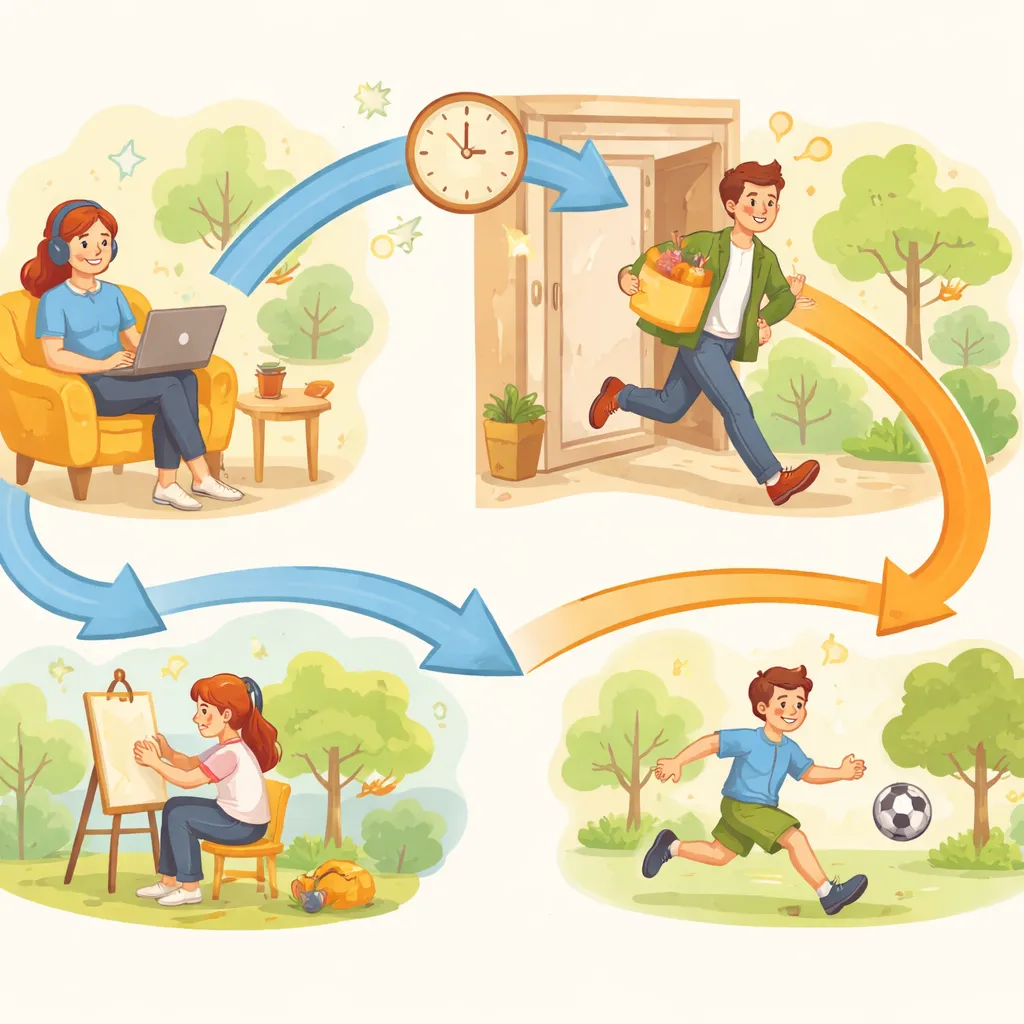
过去简单时描述已完成的动作。该动作在过去开始并结束。它就像时间轴上的一个点。例如:“她打开了门。” 开门发生了一次。它结束了。
过去进行时描述正在进行的动作。该动作花费了时间。它就像时间轴上的一条线。例如:“她正在走回家。” 走路持续了一段时间。
现在将它们结合起来。一个动作打断了另一个动作。“她走在回家的路上,突然下起了雨。” 走路(过去进行时)花费了时间。开始下雨(过去简单时)发生在一瞬间。雨打断了走路。
想想一部电影。过去进行时显示背景场景。过去简单时显示主要事件。它们一起讲述了一个完整的故事。
孩子们很容易通过例子理解这一点。“我正在吃饭,电话响了。” 吃饭花时间。电话突然响了。铃声打断了用餐。
父母可以问:当某事发生时你在做什么?这个问题自然地使用了这两种时态。
过去进行时和过去简单的规则
规则帮助我们避免错误。它们很容易学习。
过去简单时规则:对规则动词使用动词 + -ed。例如:walk → walked。对不规则动词使用特殊形式。例如:go → went, eat → ate, see → saw。
过去进行时规则:使用 was/were + 动词 + -ing。I/he/she/it + was。You/we/they + were。例如:I was sleeping。They were playing。
组合规则:对较长的动作使用过去进行时。对较短的打断使用过去简单时。用“when”或“while”连接它们。
“When”通常在过去简单时动作之前。“When the phone rang, I was taking a shower.” 电话先响了吗?没有。淋浴先开始了。电话是在淋浴时响的。
“While”通常在过去进行时动作之前。“While I was taking a shower, the phone rang.” 意思相同。不同的词序。
记住:过去进行时的动作先开始。过去简单时的动作稍后发生。简单动作打断了进行时动作。
孩子们记住这条规则:长动作 = was/were + -ing。短动作 = 过去简单时。短动作像剪刀一样剪入长动作。
如何使用过去进行时和过去简单时
在三种常见情况下一起使用这些时态。
情况一:中断
某事停止了另一个动作。“I was reading a book when my brother shouted.” 阅读花时间。喊叫发生得很快。喊叫打断了阅读。
情况二:背景和事件
用过去进行时设置场景。然后用过去简单时陈述主要事件。“The sun was shining. Birds were singing. Then a car stopped outside.” 太阳和鸟儿设置了场景。汽车停下来是事件。
情况三:两个动作同时发生
有时两个进行时动作同时发生。但一个动作可能会打断另一个动作。“While Mom was cooking, Dad was watching TV. Then the smoke alarm beeped.” 妈妈和爸爸做了两个长动作。哔哔声打断了两者。
父母可以使用日常生活作为例子。“You were playing with your toy when I called your name.” “We were driving home when we saw a rainbow.” 真实的时刻让学习变得持久。
孩子们可以通过描述他们的一天来练习。“I was brushing my teeth when I remembered my homework.” “My friend was telling a joke when the teacher walked in.” 这些句子感觉很自然。它们讲述了小故事。
过去进行时和过去简单的例子
例子建立信心。和你的孩子一起大声朗读这些。
例子一:中断
She was walking to school when she found a coin.
They were watching a movie when the power went out.
He was fixing his bike when he hurt his finger.
We were laughing at a video when the doorbell rang.
例子二:场景和事件
The wind was blowing strongly. Suddenly a tree branch fell.
Everyone was dancing happily. Then the music stopped.
The baby was sleeping peacefully. A loud truck passed by.
I was thinking about dinner. My friend texted me a photo of pizza.
例子三:While 和 when
While I was waiting for the bus, I saw an old friend.
When the teacher arrived, the students were talking loudly.
While the cat was sleeping, the mouse ran across the floor.
When the rain started, we were playing soccer in the park.
例子四:问题
What were you doing when the earthquake happened?
Was it raining when you left the house?
Who was singing when you walked into the room?
Were you sleeping when I called last night?
每个例子读两遍。让你的孩子识别长动作(过去进行时)和短动作(过去简单时)。这需要五分钟。它就像一个游戏。
常见错误
错误帮助我们学习。不要害怕它们。轻轻地修复它们。
错误一:对两个动作使用过去简单时
错误:“I ate dinner when the phone rang.”
正确:“I was eating dinner when the phone rang.”
吃饭花时间。铃声打断了。两个动作不能都是过去简单时。长动作需要过去进行时。
错误二:对中断使用过去进行时
错误:“I was sleeping when my alarm was ringing.”
正确:“I was sleeping when my alarm rang.”
闹钟响是短暂的。这是一个中断。它需要过去简单时。
错误三:忘记“was”或“were”
错误:“They playing outside when it started to rain.”
正确:“They were playing outside when it started to rain.”
过去进行时需要 was 或 were。始终检查。
错误四:错误的非规则动词形式
错误:“She breaked her toy while she was playing.”
正确:“She broke her toy while she was playing.”
Break 是不规则的。Broke 是过去简单时。慢慢练习不规则动词。一起列一个清单。
错误五:错误地使用“while”
错误:“While the phone rang, I was cooking.”
正确:“When the phone rang, I was cooking.” 或 “While I was cooking, the phone rang.”
“While”更喜欢长动作。“When”适用于短动作。但如果你改变词序,两者都可以工作。
庆祝错误作为前进的步骤。每个错误的句子都教一个正确的新句子。
比较:过去进行时与过去简单时单独使用
有时你只需要一个时态。其他时候你需要两者。
过去简单时单独使用:动作列表。一个接一个。“I woke up. I ate breakfast. I went to school.” 这说明了一个顺序。没有中断。没有背景。
过去进行时单独使用:描述一个场景。没有事件。“The sun was shining. Birds were singing. Children were laughing.” 这描绘了一幅图画。什么也没有突然发生。
两者结合:场景加事件。“The sun was shining when a dark cloud appeared.” 闪耀的场景持续。出现的事件中断。
想想一个相册。过去简单时单独使用是一张照片。过去进行时单独使用是没有动作的视频。两者结合是一个视频,其中某些内容突然发生变化。
孩子们通过这个例子理解:“I walked home”(一张照片)。“I was walking home”(走路的视频)。“I was walking home when I saw a shooting star”(视频加上激动人心的时刻)。
使用过去简单时单独用于快速报告。“She closed the window.” 使用过去进行时单独用于描述。“She was closing the window slowly.” 两个都用于故事。“She was closing the window when a butterfly flew inside.”
练习
和你的孩子一起尝试这些练习。在纸上写下答案。慢慢来。
练习一:选择正确的时态
用过去进行时或过去简单时填写空白。
I __________ (watch) TV when the lights __________ (go) out.
While we __________ (eat) lunch, the dog __________ (run) away.
She __________ (read) a book when her friend __________ (call).
They __________ (play) soccer when it __________ (start) to snow.
He __________ (drive) to work when he __________ (see) an accident.
练习二:纠正错误
每个句子都有一个错误。正确地重写句子。
I sleeped when the phone ringed.
While she was cook dinner, the cat was jump on the table.
They were play video games when their mom came home.
He was walking to the store when he was finding a wallet.
We were study when the fire alarm was ringing.
练习三:完成句子
用你自己的想法完成每个句子。使用两种时态。
While I was doing my homework, _______________.
When the teacher walked into the room, _______________.
My sister was singing loudly when _______________.
We were riding our bikes when _______________.
The dog was sleeping peacefully when _______________.
练习四:写两个短篇故事
为每个故事写三个句子。使用两种时态。
故事 A:晚餐时间的一个惊喜访客。
故事 B:你最喜欢的电视节目中的一个中断。
答案和解释
一起检查你的答案。解释每个更正。
练习一的答案:
was watching, went
were eating, ran
was reading, called
were playing, started
was driving, saw
练习二的答案:
- I was sleeping when the phone rang.
(Sleep 和 ring 是不规则的。对睡觉使用过去进行时。对 rang 使用过去简单时。)
While she was cooking dinner, the cat jumped on the table.
(Cook 需要 was。Jump 是规则的。对中断使用过去简单时 jumped。)
They were playing video games when their mom came home.
(Play 需要 were。Playing 是正确的。Come 是不规则的。Came 是过去简单时。)
He was walking to the store when he found a wallet.
(Find 是不规则的。Found 是过去简单时。不要使用 was finding。)
We were studying when the fire alarm rang.
(Study 变为 studying。删除 y,添加 ing。Ring 是不规则的。Rang 是过去简单时。)
常见模式的解释:
长动作总是使用 was/were + -ing。
短中断总是使用过去简单时。
“When”自然地连接两者。
“While”首先开始长动作。
如果你的孩子犯了错误,请查看“规则”部分。再练习一次。笑话关于有趣的句子。学习最好是耐心和微笑。
学习技巧
让语法成为一种日常习惯。每天五分钟比每周一小时更有效。
提示一:用不同的方式讲睡前故事。
用两种时态说一个句子。“The princess was sleeping when the dragon roared.” 让你的孩子添加下一个句子。“The dragon was breathing fire when the knight arrived.” 轮流。
提示二:使用图画书。
打开任何儿童读物。指向一张图片。问“当主角出现时发生了什么?” 一起描述场景。
提示三:创建中断游戏。
一个人开始一个长动作。“I was walking through a jungle.” 另一个人打断。“When a monkey stole my hat!” 切换角色。让它变得愚蠢。
提示四:写一本家庭日记。
每天晚上,写一个关于你一天的一个句子。“We were eating dinner when the delivery person knocked.” 阅读上周的句子。看看你学到了多少。
提示五:在歌曲和节目中听这两种时态。
暂停卡通片。问“当某些内容发生变化时,角色在做什么?” 当语法与有趣的时刻联系起来时,孩子们学得更快。
提示六:庆祝小胜利。
你的孩子说“I was brushing my teeth when I dropped my toothbrush”了吗?这是完美的语法。击掌。注意成功。不要纠正每一个错误。一次纠正一件事。
提示七:也成为学习者。
父母可以说“I was making coffee when I forgot the sugar. Is that past continuous and past simple?” 孩子们喜欢教大人。让他们向你解释规则。
一起学习过去进行时和过去简单时为讲故事打开了大门。你的孩子会清楚地描述记忆。他们会写创意故事。他们会更好地理解英语电影和书籍。
每天练习五分钟。使用本指南中的示例。笑话关于愚蠢的中断句子。你会在两周内看到进步。
现在一起去讲一个故事。“从前,一个孩子正在学习语法,突然……”