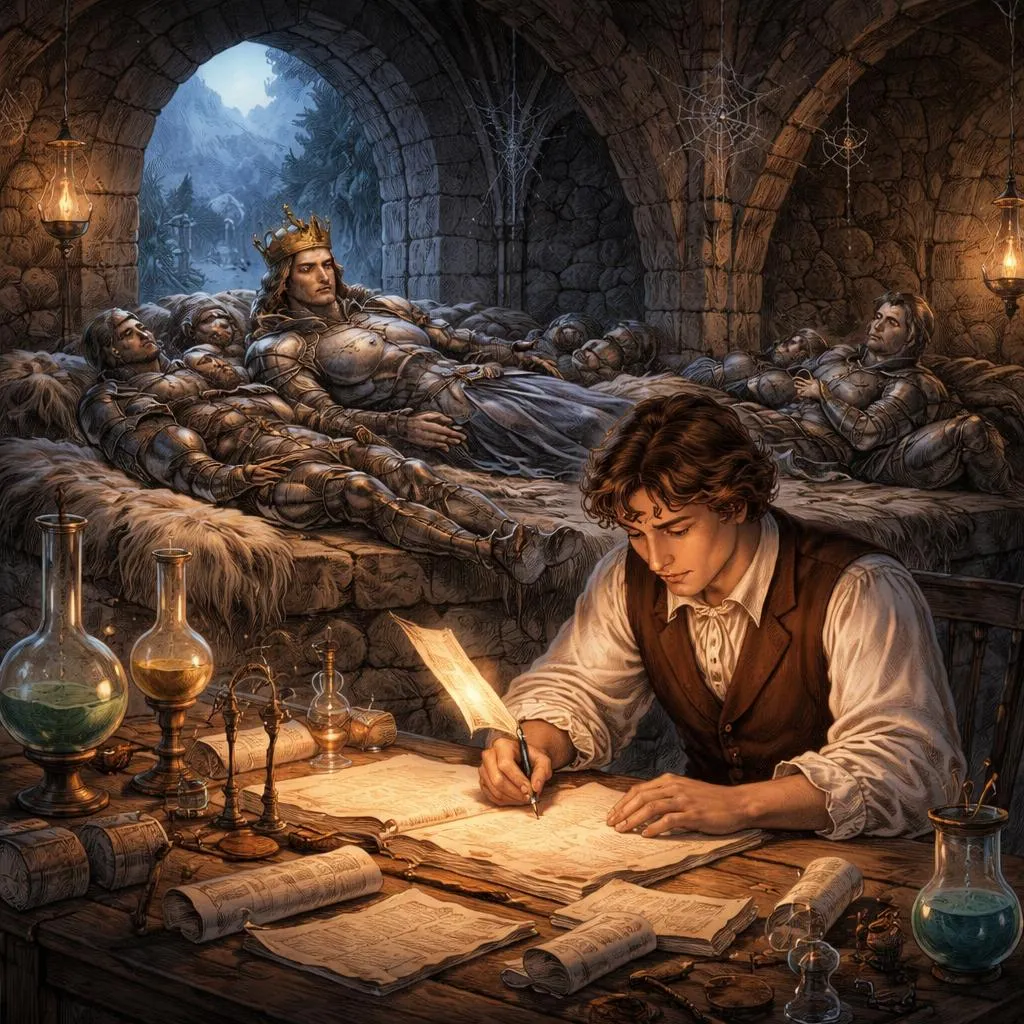

I, Clarence, must write it for him. He proposed that we two go out and see if any help could be accorded the wounded. I was strenuous against the project. I said that if there were many, we could do but little for them; and it would not be wise for us to trust ourselves among them, anyway. But he could seldom be turned from a purpose once formed; so we shut off the electric current from the fences, took an escort along, climbed over the enclosing ramparts of dead knights, and moved out upon the field. The first wounded mall who appealed for help was sitting with his back against a dead comrade. When The Boss bent over him and spoke to him, the man recognized him and stabbed him. That knight was Sir Meliagraunce, as I found out by tearing off his helmet. He will not ask for help any more.
We carried The Boss to the cave and gave his wound, which was not very serious, the best care we could. In this service we had the help of Merlin, though we did not know it. He was disguised as a woman, and appeared to be a simple old peasant goodwife. In this disguise, with brown-stained face and smooth shaven, he had appeared a few days after The Boss was hurt and offered to cook for us, saying her people had gone off to join certain new camps which the enemy were forming, and that she was starving. The Boss had been getting along very well, and had amused himself with finishing up his record.
We were glad to have this woman, for we were short handed. We were in a trap, you see—a trap of our own making. If we stayed where we were, our dead would kill us; if we moved out of our defenses, we should no longer be invincible. We had conquered; in turn we were conquered. The Boss recognized this; we all recognized it. If we could go to one of those new camps and patch up some kind of terms with the enemy—yes, but The Boss could not go, and neither could I, for I was among the first that were made sick by the poisonous air bred by those dead thousands. Others were taken down, and still others. To-morrow—
To-morrow. It is here. And with it the end. About midnight I awoke, and saw that hag making curious passes in the air about The Boss’s head and face, and wondered what it meant. Everybody but the dynamo-watch lay steeped in sleep; there was no sound. The woman ceased from her mysterious foolery, and started tip-toeing toward the door. I called out:
“Stop! What have you been doing?”
She halted, and said with an accent of malicious satisfaction:
“Ye were conquerors; ye are conquered! These others are perishing —you also. Ye shall all die in this place—every one—except him. He sleepeth now—and shall sleep thirteen centuries. I am Merlin!”
Then such a delirium of silly laughter overtook him that he reeled about like a drunken man, and presently fetched up against one of our wires. His mouth is spread open yet; apparently he is still laughing. I suppose the face will retain that petrified laugh until the corpse turns to dust.
The Boss has never stirred—sleeps like a stone. If he does not wake to-day we shall understand what kind of a sleep it is, and his body will then be borne to a place in one of the remote recesses of the cave where none will ever find it to desecrate it. As for the rest of us—well, it is agreed that if any one of us ever escapes alive from this place, he will write the fact here, and loyally hide this Manuscript with The Boss, our dear good chief, whose property it is, be he alive or dead.
背景介紹與作者介紹
這段摘錄出自康妮·威利斯所著的《最後的溫尼貝戈人》,她是一位以富有想像力的故事和對人性的深刻探索而聞名的科幻小說作家。故事設定在一個反烏托邦的未來,人類面臨著巨大的挑戰,融合了奇幻和科幻的元素。威利斯經常利用她的敘事來探討生存、忠誠和戰爭的後果等主題。
詳細解讀與意義
這段描述了一個佈滿死傷騎士的慘烈戰場景象,象徵著衝突的後果和戰爭的徒勞。角色,包括「老闆」和克萊倫斯,代表著在絕望中的韌性和領導力。梅林偽裝成一個謙卑的女人,增添了一種神秘的元素,暗示著希望和智慧可能來自意想不到的地方。故事探討了犧牲、變化的不可避免性,以及勝利和失敗的複雜本質。
敘事也觸及了被自己的行為所困的概念——無論是身體上還是隱喻上。角色們被困在原地不動的危險和前進的風險之間,反映了人們在危機時刻所面臨的艱難選擇。「老闆」沉睡十三個世紀暗示著在更新或覺醒之前的漫長停頓或等待期,象徵著儘管目前遭受痛苦,但對未來的希望。
給學生的教訓和見解
-
勇氣與領導力: 老闆不顧危險幫助傷員的決心,教導了勇敢和責任的重要性。學生們可以學到真正的領導者是無私的,並且勇於面對挑戰。
-
逆境中的同情心: 即使資源有限,也要幫助傷員的努力,突出了同情心和善良。這鼓勵年輕讀者關心他人,尤其是在困難時期。
-
智慧與適應性: 梅林的偽裝和神秘的行為提醒我們,智慧可以隱藏在不太可能出現的形式中,而適應性至關重要。學生們應該保持開放的心態,並準備好從意想不到的來源學習。
-
理解後果: 故事展示了行為如何產生後果,有時會使人們陷入困境。這可以幫助學生批判性地思考他們的選擇以及它們對自己和他人的影響。
在日常生活中應用這些教訓
-
在學習中: 就像角色們面臨艱難的決定一樣,學生們可以通過深思熟慮地處理挑戰並在需要時尋求幫助來培養解決問題的技能。
-
在社交場合中: 在同伴中表現出同情心和領導力,可以營造一個支持性的環境。為他人挺身而出並以善良行事可以建立牢固的友誼。
-
在個人成長中: 擁抱變化並從錯誤中學習可以幫助學生成長。就像梅林的隱藏身份一樣,有時成長來自意想不到的經歷。
從故事中培養積極的價值觀
-
韌性: 鼓勵學生們即使在情況看起來毫無希望時也要繼續嘗試,就像那些儘管面臨壓倒性困難,仍然互相照顧的角色一樣。
-
同情心: 促進幫助學生理解他人感受的活動,加強故事中關於幫助有需要的人的信息。
-
批判性思維: 使用故事中複雜的情節來練習分析問題並考慮不同的觀點。
-
尊重歷史和故事: 了解故事承載著來自過去的教訓,可以激勵學生重視文學並從中學習。
結論
這個故事為年輕讀者提供了豐富的材料,以探索勇氣、同情心和智慧的主題。通過反思角色們的掙扎和選擇,學生們可以深入了解自己的生活,並培養有助於他們應對學校內外挑戰的技能。鼓勵基於故事的討論和創意項目可以加深理解,並使這些教訓令人難忘且有意義。
