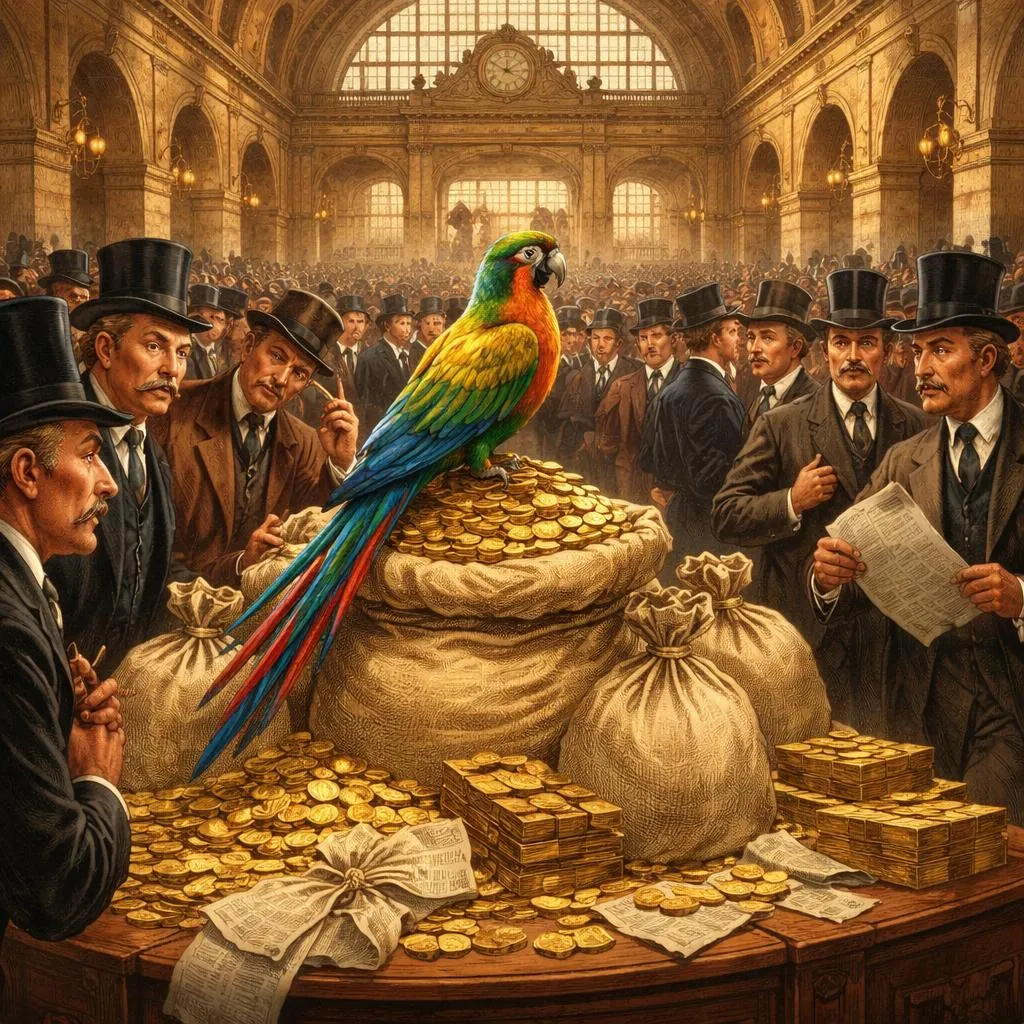

Phileas Fogg rightly suspected that his departure from London would create a lively sensation at the West End. The news of the bet spread through the Reform Club, and afforded an exciting topic of conversation to its members. From the club it soon got into the papers throughout England. The boasted "tour of the world" was talked about, disputed, argued with as much warmth as if the subject were another Alabama claim. Some took sides with Phileas Fogg, but the large majority shook their heads and declared against him; it was absurd, impossible, they declared, that the tour of the world could be made, except theoretically and on paper, in this minimum of time, and with the existing means of travelling. The Times, Standard, Morning Post, and Daily News, and twenty other highly respectable newspapers scouted Mr. Fogg's project as madness; the Daily Telegraph alone hesitatingly supported him. People in general thought him a lunatic, and blamed his Reform Club friends for having accepted a wager which betrayed the mental aberration of its proposer.
Articles no less passionate than logical appeared on the question, for geography is one of the pet subjects of the English; and the columns devoted to Phileas Fogg's venture were eagerly devoured by all classes of readers. At first some rash individuals, principally of the gentler sex, espoused his cause, which became still more popular when the Illustrated London News came out with his portrait, copied from a photograph in the Reform Club. A few readers of the Daily Telegraph even dared to say, "Why not, after all? Stranger things have come to pass."
At last a long article appeared, on the 7th of October, in the bulletin of the Royal Geographical Society, which treated the question from every point of view, and demonstrated the utter folly of the enterprise.
Everything, it said, was against the travellers, every obstacle imposed alike by man and by nature. A miraculous agreement of the times of departure and arrival, which was impossible, was absolutely necessary to his success. He might, perhaps, reckon on the arrival of trains at the designated hours, in Europe, where the distances were relatively moderate; but when he calculated upon crossing India in three days, and the United States in seven, could he rely beyond misgiving upon accomplishing his task? There were accidents to machinery, the liability of trains to run off the line, collisions, bad weather, the blocking up by snow—were not all these against Phileas Fogg? Would he not find himself, when travelling by steamer in winter, at the mercy of the winds and fogs? Is it uncommon for the best ocean steamers to be two or three days behind time? But a single delay would suffice to fatally break the chain of communication; should Phileas Fogg once miss, even by an hour; a steamer, he would have to wait for the next, and that would irrevocably render his attempt vain.
This article made a great deal of noise, and, being copied into all the papers, seriously depressed the advocates of the rash tourist.
Everybody knows that England is the world of betting men, who are of a higher class than mere gamblers; to bet is in the English temperament. Not only the members of the Reform, but the general public, made heavy wagers for or against Phileas Fogg, who was set down in the betting books as if he were a race–horse. Bonds were issued, and made their appearance on 'Change; "Phileas Fogg bonds" were offered at par or at a premium, and a great business was done in them. But five days after the article in the bulletin of the Geographical Society appeared, the demand began to subside: "Phileas Fogg" declined. They were offered by packages, at first of five, then of ten, until at last nobody would take less than twenty, fifty, a hundred!
Lord Albemarle, an elderly paralytic gentleman, was now the only advocate of Phileas Fogg left. This noble lord, who was fastened to his chair, would have given his fortune to be able to make the tour of the world, if it took ten years; and he bet five thousand pounds on Phileas Fogg. When the folly as well as the uselessness of the adventure was pointed out to him, he contented himself with replying, "If the thing is feasible, the first to do it ought to be an Englishman."
The Fogg party dwindled more and more, everybody was going against him, and the bets stood a hundred and fifty and two hundred to one; and a week after his departure an incident occurred which deprived him of backers at any price.
The commissioner of police was sitting in his office at nine o'clock one evening, when the following telegraphic dispatch was put into his hands:
Suez to London.
Rowan, Commissioner of Police, Scotland Yard:
I've found the bank robber, Phileas Fogg. Send with out delay warrant of arrest to Bombay.
Fix, Detective.
The effect of this dispatch was instantaneous. The polished gentleman disappeared to give place to the bank robber. His photograph, which was hung with those of the rest of the members at the Reform Club, was minutely examined, and it betrayed, feature by feature, the description of the robber which had been provided to the police. The mysterious habits of Phileas Fogg were recalled; his solitary ways, his sudden departure; and it seemed clear that, in undertaking a tour round the world on the pretext of a wager, he had had no other end in view than to elude the detectives, and throw them off his track.
背景介紹與作者介紹
這段摘錄出自儒勒·凡爾納的經典小說《八十天環遊世界》,這位法國作家以其在科幻小說和冒險文學方面的開創性作品而聞名。這部小說寫於1873年,捕捉了19世紀對探索、科技以及交通運輸進步使世界縮小的迷戀。凡爾納生動的想像力和詳細的研究使他的小說既有趣又具有教育意義,激勵了一代又一代的讀者去夢想遙遠的地方和驚險的冒險。
故事概述與重要性
故事講述了菲利斯·福克,一位精確而富有的英國紳士,他打賭自己能在短短八十天內環遊世界。這個大膽的賭注為一段充滿挑戰、文化遭遇和懸念的激動人心的旅程奠定了基礎。這段文字描述了公眾對福克計劃的最初反應,突出了報紙和公眾的懷疑和不信任,以及維多利亞時代英國關於賭博和聲譽的社會動態。
福克的旅程不僅是一場身體上的冒險,也是對人類決心、創造力和現代科技力量的考驗。故事探討了時間、進步以及傳統與創新之間的衝突等主題。它也反映了人性——社會如何對非傳統和未知的事物做出反應,通常是懷疑或恐懼。
給學生的教訓和見解
-
勇氣和決心: 菲利斯·福克願意接受幾乎不可能的挑戰,這教導了學生勇氣和毅力的價值。即使面對廣泛的懷疑和障礙,堅持自己的目標也至關重要。
-
批判性思維和懷疑: 公眾的反應表明,人們常常根據自己的經驗和偏見來判斷想法。學生可以學會仔細評估新想法,但也要對超出當前限制的可能性保持開放態度。
-
規劃和適應的重要性: 福克的旅程取決於精確的時間安排和協調,但意想不到的事件威脅著他的成功。這突出了仔細規劃和在事情沒有按預期進行時適應的能力的必要性。
-
文化意識: 當福克環遊世界時,他遇到了不同的文化和環境。這鼓勵學生欣賞全球多樣性,並培養對其他生活方式的同情心和好奇心。
-
科技的作用: 故事展示了科技進步(如鐵路和輪船)如何改變社會。學生可以反思創新如何影響日常生活,以及擁抱變革的重要性。
將這些教訓應用於生活和學習中
-
在學校: 學生可以通過設定具有挑戰性但可實現的目標、很好地管理時間以及在學習中克服困難來應用福克的例子。
-
在社交場合: 儘管受到批評,福克仍然保持冷靜和尊重的態度,這教導了在面對同伴壓力或懷疑時保持自信和正直的重要性。
-
在個人成長中: 擁抱新的體驗並從不同的文化中學習可以拓寬一個人的視野,培養開放的心態。
從故事中培養積極的品質
-
韌性: 像福克一樣,學生應該學會從挫折中恢復過來並繼續前進。
-
好奇心和探索: 鼓勵學習中的冒險精神——無論是通過閱讀、旅行還是新的愛好——都能豐富生活。
-
尊重他人: 像福克在旅行中所做的那樣,理解和重視多樣性,有助於建立更好的人際關係。
反思與欣賞
閱讀《八十天環遊世界》邀請學生想像冒險的刺激,同時批判性地思考變革和進步的挑戰。這是一個慶祝人類創造力和渴望突破界限的故事,激勵讀者敢於夢想並大膽行動。通過福克的旅程,年輕的讀者不僅獲得了娛樂,還獲得了寶貴的人生教訓,鼓勵他們在自己的生活中勇敢、深思熟慮和敞開心扉。
