
My father’s mortal remains had been consigned to the tomb; and we, with sad faces and sombre garments, sat lingering over the frugal breakfast–table, revolving plans for our future life. My mother’s strong mind had not given way beneath even this affliction: her spirit, though crushed, was not broken. Mary’s wish was that I should go back to Horton Lodge, and that our mother should come and live with her and Mr. Richardson at the vicarage: she affirmed that he wished it no less than herself, and that such an arrangement could not fail to benefit all parties; for my mother’s society and experience would be of inestimable value to them, and they would do all they could to make her happy. But no arguments or entreaties could prevail: my mother was determined not to go. Not that she questioned, for a moment, the kind wishes and intentions of her daughter; but she affirmed that so long as God spared her health and strength, she would make use of them to earn her own livelihood, and be chargeable to no one; whether her dependence would be felt as a burden or not. If she could afford to reside as a lodger in—vicarage, she would choose that house before all others as the place of her abode; but not being so circumstanced, she would never come under its roof, except as an occasional visitor: unless sickness or calamity should render her assistance really needful, or until age or infirmity made her incapable of maintaining herself.
‘No, Mary,’ said she, ‘if Richardson and you have anything to spare, you must lay it aside for your family; and Agnes and I must gather honey for ourselves. Thanks to my having had daughters to educate, I have not forgotten my accomplishments. God willing, I will check this vain repining,’ she said, while the tears coursed one another down her cheeks in spite of her efforts; but she wiped them away, and resolutely shaking back her head, continued, ‘I will exert myself, and look out for a small house, commodiously situated in some populous but healthy district, where we will take a few young ladies to board and educate—if we can get them—and as many day pupils as will come, or as we can manage to instruct. Your father’s relations and old friends will be able to send us some pupils, or to assist us with their recommendations, no doubt: I shall not apply to my own. What say you to it, Agnes? will you be willing to leave your present situation and try?’
‘Quite willing, mamma; and the money I have saved will do to furnish the house. It shall be taken from the bank directly.’
‘When it is wanted: we must get the house, and settle on preliminaries first.’
Mary offered to lend the little she possessed; but my mother declined it, saying that we must begin on an economical plan; and she hoped that the whole or part of mine, added to what we could get by the sale of the furniture, and what little our dear papa had contrived to lay aside for her since the debts were paid, would be sufficient to last us till Christmas; when, it was hoped, something would accrue from our united labours. It was finally settled that this should be our plan; and that inquiries and preparations should immediately be set on foot; and while my mother busied herself with these, I should return to Horton Lodge at the close of my four weeks’ vacation, and give notice for my final departure when things were in train for the speedy commencement of our school.
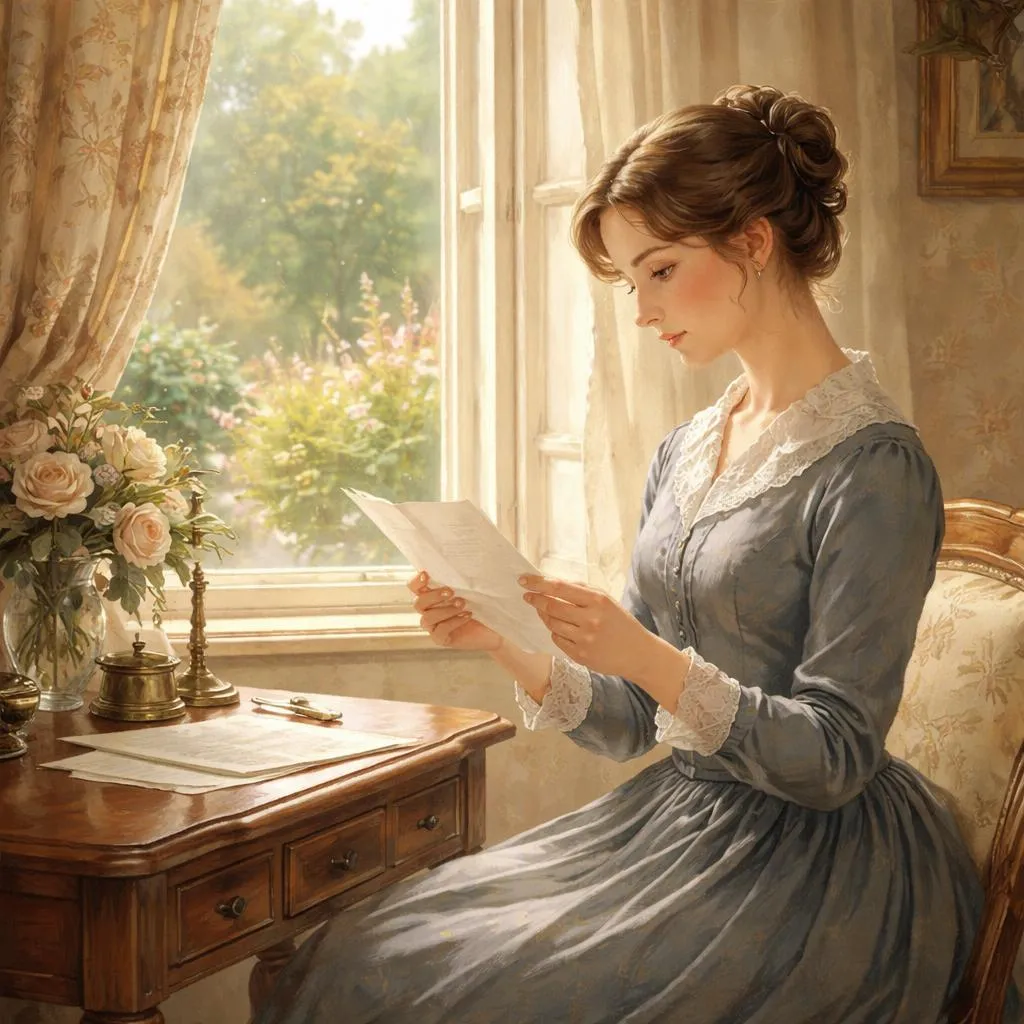
We were discussing these affairs on the morning I have mentioned, about a fortnight after my father’s death, when a letter was brought in for my mother, on beholding which the colour mounted to her face—lately pale enough with anxious watchings and excessive sorrow. ‘From my father!’ murmured she, as she hastily tore off the cover. It was many years since she had heard from any of her own relations before. Naturally wondering what the letter might contain, I watched her countenance while she read it, and was somewhat surprised to see her bite her lip and knit her brows as if in anger. When she had done, she somewhat irreverently cast it on the table, saying with a scornful smile,—’Your grandpapa has been so kind as to write to me. He says he has no doubt I have long repented of my “unfortunate marriage,” and if I will only acknowledge this, and confess I was wrong in neglecting his advice, and that I have justly suffered for it, he will make a lady of me once again—if that be possible after my long degradation—and remember my girls in his will. Get my desk, Agnes, and send these things away: I will answer the letter directly. But first, as I may be depriving you both of a legacy, it is just that I should tell you what I mean to say. I shall say that he is mistaken in supposing that I can regret the birth of my daughters (who have been the pride of my life, and are likely to be the comfort of my old age), or the thirty years I have passed in the company of my best and dearest friend;—that, had our misfortunes been three times as great as they were (unless they had been of my bringing on), I should still the more rejoice to have shared them with your father, and administered what consolation I was able; and, had his sufferings in illness been ten times what they wore, I could not regret having watched over and laboured to relieve them;—that, if he had married a richer wife, misfortunes and trials would no doubt have come upon him still; while I am egotist enough to imagine that no other woman could have cheered him through them so well: not that I am superior to the rest, but I was made for him, and he for me; and I can no more repent the hours, days, years of happiness we have spent together, and which neither could have had without the other, than I can the privilege of having been his nurse in sickness, and his comfort in affliction.
‘Will this do, children?—or shall I say we are all very sorry for what has happened during the last thirty years, and my daughters wish they had never been born; but since they have had that misfortune, they will be thankful for any trifle their grandpapa will be kind enough to bestow?’
Of course, we both applauded our mother’s resolution; Mary cleared away the breakfast things; I brought the desk; the letter was quickly written and despatched; and, from that day, we heard no more of our grandfather, till we saw his death announced in the newspaper a considerable time after—all his worldly possessions, of course, being left to our wealthy unknown cousins.
背景介紹與作者介紹
這段文字出自一部經典的 19 世紀小說,探討了家庭、韌性和獨立自主等主題。故事背景設定在女性角色大多侷限於家庭的時代,經濟保障往往依賴男性親屬。作者是一位生活在那個時代的女性,她深刻理解了那些在丈夫去世後不得不自力更生的女性所面臨的困境。她的作品經常突顯了那些儘管身處困境,仍努力保持自尊並養家糊口的女性的力量和尊嚴。
詳細解讀與意義
這段文字描述了一個家庭如何應對父親最近去世的悲痛。母親雖然深感悲痛,但拒絕依賴他人,展現了她通過教學來支持自己和女兒的堅強意志。這個決定反映了她的自豪感和決心,她寧願保持獨立,也不願接受施捨或生活在不支持她選擇的親戚的控制之下。
來自母親疏遠的父親的信件增加了家庭衝突和社會判斷的層面,揭示了社會期望和個人正直的挑戰。母親的回應是對自我價值和對她已故丈夫和女兒的無條件愛的有力聲明,她拒絕了僅僅因為她的生活選擇與她父親的觀點不符就後悔的觀念。
給學生的教訓和見解
-
逆境中的韌性: 母親勇敢地面對經濟和情感上的困境,教導學生韌性的重要性。生活可能會帶來意想不到的挑戰,但保持堅強和積極的態度可以幫助克服困難。
-
獨立自主和自力更生: 故事鼓勵年輕讀者重視獨立自主,以及通過努力工作和決心來養活自己的能力。它也突出了誠實地謀生所帶來的尊嚴。
-
家庭和忠誠: 儘管面臨外部壓力,母親對家庭的忠誠以及她拒絕後悔過去的行為,表明了支持親人並履行個人承諾的重要性。
-
反抗社會壓力: 母親堅決拒絕她父親的有條件提議,教導學生堅持自己的信念和價值觀,即使面臨他人的批評或拒絕。
在日常生活中應用
- 在學習中: 學生可以學會以決心面對學業上的挑戰,理解挫折是成長的一部分,堅持不懈才能取得成功。
- 在社交場合: 故事鼓勵年輕人支持他們的家人和朋友,忠誠於他們,並堅守他們的價值觀,即使其他人不同意。
- 在個人發展中: 培養自尊和獨立自主至關重要。學生可以練習對自己的行為和決定負責,為成年做好準備。
培養積極的精神和行為
- 同情心和同情: 理解母親的掙扎有助於學生培養對面臨困難的他人產生同情心。
- 力量和勇氣: 母親的榜樣激勵學生在逆境中勇敢。
- 自尊: 重視自己和自己的選擇是一個關鍵信息。
- 努力工作: 創辦學校的計劃表明了主動性和努力的重要性。
通過反思這個故事,學生可以欣賞內在力量的力量,以及忠於自我的重要性,這些教訓將在他們的一生中為他們提供幫助。
