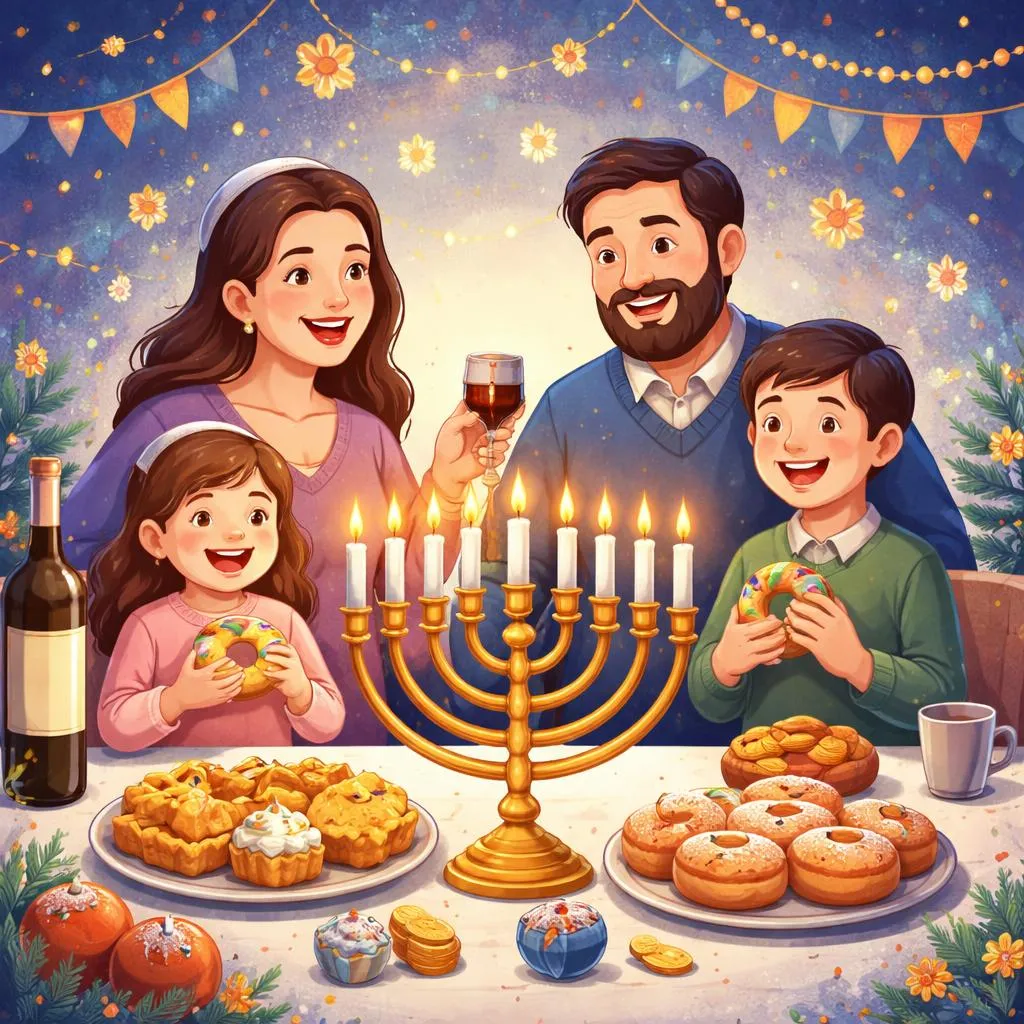

What Is Chanukkah
Chanukkah is a Jewish holiday. It is celebrated every year.
Chanukkah usually happens in winter. The exact dates change each year.
The holiday lasts for eight nights. Each night has special meaning.
Chanukkah is also called the Festival of Lights. Light is an important symbol in this holiday.
The Name Chanukkah
The word Chanukkah comes from Hebrew. It has a special meaning.
Chanukkah is often connected to the idea of dedication. It also connects to the idea of renewal.
Different spellings exist in English. Chanukkah, Hanukkah, and Chanukah are all common.
These spellings sound similar. They all refer to the same holiday.
The Story Behind Chanukkah
Chanukkah is connected to an old story. This story happened a long time ago.
The story is about the Jewish people. It is about faith and identity.
A group wanted to stop Jewish traditions. The people resisted this change.
After a struggle, the Jewish people returned to their temple.
The Miracle of the Oil
One key part of the Chanukkah story is oil. Oil was needed to light a lamp.
Only a small amount of oil was found. It was enough for one day.
The oil lasted for eight days instead. This is seen as a miracle.
Because of this miracle, light became the main symbol of Chanukkah.
The Chanukkah Menorah
A special candle holder is used during Chanukkah. It is called a menorah.
The Chanukkah menorah has nine branches. Eight branches are for the eight nights.
One extra candle is included. This candle is called the shamash.
The shamash is used to light the other candles. It has an important role.
Lighting the Candles
Candles are lit each night of Chanukkah. One new candle is added each night.
On the first night, one candle is lit. On the second night, two candles are lit.
This continues until all eight candles are lit. Light slowly fills the menorah.
The candles are usually lit after sunset. Families gather together during this time.
Blessings and Songs
Special blessings are said during candle lighting. These blessings are traditional.
Songs are often sung after lighting the candles. Music adds warmth to the celebration.
Children enjoy learning these songs. They are repeated each year.
Repetition helps memory. Tradition grows stronger this way.
Chanukkah in the Home
Chanukkah is often celebrated at home. Families come together.
The menorah is placed near a window. The light can be seen from outside.
This shows pride in tradition. Light is shared with the world.
Homes feel warm and bright during Chanukkah. The atmosphere feels joyful.
Traditional Chanukkah Foods
Food is an important part of Chanukkah. Many foods are cooked in oil.
Oil connects back to the miracle story. Food becomes part of learning.
Latkes are a popular Chanukkah food. They are potato pancakes.
Sufganiyot are also common. They are filled doughnuts.
Children enjoy these foods. Food makes traditions memorable.
Chanukkah Games and Dreidel
Games are part of Chanukkah celebrations. One famous game uses a dreidel.
A dreidel is a small spinning top. It has Hebrew letters on it.
Each letter has meaning. Together, they tell part of the Chanukkah story.
Children spin the dreidel and play. Play supports joyful learning.
Gifts and Chanukkah
Some families give gifts during Chanukkah. This practice varies.
Gifts may be small. They often focus on meaning.
Books, games, and coins are common. Learning is often encouraged.
Gift-giving adds excitement. It is not the main focus of the holiday.
Chanukkah and Children
Chanukkah is very child-friendly. Many traditions include children.
Lighting candles feels special. Games feel fun.
Stories are shared in simple language. Learning happens naturally.
Children connect light with hope. Hope becomes a shared idea.
Chanukkah Vocabulary for Beginners
Chanukkah includes special vocabulary. Learning these words builds understanding.
Words like menorah and dreidel appear often. They become familiar.
Learning holiday words supports language awareness. Culture and language grow together.
Vocabulary learning feels meaningful. Words connect to real experiences.
Chanukkah and Cultural Identity
Chanukkah supports cultural identity. It reminds people of history.
Celebrating traditions keeps stories alive. Memory is shared across generations.
Families pass down customs. Children learn where they come from.
This connection builds belonging. Belonging supports confidence.
Chanukkah Compared to Other Holidays
Chanukkah is sometimes compared to other winter holidays. It has its own meaning.
Light is the main symbol. Hope and dedication are key ideas.
Understanding differences supports respect. Learning about holidays builds awareness.
Awareness supports kindness. Kindness connects communities.
Chanukkah in Schools
Many schools talk about Chanukkah. This helps students learn about diversity.
Simple explanations work best. Pictures and stories help.
Children learn that people celebrate in different ways. Difference becomes normal.
Learning about Chanukkah supports inclusion. Inclusion supports understanding.
Chanukkah Around the World
Chanukkah is celebrated in many countries. Jewish communities live around the world.
Each community may have small differences. The core traditions stay the same.
Candles are still lit. Stories are still shared.
This shows how traditions travel. Culture moves with people.
Chanukkah and Light as a Symbol
Light is central to Chanukkah. Light represents hope.
It also represents strength. Small light can last.
This idea is easy for children to understand. Light beats darkness.
Symbolic ideas grow through stories. Stories stay in memory.
Chanukkah and Family Time
Family time is important during Chanukkah. People slow down.
Candles create calm moments. Conversation flows easily.
Sharing time builds connection. Connection strengthens relationships.
This is a quiet gift of the holiday.
Chanukkah and Routine
Chanukkah includes repeated actions. Candles are lit every night.
Repetition builds comfort. Comfort supports learning.
Children know what to expect. Expectation builds excitement.
Routine helps memory grow strong.
Chanukkah and Respectful Learning
Learning about Chanukkah teaches respect. Respect for culture matters.
Understanding traditions reduces confusion. Knowledge replaces guessing.
Children learn to ask questions kindly. Curiosity is welcomed.
Respectful learning supports community.
Chanukkah and Language Learning
Chanukkah offers language learning chances. New words appear naturally.
Hebrew words mix with English explanations. Language awareness grows.
Learning holiday words feels different from textbooks. Experience supports understanding.
Language becomes alive.
Chanukkah as a Teaching Moment
Chanukkah provides teaching moments. History, culture, and values appear together.
Teachers can focus on light and hope. Simple ideas work well.
Stories support listening skills. Discussion supports speaking.
Learning feels gentle and meaningful.
Chanukkah and Emotional Meaning
Chanukkah carries emotional meaning. Joy mixes with reflection.
Families remember the past. They celebrate the present.
Children feel warmth and safety. These feelings stay strong.
Emotion supports memory. Memory supports learning.
Chanukkah and Community
Chanukkah is not only personal. Community celebrations also happen.
Public menorahs may be displayed. Songs may be shared.
Community events build connection. Shared light feels powerful.
Belonging grows stronger.
Chanukkah and Everyday Life
Chanukkah fits into everyday life. School and work continue.
Evening candle lighting creates pause. Pause matters.
This balance feels healthy. Celebration and routine meet.
Chanukkah and Lasting Meaning
Chanukkah is remembered through actions. Lighting candles matters.
Sharing food matters. Telling stories matters.
Meaning grows through repetition. Traditions stay alive.
Chanukkah is more than a holiday name. It is a story of light.
It is a story of tradition. It is a story of people.
Through simple actions, meaning is shared and remembered.
Chanukkah and the Feeling of Light
Chanukkah is often remembered by light. Light is calm and gentle.
Each candle adds a little brightness. The room slowly changes.
Children watch the candles carefully. They see light grow night by night.
This slow change feels comforting. It teaches patience in a quiet way.
Chanukkah Nights and Repetition
Chanukkah happens over eight nights. Each night feels similar, but also new.
The same action happens again. A candle is added.
Repetition helps children learn. They know what will happen next.
Knowing what comes next builds security. Security supports learning.
Chanukkah and Simple Language Learning
Chanukkah words are repeated often. The same words appear each night.
Menorah. Candle. Light. Night.
These words become familiar. Familiar words feel safe.
Children remember them easily. Memory grows naturally.
Chanukkah and Listening Together
Families often sit together during Chanukkah. They talk softly.
Children listen to adults. Adults listen to children.
Listening builds connection. Connection builds understanding.
Language is shared in calm moments. These moments stay in memory.
Chanukkah and Warm Sounds
Songs are part of Chanukkah. The sounds are gentle.
Songs repeat the same lines. The melody feels easy.
Children sing without pressure. They learn by hearing.
Sound and meaning grow together. This supports language awareness.
Chanukkah and Visual Memory
The menorah creates a strong image. Candles stand in a row.
Each night looks slightly different. More light appears.
Visual change supports memory. Children remember what they see.
Pictures and real objects work together. Learning feels real.
Chanukkah and Quiet Joy
Chanukkah joy is often quiet. It is not rushed.
The light invites calm. Calm supports focus.
Children feel safe in this calm space. Learning feels gentle.
Gentle learning lasts longer.
Chanukkah and Everyday Words
Many Chanukkah words are simple. They connect to daily life.
Light. Home. Family. Food.
Simple words are powerful. They build strong foundations.
Children use these words easily. Confidence grows.
Chanukkah and Sharing Stories
Stories are told during Chanukkah. They are told many times.
Each time feels familiar. Each time feels warm.
Repetition makes stories easy to follow. Understanding deepens naturally.
Stories connect past and present. Connection supports meaning.
Chanukkah and Learning Through Routine
Routine is part of Chanukkah. Candles are lit at the same time.
Routine helps children feel stable. Stability supports learning.
The body relaxes. The mind opens.
Learning happens quietly.
Chanukkah and the Idea of Hope
Light often represents hope. This idea is simple.
Even small light matters. Even one candle shines.
Children understand this idea easily. It feels true.
Simple ideas stay longer than complex ones. Hope becomes part of memory.
Chanukkah and Respectful Curiosity
Children often ask questions. Why eight nights. Why candles.
Questions are welcome. Answers are shared gently.
Curiosity is treated with respect. Respect supports confidence.
Learning feels safe.
Chanukkah and Emotional Comfort
Chanukkah creates emotional comfort. Warm light. Warm food. Warm voices.
Emotion and learning connect. Emotion helps memory.
Children remember how they felt. Feeling supports understanding.
Chanukkah and Quiet Teaching Moments
Chanukkah teaches without pressure. No long lessons are needed.
The holiday itself teaches. Through action and repetition.
Children learn by being present. Presence matters.
This is natural learning.
Chanukkah and Gentle Endings
Each night ends calmly. Candles slowly burn down.
The light fades naturally. No rush.
Children learn that endings can be soft. Soft endings feel safe.
Learning does not need strong s. It can simply rest.