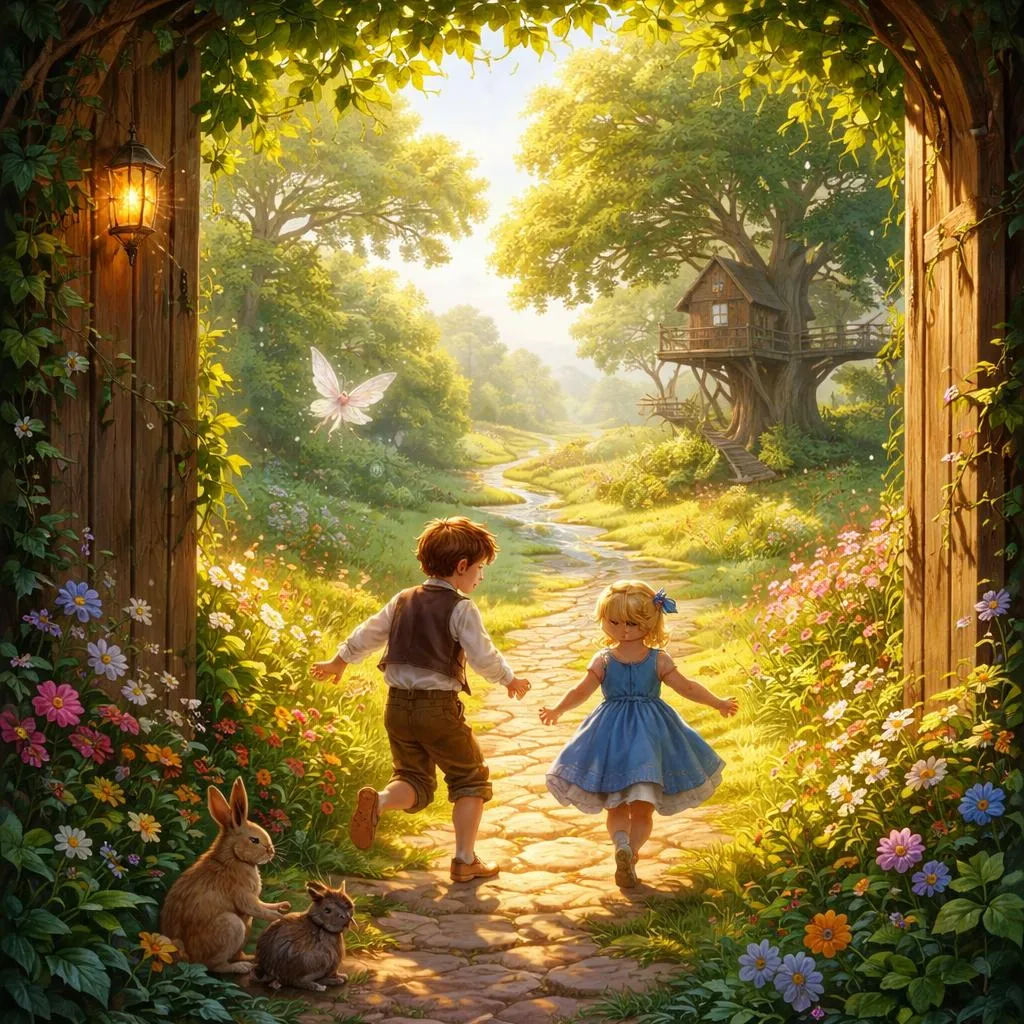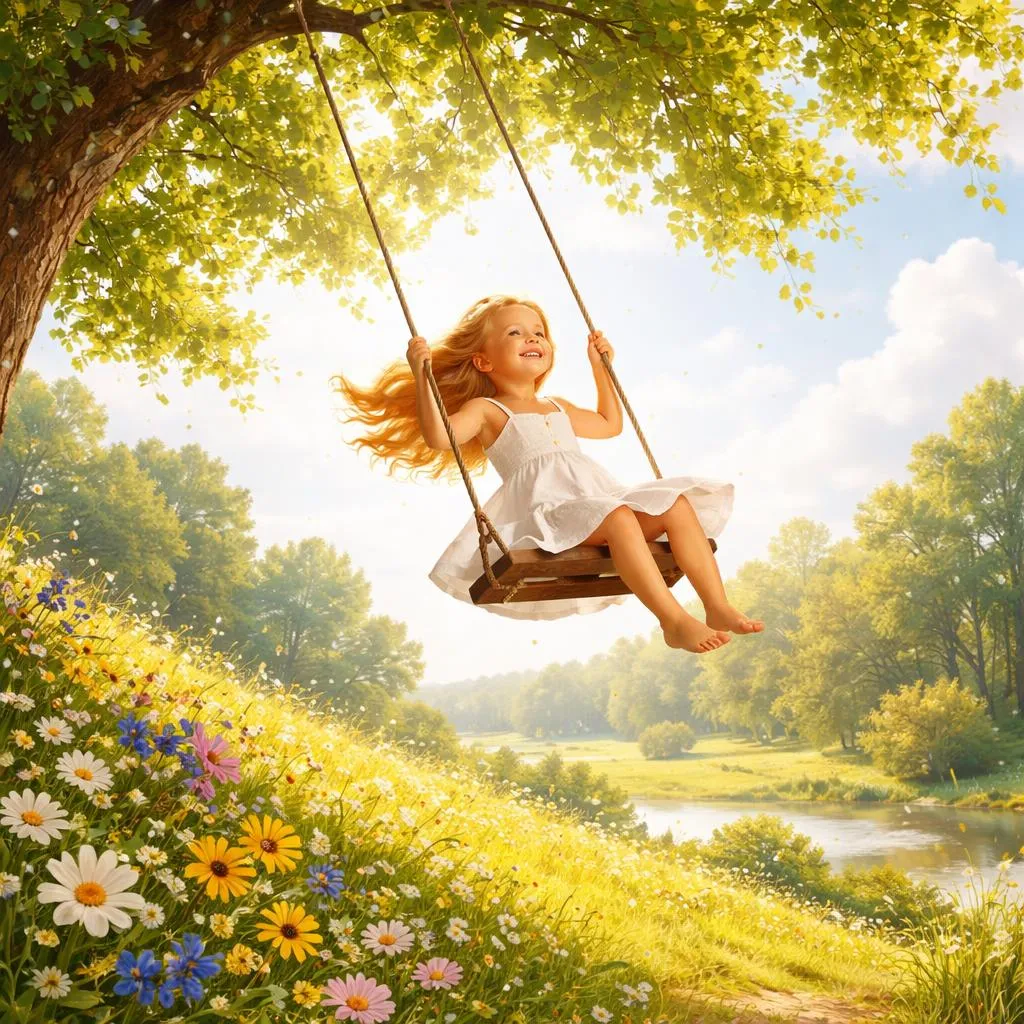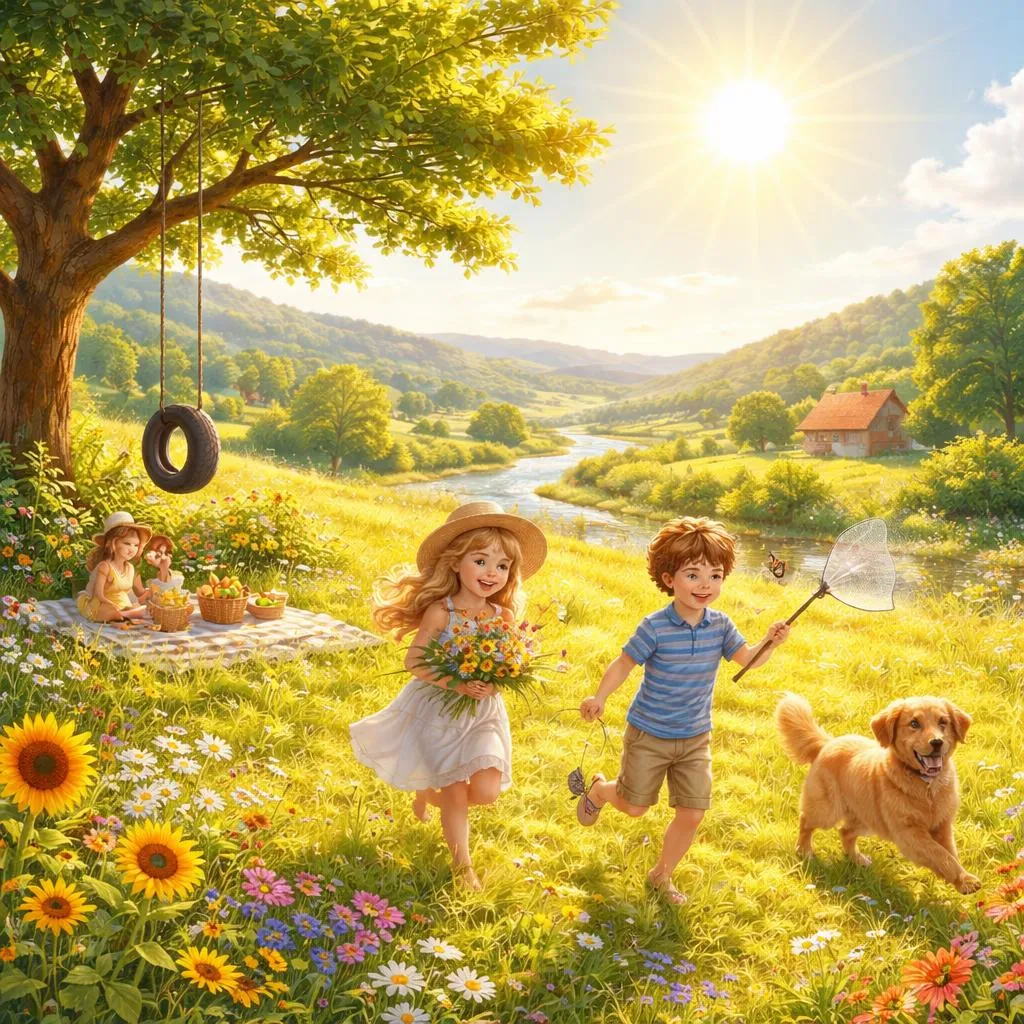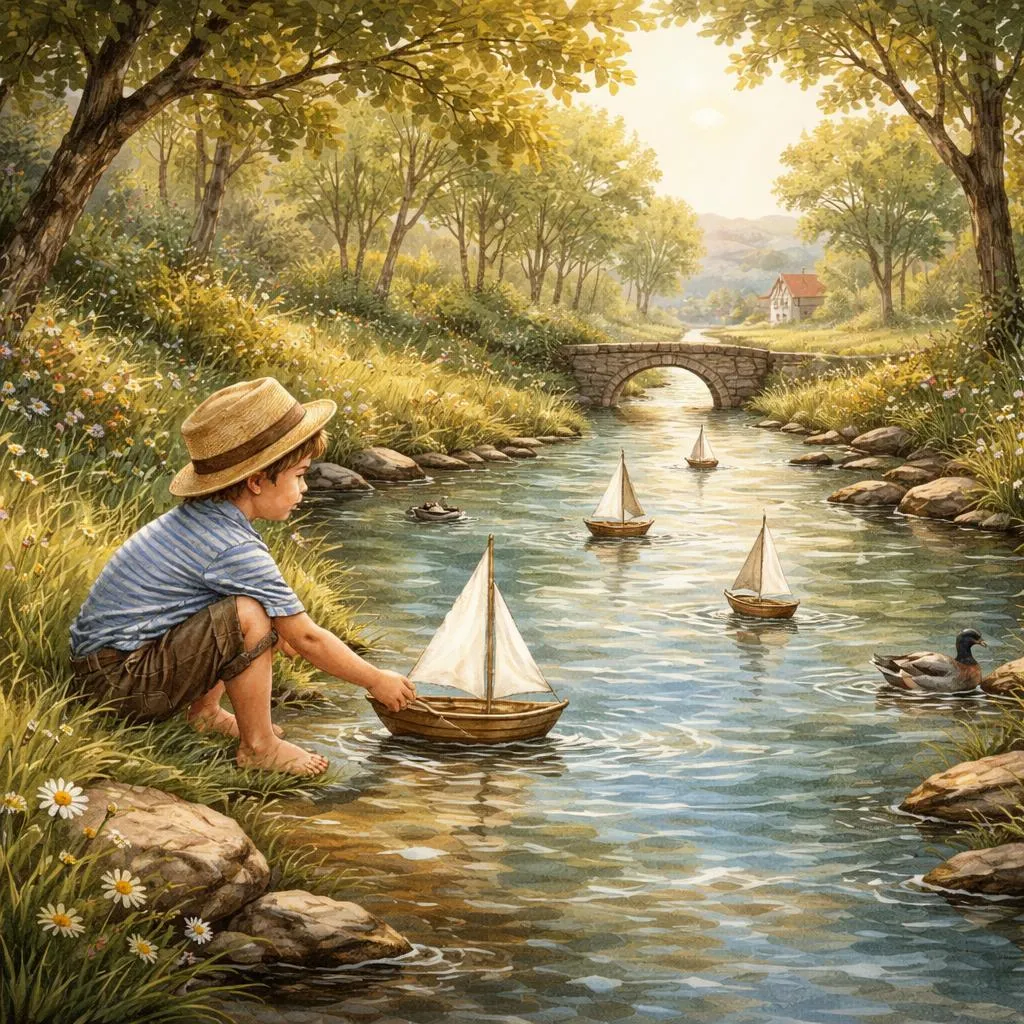

Dark brown is the river, Golden is the sand. It flows along for ever, With trees on either hand. Green leaves a-floating, Castles of the foam, Boats of mine a-boating— Where will all come home? On goes the river And out past the mill, Away down the valley, Away down the hill. Away down the river, A hundred miles or more, Other little children Shall bring my boats ashore.
Background and Author Introduction
This charming poem is from "The House at Pooh Corner," written by A.A. Milne, a beloved British author famous for creating the Winnie-the-Pooh stories. Milne’s works have captivated children and adults alike for nearly a century, blending simple language with deep warmth and wisdom. This particular poem reflects Milne’s gentle observation of nature and childhood, capturing the quiet beauty of a river journey and the innocence of play.
Detailed Interpretation and Meaning
At first glance, the poem paints a vivid picture of a river flowing endlessly, bordered by trees and golden sand. The imagery of "green leaves a-floating" and "castles of the foam" invites readers to imagine the natural world’s delicate beauty. The "boats of mine a-boating" refers to small boats, likely made by children, floating down the river, sparking a sense of adventure and curiosity.
The poem’s central question, "Where will all come home?" invites reflection on journeys and destinations, both literal and metaphorical. The river’s endless flow symbolizes life’s ongoing passage, while the boats represent the dreams, hopes, and efforts of children. The closing lines suggest a cycle of sharing and community—other children will find and bring the boats ashore, continuing the story and connection between generations.
What Children and Students Can Learn
-
Connection to Nature: The poem encourages children to observe and appreciate the natural world—the colors, sounds, and movements around them. This fosters mindfulness and respect for the environment.
-
Imagination and Creativity: The idea of making boats and sending them down the river sparks creativity and play, essential for cognitive and emotional development.
-
Curiosity and Wonder: Asking "Where will all come home?" nurtures curiosity about the world, encouraging children to think beyond the immediate and explore possibilities.
-
Community and Sharing: The poem highlights the idea that experiences and joys are shared. Other children bringing the boats ashore symbolizes friendship, cooperation, and continuity.
Applying These Lessons in Life, Learning, and Social Settings
-
In Daily Life: Encourage children to spend time outdoors, observing rivers, trees, and wildlife. Simple activities like floating paper boats or leaves on water can deepen their connection to nature.
-
In Learning: Use the poem as a starting point for creative writing or art projects. Children can write their own stories about where their boats might travel or draw pictures of the river scene.
-
In Social Interaction: Discuss with children how sharing their creations and experiences with friends enriches everyone’s lives. Promote teamwork through group activities inspired by the poem's themes.
Cultivating Positive Values and Behaviors
-
Patience and Reflection: Watching a boat float down a river requires patience and quiet observation, teaching children to slow down and appreciate moments.
-
Hope and Optimism: The journey of the boats symbolizes hope—that efforts and dreams will find their way and be appreciated.
-
Responsibility and Care: Making and sending boats on a river can also introduce lessons about caring for the environment and being mindful of one’s actions.
-
Empathy and Connection: Understanding that other children will find and care for the boats fosters empathy and a sense of belonging.
By engaging with this poem, children and students not only enjoy a beautiful piece of literature but also develop important life skills and values. The gentle flow of the river and the journey of the boats become metaphors for growth, learning, and the shared human experience.