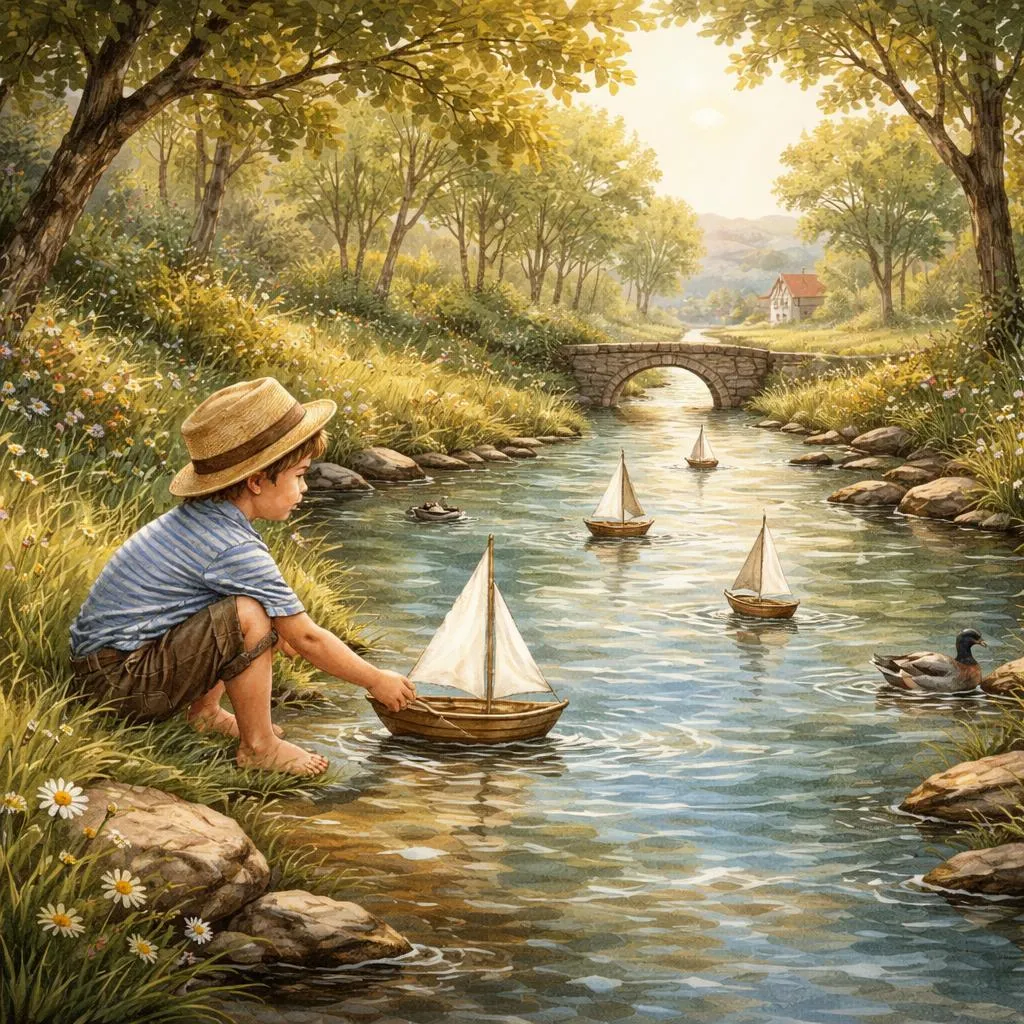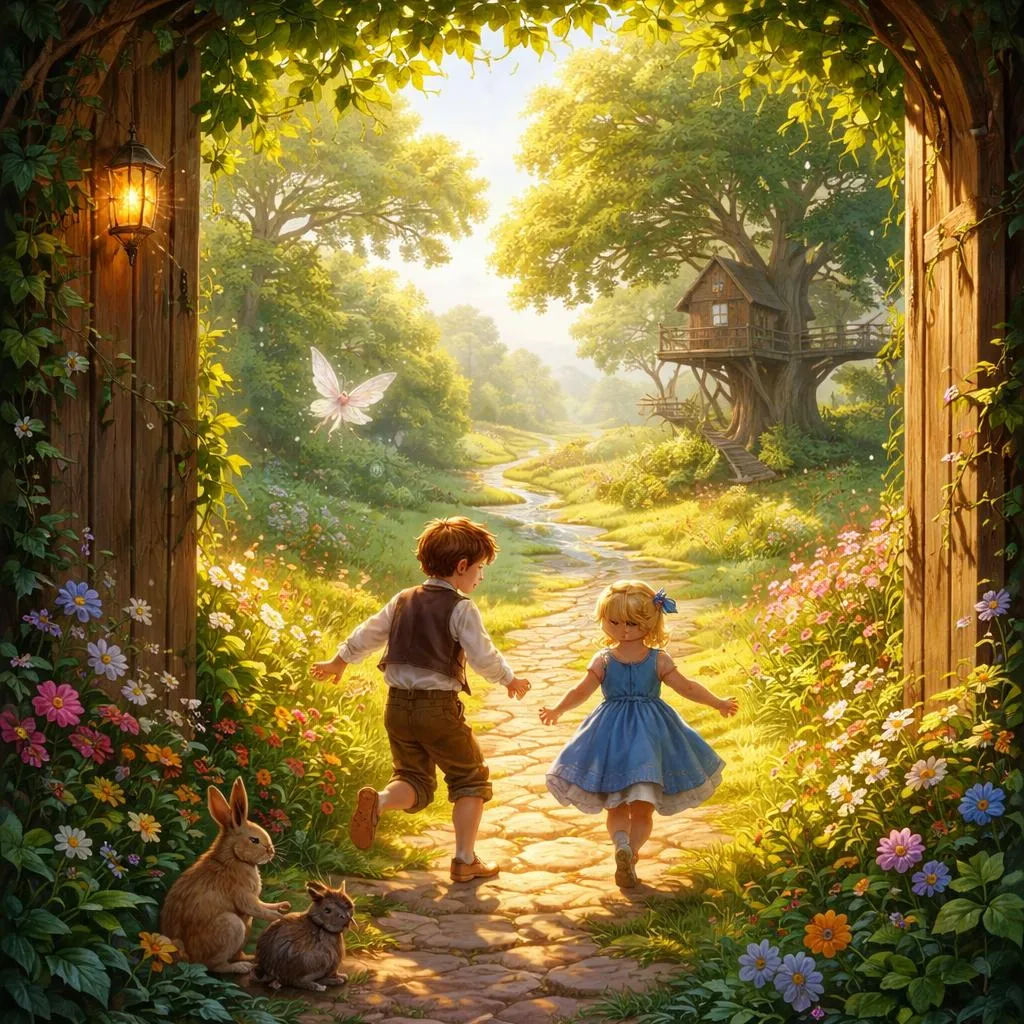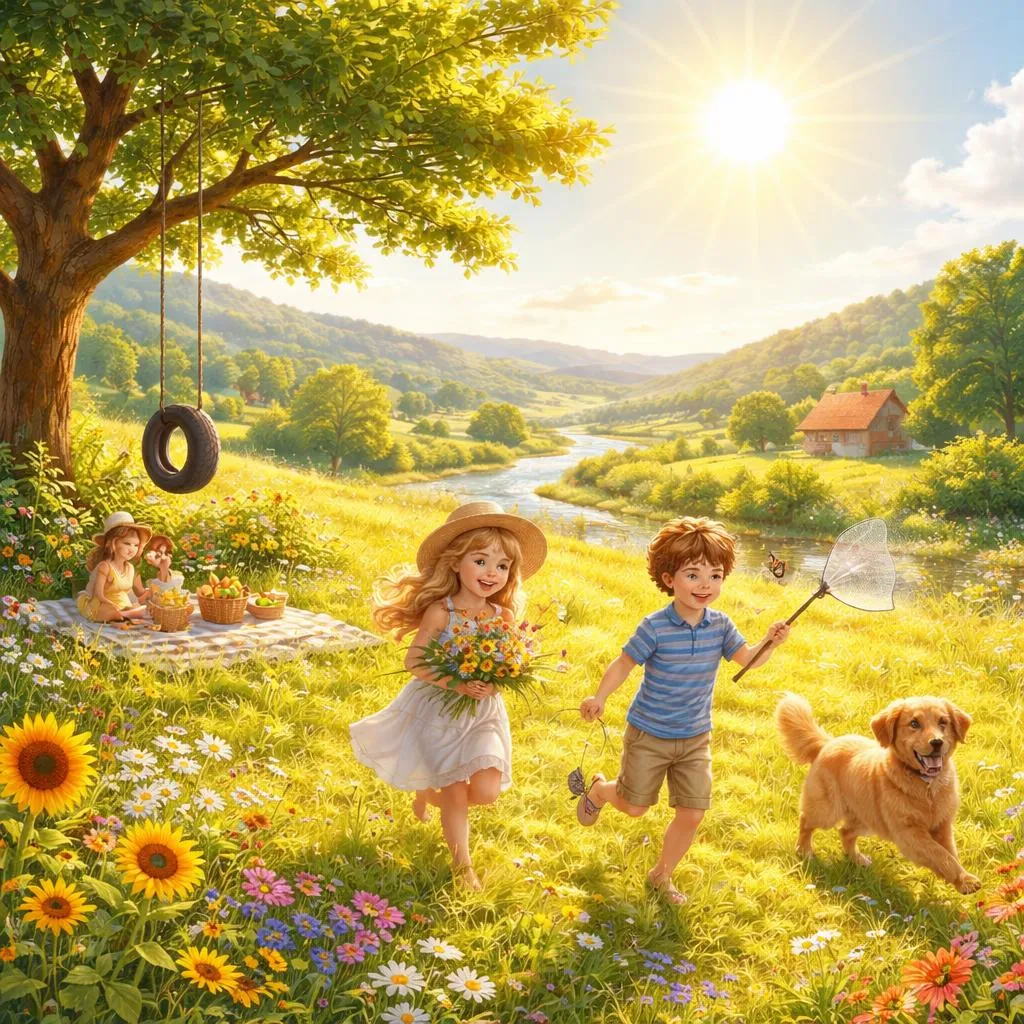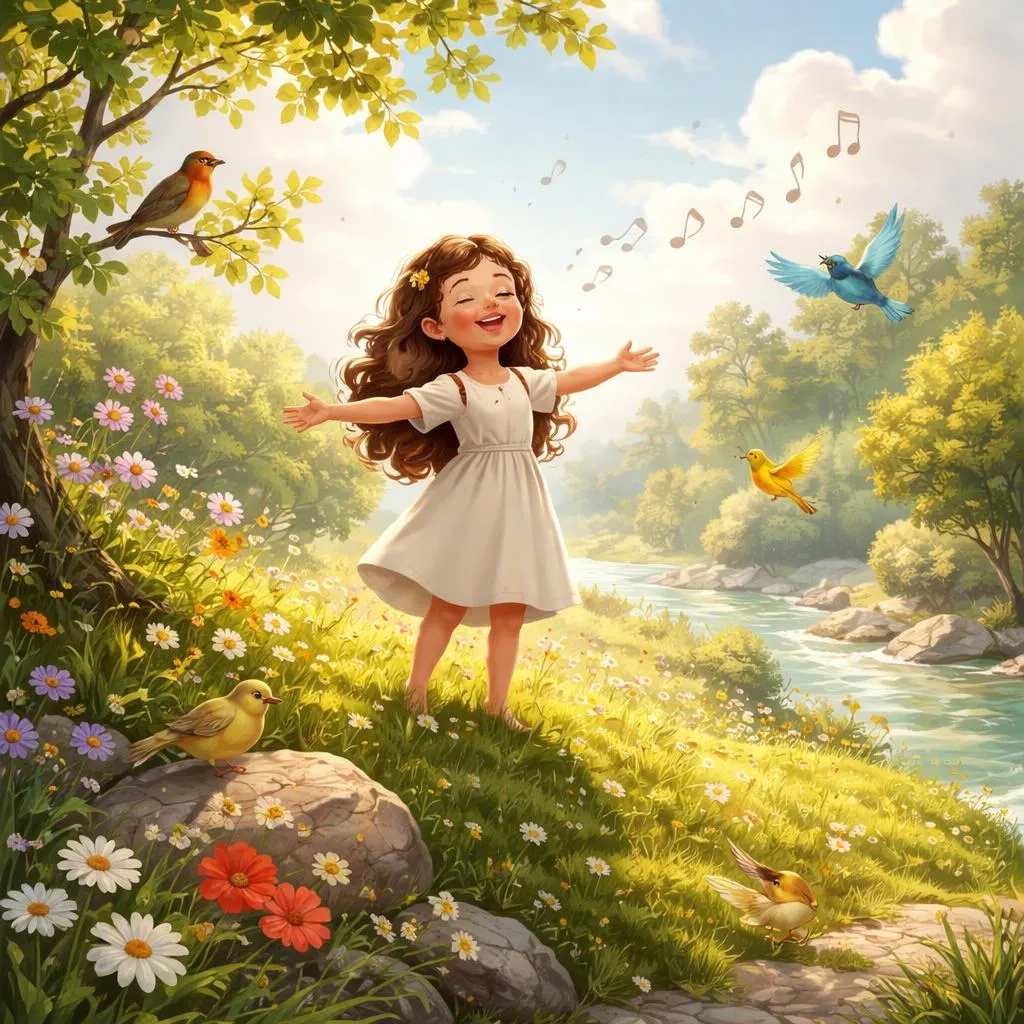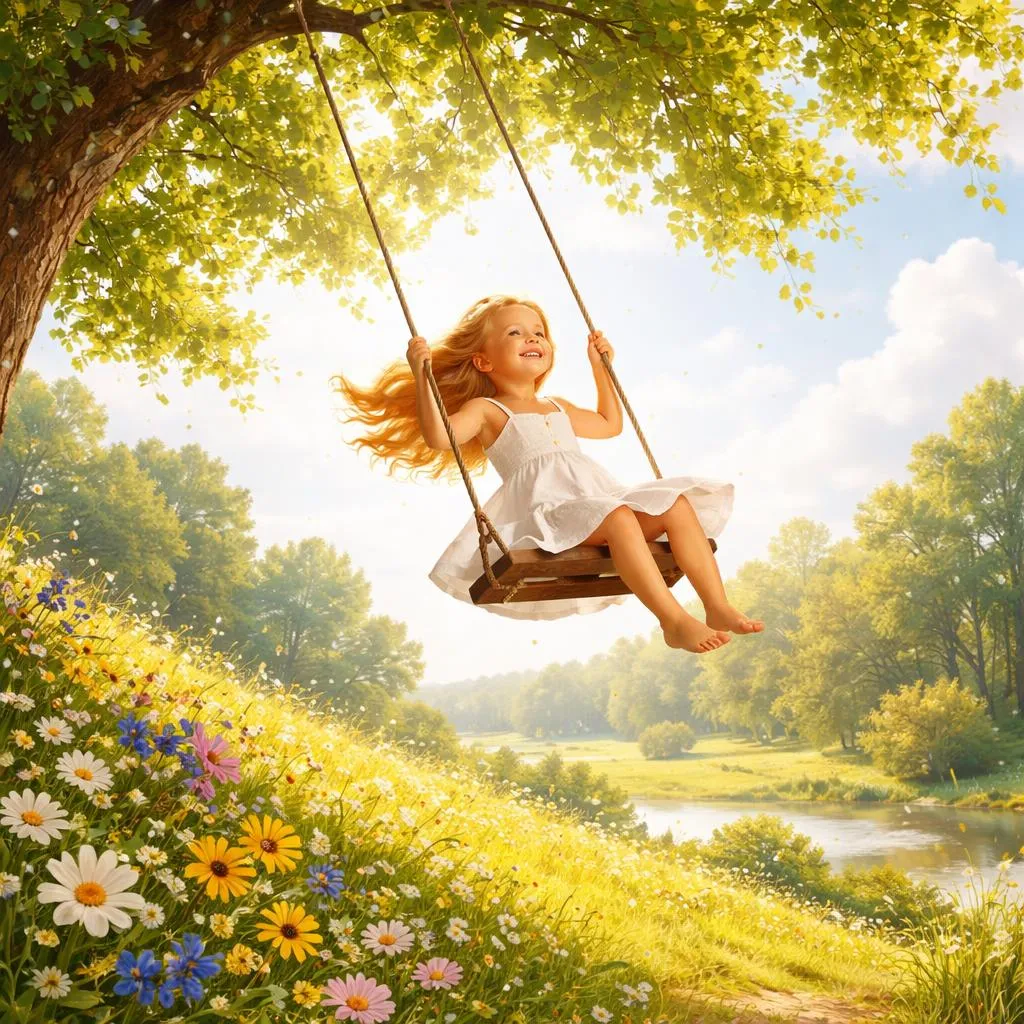

How do you like to go up in a swing, Up in the air so blue? Oh, I do think it the pleasantest thing Ever a child can do! Up in the air and over the wall, Till I can see so wide, River and trees and cattle and all Over the countryside— Till I look down on the garden green, Down on the roof so brown— Up in the air I go flying again, Up in the air and down!
Story Background and Author Introduction
This charming poem, often known as "The Swing," was written by Robert Louis Stevenson, a celebrated Scottish author and poet of the late 19th century. Stevenson is best known for his adventure novels like Treasure Island and Kidnapped, but he also wrote delightful poetry that captures the innocence and joy of childhood. "The Swing" was published in his collection A Child’s Garden of Verses in 1885, a book filled with poems that explore the world from a child's perspective.
Stevenson wrote these poems to celebrate the simple pleasures of childhood, encouraging children to see the world with wonder and imagination. His work remains popular because it speaks directly to the feelings and experiences of young readers.
Detailed Story Interpretation and Meaning
At first glance, "The Swing" is a joyful celebration of the simple act of swinging. The poem invites readers to imagine the thrill and freedom of soaring high into the sky, feeling the wind, and seeing the world from a new perspective. The repeated phrases and rhythmic flow mimic the swinging motion itself, creating a vivid sensory experience.
Beyond the literal description, the poem symbolizes the boundless imagination and happiness that children experience during play. The swing becomes a vehicle for adventure and discovery, allowing the child to momentarily escape the everyday world and explore the vast countryside from above. This sense of freedom and joy is central to the poem’s appeal.
What Children and Students Can Learn
-
Appreciation of Nature and Imagination: The poem encourages children to observe and appreciate the beauty of the natural world—the river, trees, cattle, and countryside. It also shows how imagination can transform a simple playground activity into a magical journey.
-
Joy in Simple Pleasures: In a world often focused on technology and complex entertainment, this poem reminds children that happiness can be found in simple, everyday experiences like swinging.
-
Rhythm and Language Skills: Reading and reciting this poem helps children develop a sense of rhythm, rhyme, and sound patterns in English, enhancing their language skills.
-
Emotional Expression: The poem expresses feelings of joy, excitement, and freedom, helping children connect with their own emotions and understand the importance of play for emotional well-being.
How to Apply These Lessons in Life, Study, and Social Situations
-
Life: Encourage children to spend time outdoors, engage with nature, and find joy in simple activities. This helps build a healthy, balanced lifestyle and fosters creativity.
-
Study: Use the poem as a tool to develop reading fluency, vocabulary, and comprehension. Teachers can ask students to describe their own experiences or create their own poems inspired by nature and play.
-
Social: Playing on swings or in playgrounds often involves social interaction. Children learn to take turns, share, and communicate, building important social skills.
Cultivating Positive Spirit and Behavior
The spirit of the poem is one of joy, freedom, and curiosity. To nurture these qualities in children:
-
Encourage Curiosity: Allow children to explore their surroundings and ask questions about the world.
-
Promote Play: Recognize the value of play in learning and emotional health. Provide safe spaces and time for children to play freely.
-
Foster Gratitude: Help children appreciate the small joys in life, teaching them to be thankful for everyday experiences.
-
Support Emotional Expression: Use poetry and storytelling as tools for children to express their feelings and develop empathy.
By embracing these lessons, children not only enjoy the moment but also develop skills and attitudes that support lifelong learning and well-being. "The Swing" is more than a poem; it is an invitation to see the world through the eyes of a child—full of wonder, joy, and endless possibility.