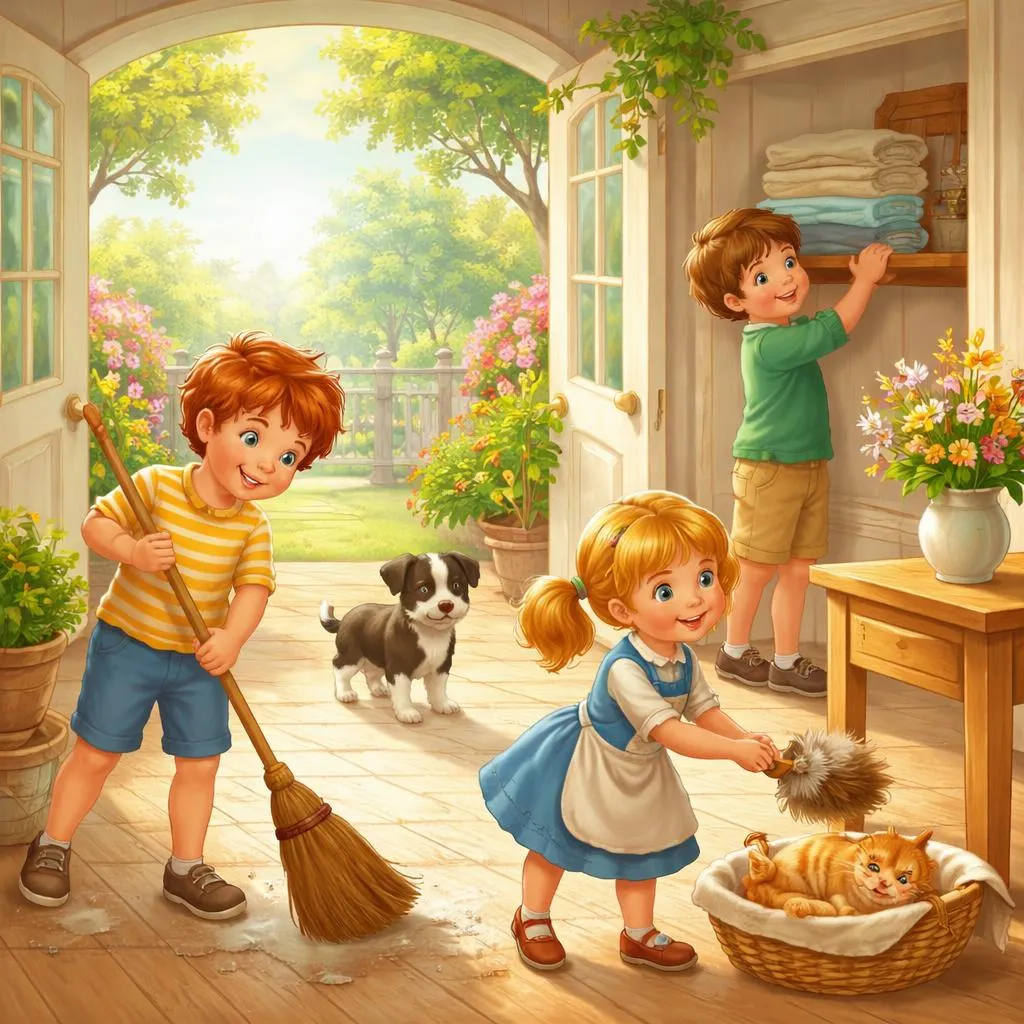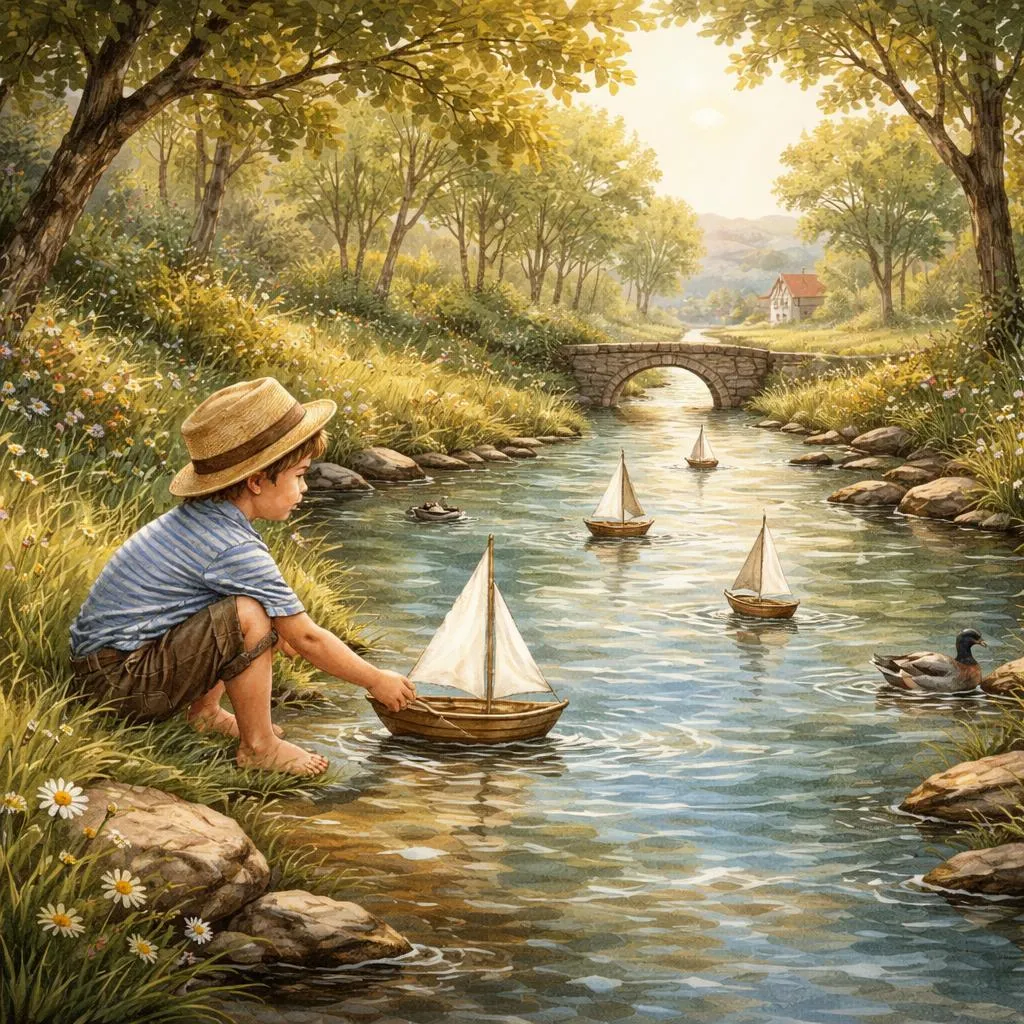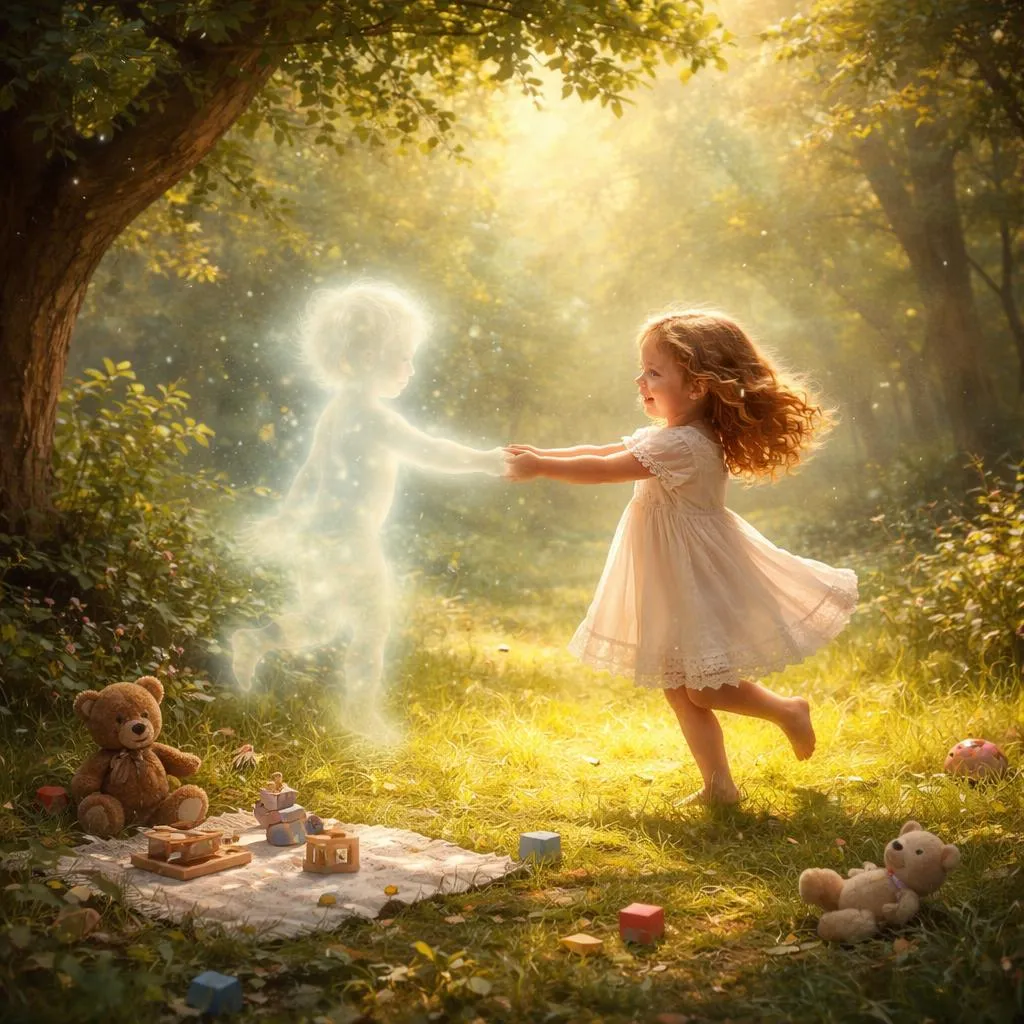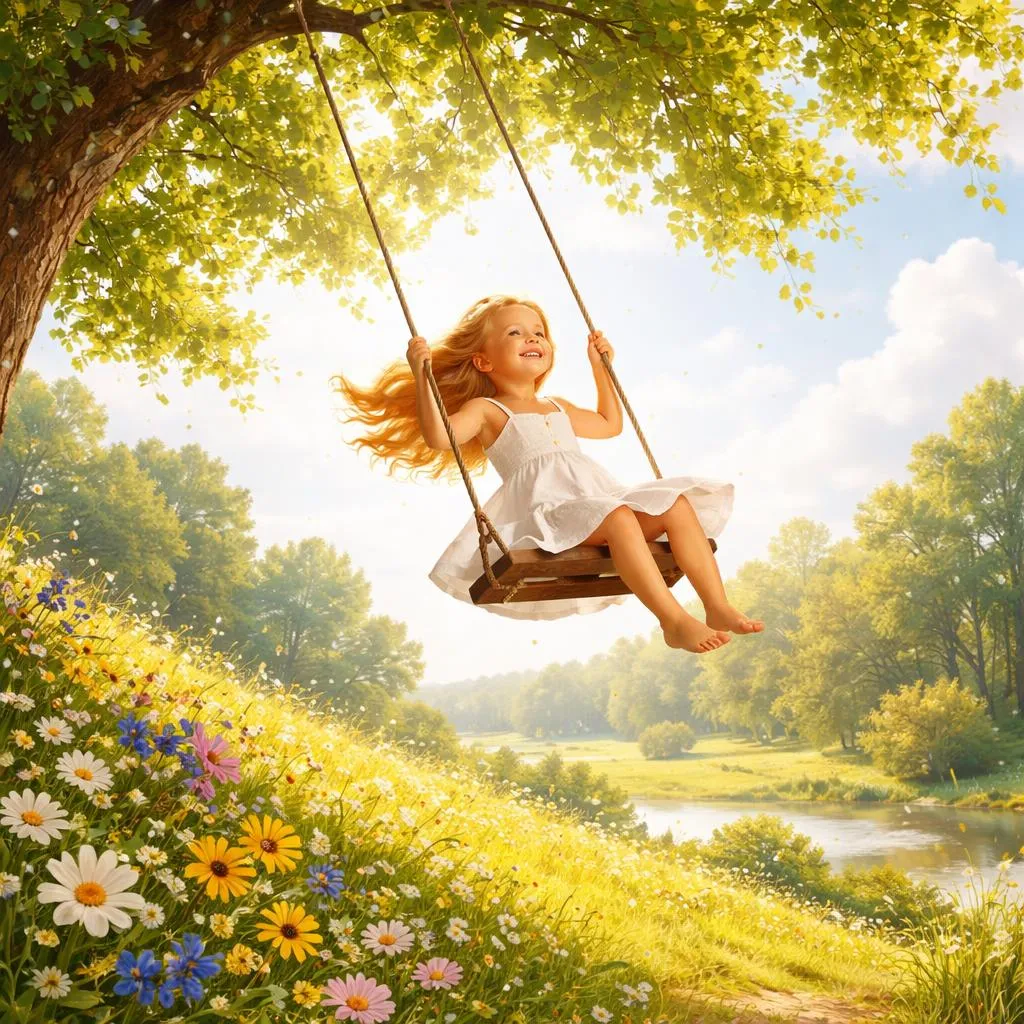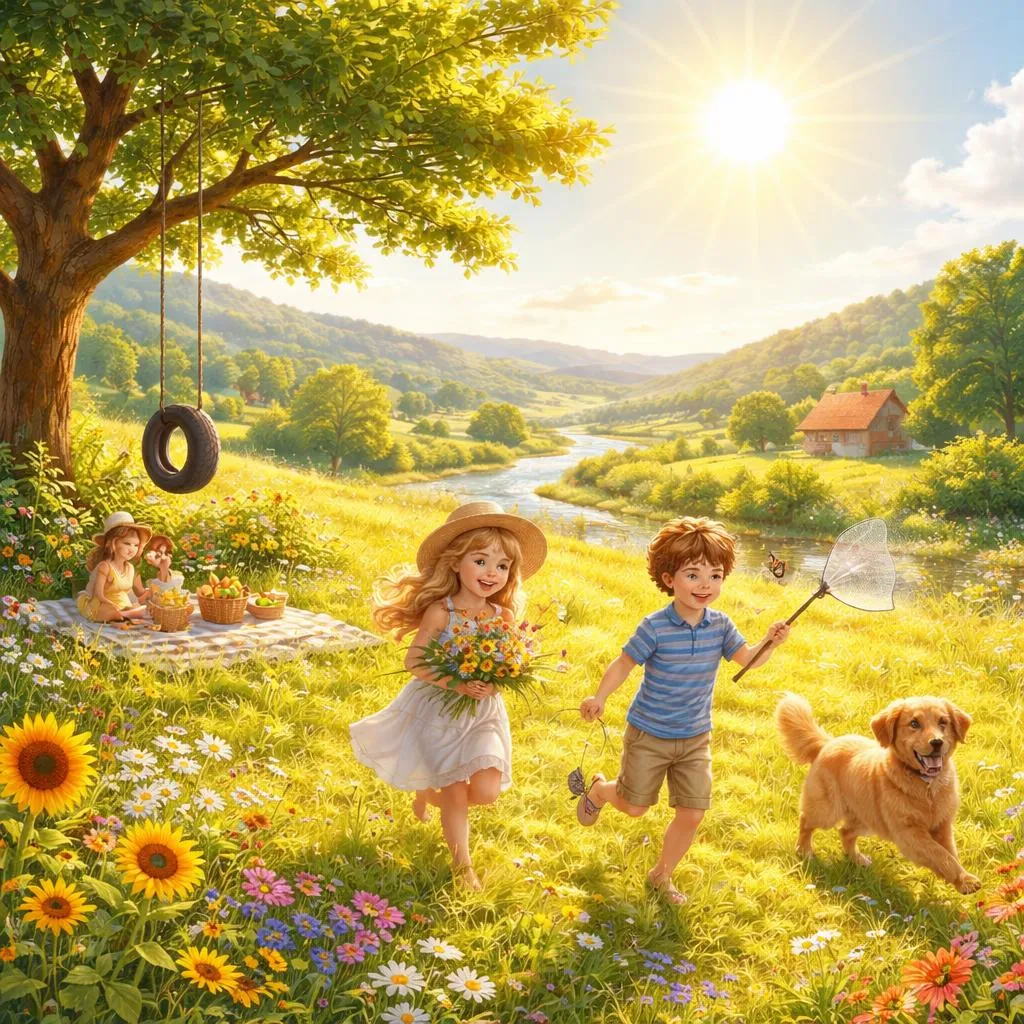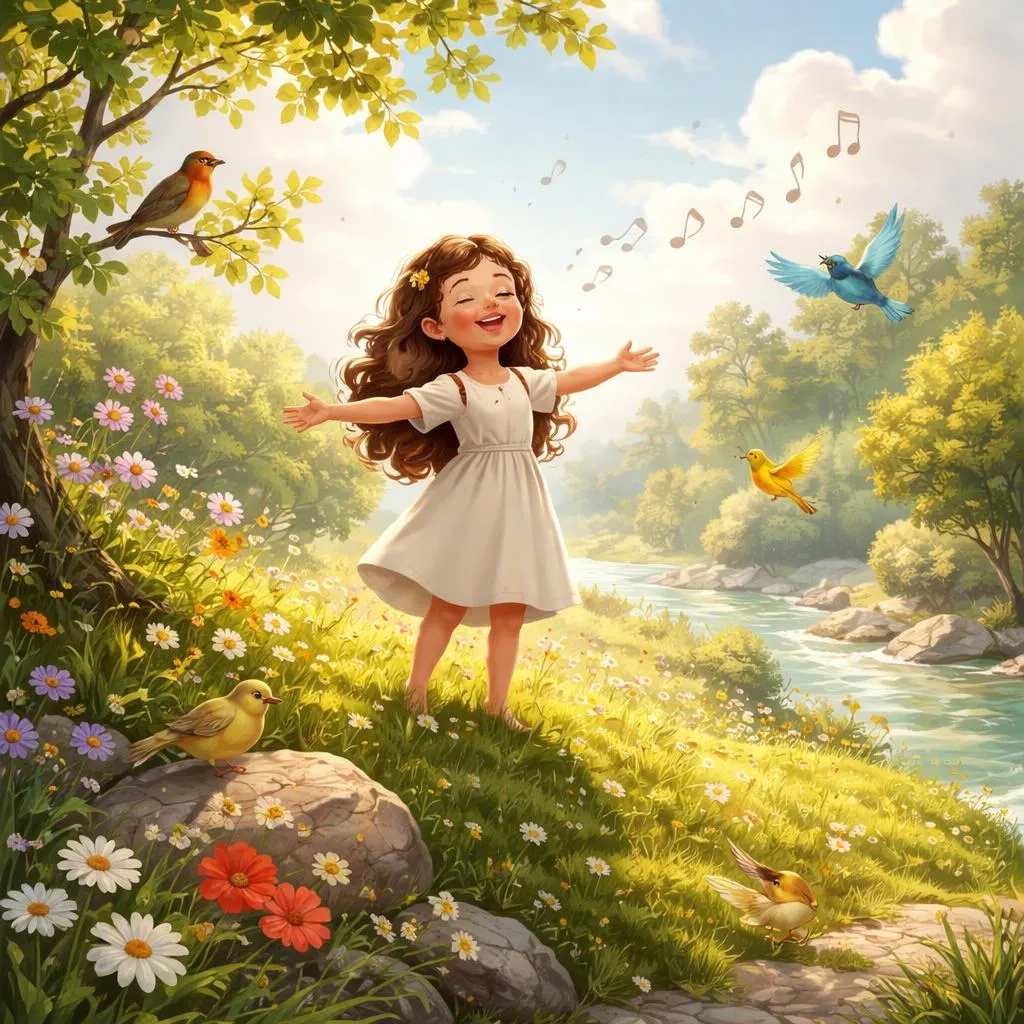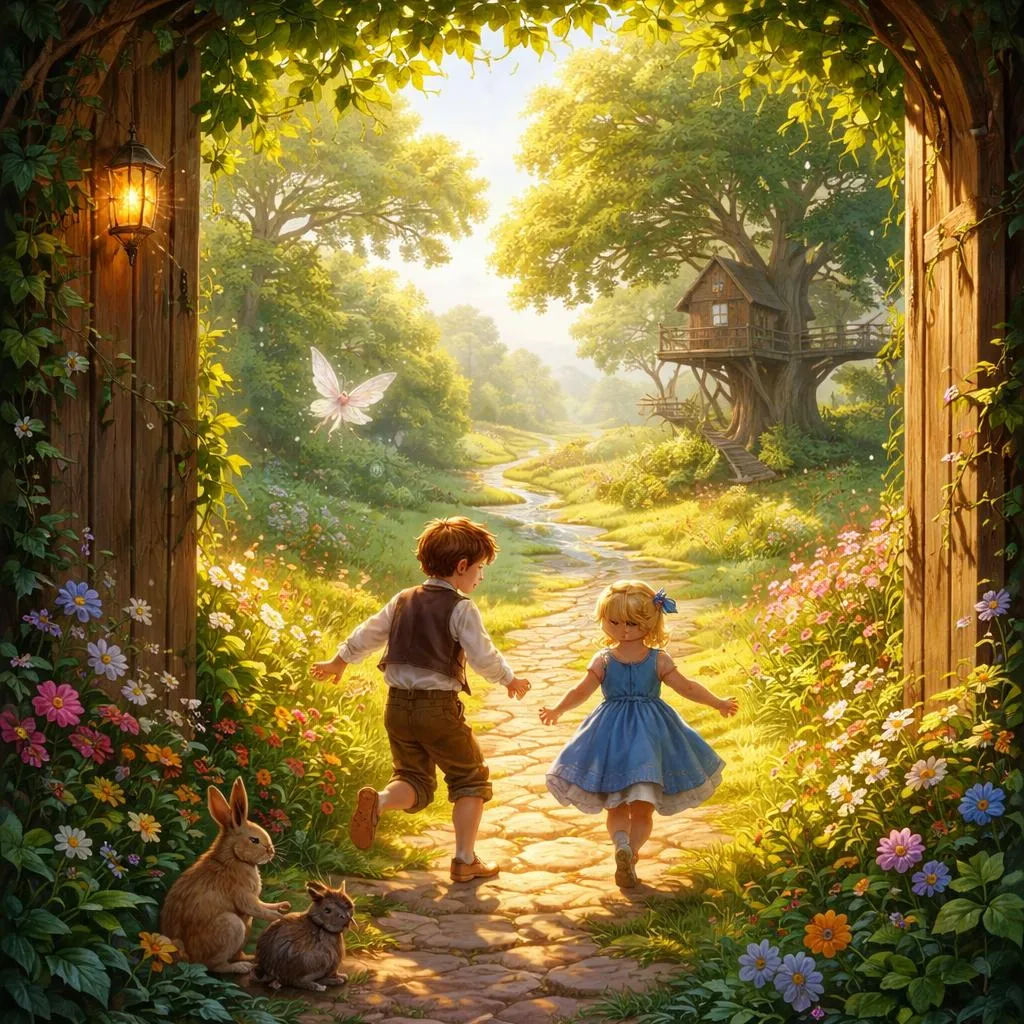

As from the house your mother sees You playing round the garden trees, So you may see, if you will look Through the windows of this book, Another child, far, far away, And in another garden, play. But do not think you can at all, By knocking on the window, call That child to hear you.? He intent Is all on his play-business bent. He does not hear, he will not look, Nor yet be lured out of this book. For, long ago, the truth to say, He has grown up and gone away, And it is but a child of air That lingers in the garden there.
Introduction to the Story
This beautiful poem invites children to imagine looking through the pages of a book as if they were windows into another world. It tells of a child playing in a distant garden, a child who is so absorbed in their play that they cannot hear or see anyone trying to call them. The poem ends with a gentle reminder that this child is no longer real but a "child of air," a figure that remains only in the imagination and stories.
Background and Author Introduction
This poem is from "The Child of Air," a work by the English poet and author Walter de la Mare, who lived from 1873 to 1956. De la Mare was known for his ability to capture the mysterious and magical qualities of childhood in his poetry and stories. His works often explore the boundary between reality and imagination, encouraging readers to look beyond the ordinary and find wonder in everyday things.
Detailed Interpretation and Meaning
At its core, this poem explores the idea of imagination and the ephemeral nature of childhood. The "child of air" symbolizes the fleeting moments of youth and innocence that cannot be grasped or held onto forever. The poem encourages readers to appreciate the magic of stories and the worlds they open up, while also recognizing that these worlds exist in a special space between reality and fantasy.
The child playing in the garden represents the joy and freedom of childhood play, a time when imagination rules and the outside world fades away. The poem also subtly teaches that while we can visit these magical places through books, we cannot physically enter them or call the characters to join us in the real world.
What Children and Students Can Learn
-
Imagination and Creativity
This poem inspires children to use their imagination. It shows that books are windows to new worlds where they can explore, dream, and create stories of their own. Encouraging children to imagine beyond their immediate surroundings helps develop creativity and problem-solving skills. -
The Nature of Stories
Students learn that stories and characters live in a special place—the world of imagination. Understanding this helps children appreciate literature and storytelling as a unique form of art that connects us to different experiences and emotions. -
Acceptance of Change
The poem gently introduces the concept that childhood and innocence are temporary. This can help children understand change and growth as natural parts of life, encouraging them to cherish their current moments. -
Focus and Presence
The child in the poem is deeply focused on play, showing the value of being fully present in activities. This teaches children the importance of concentration and enjoying the moment, which can improve learning and social interactions.
Practical Applications in Life, Learning, and Social Settings
-
In Learning: Teachers and parents can encourage children to dive into stories and use their imagination to enhance comprehension and engagement. Activities like drawing scenes from stories or creating their own endings can deepen understanding.
-
In Social Life: Understanding that others have their own "worlds" or interests helps children develop empathy and respect for different perspectives. It also teaches patience, as sometimes others may be focused on their own activities.
-
In Personal Growth: Recognizing that childhood is a special but temporary phase helps children appreciate their experiences and motivates them to grow positively, embracing new challenges while holding onto their curiosity.
Cultivating Positive Spirit and Behavior from the Story
-
Encouraging Curiosity: Children should be encouraged to ask questions about stories and imagine what happens beyond the pages, fostering a lifelong love of learning.
-
Respecting Imagination: Adults can validate children's imaginative play, understanding its importance in emotional and cognitive development.
-
Balancing Reality and Fantasy: Teaching children to enjoy stories while staying grounded in reality helps them develop healthy boundaries between imagination and real life.
-
Appreciating the Present: The poem’s message about the fleeting nature of childhood can be used to teach mindfulness and gratitude for the present moment.
By exploring this poem and its themes, children and students can develop a richer appreciation for literature, creativity, and the natural changes in life, all while learning valuable lessons that apply to their everyday experiences.