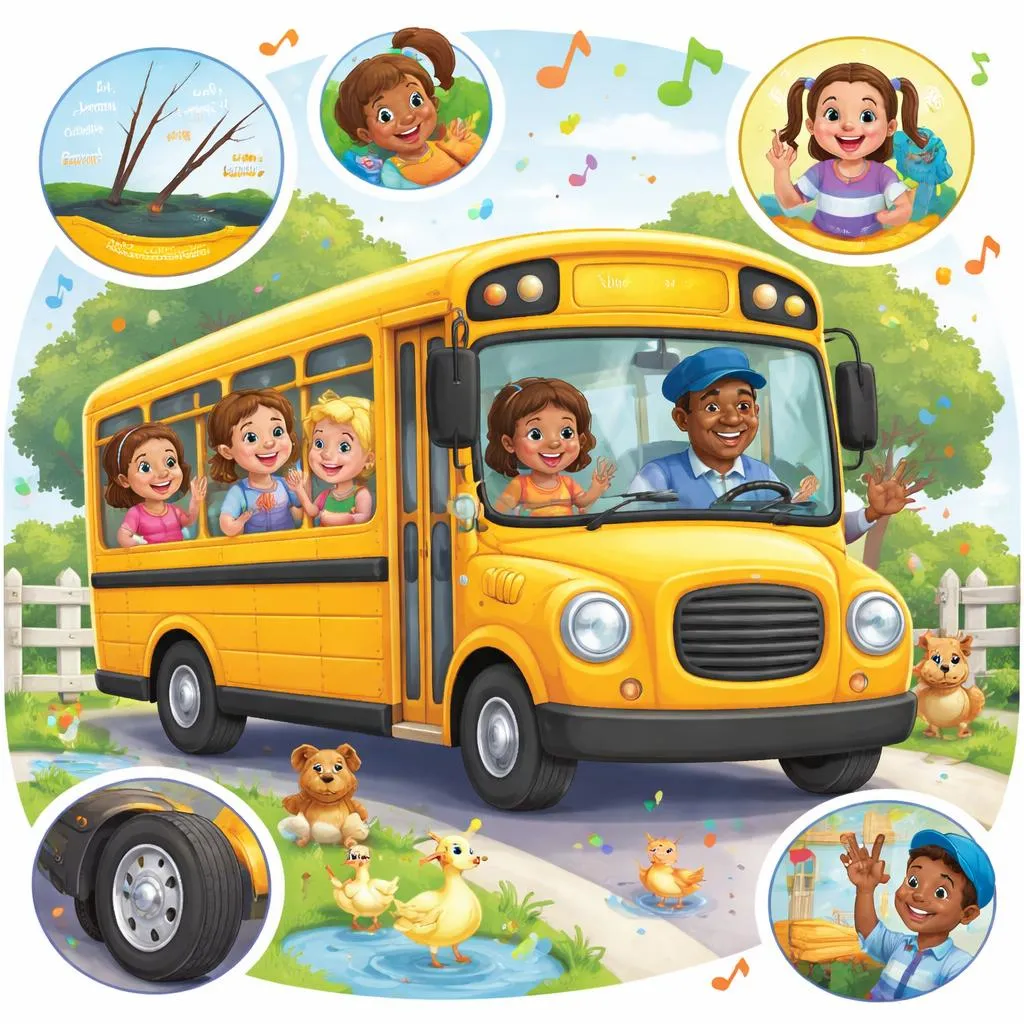

Hello, happy singers and wonderful teachers! Today we explore one of the most beloved children's songs. Buses go up and down the street. Wheels go round and round. People bounce up and down. The song is "The Wheels on the Bus." The words to the wheels on the bus song are simple and fun. Children love to sing them. They love to do the actions. This song has been popular for generations. It teaches vocabulary, actions, and sounds. It gets everyone moving and laughing. Let us discover this classic song together. Let us learn all its wonderful verses and actions.
What Is the Wheels on the Bus Rhyme? "The Wheels on the Bus" is a classic children's song. It describes a bus ride through a town. Each verse introduces a new part of the bus or the people on it. Each part makes a special sound or action. The wheels go round and round. The wipers go swish, swish, swish. The horn goes beep, beep, beep.
The song likely started in the United States. It became popular in the 1930s. Now children sing it all over the world. Many versions exist. New verses get added all the time. Parents and teachers create verses for their own communities. This flexibility keeps the song fresh and relevant.
The song has a simple repetitive structure. Each verse follows the same pattern. This makes it easy for young children to learn. They can join in quickly. They feel successful and proud. The actions make it even more engaging. Children love to move along with the music.
The Lyrics of the Nursery Rhyme Let us look at the complete words to the wheels on the bus song. Many versions exist. Here is the most common version.
The wheels on the bus go round and round, Round and round, round and round. The wheels on the bus go round and round, All through the town.
The wipers on the bus go swish, swish, swish, Swish, swish, swish, swish, swish, swish. The wipers on the bus go swish, swish, swish, All through the town.
The horn on the bus goes beep, beep, beep, Beep, beep, beep, beep, beep, beep. The horn on the bus goes beep, beep, beep, All through the town.
The doors on the bus go open and shut, Open and shut, open and shut. The doors on the bus go open and shut, All through the town.
The people on the bus go up and down, Up and down, up and down. The people on the bus go up and down, All through the town.
Many versions add more verses. The baby on the bus goes "wah, wah, wah." The mommy on the bus goes "shh, shh, shh." The driver on the bus says "move on back." Each new verse adds vocabulary and fun.
Vocabulary Learning from the Song This rich song teaches many useful words. Let us explore them together.
Vehicle parts: The song introduces parts of a bus. Wheels, wipers, horn, doors. These are specific vocabulary words. Children learn them in a memorable context. They can point to these parts on real vehicles.
Action words: The song teaches many verbs. Go round, swish, beep, open, shut, go up, go down. These are common action words. Children learn them through physical movement. They remember "swish" because they moved their hands like wipers.
People words: The song introduces people on the bus. Driver, people, baby, mommy. These are important social vocabulary words. Children learn to name the people around them.
Sound words: The song is full of onomatopoeia. Swish, beep, wah, shh. These are words that sound like the noises they describe. Children love making these sounds. They learn that words can imitate real life.
Prepositions: The song teaches location words. Round and round, open and shut, up and down, on the bus, through the town. These words help children describe movement and position.
Phonics Points in the Rhyme The wheels on the bus song offers excellent phonics practice. Let us look at some important sounds.
Listen to the "w" sound. It appears in "wheels" and "wipers." The "w" sound is made with rounded lips. Practice together. "W-w-wheels." "W-w-wipers." This helps children produce the sound correctly.
Listen to the "b" sound. It appears in "bus" and "beep" and "baby." The "b" sound is a quick popping sound. Practice together. "B-b-bus." "B-b-beep." This sound appears in many important words.
Listen to the "sh" sound. It appears in "swish" and "shh." The "sh" sound is a quiet, shushing sound. Practice together. "Sh-sh-swish." "Sh-sh-shh." This sound helps children learn to be quiet too!
The repetitive nature of the song reinforces these sounds. Children hear them many times. They practice them through singing. This builds phonemic awareness naturally.
Grammar Patterns in the Song The song contains useful grammar patterns for young learners.
Present tense verbs: The song uses present tense throughout. "The wheels go round." "The wipers go swish." This describes actions happening now. Children learn to talk about current events using this pattern.
Plural nouns: The song teaches plurals. Wheels, wipers, doors, people. Children learn that we add -s to make most plurals. They hear this pattern repeated many times.
Prepositional phrases: The song uses phrases like "on the bus" and "through the town." These show location and movement. Children learn to describe where things happen.
Sentence patterns: Each verse follows the same pattern. "The [part] on the bus [action]." This pattern can be adapted. Children can create new verses using the same structure. "The kids on the bus sing loud, loud, loud." This builds language creativity.
Learning Activities for the Song The song lends itself to many activities. Here are some ideas to extend learning.
Action Practice: Teach the actions for each verse. For wheels, roll hands around each other. For wipers, move hands back and forth. For horn, push an imaginary horn. For doors, open and close arms. For people, bounce up and down. Practice the actions without singing first. Then add the words. This connects movement and language.
Bus Craft: Create a paper bus. Use a large rectangle for the body. Add circles for wheels. Add rectangles for windows. As children build, they name each part. "These are the wheels." "This is the door." This reinforces vocabulary through hands-on creation.
Verse Creation: Challenge children to create new verses. What else might be on the bus? "The dog on the bus goes woof, woof, woof." "The ice cream on the bus goes drip, drip, drip." This builds creativity and language skills. Children feel proud of their original verses.
Sound Matching: Make sound cards for different verses. A picture of wheels, wipers, horn, doors. Play the song. Hold up the matching card for each verse. This builds listening and matching skills.
Printable Materials for the Song Printable resources support learning from the song. They provide visual reinforcement.
Lyrics Poster: Create a colorful poster with the full lyrics. Add simple pictures for key words. Wheels, wipers, horn, doors, people. Display the poster during singing time. This supports reading development. Children begin to connect written words to the song they know.
Vocabulary Cards: Create flashcards for key vocabulary. Each card has a picture and the word. Wheels, wipers, horn, doors, driver, baby, mommy. Use these for review games. Hold up a card and children do the action. Hold up a card and children sing that verse.
Sequencing Cards: Create cards for each verse in order. Children put them in the correct sequence. This builds understanding of story order. It helps children remember all the verses.
Coloring Pages: Create coloring pages showing scenes from the song. A bus with big wheels. People bouncing inside. A baby crying. Coloring reinforces the vocabulary quietly. It gives children time to think about the song's meaning.
Educational Games for the Song Games make learning from the song even more fun.
Bus Ride Dramatic Play: Arrange chairs like a bus. One child is the driver. Others are passengers. Sing the song together. Do the actions. This imaginative play brings the song to life. Children use language in a real context.
Freeze Dance: Play the song. Children dance and do the actions. When the music stops, everyone freezes. This builds listening skills and self-control. It adds excitement to the song.
Verse Guessing Game: Sing a verse but leave out the key word. "The _____ on the bus go round and round." Children guess the missing word. This builds listening and vocabulary recall.
Action Simon Says: Play Simon Says using actions from the song. "Simon says make your wheels go round." "Simon says make your wipers go swish." This practices following directions and action vocabulary.
Sound Bingo: Create bingo cards with pictures from the song. Wheels, wipers, horn, doors, people, baby. Play sound clips or make the sounds yourself. Children cover the matching picture. This builds listening skills and word recognition.
Through this beloved song, children learn about vehicles and travel. They learn action words and sound words. They learn to follow a pattern and create new verses. They move their bodies and sing together. The words to the wheels on the bus song create joy and learning at the same time. The song builds community in the classroom. It connects children to each other and to English. Every round and round, swish and beep builds language skills and happy memories.