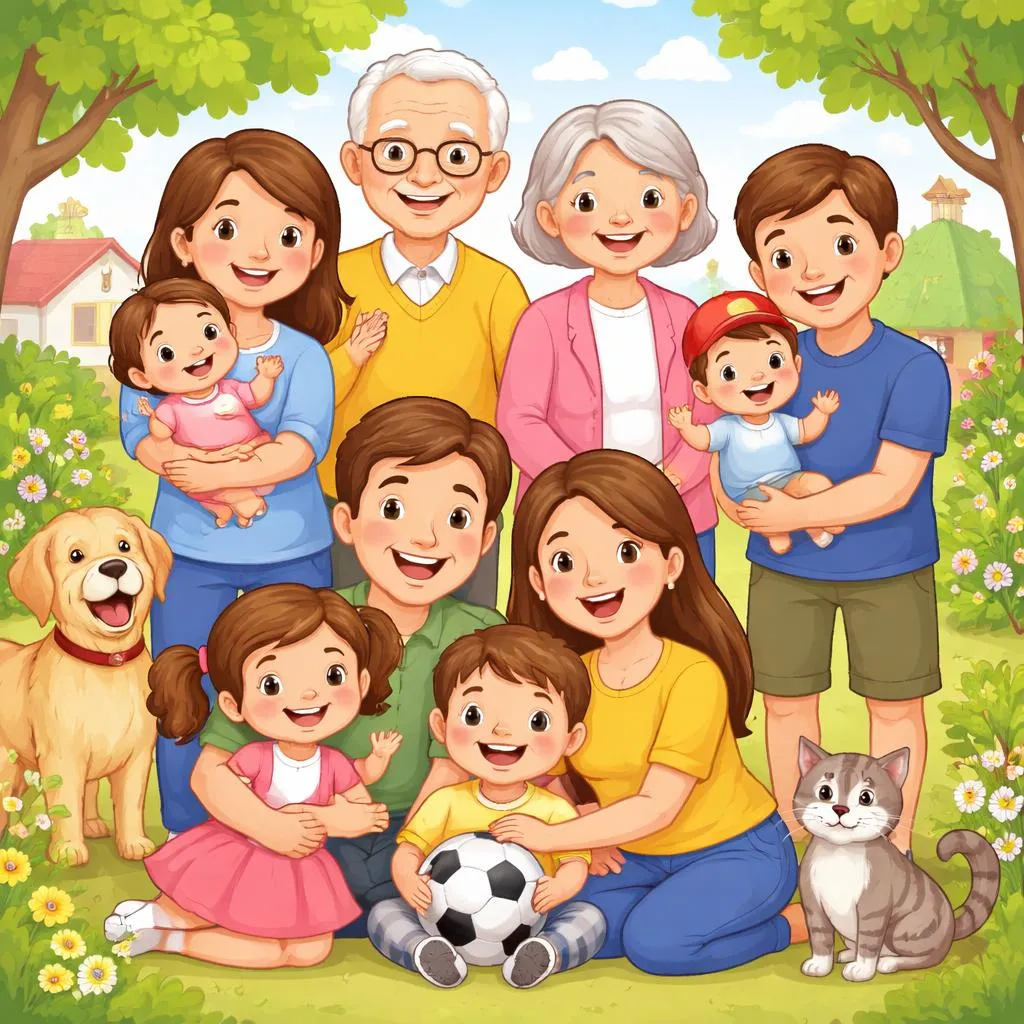

Family words are some of the first words children learn.
These words feel close.
They feel safe.
They talk about people children see every day.
What Are Family Words
Family words name the people in a family.
They tell who belongs together.
These words build understanding.
Family Words Feel Personal
Family words feel warm.
Children connect them to real people.
This makes learning feel natural.
Mother and Father
Mother and father are common family words.
Many children hear them early.
They sound familiar.
Mom and Dad
Mom and dad are everyday words.
They feel friendly.
Children use them often.
Parents as Family Words
Parents means mother and father.
This word groups people together.
Grouping words build meaning.
Brother and Sister
Brother and sister name siblings.
Children understand these words quickly.
They describe relationships.
Older and Younger
Older brother. Younger sister.
These words add detail.
Details help clear meaning.
Siblings as a Family Word
Siblings means brothers and sisters.
It is a group word.
Group words expand vocabulary.
Baby in the Family
Baby is an easy family word.
It sounds soft.
Children like this word.
Son and Daughter
Son and daughter describe children in a family.
These words appear in stories.
Stories support learning.
Family Words and Real Life
Family words are not abstract.
Children see their family every day.
Words match life.
Grandma and Grandpa
Grandma and grandpa are special words.
They feel loving.
Children smile when they say them.
Grandmother and Grandfather
Grandmother and grandfather sound longer.
Children hear them in books.
Both forms are useful.
Family Words for Older Family Members
Older family members have special names.
These names show respect.
Language carries values.
Aunt and Uncle
Aunt and uncle are common family words.
They name family helpers.
Children recognize these roles.
Cousin
Cousin is a flexible word.
It works for boys and girls.
This makes learning easier.
Family Words and Play
Play uses family words.
Family games. Family role play.
Language joins imagination.
Family Role Play
Role play helps understanding.
Children act as family members.
Words become actions.
Family Words in Stories
Stories often use family words.
Stories feel safe and familiar.
This supports listening.
Family Words and Picture Books
Picture books show families.
Words match pictures.
Visual support helps memory.
Family Words in Songs
Songs repeat family words.
Mom. Dad. Baby.
Music builds recall.
Family Words and Listening Skills
Listening comes first.
Children hear family words often.
Hearing builds confidence.
Family Words and Speaking
Speaking follows listening.
Children try family words early.
Success feels good.
Family Words and Confidence
Correct family words build pride.
Pride supports learning.
Children want to speak more.
Family Words and Classroom Language
Classrooms use family topics.
Sharing family pictures.
Talking feels natural.
Family Words and Sharing Time
Sharing time uses family words.
Children talk about home.
Language feels meaningful.
Family Words and Emotional Safety
Family words create emotional safety.
Children relax.
Relaxed learners learn better.
Family Words and Belonging
Belonging matters.
Family words show connection.
Connection supports confidence.
Family Words and Simple Sentences
Simple sentences come first.
This is my mom. That is my dad.
Clear meaning matters.
Family Words and Slightly Longer Sentences
Longer sentences grow naturally.
This is my sister, and she likes to read.
The sentence adds one idea.
Family Words and Daily Talk
Daily talk uses family words.
At home. At school.
Repetition feels normal.
Family Words and Vocabulary Growth
Vocabulary grows step by step.
Family words form a base.
Other words attach easily.
Family Words and Possessive Language
My mom. Your dad.
Possessive words appear early.
They feel useful.
Family Words and Social Language
Social language uses family ideas.
Talking about people builds connection.
Connection supports speaking.
Family Words and Question Practice
Questions feel easy.
Who is this? Is this your brother?
Answers stay simple.
Family Words and Answer Practice
Answers build structure.
This is my aunt. That is my cousin.
Clarity grows.
Family Words and Grammar Awareness
Grammar appears naturally.
Singular. Plural.
Rules come later.
Family Words and Natural Grammar Learning
Children learn patterns before rules.
They hear correct forms.
Understanding grows slowly.
Family Words and Reading Practice
Reading uses familiar words.
Family words reduce stress.
Reading feels possible.
Family Words and Writing Practice
Writing comes later.
Copying family words builds control.
Control supports accuracy.
Family Words and Drawing Activities
Drawing supports learning.
Draw your family.
Words label pictures.
Family Words and Labeling
Labeling connects word and image.
This builds memory.
Memory supports recall.
Family Words and Sorting Activities
Sorting activities build logic.
Parents here. Children there.
Words guide thinking.
Family Words and Categorizing
Categorizing helps understanding.
Immediate family. Extended family.
Language organizes ideas.
Family Words and Cultural Awareness
Families look different.
Words help talk about differences.
Respect grows.
Family Words and Inclusion
Inclusive language matters.
All families count.
Words feel welcoming.
Family Words and Calm Learning Pace
Learning pace stays gentle.
No rush.
Understanding comes with time.
Family Words and Repetition
Repetition helps.
Seeing words again feels safe.
Safety supports learning.
Family Words and Long-Term Memory
Long-term memory needs exposure.
Family words return often.
They stay strong.
Family Words and Daily Routines
Daily routines use family words.
Morning talk. Evening talk.
Language stays active.
Family Words and Home Connection
Home connection matters.
School words match home words.
Learning feels continuous.
Family Words and Teacher Modeling
Teachers model clear family language.
Children copy tone and structure.
Family Words and Peer Learning
Peer learning happens naturally.
Children talk about families.
Words spread.
Family Words and Respectful Listening
Listening matters.
Children listen to each other’s stories.
Respect grows.
Family Words and Emotional Expression
Emotions use family words.
I miss my mom. I love my grandma.
Language supports feelings.
Family Words and Positive Language
Positive language builds trust.
Nice words feel good.
Learning feels safe.
Family Words and Classroom Climate
Classroom climate benefits from family topics.
Warm talk creates calm.
Family Words and Motivation
Motivation grows with success.
Easy words encourage use.
Use builds confidence.
Family Words and Lifelong Vocabulary
Family words stay useful.
They appear at every level.
They grow with the learner.
Family Words in Everyday English
Family words are everyday English.
They appear in talk, stories, and writing.
Children use them with confidence as their language grows.
Family Words and Daily Conversations
Daily conversations use family words naturally.
Children hear them at home and at school.
Hearing and using happen together.
Family Words and Morning Talk
Morning talk often starts with family.
Talking about parents. Talking about siblings.
Language begins the day in a calm way.
Family Words and After-School Sharing
After school children like to share.
They talk about family time.
Words feel useful and real.
Family Words and Weekend Stories
Weekend stories often include family.
Trips. Meals. Games.
Family words appear again.
Family Words and Simple Opinions
Simple opinions use family words.
My brother is funny. My sister is kind.
Adjectives join naturally.
Family Words and Describing People
Describing people builds language.
Tall dad. Kind grandma.
Descriptions add meaning.
Family Words and Respectful Language
Respectful language matters.
Talking about family teaches kindness.
Kind words build trust.
Family Words and Listening to Others
Listening skills grow with sharing.
Children listen to family stories.
Understanding deepens connection.
Family Words and Turn-Taking
Turn-taking supports conversation.
One child speaks. Others listen.
Family topics make this easier.
Family Words and Classroom Discussions
Classroom discussions feel safer with familiar topics.
Family words reduce fear.
Children speak more.
Family Words and Sentence Building
Sentence building happens slowly.
One idea first. Then one more idea.
Language grows step by step.
Family Words and Natural Expansion
Natural expansion feels smooth.
This is my aunt, and she lives nearby.
Only one new idea is added.
Family Words and Speaking Fluency
Fluency comes from comfort.
Family words feel comfortable.
Speaking becomes easier.
Family Words and Error Acceptance
Errors are normal.
Wrong words still show effort.
Family topics feel forgiving.
Family Words and Gentle Correction
Correction stays gentle.
Modeling helps.
Children adjust without pressure.
Family Words and Confidence Over Time
Confidence builds with repetition.
Words become familiar.
Children speak with ease.
Family Words and Reading Aloud
Reading aloud uses family words often.
Familiar words support pronunciation.
Reading feels smooth.
Family Words and Independent Reading
Independent reading feels possible with known words.
Family vocabulary supports success.
Family Words and Writing Growth
Writing growth takes time.
Starting with family words feels safe.
Safety supports effort.
Family Words and Personal Expression
Personal expression needs language.
Family words support sharing feelings.
Expression builds confidence.
Family Words and Long-Term Use
Family words do not disappear.
They stay useful as language grows.
They return in new forms.
Family Words and Language Foundation
A strong foundation starts early.
Family words support future learning.
They remain part of everyday English for children as they grow and communicate with confidence.