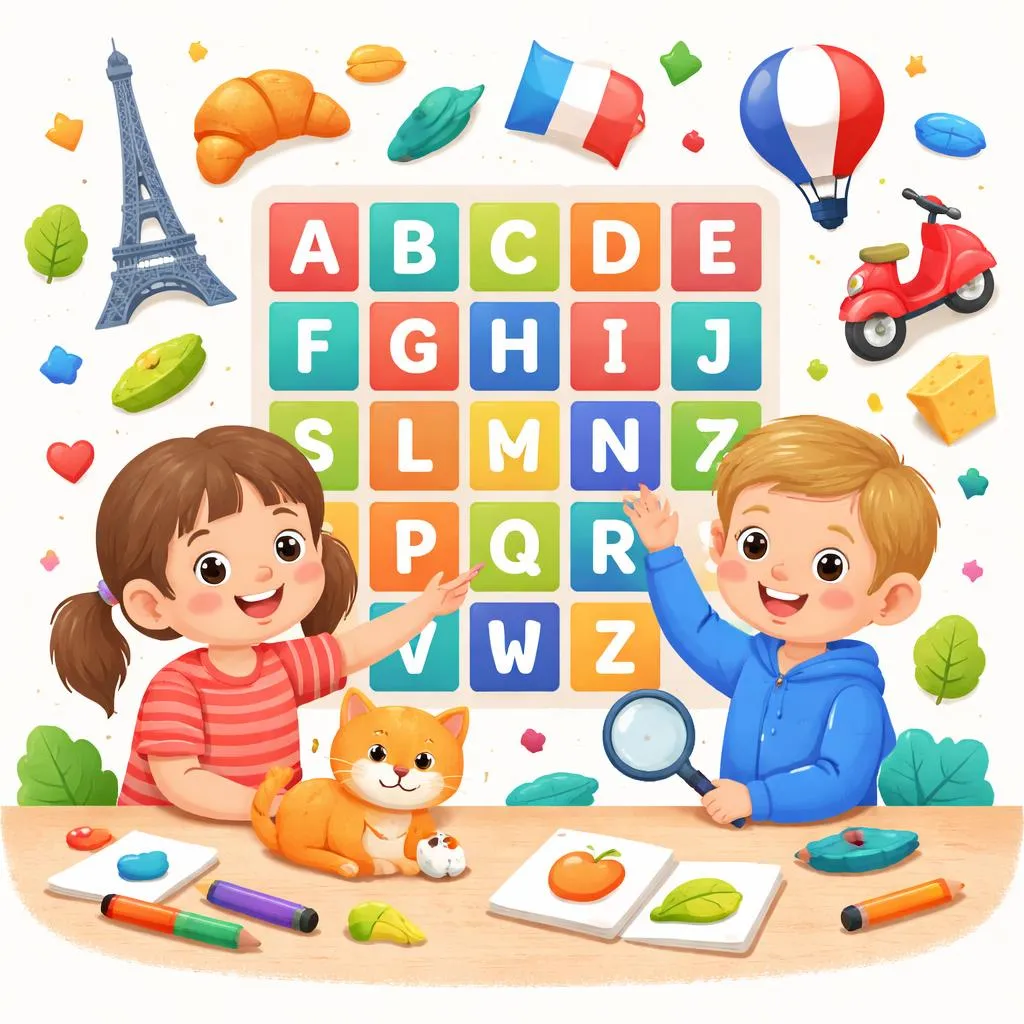

What Is the French Alphabet
The French alphabet is the set of letters used in French. It is the foundation of reading and writing.
French uses the Latin alphabet. It has 26 letters.
These letters look the same as English letters. But they do not always sound the same.
Learning the French alphabet helps pronunciation. It also helps spelling and reading.
Why the French Alphabet Matters
Alphabet knowledge comes first. It supports all language skills.
Before words, there are letters. Before sentences, there are sounds.
Understanding the alphabet helps learners decode words. Decoding builds confidence.
For beginners, the alphabet is a safe start. It feels structured and clear.
Letters in the French Alphabet
The French alphabet has 26 letters. They go from A to Z.
Each letter has a name. Each letter has a sound.
Some sounds are familiar. Some are new.
Learning letter names helps spelling aloud. Learning sounds helps reading.
Letter Names vs Letter Sounds
In French, letter names matter. They are used when spelling.
The sound of a letter inside a word can be different from its name.
For example, the letter B is called “bé.” But its sound is short and soft.
Understanding this difference helps learners. It reduces confusion.
Vowels in the French Alphabet
French vowels are important. They shape pronunciation.
The main vowels are A, E, I, O, U.
Sometimes Y acts like a vowel. It depends on the word.
Vowels can sound strong. They can sound soft.
Listening helps recognition. Practice builds comfort.
The Letter A in French
The letter A sounds open. It is clear.
It appears in many words. Its sound is stable.
A does not usually change much. This helps beginners.
Stable sounds are friendly. They build confidence.
The Letter E in French
The letter E is very common. It has many sounds.
Sometimes it sounds soft. Sometimes it is silent.
This surprises learners. It takes time to adjust.
E is important in rhythm. French rhythm depends on it.
The Letters I and O
I sounds clear and sharp. It is easy to recognize.
O can sound closed or open. Listening helps here.
These vowels appear often. They shape word melody.
Melody matters in French. It supports understanding.
The Letter U in French
U is special in French. It does not sound like English U.
The lips move differently. The sound feels new.
Learners often practice this sound. It improves accent.
This letter shows how French is unique. Small details matter.
Consonants in the French Alphabet
Consonants support structure. They frame vowels.
Many consonants sound familiar. Some change in French.
Listening helps recognition. Practice helps accuracy.
Consonants often soften. French avoids harsh sounds.
Silent Letters in French
French uses silent letters. This is important.
Some letters appear but are not spoken. They affect spelling.
This can feel confusing. But patterns exist.
Silent letters often appear at word ends. They support grammar and meaning.
The Role of Final Letters
Many French words end with consonants. But they are often silent.
This affects pronunciation. It also affects rhythm.
Learners notice patterns over time. Exposure helps.
Reading aloud builds awareness. Awareness builds confidence.
Accents in the French Alphabet
French uses accents. They sit above letters.
Accents change pronunciation. They can change meaning.
Common accents include é, è, ê, and ë.
Accents guide sound. They are pronunciation helpers.
The Accent Marks and Meaning
Accent marks are not decoration. They are functional.
They tell the reader how to say a word. They guide stress.
Ignoring accents can confuse meaning. Respecting them improves clarity.
Learning accents early helps. They become natural with time.
The Letter Ç in French
The letter C sometimes changes sound. The cedilla helps.
Ç makes the sound soft. It appears before A, O, and U.
This mark helps pronunciation. It avoids confusion.
Small marks matter. They guide sound clearly.
Alphabet Order in French
Alphabet order matters. It helps with dictionaries.
French dictionaries follow alphabet order. Knowing it helps search.
Spelling practice uses letter names. Letter names sound different.
Learning order supports independence. It helps self-study.
Spelling Words in French
Spelling aloud uses letter names. This is common in French.
People spell names. They spell addresses.
Knowing letter names is practical. It supports daily life.
Spelling practice builds listening skill. Listening skill supports comprehension.
Uppercase and Lowercase Letters
French uses uppercase and lowercase. The rules are similar to English.
Sentence beginnings use uppercase. Names use uppercase.
Accents stay on uppercase letters. This is important.
Respecting accents shows accuracy. Accuracy builds confidence.
The French Alphabet and Reading
Reading starts with letters. Letters form syllables.
Syllables form words. Words form meaning.
Understanding letter sounds helps decoding. Decoding reduces guessing.
Reading becomes smoother. Smooth reading feels rewarding.
The French Alphabet and Writing
Writing requires letter knowledge. Handwriting matters.
French handwriting may look different. Letter shapes vary.
Practicing writing builds memory. The hand supports the brain.
Writing letters slowly helps accuracy. Accuracy comes before speed.
Alphabet Songs and Learning
Songs help learning. They support memory.
French alphabet songs exist. They help rhythm.
Singing letters helps pronunciation. It makes learning playful.
Play reduces pressure. Reduced pressure helps retention.
Alphabet Learning for Children
Children benefit from repetition. The alphabet suits this.
Flashcards help recognition. Games help engagement.
Visual learning works well. Pictures support memory.
The alphabet is a gentle entry point. It feels manageable.
Alphabet Learning for Adults
Adults also benefit from basics. Starting simple works.
Alphabet review reduces errors. It improves pronunciation.
Adults appreciate structure. The alphabet offers that.
Clear foundations support progress. Progress builds motivation.
Common Difficulties With the French Alphabet
Some letters cause trouble. U and R are common.
These sounds feel new. The mouth moves differently.
Difficulty is normal. Practice helps.
Listening and repeating works best. Patience matters.
The Alphabet and Pronunciation Practice
Pronunciation improves with awareness. Letters guide sound.
Repeating letters helps mouth training. Training improves clarity.
Clear sounds support communication. Communication builds confidence.
Pronunciation grows step by step. No rush is needed.
The French Alphabet and Phonics
Phonics connects letters to sounds. French phonics has rules.
Some rules feel complex. But patterns exist.
Learning common patterns helps reading. Reading improves vocabulary.
Phonics builds independence. Independent learners grow faster.
Alphabet and Word Stress
French stress is different. It often falls at the end.
Letters guide rhythm. Rhythm guides understanding.
Alphabet awareness supports rhythm. Rhythm improves listening.
Listening improves fluency. Fluency supports confidence.
Alphabet and Listening Skills
Listening begins with sound recognition. Letters support this.
Recognizing sounds helps comprehension. Comprehension reduces anxiety.
Anxiety blocks learning. Comfort supports progress.
Alphabet practice builds comfort. Comfort supports learning.
Alphabet and Spelling Accuracy
Spelling improves with alphabet knowledge. Letter names matter.
Hearing letters clearly helps writing. Writing improves accuracy.
Accuracy builds trust in skill. Trust supports motivation.
Motivation keeps learners going.
Alphabet and Language Awareness
Alphabet study builds awareness. It shows structure.
Structure helps predict patterns. Prediction reduces effort.
Language feels less random. Understanding replaces guessing.
Awareness supports long-term learning.
Alphabet Learning and Daily Practice
Short practice works best. Five minutes is enough.
Repeating letters aloud helps. Writing a few letters helps.
Consistency matters more than time. Daily contact builds habit.
Habit supports progress.
Alphabet as a Language Foundation
The alphabet is the foundation. Everything builds on it.
Words depend on letters. Grammar depends on words.
Strong foundations support growth. Weak foundations slow progress.
Starting with the alphabet is wise. It prepares the learner.
Alphabet and Confidence Building
Confidence starts small. Recognizing letters helps.
Knowing sounds reduces fear. Fear blocks speaking.
Alphabet mastery builds courage. Courage supports communication.
Communication is the goal.
Alphabet and Long-Term Learning
Alphabet knowledge does not disappear. It stays useful.
Advanced learners still rely on it. Spelling and pronunciation matter.
Returning to basics strengthens skill. Basics remain relevant.
The alphabet grows with the learner.
The French Alphabet as a First Step
Every language journey starts somewhere. The alphabet is a natural start.
It is clear. It is structured.
Learning letters opens the door to reading. Reading opens the door to meaning.
Step by step, the French alphabet becomes familiar, sounds become clear, and French begins to feel accessible, friendly, and possible.
The French Alphabet and Sound Awareness
Sound awareness is important. It comes before fluent reading.
Each letter connects to a sound. Some sounds repeat often.
Listening to letters helps the ear. The ear learns contrast.
Clear sound awareness reduces guessing. Less guessing improves confidence.
The French Alphabet and Mouth Movement
French sounds use the mouth differently. Lips and tongue play a role.
Some letters need rounded lips. Some need gentle airflow.
Watching mouth movement helps learners. Imitation supports accuracy.
Physical awareness improves pronunciation. Pronunciation affects understanding.
The French Alphabet and Spelling Patterns
Spelling patterns appear early. Letters combine in predictable ways.
Certain letter pairs repeat often. Recognition grows with exposure.
Seeing patterns supports memory. Memory supports reading speed.
Speed builds comfort. Comfort builds confidence.
The French Alphabet and Reading Aloud
Reading aloud helps learning. It connects sound and sight.
Hearing your own voice matters. It builds awareness.
Reading slowly is fine. Accuracy comes before speed.
With time, reading feels smoother. Smooth reading feels rewarding.
The French Alphabet and Dictation
Dictation uses alphabet knowledge. Listening and writing work together.
Hearing letter names helps spelling. Spelling improves accuracy.
Dictation feels challenging at first. Practice reduces difficulty.
This exercise builds focus. Focus supports learning.
The French Alphabet and Word Building
Letters build syllables. Syllables build words.
Breaking words into parts helps beginners. Parts feel manageable.
Managing small pieces reduces fear. Reduced fear improves engagement.
Word building strengthens decoding skills. Decoding supports reading independence.
The French Alphabet and Confidence With New Words
New words feel less scary when letters are familiar.
Familiar letters create comfort. Comfort encourages trying.
Trying leads to success. Success builds motivation.
Motivation supports daily practice. Daily practice builds skill.
The French Alphabet and Listening Games
Games help learning. Alphabet games support sound recognition.
Matching sounds to letters works well. Repetition feels playful.
Play reduces pressure. Reduced pressure improves memory.
Games support children and adults. Enjoyment matters.
The French Alphabet and Visual Aids
Charts help learners. They show letters clearly.
Visual layout supports memory. Seeing helps recall.
Posters and cards are useful. They remind learners daily.
Visual exposure builds familiarity. Familiarity supports progress.
The French Alphabet and Learning Order
Learning does not need speed. Order matters more.
Starting with common letters helps. Common letters appear often.
Early success feels good. Feeling good encourages continuation.
Gradual learning lasts longer. Slow progress is stable.
The French Alphabet and Error Acceptance
Errors are part of learning. They show effort.
Mispronouncing a letter is normal. Correction comes later.
Accepting errors reduces stress. Less stress improves memory.
Kind learning works best. Pressure blocks progress.
The French Alphabet and Daily Review
Daily review strengthens memory. Short review is enough.
Saying letters aloud helps. Writing a few helps.
Consistency matters more than time. Habit supports learning.
Small daily steps add up. Progress becomes visible.
The French Alphabet and Long-Term Skill Growth
Alphabet skills grow with the learner. They do not stop at basics.
Advanced reading still uses letter awareness. Pronunciation still depends on letters.
Returning to the alphabet helps refine skill. Refinement improves clarity.
Strong basics support advanced learning. Foundations always matter.
The French Alphabet and Learning Confidence
Confidence grows from understanding. Understanding starts small.
Knowing letters reduces fear. Reduced fear encourages speaking.
Speaking improves fluency. Fluency supports communication.
Communication is the goal of learning.
The French alphabet may seem simple, but it carries great importance.
With steady practice and gentle review, letters become familiar friends, sounds become clearer, and French learning feels structured, calm, and achievable.