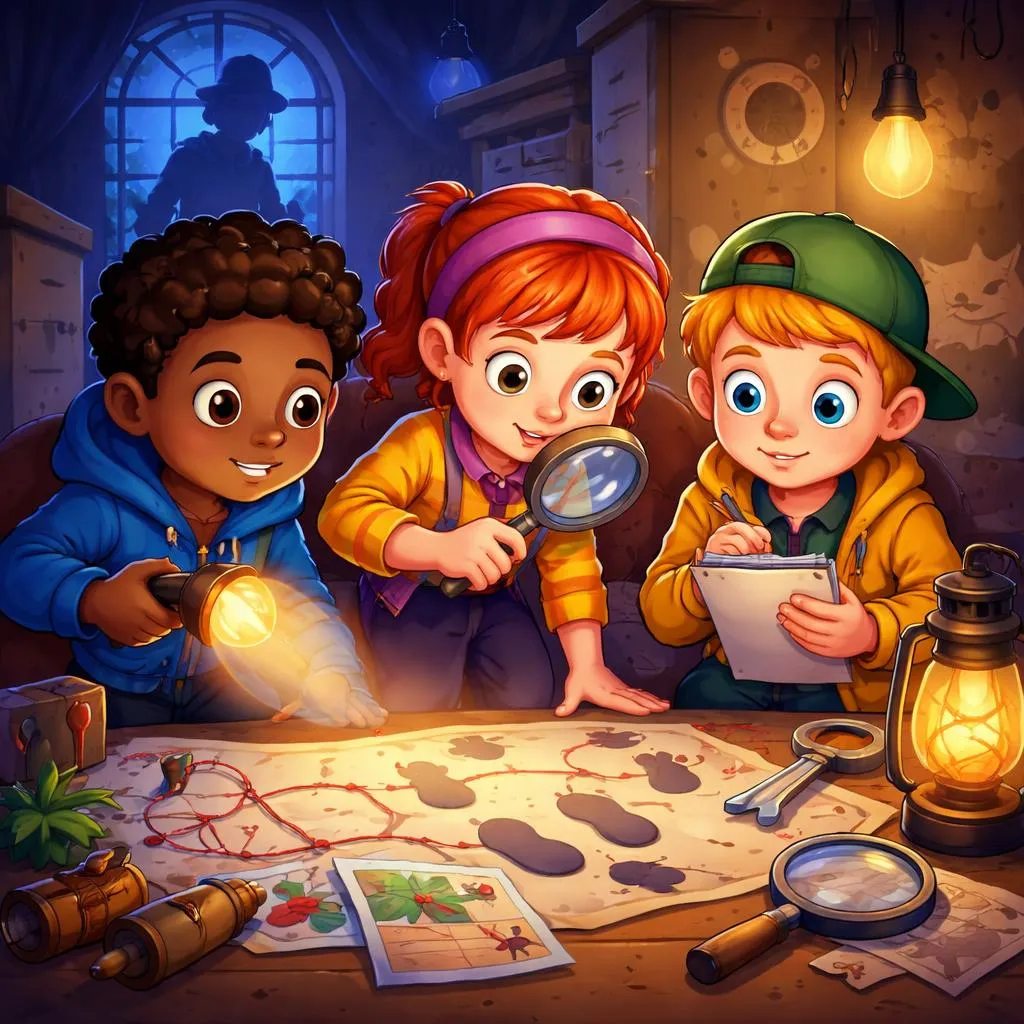

What Are Children's Mystery Short Stories? Let us explore this engaging genre together. Children's mystery short stories are tales built around puzzles to solve. They present a question or problem at the beginning. Something goes missing or something strange happens. Young readers follow along as characters investigate. Clues appear throughout the story for careful readers to find. The mystery unfolds gradually with each new piece of information. Suspense builds as the story moves toward the solution. These stories stay short enough for one reading session. This makes them perfect for classroom use or bedtime. The satisfying ending reveals how everything connects. Readers feel smart when they solve the puzzle before the characters. These stories turn reading into an active game of detection.
Meaning and Purpose of Mystery Stories Mystery stories serve important educational purposes for children. They teach careful attention to details in text. Young readers learn that small things can matter greatly. A dropped object or a strange sound might become important later. These stories develop logical thinking and reasoning skills. Children practice connecting clues to form conclusions. They learn to ask questions while reading. Who could have taken the missing item? Why would they do it? Mysteries also teach patience and delayed gratification. The answer does not come immediately. Readers must wait and gather information first. This builds stamina for longer, more complex texts later. The genre also introduces the concept of evidence. Characters must prove their theories, not just guess. This teaches children to support ideas with facts.
Common Elements in Mystery Stories We can identify several elements common to mystery tales. A crime or puzzle starts the story. Something is missing, broken, or unexplained. A detective character leads the investigation. This might be a child, a group of friends, or a grown-up. Clues provide pieces of the puzzle throughout. Some clues are obvious while others hide in plain sight. Red herrings mislead both characters and readers. These false clues make the mystery more interesting. Suspects appear as possible wrongdoers. Each might have motive and opportunity. An alibi places a suspect somewhere else at the time. The solution reveals what really happened. All clues come together in the end. Justice usually prevails in children's mysteries. The wrong is made right and order returns.
Categories of Mystery Stories for Children We can organize mystery stories into helpful categories. Missing object mysteries are most common for young readers. A pet, toy, or treasured item disappears. Secret message mysteries involve codes and hidden meanings. Characters must decode notes to solve the puzzle. Detective club mysteries feature a group of friends who solve cases together. They might have meetings and special notebooks. School mysteries take place in familiar settings. Something happens in the classroom or on the playground. Holiday mysteries add seasonal fun to the puzzle. A Halloween costume or Valentine candy might go missing. Nature mysteries involve animals or outdoor clues. Following tracks or signs leads to answers. Historical mysteries add interest about the past. Children solve puzzles from long ago.
Daily Life Connections Through Mysteries Mystery stories connect naturally to children's daily experiences. A lost toy at home becomes a real-life mystery. Where did it go? Who had it last? Strange noises at night puzzle everyone. What could be making that sound? Missing homework creates a classroom mystery to solve. A friend acting differently becomes a puzzle of feelings. Why are they sad today? What happened? Mysteries also appear in games children already play. Hide and seek is a simple mystery of location. I Spy asks players to find hidden objects. Treasure hunts require following clues in order. We can point out these connections during discussions. "This feels like the mystery we read yesterday." "What clues can we find to solve our problem?" Children learn that detective skills help in real life too.
Vocabulary Learning from Mystery Stories Mystery stories introduce specialized and useful vocabulary. Detective words build understanding of the genre. Clue, evidence, suspect, and alibi appear regularly. Investigation words describe the process of solving. Search, examine, observe, and discover move the story forward. Mystery words create the right atmosphere. Secret, hidden, strange, and suspicious set the tone. Question words drive the investigation. Who, what, where, when, and why appear throughout. Thinking words describe mental work. Deduce, conclude, realize, and remember show characters figuring things out. We can teach these words with picture cards showing examples. Use them in sentences about classroom situations. "Let's investigate where the missing crayons went." This builds vocabulary through meaningful application.
Phonics Points in Mystery Reading Mystery stories provide engaging phonics practice. Clue words contain useful sound patterns. Clue has the CL blend. Secret has the soft C and short E. Hidden has the short I and ED ending. Question words offer sound practice. Who has the silent W and long OO. What has the WH digraph and short A. Where has the WH and long E sound. Action words demonstrate various patterns. Search has the EAR trigraph. Examine has the EG short sound and long I. Observe has the OB short sound and ER ending. We can focus on one sound pattern from each story. Find all words with that sound in the mystery. Write them on magnifying glass shapes for practice. This connects phonics instruction with exciting content.
Grammar Patterns in Mystery Narratives Mystery stories model useful grammar for young readers. Past tense carries the main investigation. "The children searched everywhere for clues." Present tense appears in dialogue and discovery. "I think I found something," says Maria. Future tense shows predictions and plans. "We will check the playground tomorrow." Questions drive the mystery forward. "Who took the class pet?" "Where could it be?" Commands appear in detective instructions. "Look under the desk." "Check behind the books." Descriptive language sets the scene. "The dark, empty classroom felt strange and quiet." Prepositional phrases describe locations. "Behind the curtain, under the rug, inside the desk." We can point out these patterns during reading. Notice how questions move the story. See how clues are described.
Learning Activities for Mystery Stories Many activities deepen engagement with mystery tales. Create a detective notebook for tracking clues. Include sections for suspects, evidence, and questions. Draw pictures of important clues from the story. Write what each clue might mean. Map the locations where clues were found. Use a simple diagram of the story setting. Make a list of suspects with motives. Who might want the missing item? Practice asking good detective questions. What do we know? What do we need to find out? Write a new ending for the mystery. What if a different character solved the case? Create a wanted poster for the culprit. Include description and what they took. These activities build comprehension while maintaining mystery fun.
Printable Materials for Mystery Learning Printable resources support deep engagement with mystery stories. Create detective badges for young readers to wear during investigation. Design clue cards showing important objects from the story. Make a case file cover page for collecting all materials. Create suspect cards with names, descriptions, and possible motives. Design a evidence log for recording important findings. Make a mystery vocabulary booklet with words and pictures. Create simple comprehension questions for each story. "What was the first clue?" "Who seemed suspicious?" Design a solution page where children write or draw what happened. These printables structure the detective work. They give children tools for organizing their thinking.
Educational Games Inspired by Mysteries Games make mystery learning active and playful. Play "What's Missing?" placing several objects on a tray. Remove one while children close their eyes. They guess what disappeared. Create a clue hunt hiding objects around the room. Provide written clues leading to each one. Play "Detective Says" like Simon Says with investigation actions. "Detective says look through the magnifying glass." Design a suspect lineup with character pictures. Give descriptions and ask children to identify. Play "Alibi Game" where one child leaves the room. Others decide on a pretend activity. The child returns and asks questions to guess. Create a code-breaking center with simple ciphers. Children decode mystery messages to find answers. These games build observation and reasoning skills naturally.
Teaching Inference Through Mysteries Mystery stories excel at teaching inference skills. Authors provide clues without stating everything directly. Readers must read between the lines. A character acting nervous might suggest they know something. A muddy footprint implies someone went outside. An empty cookie jar hints at who was hungry. We can practice inference during reading. Stop and ask what clues suggest. "Why do you think she looked away?" "What might that sound mean?" Children learn to combine text clues with their own knowledge. This builds deeper comprehension abilities. After reading, review how clues pointed to the solution. Discuss which clues were most important. Talk about red herrings that misled everyone. These discussions make thinking visible. Children learn how detectives and readers think alike.
Building Questioning Skills Through Mysteries Mystery reading naturally develops questioning abilities. Good detectives ask good questions. We can model this during story time. Before reading, ask what questions we have. Who might be involved? What could have happened? During reading, pause to ask new questions. Why did that character lie? Where is the missing item? After reading, reflect on which questions were answered. Were any left unanswered? Children can generate their own questions at each stage. Write them in detective notebooks. Discuss which questions help most with solving. Some questions lead to important clues. Others lead away from the truth. Learning to ask productive questions transfers to all learning. It builds curiosity and active engagement with texts.
The Satisfaction of Solving Mysteries Mystery stories provide unique satisfaction for young readers. The moment of solution brings pleasure and pride. Children feel smart when pieces come together. This builds reading confidence and motivation. The genre rewards careful attention and thinking. Children see their effort pay off in understanding. Mysteries also provide safe tension and release. The suspense feels exciting but not overwhelming. Young readers know the solution will come. Order will be restored. This predictability within uncertainty comforts children. They learn that puzzles have answers. Problems can be solved. Questions lead to understanding. These lessons extend beyond reading into life. Children face their own puzzles with detective confidence. They know asking questions and seeking clues leads to answers. The mystery genre builds thinkers who enjoy the chase of understanding.