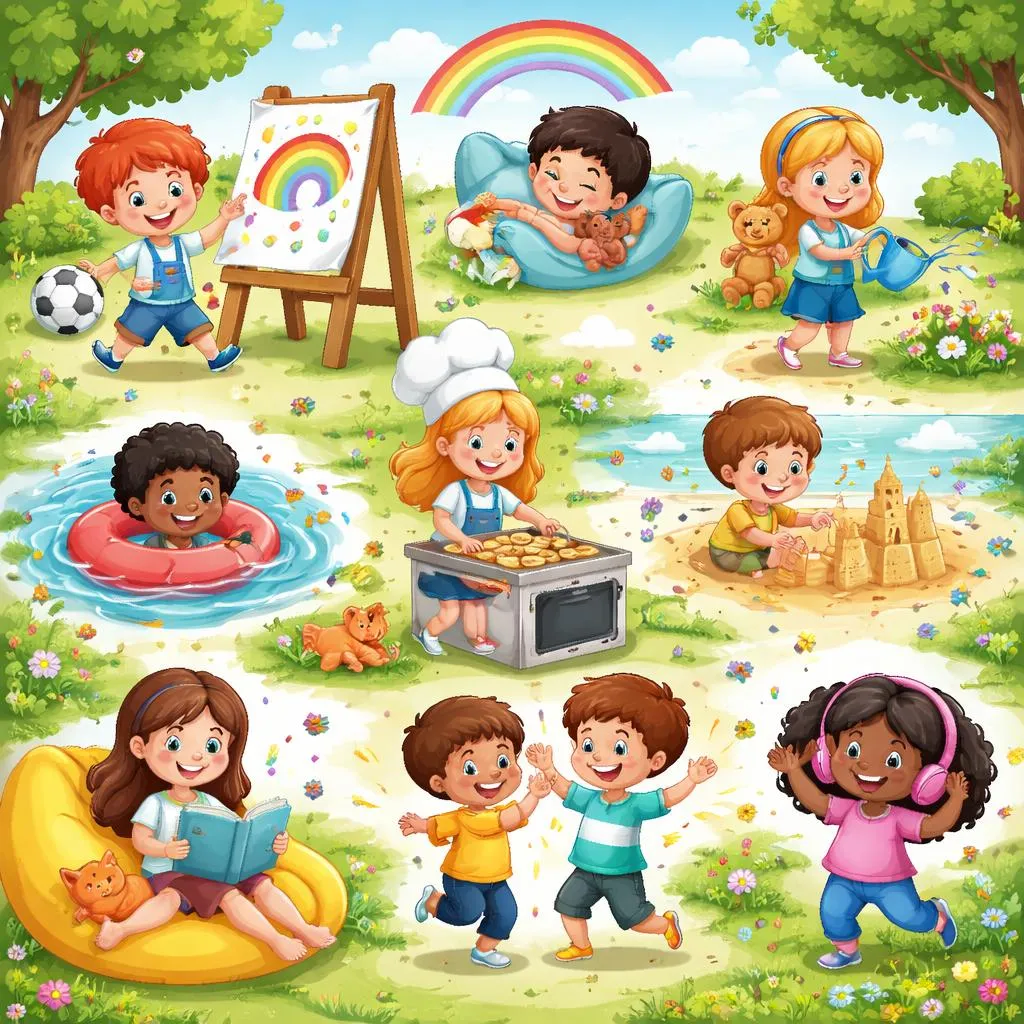

What Verbs Are Verbs are action words. They tell what people do. They show movement. They show thinking. They show daily actions. Children use verbs every day. They use them when they speak. They use them when they listen. They use them when they read. They use them when they write. Verbs help sentences feel complete. Verbs help ideas feel alive.
Why Verbs Are Important Verbs carry meaning. Without verbs, ideas stop. Sentences feel empty without verbs. With verbs, language moves forward. Children need verbs to explain actions. They need verbs to share feelings. They need verbs to tell stories. Learning verbs builds confidence.
Verbs in Daily Life Daily life is full of verbs. Children wake up in the morning. They get out of bed. They eat breakfast. They drink milk or juice. They go to school. They learn new things. They play with friends. They come home later. They rest at night. These actions happen every day. These actions help children learn verbs naturally.
How Children Learn Verbs Children hear verbs first. They hear adults speak. They hear teachers talk. They hear stories every day. Listening comes before speaking. Speaking comes before reading. Reading comes before writing. Hearing verbs many times helps memory. Repeating verbs builds understanding.
Common Verbs for Daily Actions Go means move from one place to another. Go home. Go outside. Go to school. This verb is short. This verb is very useful. Children use this verb often.
Come means move closer. Come here. Come with me. Come inside. This verb is easy to understand. Children hear it every day.
Look means use the eyes. Look at the book. Look at the picture. Look at the board. Seeing helps learning. Visual verbs support understanding.
Verbs for Eating and Drinking Eat means have food. Eat fruit. Eat lunch. Eat dinner. Food verbs feel safe. Food verbs feel familiar.
Drink means have water or juice. Drink water. Drink milk. Drink slowly. Daily habits support language learning.
Verbs for Play and Movement Play is a happy verb. Play games. Play outside. Play with friends. Play helps children relax. Play helps children learn.
Run means move fast. Run in the park. Run with friends. Run to the ball. Movement verbs feel strong.
Walk means move slowly. Walk to school. Walk home. Walk together. Comparing run and walk builds meaning.
Verbs for Rest and Routines Sleep means rest the body. Sleep at night. Sleep in bed. Sleep well. Calm verbs support comfort.
Wake means open the eyes after sleep. Wake up early. Wake up slowly. Wake up happy. Morning routines use this verb often.
Daily routines include many simple verbs. Children brush teeth. They wash hands. They get dressed. They pack school bags. These actions repeat every day. Repeated verbs are easy to remember.
Verbs for Classroom Actions Classrooms use clear verbs. These verbs tell children what to do. They help the class stay calm. They help learning move smoothly.
Listen means use the ears. Listen to the teacher. Listen to the story. Good listening supports understanding.
Sit means place the body on a chair. Sit down. Sit quietly. This verb supports classroom order.
Stand means move to the feet. Stand up. Stand in line. Clear action verbs guide behavior.
Read means look at words and understand them. Read the book. Read the sentence. Reading verbs support literacy growth.
Write means make letters or words. Write your name. Write a word. Writing starts with simple actions.
Open means move something so it is not closed. Open the book. Open the door. This verb is common in school.
Close means stop something from being open. Close the book. Close the bag. Opposite verbs help memory.
Verbs for Speaking and Communication Communication verbs help children share ideas. They help children talk with others.
Say means speak words. Say hello. Say thank you. Polite verbs build social skills.
Tell means give information. Tell a story. Tell the teacher. Story verbs support language growth.
Ask means use a question. Ask for help. Ask a friend. Questions support learning.
Answer means reply to a question. Answer clearly. Answer kindly. Conversation needs both verbs.
Verbs for Helping and Sharing Helping verbs show care. They support positive behavior.
Help means support someone. Help a friend. Help at home. Helping builds confidence.
Share means give part of something. Share toys. Share food. Sharing teaches cooperation.
Give means pass something to another person. Give a pencil. Give a book. Giving actions are easy to see.
Take means receive or pick up. Take the book. Take your bag. Opposite verb pairs support meaning.
Verbs for Feelings and Preferences Some verbs show feelings. Some verbs show choices.
Like shows preference. I like apples. I like stories. Children enjoy sharing likes.
Love shows strong feelings. Love family. Love pets. Emotional verbs build connection.
Enjoy means feel happy doing something. Enjoy reading. Enjoy playing. Positive verbs support motivation.
Want means wish to have or do something. I want water. I want to play. This verb appears early in speech.
Verbs for Thinking and Learning Thinking verbs grow slowly. Children meet them step by step.
Think means use the mind. Think about the answer. Thinking supports problem solving.
Know means understand something. I know this word. Knowing builds confidence.
Remember means keep something in the mind. Remember the song. Memory supports learning.
Learn means gain new knowledge. Learn new words. Learn every day. Learning verbs support growth.
Verbs for Games and Movement Games include many action verbs. Movement helps learning.
Jump means move up into the air. Jump high. Jump forward. Active verbs support energy.
Throw means send something through the air. Throw the ball. Throw gently. Game verbs feel fun.
Catch means stop something moving. Catch the ball. Catch carefully. Action and reaction build understanding.
Kick means hit with the foot. Kick the ball. Kick slowly. Sports verbs feel exciting.
Verbs in Stories Stories need verbs. Verbs show what happens.
Characters run. They hide. They help others. Actions move the story forward.
Reading stories helps children hear verbs in context. Context shows meaning clearly. Children understand without explanation.
Verbs in Early Writing Writing begins with verbs. Simple sentences come first.
I play. I read. I draw. Short sentences feel successful.
Longer sentences grow slowly. I play and laugh. I read and learn. Connection words come later.
Verbs and Daily Practice Daily practice keeps verbs active. Morning talk helps. Story time helps. Classroom routines help.
Listening comes first. Speaking comes next. Reading and writing follow later. Language grows naturally.
Verben List and Language Growth A clear verben list supports children every day. It helps them talk about actions. It helps them understand stories. It helps them follow instructions. Strong verbs build strong language skills. Step by step learning supports long term success.